
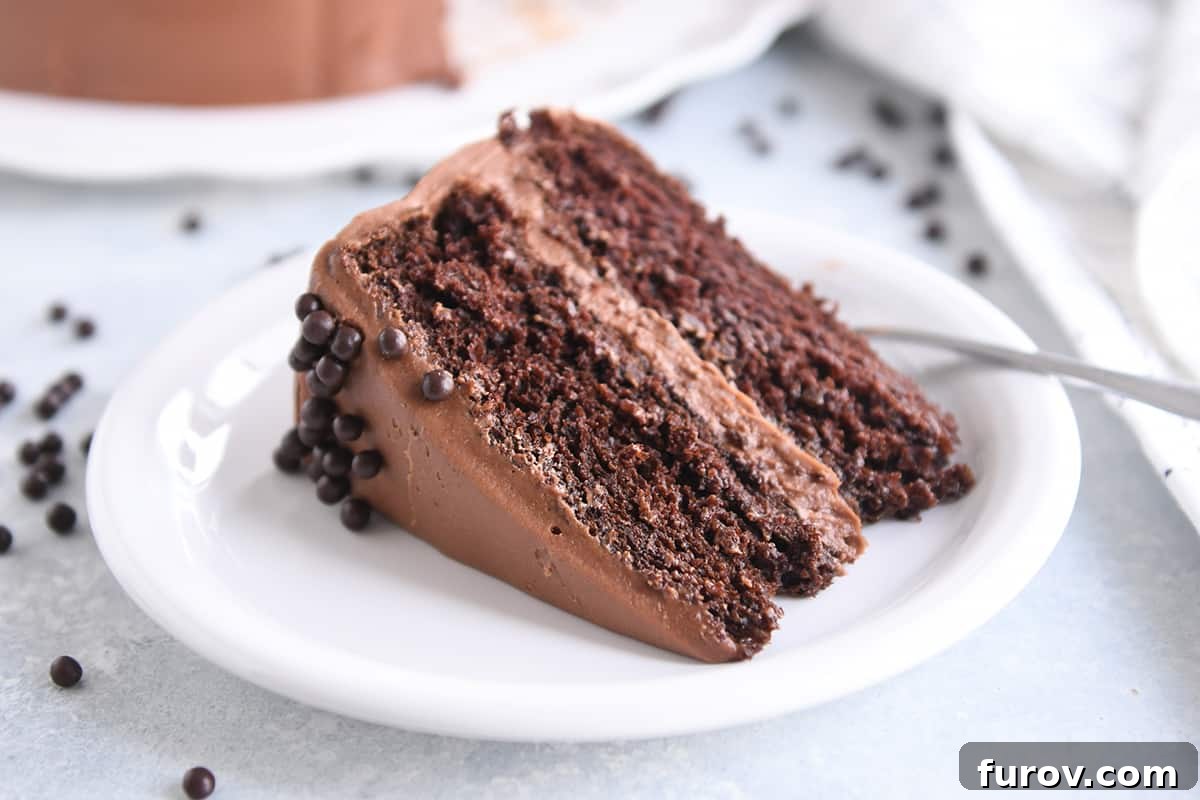
Welcome, fellow dessert enthusiasts, to what can only be described as the zenith of chocolate cake perfection. Forget everything you thought you knew about baking because this isn’t just a recipe; it’s a revelation. This best chocolate cake recipe is not only incredibly simple, boasting a convenient one-bowl preparation, but it also delivers an unparalleled experience of richness, decadence, and profound moisture. Prepare to embark on a culinary journey that will redefine your standards for homemade desserts.
If your quest for a truly reliable, tried-and-true chocolate cake has led to disappointment, your search ends here. For over a decade, this recipe has been my unwavering companion, my culinary north star whenever a classic, show-stopping chocolate cake was required. It consistently delights with its deep cocoa flavor and unbelievably tender crumb, making it the quintessential centerpiece for any celebration or a simple, comforting indulgence.
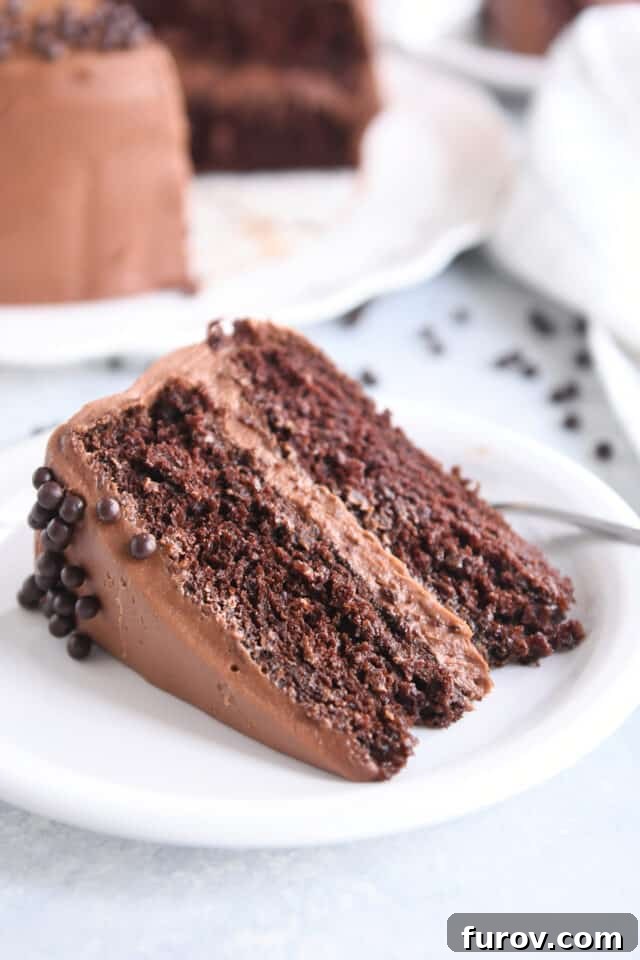
The Journey to the Ultimate Chocolate Cake
My love affair with this cake began many years ago, when I first stumbled upon a chocolate cake recipe in a Martha Stewart cookbook, borrowed from a local library. It was a good recipe, quickly becoming my favorite, but like many online recipes that evolve over time, I found myself tweaking and refining it to enhance its user-friendliness and overall perfection. The blogosphere, a vibrant community of home bakers, provided invaluable feedback, pushing this already great cake towards true greatness.
Early iterations of the recipe, while delicious, presented a few quirky measurement challenges. For instance, the original called for a rather specific “two eggs plus one egg yolk,” a detail that, while precise, could be a minor inconvenience. Furthermore, the batter volume was quite substantial, often filling two 9-inch pans to the brim, resulting in unusually thick layers that were sometimes challenging to manage. Baking it in a 9×13-inch pan could also be tricky, often leading to uneven cooking.
Thanks to the insightful suggestions from countless fellow bakers, I’ve diligently adapted and improved that foundational recipe. This enhanced version is now perfectly scaled to fit standard cake pans, utilizes more straightforward ingredient quantities, and continues to emerge as one of the most exceptional chocolate cakes ever baked. Believe it or not, this beloved classic has only grown more iconic with these thoughtful updates, solidifying its place as the definitive moist chocolate cake recipe.
The Secret to Perfection: Sifting Dry Ingredients
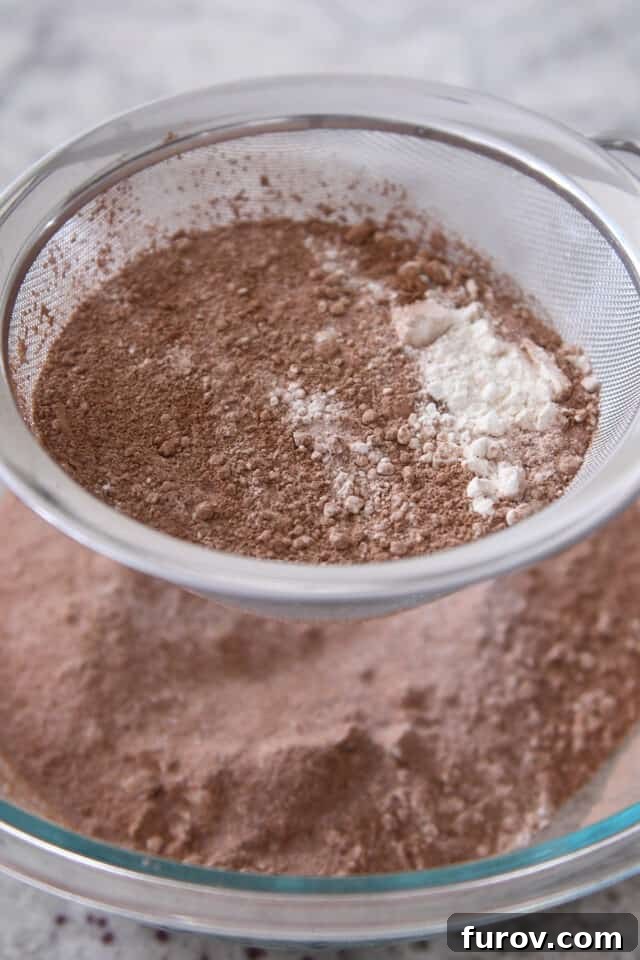
You might be wondering, “Is this truly a one-bowl chocolate cake as promised?” And the answer is a resounding yes! Its simplicity is one of its most endearing qualities. However, there’s one crucial step where I become unashamedly insistent, even a little “bossy,” if you will: sifting your dry ingredients.
This seemingly small extra step makes a colossal difference in the final texture of your cake. The dry ingredients include:
- All-purpose flour
- Granulated sugar
- Unsweetened cocoa powder
- Baking soda
- Baking powder
- Salt
Cocoa powder, in particular, has a notorious tendency to clump. These tenacious little lumps refuse to yield to a whisk or mixer and can lead to an uneven batter, resulting in an inconsistent crumb texture in your finished cake. Imagine biting into a beautiful slice of cake only to encounter a dry, powdery pocket of unmixed cocoa – a truly unwelcome surprise! Sifting ensures every granule is perfectly incorporated, leading to an exquisitely smooth batter and, ultimately, a consistently tender, velvety, and rich chocolate cake. Don’t skip this step; your taste buds will thank you.
Crafting the Velvety Chocolate Cake Batter
Once your dry ingredients are perfectly sifted and residing in your trusty large bowl, it’s time to introduce the liquid elements that will transform them into an irresistible batter. Add the following to your bowl:
- Warm water
- Buttermilk
- Neutral oil (like vegetable or canola)
- Large eggs
- Vanilla extract (feel free to measure this with your heart, as the original recipe charmingly suggests – a generous splash is always welcome!)
Now, grab your whisk, or for an even easier experience, an electric mixer, and combine everything until it’s thoroughly mixed. The batter will be liquid and smooth, with a beautiful deep brown hue. You might notice some small bubbles forming – this is completely normal and a sign of the leavening agents beginning their work. Do not mistake these lovely little bubbles for lumps. If you’ve sifted properly, lumps will be a distant memory, ensuring an unblemished, consistent texture throughout your homemade chocolate cake.
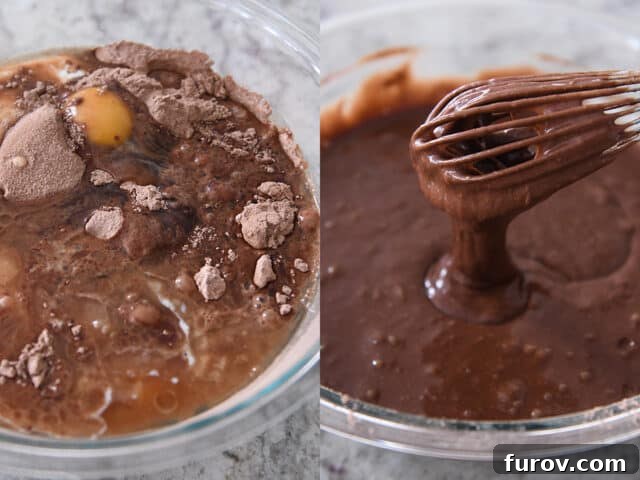
Baking for Perfection: Pan Sizes and Moisture Tips
One of the beauties of this adaptable batter is its versatility in baking. It performs magnificently whether baked in two 9-inch round cake pans, yielding beautiful, even layers perfect for stacking and frosting, or as a single, generous 9×13-inch sheet cake, ideal for casual gatherings or easy slicing.
A cardinal rule for achieving the perfect, moist chocolate cake is simple but critical: do not overbake! Overbaking is the arch-nemesis of moisture, transforming a potentially tender cake into a dry disappointment. It’s always better to err on the side of slightly underbaking by a minute or two than to risk overbaking. The sweet spot is when a toothpick inserted into the center comes out clean or with a few moist crumbs clinging to it, and the top springs back lightly when gently touched. Trust your instincts and your oven; every oven can vary slightly, so keep a watchful eye during the last few minutes of baking.
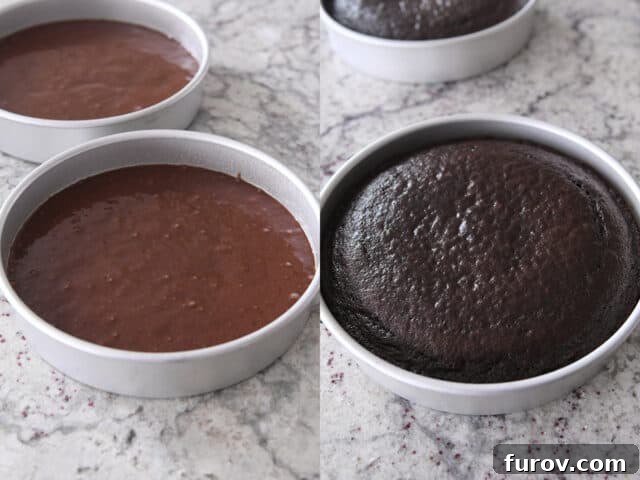
The Marriage of Cake and Frosting: Pure Bliss
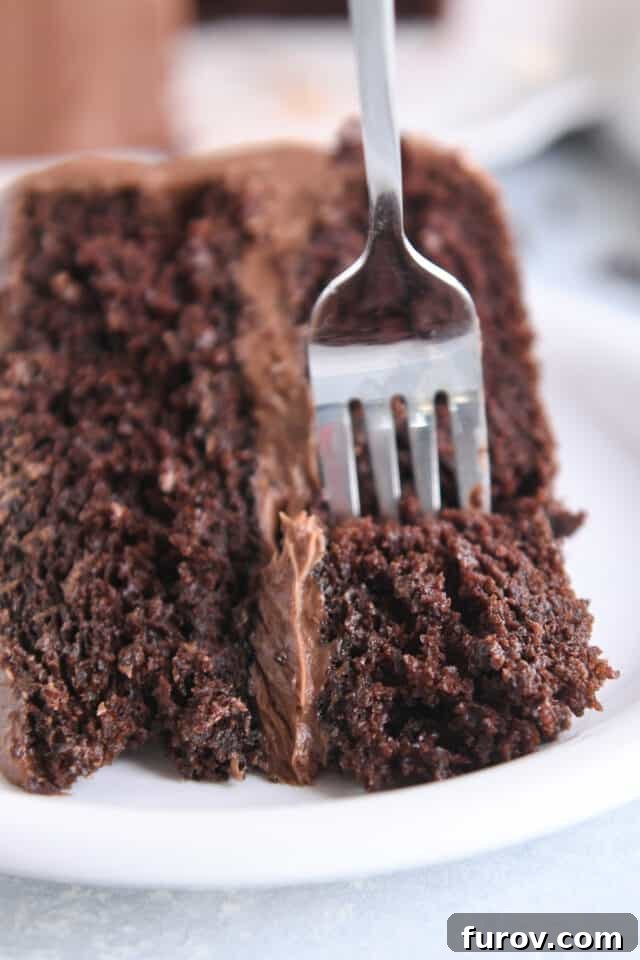
Let me be candid. As someone who often leans towards cookies over cake, I can confidently attest that this decadent chocolate cake is so incredibly flavorful and moist, it stands on its own. It strikes a remarkable balance between richness and sweetness, with a tender, velvety crumb that truly melts in your mouth. This cake is, without a doubt, the quintessential, perfect chocolate cake recipe – delicious even in its unfrosted glory.
However, let’s be honest, who would ever discourage you from lavishly slathering every surface with a glorious frosting? Frosting elevates the experience, adding another layer of texture and flavor. While a classic chocolate frosting is often the go-to, don’t hesitate to experiment.
Some of my absolute favorite companions for this cake include a magical, not-too-sweet vanilla frosting, which offers a delightful contrast to the deep chocolate. You also can’t go wrong with a fluffy whipped chocolate buttercream for a double dose of cocoa bliss, or a smooth, rich classic vanilla buttercream. Each option brings its unique charm to this extraordinary dessert.
Exciting news for chocolate lovers: I’ve been diligently perfecting a classic chocolate buttercream frosting recipe, designed specifically to complement this cake, and I’ll be sharing it with you very soon. Stay tuned for that ultimate pairing!
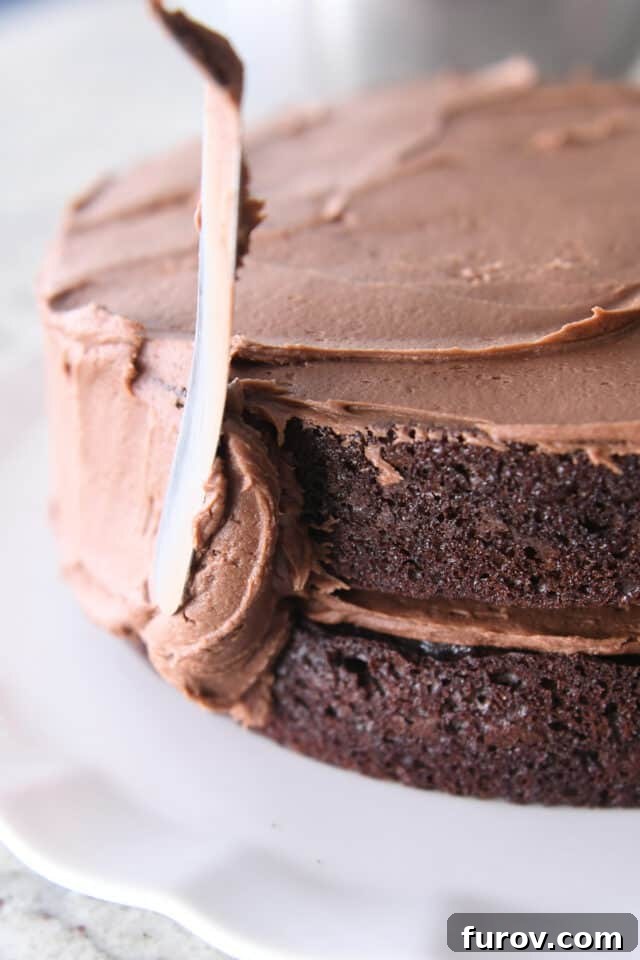
Pro Tips and Variations for Your Chocolate Masterpiece
To ensure your chocolate cake experience is nothing short of spectacular, here are a few additional notes and helpful tips:
- For an elegant yet simple finish, I adore topping this cake with a generous layer of chocolate frosting and then scattering a few of these crisp chocolate pearls. Not only do they add a sophisticated touch, but their satisfying crunch and intense chocolate flavor are simply irresistible.
- The recipe typically calls for natural, unsweetened cocoa powder, such as Hershey’s brand, which contributes to the cake’s classic chocolate flavor profile. However, if you prefer a darker, slightly less acidic, and even richer cocoa taste, you can absolutely use Dutch-process cocoa. Just be aware that Dutch-process cocoa reacts differently with baking soda, so the cake may not rise quite as high, and the crumb texture might be marginally denser, though still delicious.
- For those who have a deep affection for the original chocolate cake recipe, there might not be a compelling reason to switch to this updated version unless you’ve found the previous ingredient quantities challenging or prefer more manageable cake layers. Both versions deliver a truly fantastic chocolate cake.
- Ensure all your cold ingredients, especially eggs and buttermilk, are at room temperature. This helps them incorporate more smoothly into the batter, leading to a more consistent emulsion and a finer, more tender crumb in the final cake.
- Don’t rush the cooling process. Allow the cakes to cool in their pans for a few minutes before inverting them onto a wire rack. Cooling completely on a rack prevents steam from getting trapped, which can make the cake soggy. Fully cooled cakes are also much easier to frost.
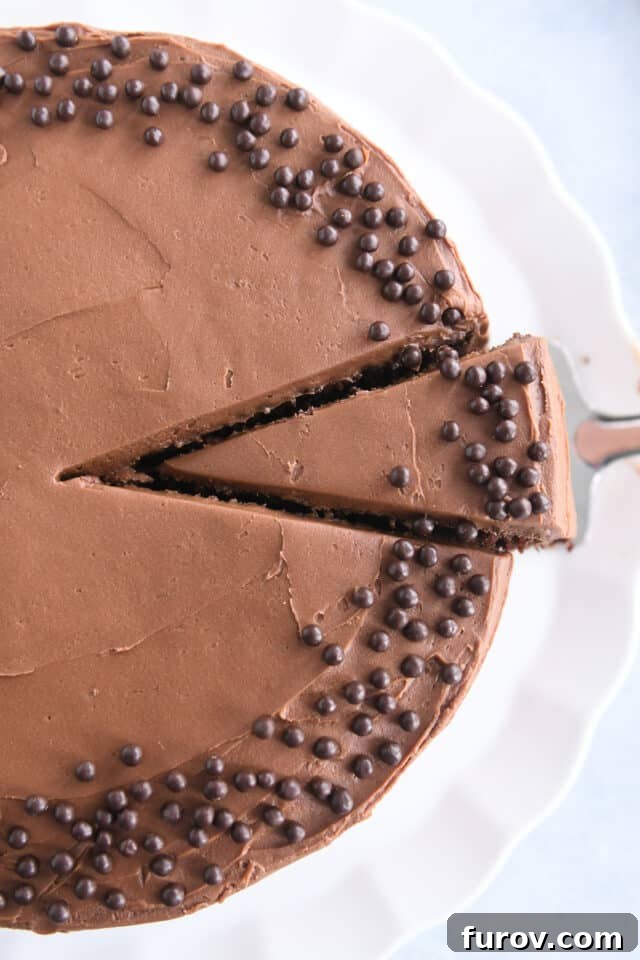
A Go-To Chocolate Cake Recipe for Every Baker
I genuinely believe that everyone deserves a reliable, go-to chocolate cake recipe in their culinary repertoire. It’s a foundational skill for any home baker, a recipe that can be whipped up for birthdays, potlucks, or simply because a craving strikes. My mission here is not complete until every person who visits this space feels equipped with that perfect recipe in their back pocket.
This is a recipe that consistently performs, time after time. It’s a recipe that has never let me down, always delivering on its promise of rich flavor and moist texture. It’s a recipe that asks for very little in terms of complicated techniques or exotic ingredients, yet it always, without fail, receives enthusiastic rave reviews from anyone lucky enough to taste a slice.
And indeed, this is that recipe. It is, unequivocally, the best chocolate cake. I am thrilled to share this refined and improved version, a recipe I’ve been baking and perfecting for years with absolutely no intention of changing my mind about its superiority. It’s simple, it’s reliable, and it’s utterly delicious.
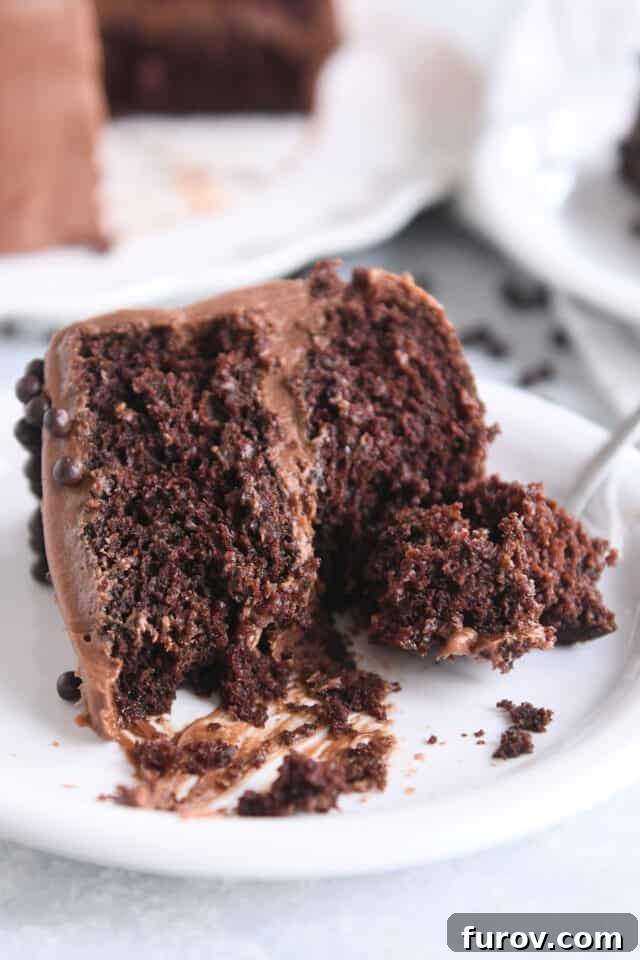
The Best Chocolate Cake
Yield: 12 servings
Prep Time: 25 mins
Cook Time: 32 mins
Total Time: 57 mins
Ingredients
- 2 cups (284 g) all-purpose flour
- 2 cups (424 g) granulated sugar
- 1 cup (85 g) natural, unsweetened cocoa powder
- 2 teaspoons baking soda
- 1 teaspoon baking powder
- 1 teaspoon salt
- 1 cup (225 g) warm water
- 1 cup (245 g) buttermilk
- ½ cup (100 g) vegetable or canola oil (see note)
- 2 large (100 g out of shell) eggs
- 2 teaspoons vanilla extract
Instructions
- Preheat your oven to 350 degrees F (175 degrees C). Position an oven rack in the middle of your oven for even baking.
- Line the bottom of two 9-inch round cake pans or one 9×13-inch baking pan (preferably aluminum, as glass can bake differently) with parchment paper. Lightly grease the bottom and sides of the pan(s) with nonstick cooking spray to ensure the cakes release easily. Set aside.
- In a large mixing bowl, meticulously sift together the flour, granulated sugar, cocoa powder, baking soda, baking powder, and salt. This step is crucial for preventing lumps and achieving a smooth, even crumb.
- To the sifted dry ingredients, add the warm water, buttermilk, vegetable or canola oil, large eggs, and vanilla extract.
- Using either a handheld electric mixer on low speed or a sturdy wire whisk, mix all the ingredients until they are thoroughly combined and the batter is smooth. Be careful not to overmix; a few small bubbles are normal, but lumps should be absent after proper sifting.
- Evenly divide the prepared batter between your two 9-inch round cake pans or pour it into the single 9×13-inch pan, ensuring it’s spread uniformly.
- Bake the cakes for 28-35 minutes for round pans, or slightly longer for a 9×13-inch pan, until the top springs back lightly when touched, and a toothpick inserted into the center comes out clean or with only moist crumbs attached. Avoid overbaking to maintain maximum moisture.
- Allow the freshly baked cakes to cool in their pans for 2-3 minutes. Then, carefully run a thin knife around the edges of the pans to loosen the cakes before inverting them onto a wire cooling rack to cool completely. Fully cooled cakes are essential before frosting.
Notes
Oil: For the best flavor, use a neutral-flavored oil such as vegetable or canola oil. Avoid oils with strong flavors like olive oil, as they can alter the taste of your delicate chocolate cake.
Cocoa Powder: This recipe is designed for natural, unsweetened cocoa powder (e.g., Hershey’s). While Dutch-process cocoa can be substituted for a darker, richer color and flavor, please note that the cake may not rise quite as high, and the crumb texture might be slightly different due to the difference in acidity.
Glass Pan: If you choose to bake this cake in a 9×13-inch glass pan, it’s recommended to reduce your oven temperature to 325 degrees F (160 degrees C). Glass pans retain heat differently than metal, and a lower temperature helps prevent overbaking the edges before the center is cooked through. Keep a close eye on the baking time, as it may vary.
Author: Mel Gunnell
Course: Dessert
Cuisine: American
Method: Bake
Nutrition
Serving: 1 piece (1/12th of the cake)
Calories: 330kcal
Carbohydrates: 55g
Protein: 5g
Fat: 12g
Saturated Fat: 2g
Cholesterol: 33mg
Sodium: 254mg
Fiber: 3g
Sugar: 35g
Recommended Products
Recipe Source: This exceptional recipe is thoughtfully adapted from the original chocolate cake recipe, with inspiration drawn from the timeless elegance of the Martha Stewart The New Classics Cookbook.