
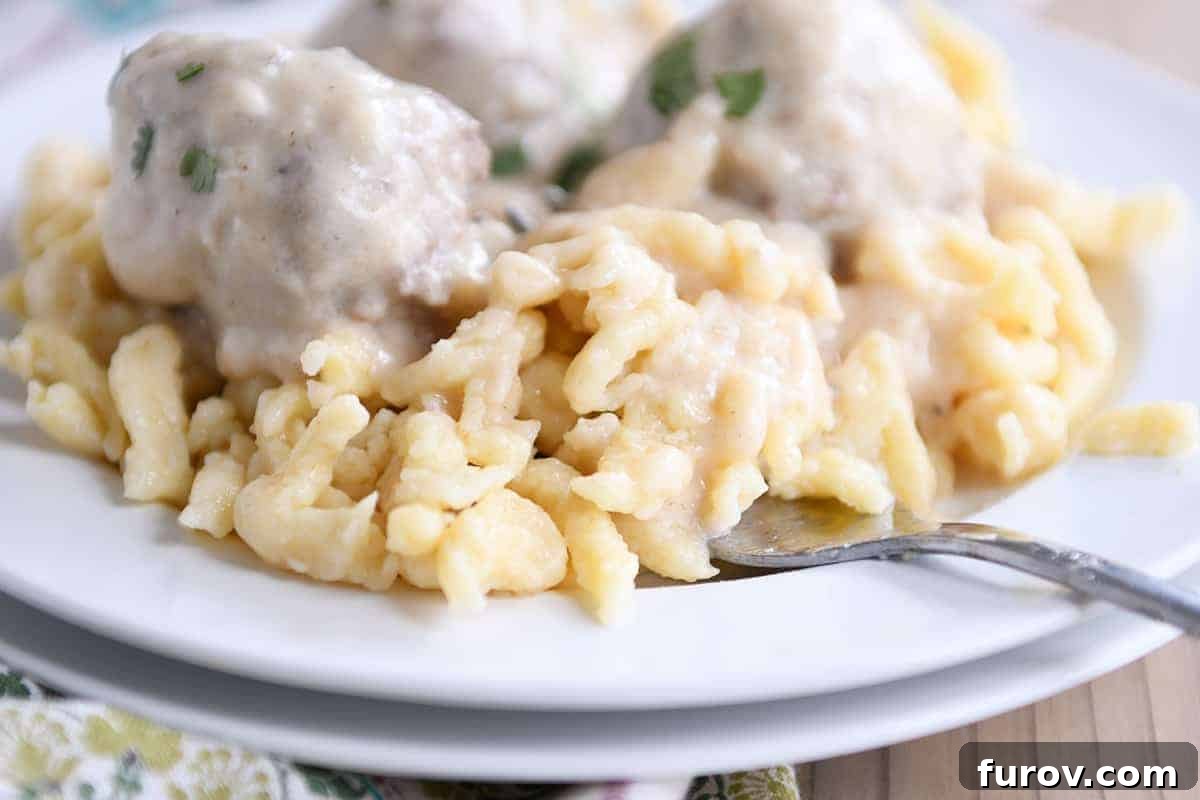
Discover the ultimate homemade German Spaetzle recipe! These tender, buttery dumplings are incredibly easy to make from scratch and perfect as a side dish or main course. Get ready for a foolproof guide to crafting your own delightful Spaetzle, ideal for pairing with Beef Stroganoff, cheese, or simply browned butter.
Last week, I shared a quick peek at my homemade Spaetzle dinner on Instagram, and the response was overwhelming! So many of you expressed an intense love for these tiny German dumplings, and many more were curious to try them for the first time. It became clear that a detailed, easy-to-follow Spaetzle recipe was a must-share. For those unfamiliar, Spaetzle (pronounced “shpeht-zluh” or “spetz-ul”) is a traditional German egg noodle or dumpling, renowned for its soft, chewy texture and incredible versatility.
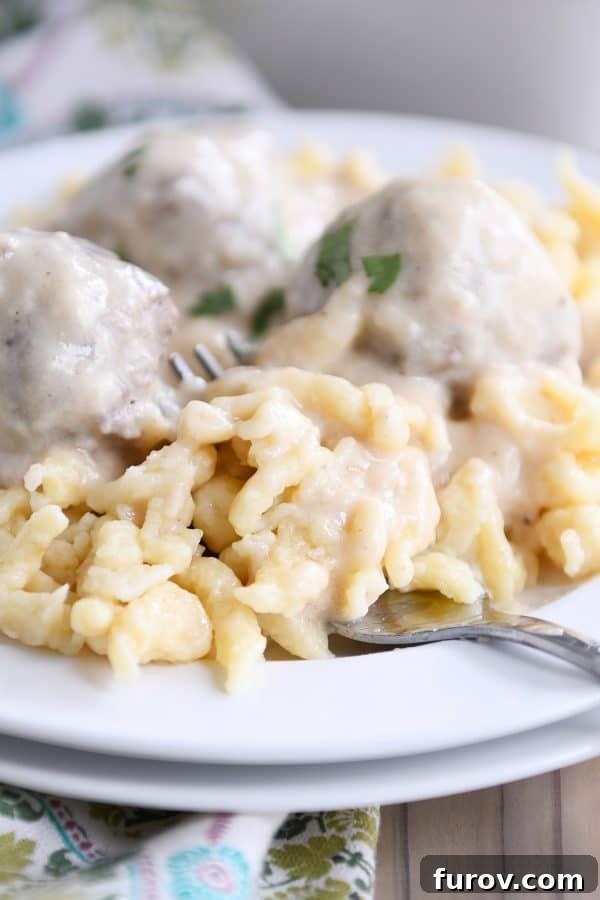
Living through times when we spend more time at home, there’s truly no better moment to delve into the comforting art of home cooking. Making Spaetzle from scratch is surprisingly quick, rewarding, and a fantastic way to bring a touch of German culinary tradition to your kitchen. My family, especially the kids, absolutely adores it, and I’m confident yours will too. Today, I’m excited to guide you through every step: from preparing the simple batter and cooking the Spaetzle (with or without a dedicated Spaetzle maker!) to exploring the best ways to serve these delightful little noodles.
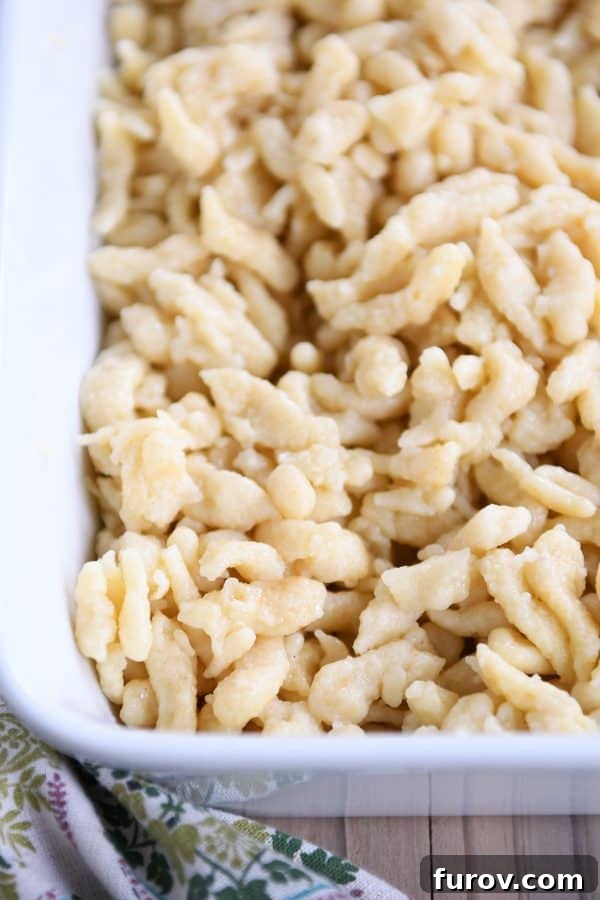
What is Spaetzle? A German Delicacy
Before we dive into the making, let’s clarify what Spaetzle actually is. Often described as a small, irregular egg noodle or dumpling, Spaetzle is a staple in German, Austrian, and Hungarian cuisines. The name “Spaetzle” literally translates to “little sparrow” in Swabian dialect, likely referring to its small, somewhat uneven shape, reminiscent of little bird bodies. Unlike pasta, which is rolled and cut, Spaetzle is typically made by pushing a soft dough through a specialized tool or colander directly into boiling water or broth. This unique method gives it its characteristic chewy-yet-tender texture and delightful “chubby” appearance. It’s a fantastic alternative to traditional pasta or potatoes and truly shines when homemade.
The Simplicity of Homemade Spaetzle
One of the most appealing aspects of Spaetzle is how incredibly easy it is to prepare from scratch. Forget complicated techniques or long proofing times. This recipe simplifies the process, making it accessible for even novice cooks. The basic Spaetzle batter requires just a few pantry staples, and the mixing process is straightforward.
For mixing the quick batter, a food processor is my go-to for its efficiency, ensuring a perfectly smooth and lump-free consistency in mere seconds. However, don’t fret if you don’t own one! A sturdy whisk and a mixing bowl, an electric hand mixer, or even a blender will yield excellent results. The key is to thoroughly combine the ingredients until the batter is uniform.
The core ingredients for this authentic homemade German Spaetzle dough are:
- Milk (I prefer 2% for richness)
- Large Eggs
- All-Purpose Flour
- Salt
For an extra layer of traditional German flavor, you have the option to add a pinch of freshly ground nutmeg. While this adds a wonderfully authentic aroma, my family often prefers it without, so feel free to adjust to your personal taste preferences. It’s delicious either way!
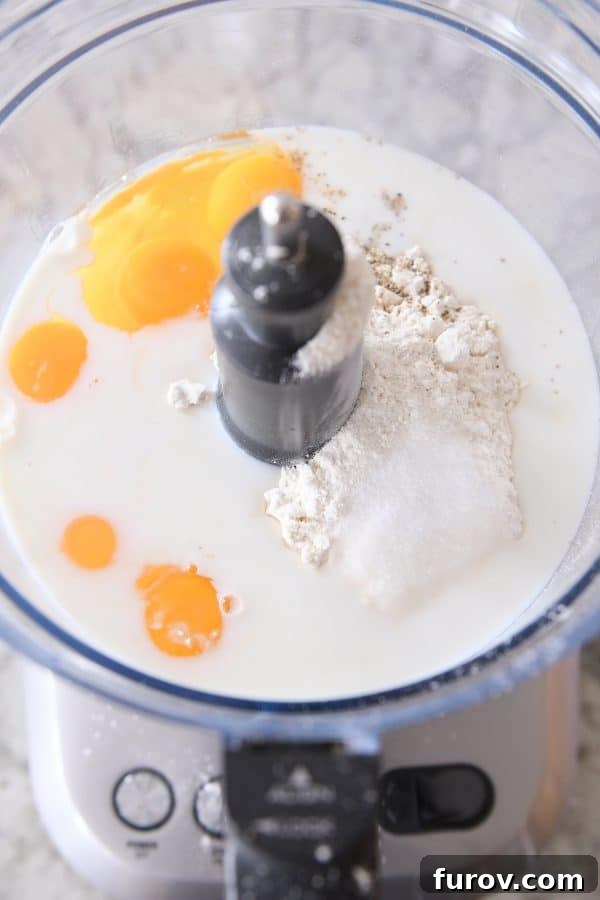
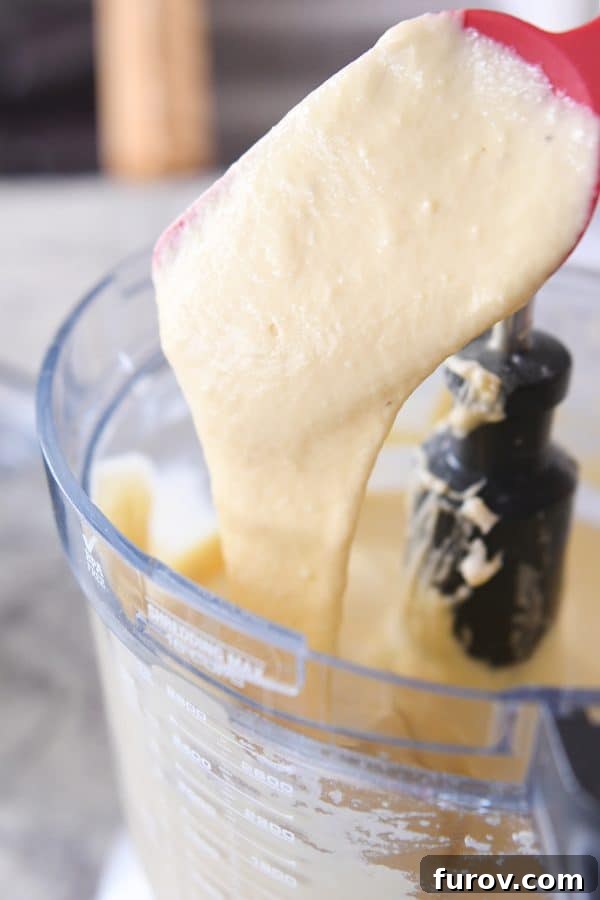
Once your ingredients are thoroughly mixed, the batter should be exceptionally smooth, with no flour clumps in sight. The ideal consistency is crucial: it should be pourable yet thick enough to form substantial ribbons as it drips from a spatula or spoon. It should not be overly runny like crepe batter, nor too thick like bread dough. This “pourable but not too runny” texture is essential because the Spaetzle dumplings are created by pressing this batter through holes. If it’s too thick, it will be difficult to push through, and if it’s too thin, the noodles might disintegrate or be too delicate.
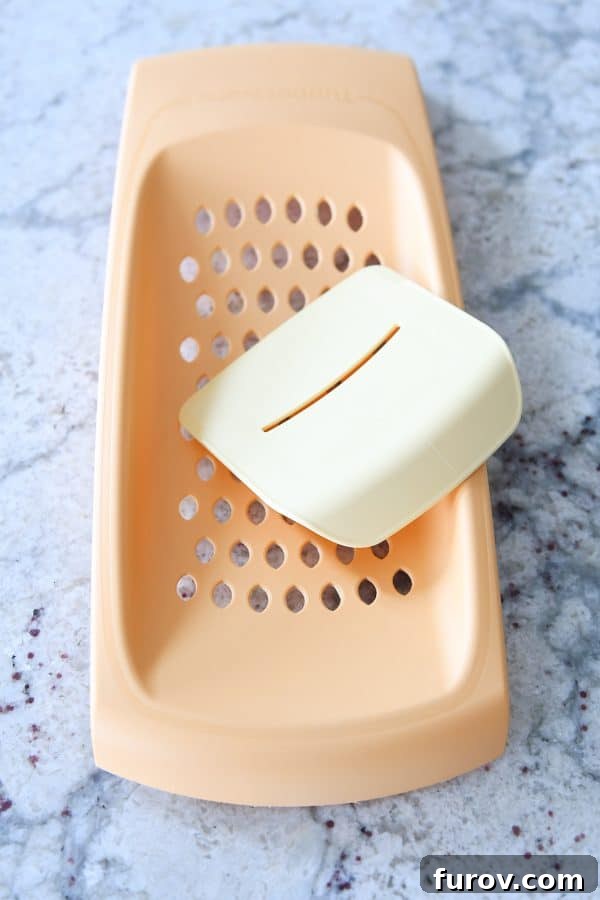
My Treasured Spaetzle Maker and Other Options
My journey with Spaetzle began years ago in Wisconsin, thanks to dear friends, Angela and Clint. They invited us over for dinner and introduced us to the marvel of homemade Spaetzle served alongside a rich stroganoff. It was an instant hit with my entire family. Angela not only shared her recipe but also gifted me a genuine Spaetzle maker from Germany when we moved. This tool has become an indispensable and cherished item in my kitchen, sparking playful debates among my children about who will inherit this handy gadget one day!
While my specific German Spaetzle maker can be a bit tricky to find in the U.S., several excellent alternatives are available. You can find similar models here and another well-reviewed option here. These tools typically sit over a pot of boiling water, allowing you to scrape the batter through holes, creating perfectly formed Spaetzle. However, as you’ll see below, a dedicated maker isn’t absolutely necessary to enjoy homemade Spaetzle.
Cooking Your Perfect Homemade Spaetzle
Once your batter is ready, the cooking process is quick and simple. My friend Angela taught me a brilliant tip: cook the Spaetzle in boiling broth instead of plain water. This significantly enhances the flavor! I usually opt for a 50/50 mix of chicken broth and water, but if you’re using only water, make sure to salt it generously before bringing it to a rolling boil. A wide, shallow pot works best for this.
To cook, position your Spaetzle maker (or chosen alternative) directly over the pot of boiling liquid. Spoon a generous amount of batter onto the maker. Using the scraper (or a spatula), gently press and scrape the batter back and forth. The batter will fall through the holes, forming individual little dumplings that drop directly into the hot liquid below. If your batter consistency is just right, the Spaetzle will detach easily without much effort.
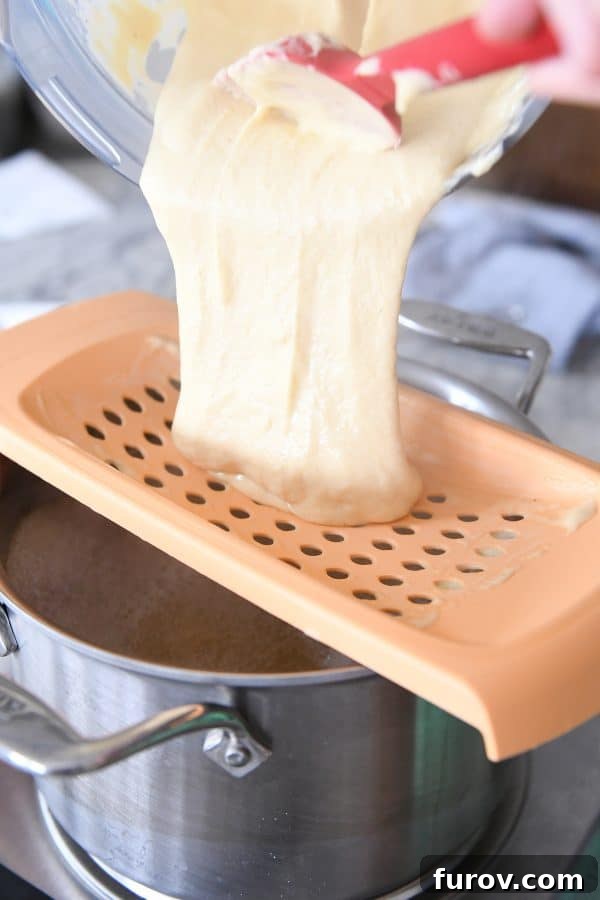
After a batch of Spaetzle has dropped into the pot, give the maker a light tap to release any clinging bits of dough, then remove it while the noodles cook. Spaetzle cooks remarkably fast. In just 3-5 minutes, these charming little noodles will puff up slightly and float to the surface of the broth, indicating they are done. You’ll notice their wonderfully irregular and imperfect shapes – this is the hallmark beauty of homemade Spaetzle!
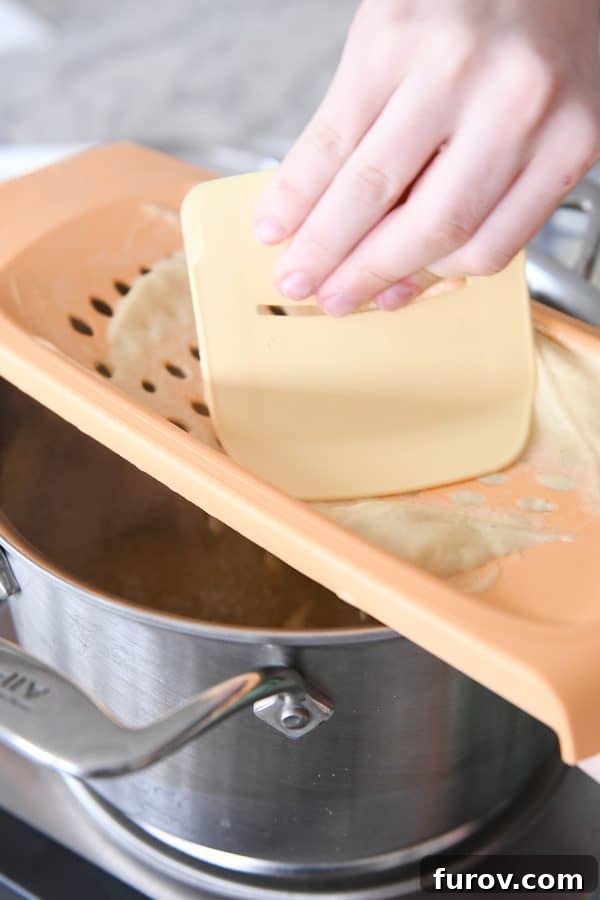
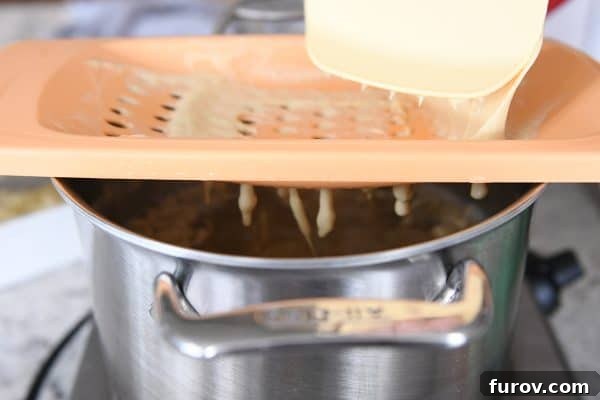
Once cooked, use a fine mesh strainer or a slotted spoon to scoop them out, allowing the broth to drain back into the pot for subsequent batches. This method ensures maximum flavor transfer and efficiency. Continue cooking in batches until all the batter is used. Your freshly cooked Spaetzle is now ready to be transformed into a memorable meal!
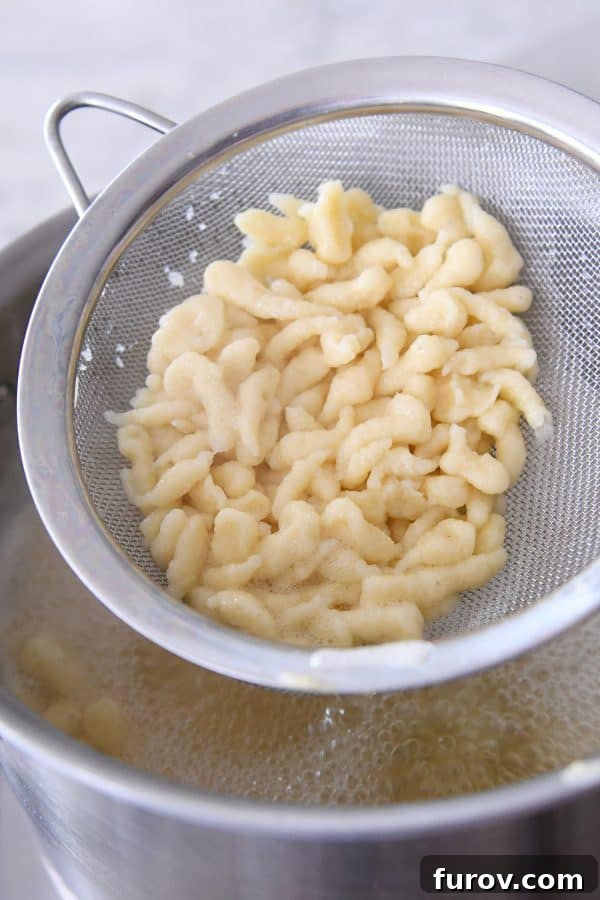
No Spaetzle Maker? No Problem! Alternative Methods
Even without a specialized Spaetzle maker, you can still easily enjoy the deliciousness of homemade German Spaetzle! There are several simple household items you can use to achieve similar results:
- Using a Colander: This is arguably the easiest alternative. Grab a colander with medium-sized holes (not too big, not too small). Hold it firmly above your pot of boiling water or broth. Pour a scoop of batter into the colander and use a sturdy spatula to press the batter through the holes. It’s important to hold the colander above the boiling water, rather than resting it on the pot’s rim, to prevent cooked dough from clogging the holes.
- The Potato Ricer Method: A potato ricer, typically used for mashing potatoes, works exceptionally well for making Spaetzle. Load the batter into the ricer and press it directly over the boiling liquid. The results are wonderfully uniform and delicate noodles.
- The Cutting Board (Traditional Knife) Method: For the truly adventurous, or those seeking the most traditional approach, the cutting board and knife method is a time-honored technique. You spread a thin layer of batter onto a wet cutting board and, using a sharp knife, carefully scrape small slivers of dough directly into the boiling water. This method produces truly unique, rustic shapes and requires a bit of practice, but is incredibly satisfying once mastered. You can see a visual example of this cutting board technique here.
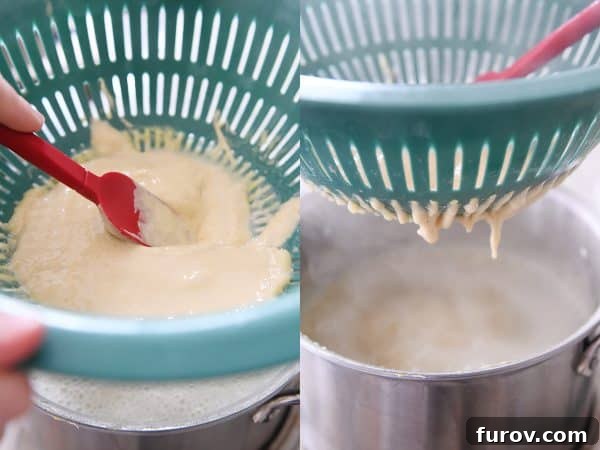
How to Serve Spaetzle: Endless Delicious Possibilities
Once your homemade German Spaetzle is cooked, the real fun begins: deciding how to serve it! While there are countless traditions and strong opinions about Spaetzle pairings across Germany and beyond, I firmly believe there are no wrong answers when it comes to enjoying these versatile dumplings. Here are some of our favorite ways:
- Browned Butter Delight: For a simple yet incredibly flavorful experience, toss the freshly cooked Spaetzle with rich, nutty browned butter. The butter adds a depth of flavor that complements the tender noodles beautifully.
- Butter & Cheese Sauté: Take it up a notch by sautéing the cooked Spaetzle in a skillet with butter until lightly golden, then stirring in your favorite cheese. Gouda is a fantastic choice, melting into a creamy, dreamy coating.
- Classic Käsespätzle: Layer hot, cooked Spaetzle with generous amounts of shredded cheese (Emmental or Gruyère are traditional, but Gouda works wonders) and caramelized onions for a German-style macaroni and cheese known as Käsespätzle. Enjoy it plain or alongside a hearty meat dish.
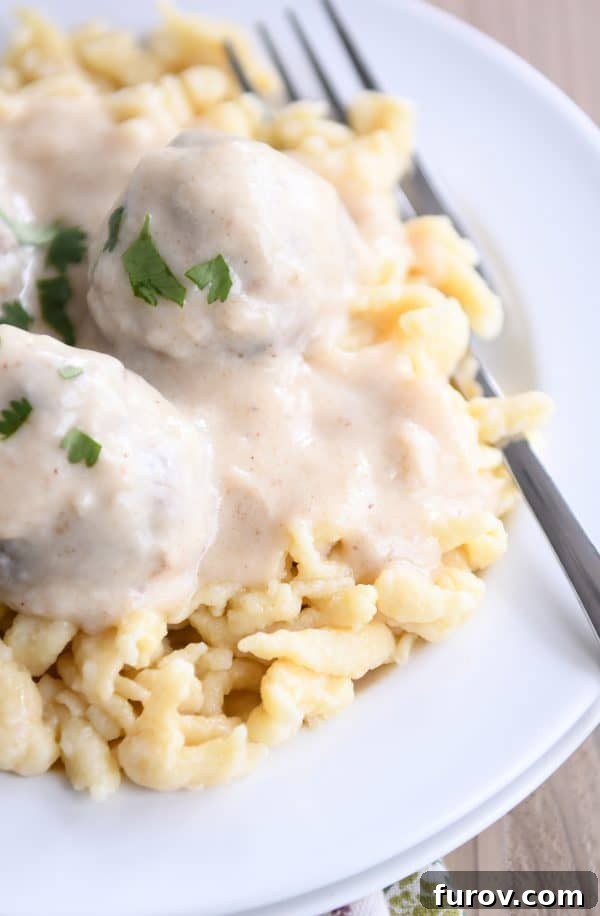
- The Ultimate Sidekick: Spaetzle is an ideal accompaniment to a wide range of main courses. It’s truly spectacular with Beef Stroganoff, absorbing all that creamy, savory sauce. It also pairs wonderfully with Swedish meatballs, goulash, roasted meats, or any dish with a rich gravy or sauce.
- Crispy Variations: For added texture, you can pan-fry cooked Spaetzle until crispy after boiling. This adds a delightful crunch that contrasts with the soft interior.
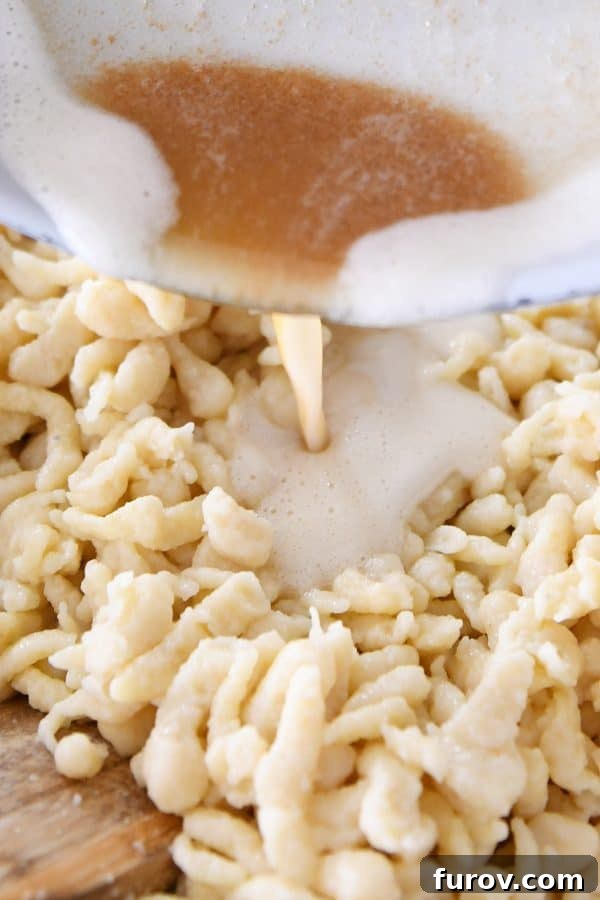
While homemade German Spaetzle might not grace your dinner table every single day, I have a strong feeling that once you experience its tender chewiness and comforting flavor, it will quickly become a cherished favorite in your culinary repertoire. Seriously, earning those “rock star points” for making homemade Spaetzle at least once is a badge of honor every home cook should aim for!
If you’re already a seasoned Spaetzle enthusiast, I’d love to hear your favorite ways to make and serve it in the comments below! I’ll be eagerly awaiting your Spaetzle reports. Don’t underestimate yourself – you absolutely can do this!
Prepare to be genuinely surprised by how simple these chubby little dumplings are to create and, more importantly, how incredibly delicious they are in real life. It’s a truly satisfying dish that promises comfort and a taste of authentic German tradition with every bite.
One Year Ago: Big Fat Double Dark Chocolate Cookies {Almost Levain Bakery Knockoff}
Two Years Ago: Caramel Oat Chocolate Chunk Shortbread Bars
Three Years Ago: Amazing Instant Pot Mashed Potatoes
Four Years Ago: Overnight Strawberry Cream Cheese Sweet Rolls
Five Years Ago: Lemon Sticky Buns with Lemony Cream Cheese Glaze
Six Years Ago: Skillet Baked Spaghetti {One Pot, 30-Minute Meal}
Seven Years Ago: Classic Deviled Eggs
Eight Years Ago: Butternut Squash Risotto
Homemade German Spaetzle Noodles
Pin
Rate
Ingredients
- 1 cup milk, I use 2%
- 6 large eggs
- 3 ½ cups (497 g) all-purpose flour
- 1 ½ teaspoons salt
- ¼ teaspoon ground nutmeg, optional
Instructions
-
Mix all of the ingredients together until very smooth. I use a food processor but a whisk, blender, or hand mixer will work well, too. The consistency of the batter should be pourable but not super runny (it should drop off a spatula or spoon in thick ribbons).
-
Bring a pot of lightly salted water or broth (about 2 to 3 quarts total) to a boil. Press the batter through a spaetzle maker in batches (see notes for alternate methods). Cook each batch of spaetzle for 4-6 minutes until it is puffy and rises to the top of the water/broth.
-
Lift the spaetzle out with a fine mesh strainer or slotted spoon (so the water/broth can be used for subsequent batches).
-
Saute cooked spaetzle in butter (or browned butter!) or serve plain spaetzle with stroganoff or other favorite gravy/sauce. It’s also delicious tossed with butter and cheese.
Notes
Recommended Products
Recipe Source: This recipe has been slightly adapted over the years from a beloved original shared by my friend, Angela R., who introduced me to the wonderful world of homemade Spaetzle. My adaptations include adjusting the milk quantity, adding an extra egg for tenderness, and a bit more salt to enhance the flavor.