
Wheat and Wheat Grinding 101: Your Essential Guide to Whole Grains
Welcome to the much-anticipated first installment of our comprehensive Wheat and Wheat Grinding 101 series! Embarking on a journey into the world of whole grains is not just about mastering a skill; it’s about embracing a healthier lifestyle, unlocking superior flavors, and enjoying the incredible satisfaction of creating wholesome food from scratch. While my personal excitement for wheat might seem a little over the top, the benefits of understanding and utilizing this ancient grain in your kitchen are truly transformative.
For many years, my wheat grinder has been an indispensable tool in my home, enabling my family to enjoy the unparalleled freshness and nutritional richness of homemade, 100% whole wheat bread and countless other delicious creations. The initial learning curve, navigating the nuances of different wheat varieties and the grinding process, was a journey of discovery. This series is designed to demystify that process for you, offering practical insights and actionable advice to simplify your whole grain adventure.
In the coming weeks, anticipate exciting new installments that will delve into everything from selecting the perfect wheat grinder (including in-depth reviews) to exploring innovative ways to incorporate wheat berries and other whole grains into your daily diet, alongside a wealth of valuable resources. Today, our focus is on building a strong foundation: understanding the primary types of wheat, their distinct characteristics, optimal culinary applications, reliable sources for purchase, and effective storage methods.
Whether you’re an experienced baker keen on enhancing your sourdough creations or simply looking to integrate more nutrient-dense whole grains into your family’s meals, wheat berries and their freshly ground flour offer astonishing versatility and health advantages. Let’s begin this fascinating exploration!
Important Disclaimer: This guide centers on common, easily accessible wheat varieties that I have personally used with consistent success over many years. These are my go-to choices, but it’s important to remember that the world of wheat is incredibly diverse. Feel free to research and experiment with other unique varieties like Kamut, Spelt, or Einkorn as your confidence grows. My primary goal here is to provide a robust starting point for newcomers and a valuable reference for seasoned whole grain enthusiasts alike.
What Exactly Are Wheat Berries? Your Whole Grain Foundation
Before we explore the distinct varieties, let’s establish a clear understanding of the term: wheat berries. These are the whole, unprocessed kernels of wheat, harvested and hulled but not yet milled into flour. A wheat berry is a complete package, comprising three vital components: the bran, the germ, and the endosperm. The bran is the fiber-rich outer layer, packed with antioxidants and B vitamins. The germ is the nutrient-dense embryo, containing healthy fats, vitamin E, and more B vitamins. The endosperm is the starchy core, providing energy. It’s this complete composition that earns whole wheat its superior nutritional profile compared to refined flours, which have been stripped of the bran and germ.
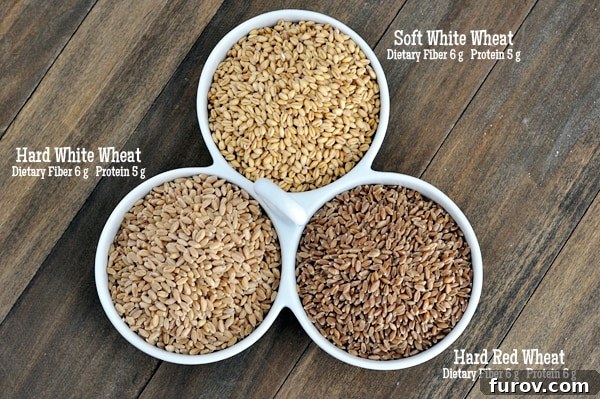
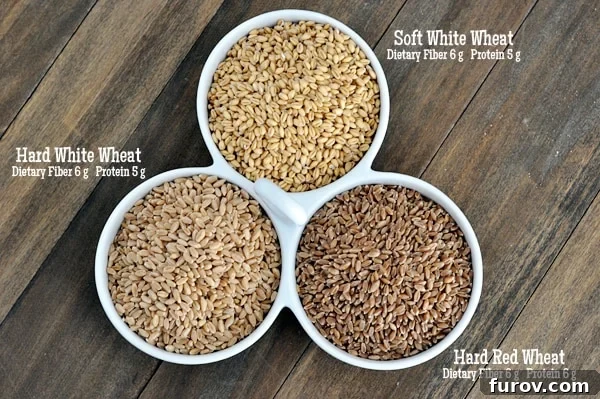
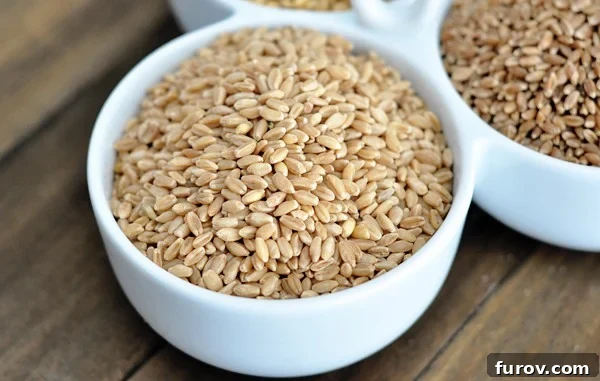
When you encounter the term “berries” throughout this guide, envision these intact, wholesome kernels, rather than fresh fruit. Visually, you’ll immediately notice differences in both color and shape among various wheat berry types, as depicted in the images below. These subtle distinctions are key indicators of their unique baking properties and protein content. For instance, a quarter cup of hard red wheat berries typically contains slightly more protein than the same amount of hard white or soft white varieties, directly influencing gluten development and overall baking performance in your recipes.

Understanding Wheat Varieties: Soft White, Hard Red, and Hard White
The extensive world of wheat can be categorized in numerous ways, but for the home baker, focusing on the primary differences between soft white, hard red, and hard white wheat is crucial for achieving desired results. Each type brings distinct characteristics to the table, making it uniquely suited for specific culinary applications. Understanding these distinctions will empower you to select the perfect wheat berry for your next baking project.
Soft White Wheat: The Choice for Lightness and Tenderness
Our first variety is soft white wheat. Its berries are typically rounder in shape and boast a lighter, more yellowish hue when compared to the hard wheat varieties. When finely ground, soft white wheat yields a flour that is notably lower in protein and gluten content. This characteristic makes it the ideal choice for creating delicate, tender baked goods that don’t require a strong, elastic gluten structure. Imagine perfectly flaky pie crusts, crumbly cookies, moist cakes, tender muffins, and quick breads. Its mild, almost neutral flavor ensures that it complements other ingredients without overpowering them, allowing the true taste of your recipe to shine through. This makes it an excellent substitute for all-purpose flour in many non-yeasted recipes, providing a whole grain boost without a heavy texture.
Hard Red Wheat: For Robustness, Heartiness, and Strong Structure
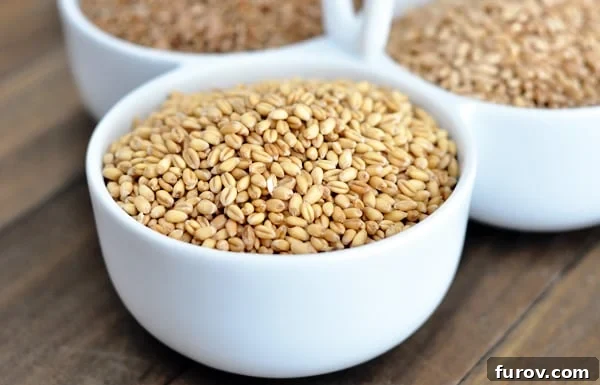
Next, we examine hard red wheat, which is easily recognized by its noticeably darker, reddish-brown color. This variety stands out due to its higher protein content, which directly translates to stronger gluten development when kneaded. Consequently, flour milled from hard red wheat is exceptionally well-suited for hearty, robust breads and other baked goods that demand a strong, elastic structure to rise properly. This includes artisanal rustic loaves, dense sandwich breads, and most traditional yeast-leavened recipes where a substantial crumb is desired.
However, it’s worth noting that baking with hard red wheat flour typically results in a finished product with a darker color and a denser texture. Beginners in whole wheat baking sometimes encounter disappointment if their first loaf made with hard red wheat turns out heavier and darker than anticipated. This is not a flaw, but rather a natural characteristic of the grain itself. While I am by no means “anti-red wheat”—it certainly has its valuable place in my baking repertoire—I often advise newcomers to begin their whole grain journey with hard white wheat. It tends to be more forgiving for developing gluten and achieving a lighter, more tender whole wheat loaf, which can lead to a more positive initial experience. Hard red wheat can, at times, inadvertently contribute to the misconception that all whole wheat bread is inherently heavy or “brick-like,” a stereotype we aim to overcome by highlighting its specific strengths and appropriate uses.
Hard White Wheat: The Versatile All-Rounder for Everyday Baking
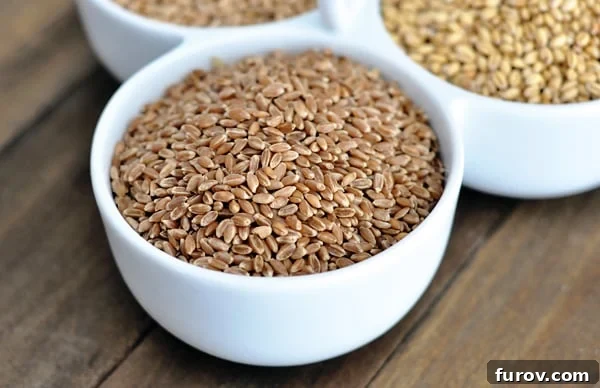
Finally, we turn our attention to hard white wheat. This variety shares the desirable light color of soft white wheat, but its berries are typically slightly longer and thinner. In my kitchen, this is truly the workhorse and, arguably, the most versatile option for home bakers transitioning to whole grains. Hard white wheat masterfully combines the strong gluten potential characteristic of hard wheats with a milder flavor and lighter appearance than hard red wheat. This makes it an exceptional all-purpose whole wheat flour.
Hard white wheat excels across an impressive spectrum of applications, from crafting light and airy yeast-leavened breads and dinner rolls to baking delicious cookies, muffins, and a myriad of other everyday treats. If you are looking for a single type of wheat berry to begin your flour-grinding adventure, hard white wheat is an outstanding choice that consistently delivers fantastic results. It allows you to create wholesome baked goods that are lighter in color and possess a less assertive, more palatable flavor profile than those made with hard red wheat, making it an ideal bridge for those accustomed to refined white flour.
The Art of Grinding Wheat Berries into Fresh Flour
Once you’ve selected your wheat berries, the true magic of whole grain baking begins with grinding them into fresh flour. The significant advantage of owning a grain mill or wheat grinder lies in your ability to customize the fineness of your flour. Whether your recipe calls for a coarse meal suitable for cracked wheat cereal or an ultra-fine flour for delicate pastries, your mill provides the flexibility to achieve the precise texture you need. My personal approach for most baking applications is to grind the wheat as finely as my mill permits. This fine texture is critical because it greatly facilitates a one-to-one substitution of fresh whole wheat flour for conventional all-purpose flour in many recipes, ensuring smoother transitions to whole grain baking without drastically compromising the final product’s texture or rise.
While a detailed exploration of specific wheat grinders will be featured in an upcoming post, a useful general guideline to remember is that one cup of whole wheat berries typically yields approximately two cups of freshly ground flour. However, measuring freshly ground flour requires a slightly different approach due to its inherent airiness. As the flour exits the grinder, it becomes highly aerated, making it less dense than settled, commercially packaged flour. This is precisely why I often use approximate flour amounts in my whole wheat bread recipes, prioritizing the feel of the dough over overly precise volumetric measurements.
To ensure more accurate measurements with freshly ground flour, you have a couple of reliable options. You can either allow the flour to settle naturally for about 30 minutes, giving the incorporated air time to dissipate, or if you plan to use it immediately, gently pack the flour into your measuring cup slightly more firmly than you would with settled flour. This technique helps to account for the initial fluffiness and achieves a more consistent density crucial for successful baking. You’ll also observe that the color of your freshly ground flour will vary slightly, directly reflecting the distinct hues of the wheat berries from which it was milled.
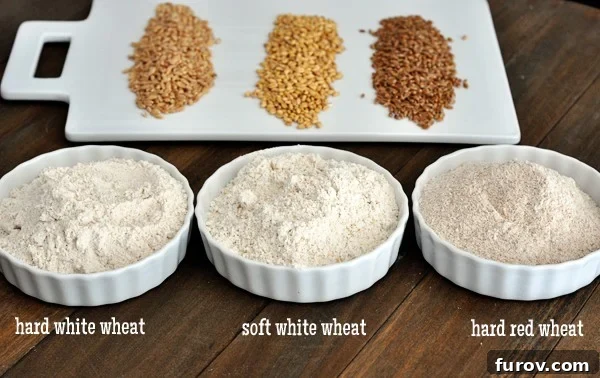
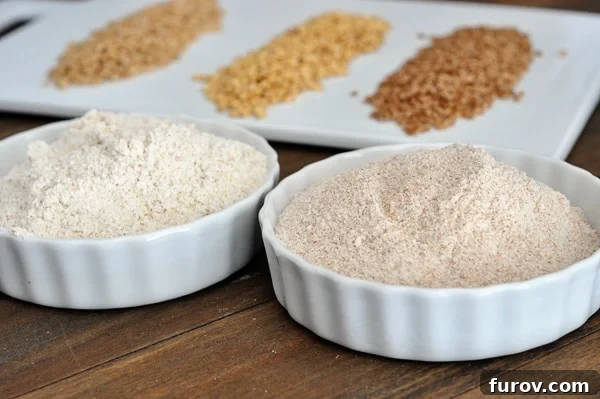
Though subtle in the image below, the hard red wheat flour (on the far right) exhibits a slightly coarser texture and a deeper color when compared to the soft white wheat flour. These visual cues serve as helpful identifiers, allowing you to easily distinguish between your freshly milled flours and understand their unique properties.
Embrace Experimentation: Discover Your Perfect Blend
As I’ve shared, my kitchen relies predominantly on hard white wheat flour for roughly 90% of my baking. However, I recently undertook a project to utilize a substantial 100-pound reserve of hard red wheat that had been patiently stored for a decade. For the past year, I’ve been experimenting with grinding a blend of hard red and hard white wheat together for my bread making. Interestingly, after preparing this tutorial and baking with all three distinct varieties, I made a delightful discovery: the loaf crafted from this specific blend was, arguably, one of the finest I’ve ever produced! This experience powerfully reinforces a crucial principle: your ideal type of wheat, or even your preferred blend, will likely evolve over time, tailored by your personal taste preferences, specific baking objectives, and ongoing culinary experiments. Do not hesitate to mix, match, and explore different combinations to find what truly resonates with your palate and baking style.
Sourcing Quality Wheat Berries: Where to Buy
Acquiring high-quality wheat berries is the essential first step toward enjoying the unparalleled freshness and nutritional benefits of homemade whole grain baked goods. While availability can certainly vary based on your geographical location, there are several reliable avenues to explore. It’s often advisable to investigate local options first, not only to support community businesses but also to potentially access fresher products, reduce carbon footprint, and sometimes even benefit from better pricing despite shipping considerations.

Local Retailers, Organic Mills, and Farms
- Local Organic Mills: If you are fortunate enough to reside near an organic grain mill, this is an exceptional resource. These mills typically provide the freshest, highest-quality grains, often with options for bulk purchases that can be more economical. While some mills offer shipping services, it’s prudent to remember that freight costs for heavy wheat berries can be substantial.
- Mainstream and Specialty Grocery Stores: Many larger grocery chains and health food stores are increasingly stocking wheat berries. Be sure to check the natural foods aisle, the bulk bins section, or even the lower shelves near the conventional flour section. Stores like Winco, for instance, are known to carry wheat berries in convenient 25-pound bags, providing a great starting point for home storage.
- Local Farms and Farmers’ Markets: Explore your local farmers’ markets, agricultural co-ops, or contact farms directly in your vicinity. Many small-scale and sustainable farmers are cultivating heritage grains, offering a unique opportunity to purchase directly from the source. A quick online search for “local grain farms [your city/state]” or “organic wheat berries near me” can yield surprisingly fruitful results.
Reliable Online Suppliers for Bulk Wheat
For those living in areas with limited local options, online retailers provide a convenient and often essential means of purchasing wheat berries, frequently in bulk quantities. When considering online purchases, always factor in shipping costs, which can significantly impact your total expenditure. Here are a few highly regarded online resources (please note: I am not directly affiliated with these companies, but I have personally purchased various products from them in the past with consistently positive experiences):
- Pleasant Hill Grain: This platform is frequently cited as one of the more reasonably priced options for online bulk wheat purchases, offering a robust selection of different wheat varieties and related milling equipment.
- Emergency Essentials: Renowned for their comprehensive food storage solutions, they often feature competitive pricing and sales on grains, making them a surprisingly excellent option for stocking up on wheat berries.
- Shelf Reliance (Thrive Life): While their products may be at a slightly higher price point, they offer the added convenience of scheduled shipments and frequently carry non-GMO wheat. Their specialization lies in long-term, high-quality food storage solutions.
Community and Organizational Food Storage Resources
Another excellent and often overlooked resource for bulk grains is community home storage centers. For instance, the LDS (Mormon) Home Storage Centers are openly accessible to the public, irrespective of church membership, and provide dry goods such as wheat at remarkably low prices. This cost-efficiency is largely due to their unique model where patrons participate in the packaging process, personally filling and sealing #10 cans or Mylar bags, thereby minimizing labor costs.
- Locate a Home Storage Center: Visit the official Provident Living website to find a center near you. It’s always a good practice to call ahead for specific details on operating hours, current product availability, and any procedures.
- Online Ordering Option: If a physical center is not conveniently located, you can also order #10 cans of wheat (typically hard white or hard red) directly online at store.lds.org. A substantial 30-pound supply often costs around $33, and shipping within the continental United States is provided free of charge. This represents an incredibly cost-effective and convenient option for building your long-term food storage.
We warmly invite you to share any other fantastic local or online resources you’ve discovered for purchasing quality wheat berries in the comments section below! Your valuable insights significantly enrich our collective knowledge and benefit fellow whole grain enthusiasts.
Storing Wheat for Longevity: Keeping Your Grains Fresh and Nutritious
Proper storage is absolutely paramount to preserving the quality, nutritional integrity, and extending the shelf life of your wheat berries. When stored correctly under optimal conditions, whole wheat berries possess an astonishing shelf life, remaining viable for consumption for 20 years or even longer. This makes them an exceptional choice for long-term food storage. The foundational rule for storing most dry goods, including wheat berries, is to maintain them in a dry, cool, and dark place, protected from extreme temperature fluctuations and moisture.

Long-Term vs. Short-Term Storage Solutions
- Long-Term Storage (Sealed Containers): For maximum longevity, sealed containers are indispensable. These protect your wheat berries from moisture, oxygen, and potential pests. My personal long-term supply is meticulously kept in sealed #10 cans and food-grade plastic buckets, stored in a cool, dry section of my basement. For these long-term solutions, consider incorporating oxygen absorbers. These small packets effectively eliminate residual oxygen within the container, dramatically extending shelf life by preventing insect infestations, inhibiting mold growth, and delaying rancidity. Mylar bags placed inside sturdy buckets also offer superior protection, creating an excellent barrier against environmental factors.
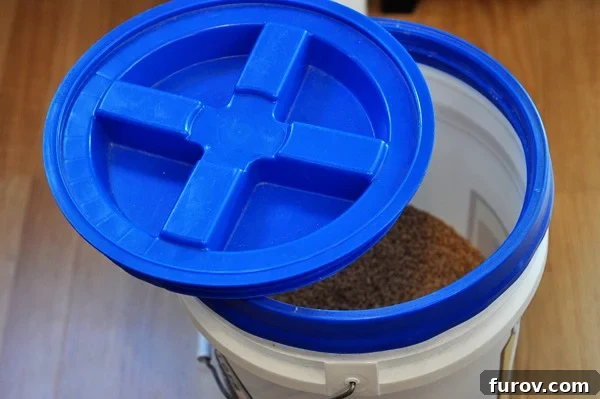
- Short-Term/Working Storage (Accessible Containers): For daily or weekly use, an easily accessible, unsealed container in your kitchen is highly practical. I maintain a large 50-pound food-grade bucket in my kitchen, which I regularly replenish from my long-term storage or newly purchased bags. While this working bucket isn’t hermetically sealed for decades, its frequent turnover ensures the contents remain fresh. As long as the lid is kept tightly closed, I have fortunately never encountered issues with pests in this container. The only consistent “intruders” are small, curious hands eager to play with the grains!

The Invaluable Advantage of Gamma Seal Lids
For your active kitchen storage bucket, a two-piece plastic ring lid that screws on and off, commonly known as a “Gamma Seal Lid,” is an ingenious invention. This brilliant design completely eliminates the frustration of prying off conventional bucket lids, making daily access to your wheat berries effortless and significantly more convenient. Gamma Seal Lids are specifically engineered to fit standard food-grade 5-gallon (or 50-pound) buckets, creating an airtight yet easily removable seal. These highly recommended lids can typically be found at most of the online wheat resource links mentioned earlier, such as Pleasant Hill Grain. They represent a worthwhile investment for anyone who regularly uses and stores bulk grains.
Creative Culinary Uses for Whole Wheat Berries and Flour
Now, let’s transition to the most exciting part: the myriad of delicious possibilities that await! While using freshly ground whole wheat flour in breads and rolls is a primary motivation for many, the versatility of both whole wheat berries and their freshly milled flour extends far beyond the traditional loaf. Incorporating whole wheat into your diet not only significantly boosts your fiber and nutrient intake but also introduces unique textures and rich flavors to a wide array of dishes.

Beyond the Loaf: Innovative Ways to Utilize Wheat in Your Kitchen
On my website, you’ll discover dozens of yeast recipes where I consistently integrate whole wheat flour as a substitute for or in combination with all-purpose flour for various rolls and breads. My tried-and-true recipe for 100% whole wheat bread is always a cherished go-to. For other yeast-leavened items, I typically use at least half whole wheat flour, adjusting the ratio as needed, though I do occasionally indulge in 100% white flour for specific recipes like homemade ciabatta or rustic crusty bread. But let’s delve into some truly “outside the bread box” applications that showcase the incredible versatility of wheat:
- Homemade Cream of Wheat Cereal: For a supremely hearty and wholesome breakfast, lightly toast your chosen wheat berries in the oven until they achieve a delicate golden hue. Once cooled, grind them in your grain mill or even a powerful blender to a coarse, hot cereal texture—finer than cracked wheat but not as fine as flour. Cook one cup of these toasted, ground wheat berries in three cups of water (or milk for a richer, creamier consistency) for a wonderfully comforting, warm cereal. This is genuinely one of my boys’ favorite breakfast choices, especially when served with fresh blueberries and a touch of brown sugar and milk!
- Nutritious Pancake and Waffle Mixes: Elevate your breakfast staples by opting for 100% whole wheat flour. Our favorite oatmeal pancake mix, for instance, is crafted entirely with whole wheat flour, yielding a hearty, healthy, and incredibly flavorful start to the day.
- Whole Wheat Blender Pancakes/Waffles: This is a truly innovative and incredibly convenient approach! This unique recipe completely bypasses flour. Instead, it begins with whole wheat berries that are soaked and then blended directly with buttermilk and other ingredients. This ingenious method has become another regular breakfast staple in our home, offering a remarkably easy way to enjoy the full nutritional benefits of whole grains. Any type of wheat berry works wonderfully for these.
- Traditional Cracked Wheat Cereal: If your wheat grinder features a coarse setting, you can effortlessly prepare traditional cracked wheat cereal. Simply grind the berries to a textured, broken consistency perfect for cooking as a hot breakfast or for adding delightful texture to various bread recipes.
- Wheat Berries as a Meat Extender: This ingenious culinary hack is a game-changer for both budgeting and significantly boosting nutrition! Cooked wheat berries (often cracked wheat for better texture integration) can be simmered directly with ground meat to extend your meals without sacrificing flavor or satisfaction. A friend once served me a beef stroganoff so incredibly tasty that I eagerly asked for the recipe, only for her to sheepishly admit that at least half of the “meat” in the dish was actually cooked wheat berries! I was genuinely unable to tell the difference. This method not only effectively stretches your protein but also infuses meals like tacos, chili, casseroles, or stroganoff with substantial fiber and nutrients. The wheat berries brilliantly absorb the rich flavors of the dish, becoming virtually indistinguishable from the meat. A quick online search for “wheat meat extender” will reveal even more creative applications for this smart technique.
- Wholesome Wheat Berry Salads: Cooked wheat berries make an outstanding, chewy, and nutritious base for vibrant grain salads. Combine them with an assortment of fresh vegetables, aromatic herbs, a light and zesty vinaigrette, and perhaps some crumbled feta cheese or chickpeas for a complete, wholesome, and incredibly satisfying meal.
- Sprouted Wheat Berries: For an additional boost of nutrition and enhanced digestibility, you can easily sprout wheat berries. Once sprouted, they can be added to salads for a fresh crunch, incorporated into sandwiches, or even blended into smoothies for a powerful nutrient punch.
That concludes our insightful first deep dive into the truly wonderful world of wheat and the art of wheat grinding! Today, we’ve successfully covered the foundational aspects, including the distinct characteristics of various wheat varieties, the nuanced process of grinding your own flour, essential tips for sourcing high-quality grains, and critical methods for long-term storage. Furthermore, we’ve explored some genuinely versatile and creative culinary uses that extend far beyond traditional bread making. I sincerely hope this inaugural installment has sparked your curiosity and inspired you to enthusiastically explore the countless benefits of integrating whole grains into your kitchen and daily life.
Next up in our exciting series, get ready for a thorough and engaging exploration of various wheat grinders and grain mills—a topic I am particularly passionate about and eager to share! Seriously, stay tuned; you absolutely won’t want to miss it, as it’s key to unlocking your full whole grain potential.
Please do not hesitate to share any questions you may have in the comments section below, and I will make every effort to answer them as promptly and thoroughly as possible. Moreover, I warmly welcome and greatly value any suggestions, personal tips, or unique insights from your own experiences with wheat; there is always a wealth of knowledge to learn and share within our vibrant community!