
Mastering the Art of Chiffonade Basil: A Comprehensive Guide to Perfect Herb Preparation
For home cooks and culinary enthusiasts alike, fresh basil is an indispensable ingredient, offering a vibrant burst of flavor and a beautiful aromatic touch to countless dishes. But have you ever wondered how to transform those delicate basil leaves into elegant, uniform ribbons that elevate both the taste and presentation of your creations? The secret lies in a classic French culinary technique known as chiffonade. Pronounced shif-oh-nod or shif-oh-nade (like lemonade), this method is much simpler than it sounds and will instantly upgrade your kitchen skills.
While some might dismiss it as merely a fancy way to cut herbs, chiffonading basil is far more than just aesthetics. This precise technique is designed to prevent bruising, preserve the herb’s delicate flavor and aroma, and ensure an even distribution throughout your dish. Instead of roughly chopping or tearing, which can crush the leaves and cause them to blacken quickly, chiffonading provides clean, beautiful cuts that remain vibrant and fresh. If you’ve ever struggled with bruised, discolored basil or unevenly chopped pieces, then learning to chiffonade is a game-changer you’ll wish you discovered sooner.
What Exactly is Chiffonade? Understanding the Technique
The term “chiffonade” literally translates from French to “made of rags,” a whimsical description for the delicate, thin strips produced by this cutting method. It’s primarily used for leafy green vegetables and herbs, such as basil, mint, spinach, lettuce, or even kale, when a fine, elegant cut is desired. Unlike a rough chop, which aims for speed and overall size reduction, chiffonade focuses on creating long, slender strands. This precision is particularly important for delicate herbs like basil, whose essential oils are easily bruised and whose texture can be unappealing if not handled correctly.
The core principle behind chiffonade is to minimize knife contact with the herb’s surface area, thereby reducing oxidation and preventing the release of bitter compounds that can occur when cells are ruptured improperly. By creating neat, consistent ribbons, you ensure that the basil’s fresh, slightly peppery, and sweet notes are perfectly integrated into your meal, rather than overpowering it with an inconsistent texture or flavor.
Beyond Beauty: The Undeniable Benefits of Chiffonading Basil
While the visual appeal of perfectly chiffonaded basil is undeniable, the advantages extend far beyond the plate’s presentation. Incorporating this technique into your culinary repertoire offers several practical benefits:
- Preserves Flavor and Aroma: Basil’s aromatic compounds are delicate. Rough chopping or tearing can damage cell walls, leading to the rapid escape of these volatile oils and a loss of flavor. Chiffonading provides clean cuts, minimizing cell damage and locking in that fresh, vibrant basil taste and scent until it hits your palate.
- Prevents Bruising and Discoloration: One of the most common frustrations with fresh basil is how quickly it can turn dark and unsightly. This browning is often due to oxidation triggered by rough handling or blunt knife cuts. A sharp knife used for chiffonading slices through the leaves cleanly, significantly reducing bruising and keeping your basil a beautiful, bright green.
- Enhances Texture: Delicate, thin ribbons of basil integrate seamlessly into dishes without providing a chewy or bulky texture. They melt into sauces, salads, and garnishes, offering a subtle burst of flavor in every bite without being obtrusive.
- Superior Presentation: Let’s not completely dismiss the aesthetic aspect! Those elegant green ribbons instantly elevate the visual appeal of any dish, making it look professionally prepared and inviting. It’s the mark of a thoughtful cook.
- Even Distribution: Fine strands of chiffonaded basil distribute more uniformly throughout a dish compared to larger, irregularly chopped pieces. This ensures that every forkful receives a balanced amount of basil flavor.
Your Step-by-Step Guide: How to Chiffonade Basil Like a Culinary Expert
Achieving perfect chiffonaded basil is surprisingly easy once you get the hang of it. Follow these simple steps, and you’ll be slicing like a pro in no time:
Step 1: Select and Prepare Your Basil
Start with fresh, vibrant basil leaves. Look for leaves that are bright green, firm, and free from blemishes or wilting. Avoid any leaves that show signs of blackening or damage. Gently wash the basil under cool running water. This step is crucial: thoroughly dry the leaves. Excess moisture will make the leaves slippery, difficult to cut cleanly, and prone to bruising. Use a salad spinner or gently pat them dry with paper towels.
Step 2: Stack the Leaves
Take 5-10 basil leaves (depending on their size) and stack them neatly on top of each other. Arrange them from largest to smallest, or simply align the edges as best you can. The goal is to create a compact, uniform stack.
Step 3: Roll Them Up Tightly
Starting from one end (the tip or the stem end, it doesn’t matter), gently but firmly roll the stack of basil leaves lengthwise into a tight, cigar-like cylinder. The tighter the roll, the more uniform your ribbons will be. Be careful not to crush the leaves while rolling, just keep them snug.
Step 4: The Cutting Action
Place your rolled basil on a clean cutting board. Now, using a very sharp chef’s knife or a sharp paring knife, make thin, perpendicular slices across the rolled basil. Aim for slices that are about 1/16 to 1/8 inch thick (1-3mm). Use a smooth, rocking motion with your knife, rather than pressing straight down, which can crush the leaves. Keep your fingers tucked in a “claw” grip to protect them as you slice.
Step 5: Unfurl and Use
Once you’ve sliced through the entire roll, gently separate the beautiful, delicate ribbons of basil with your fingertips. They should unfurl into perfect, uniform strands. Your chiffonaded basil is now ready to be used!
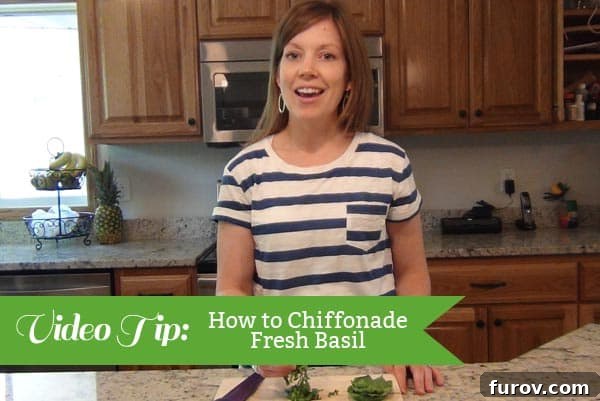
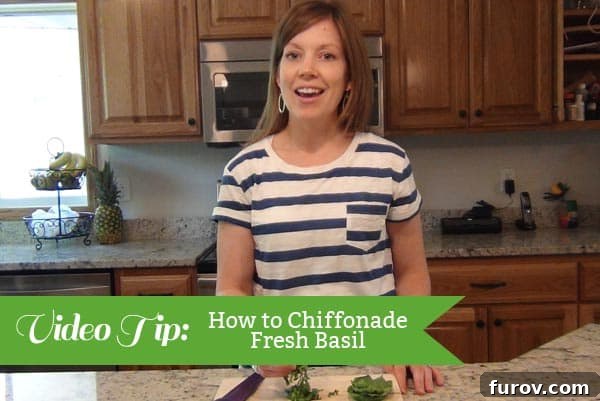
For a visual demonstration of this simple yet effective technique, please watch the short video below. It shows you a simple, fast way to channel your inner chef and chiffonade that basil like you’ve been doing it your whole life:
Expert Tips for Perfect Chiffonade Every Single Time
While the steps are straightforward, a few key details can make all the difference in achieving consistently perfect chiffonaded basil:
- A Sharp Knife is Non-Negotiable: This cannot be stressed enough. A dull knife will tear and bruise the basil, negating the entire purpose of chiffonading. Ensure your chef’s knife is impeccably sharp.
- Bone Dry Leaves: Any moisture on the leaves will make them slippery and difficult to cut cleanly, leading to uneven strips and bruising. Pat them thoroughly dry before stacking and rolling.
- Roll Tightly, But Don’t Crush: Aim for a firm, compact roll that holds together, but avoid squeezing so hard that you mash the leaves. Gentle pressure is key.
- Work in Small Batches: If you have a large amount of basil, it’s better to chiffonade it in several smaller batches rather than trying to roll too many leaves at once. This ensures a tighter roll and cleaner cuts.
- Use Immediately: Chiffonaded basil, like most cut herbs, will begin to oxidize and wilt relatively quickly once exposed to air. For the best flavor and appearance, use it as soon as possible after cutting.
Common Chiffonade Mistakes to Avoid
Even with the best intentions, it’s easy to fall into common pitfalls that can diminish the quality of your chiffonaded basil:
- Using a Dull Knife: As mentioned, this is the number one culprit for bruised and blackened basil. Invest in a good knife sharpener or have your knives professionally sharpened.
- Cutting Wet Leaves: Slippery leaves lead to uneven, potentially dangerous cuts and promote bruising. Always ensure your basil is thoroughly dry.
- Rolling Too Loosely: A loose roll will result in uneven, jagged strips rather than uniform ribbons.
- Chopping Motion Instead of Slicing: A forceful downward chop can crush the basil. Instead, use a smooth, controlled slicing motion, letting the sharp blade do the work.
- Over-Handling After Cutting: Once chiffonaded, try to handle the basil as little as possible before adding it to your dish to maintain its delicate structure and prevent further bruising.
Beyond Basil: Expanding Your Chiffonade Skills
The chiffonade technique isn’t exclusive to basil! It’s a versatile skill that can be applied to a variety of other herbs and leafy greens to achieve similar elegant results:
- Mint: Perfect for garnishing desserts, cocktails, or fruit salads.
- Spinach or Kale: For adding fine ribbons to salads, soups, or stir-fries without large, tough pieces.
- Sage: Ideal for delicate garnishes on rich, savory dishes.
- Lettuce: For finely shredded lettuce in tacos, sandwiches, or as a bed for main courses.
Inspiring Recipes Featuring Perfectly Chiffonaded Basil
Once you’ve mastered the art of chiffonade, a world of culinary possibilities opens up. The delicate strips of basil add a burst of freshness, color, and aroma that elevates countless dishes. Here are some of my favorite recipes where chiffonaded basil truly shines, transforming ordinary meals into extraordinary experiences:
- Summer Couscous Salad: A light, refreshing salad where vibrant basil ribbons complement the couscous, fresh vegetables, and tangy dressing. The chiffonaded basil ensures every bite is infused with its aromatic goodness.
- Marinated Caprese Salad: The classic combination of fresh mozzarella, ripe tomatoes, and sweet basil is incomplete without those beautiful chiffonaded strips, which soak up the marinade and release their flavor perfectly.
- Fast and Fresh Orzo Salad: Here, the delicate orzo pasta pairs wonderfully with the subtle texture of chiffonaded basil, alongside juicy tomatoes and salty feta, creating a harmonious summer dish.
- Grilled Caprese Chicken: A delightful main course where chiffonaded basil can be sprinkled over the grilled chicken and melted mozzarella, adding a fresh, herbaceous counterpoint to the rich flavors.
- Summer Corn Salad: Sweet corn kernels find their perfect partner in the fresh, peppery notes of chiffonaded basil, making this salad an absolute seasonal must-have.
- Cherry Tomato Caprese Salad: The smaller scale of cherry tomatoes makes chiffonaded basil an even more suitable choice here, ensuring an elegant presentation and even flavor distribution.
- Fusilli alla Caprese: The twists and turns of fusilli pasta are ideal for catching and holding the delicate basil ribbons, along with chunks of fresh mozzarella and tomatoes, for a flavorful pasta experience.
- Tri Color Pasta Salad: Chiffonaded basil adds a professional touch and a burst of fresh flavor to this visually appealing pasta salad, making it a potluck favorite.
Beyond these specific recipes, chiffonaded basil is an exceptional garnish for pizzas, bruschetta, scrambled eggs, omelets, and even fruit desserts like strawberry shortcake. Its versatility makes it a kitchen essential.
Storing Fresh Basil for Longevity
To ensure you always have fresh basil ready for chiffonading, proper storage is key. Avoid refrigerating basil directly, as it can blacken quickly due to the cold. Instead, treat it like a bouquet of flowers:
- Trim the bottom of the stems.
- Place the basil in a glass of water, ensuring the stems are submerged.
- Loosely cover the basil and glass with a plastic bag (like a produce bag).
- Leave it on your kitchen counter, away from direct sunlight, for several days. Change the water daily.
Once chiffonaded, basil is best used immediately. If you must store it for a very short period (a few hours), place the ribbons between damp paper towels in an airtight container in the refrigerator, but be aware that some discoloration may still occur.
Conclusion: Elevate Your Culinary Creations with Chiffonaded Basil
Learning to chiffonade basil is a simple skill that yields impressive results, transforming your cooking from good to gourmet. It’s a technique that not only enhances the visual appeal of your dishes but, more importantly, preserves the delicate flavors and aromas of this beloved herb. By preventing bruising and ensuring uniform cuts, you’ll consistently present vibrant, fresh basil that truly shines in every recipe.
So, grab a fresh bunch of basil, sharpen your knife, and give this elegant technique a try. You’ll be amazed at how a little precision can make such a significant difference in your culinary adventures. Unleash your inner chef and enjoy the delightful difference chiffonaded basil brings to your table!
Remember all of the video tips can be seen on my Video Tips page as well as on Mel’s Kitchen Cafe YouTube channel.