
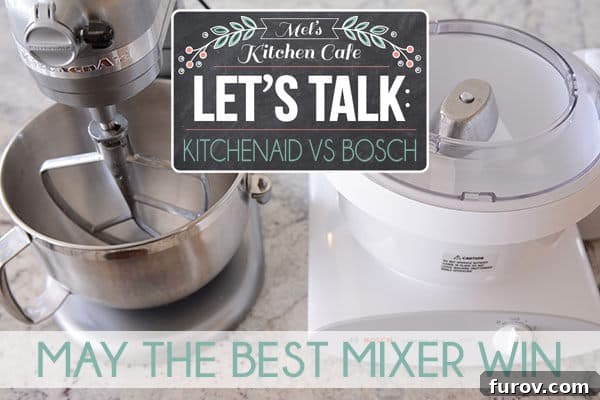
In the bustling world of baking, two names frequently rise to the top of every home chef’s wishlist: KitchenAid and Bosch. These iconic brands have carved out significant niches in the stand mixer market, each boasting a loyal following and distinct advantages. But when it comes to choosing the ultimate kitchen companion, which one truly reigns supreme? This comprehensive guide delves deep into a head-to-head comparison of the KitchenAid and Bosch Universal stand mixers, exploring their features, performance, and suitability for various baking tasks. Prepare for the ultimate showdown as we dissect every detail to help you discover the perfect stand mixer for your culinary adventures!
Disclaimer: This detailed comparison is an unsponsored post, meaning I have not received any payment or incentives from either brand to discuss their products. However, to support the creation of valuable content, this article does contain a few affiliate links. This means that, at no additional cost to you, I may earn a small commission if you choose to make a purchase through these links. Your support in this manner is greatly appreciated! As always, I encourage you to shop around and compare prices to find the best deal that suits your needs.
Through extensive (albeit unscientific) observation and feedback from countless passionate home bakers, it’s clear that among stand mixer owners, the vast majority fall into two camps: those who swear by their KitchenAid and those who champion their Bosch mixer. While the market offers a variety of other reputable brands, today’s focus is squarely on these two titans of the kitchen.
Today, we dive into the epic battle of KitchenAid vs. Bosch, a contest of power, design, and versatility!
My Personal Journey with Both Stand Mixers
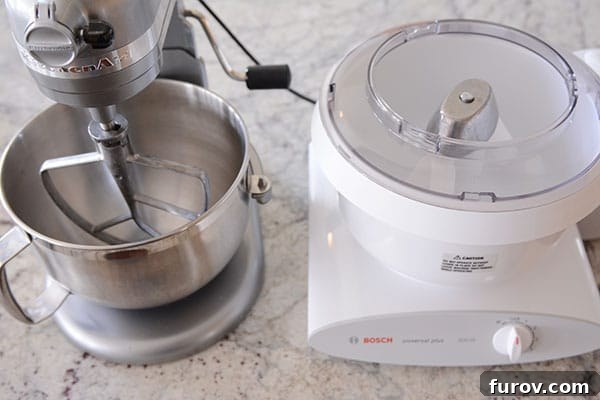
From the moment you first encounter a KitchenAid and a Bosch Universal stand mixer, their fundamental differences are immediately apparent. Their distinct shapes, color palettes, overall sizes, and design philosophies set them apart. And precisely because of these variations, each mixer brings a unique set of strengths and, inevitably, a few limitations to the table.
For many years, I was a devoted enthusiast of the Bosch Universal. My journey with Bosch began early in my marriage when I received my first unit. It quickly became an indispensable tool in my kitchen. While I’ve upgraded models over the years – even passing on my beloved 14-year-old Bosch to a friend, Katie, who still finds it incredibly robust – my allegiance to the Bosch name remained strong.
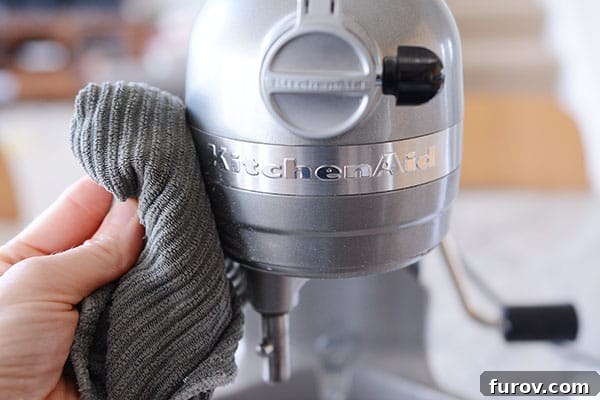
My foray into the world of KitchenAid came unexpectedly. Several years ago, Costco offered an irresistible rebate on KitchenAid mixers, and I seized the opportunity. Initially, I never envisioned myself as a KitchenAid owner, let alone a fan. However, after hearing numerous friends rave about their KitchenAid’s capabilities and elegant design, my curiosity was piqued, and I decided to experience it firsthand. There’s no denying its visual appeal; it’s truly a striking appliance.
Admittedly, in the initial weeks, I was tempted to return the KitchenAid. The idea of owning two stand mixers felt somewhat excessive. Yet, I persevered, determined to overcome the learning curve associated with a new appliance. I’m incredibly glad I did. This dual ownership has provided me with invaluable insight, allowing me to conduct a thorough, real-world assessment of which mixer genuinely excels in various culinary applications.
Detailed Comparison: KitchenAid vs. Bosch Universal
The specific KitchenAid model I acquired from Costco is often exclusive to their stores, featuring slight variations compared to those available online or at other retailers. Nevertheless, its performance and core functionalities are very much akin to this popular KitchenAid mixer. My current Bosch mixer, on the other hand, is the renowned Bosch Universal.
It’s worth noting that Bosch also offers a compact version of its stand mixer, typically featuring a 400-watt motor and a 4-quart bowl capacity, usually retailing around $189. KitchenAid, in its extensive lineup, provides a myriad of options varying in motor power and bowl size, such as this 5-quart, 325-watt model, often priced around $299.
For the most equitable comparison in this KitchenAid vs. Bosch review, we will focus on models with similar specifications across both brands. This ensures a fair contest, rather than comparing apples to oranges, or in this case, a high-performance sports car to a reliable family sedan.
Below, you’ll find a concise overview of the fundamental specifications for each mixer, allowing for an initial side-by-side assessment:
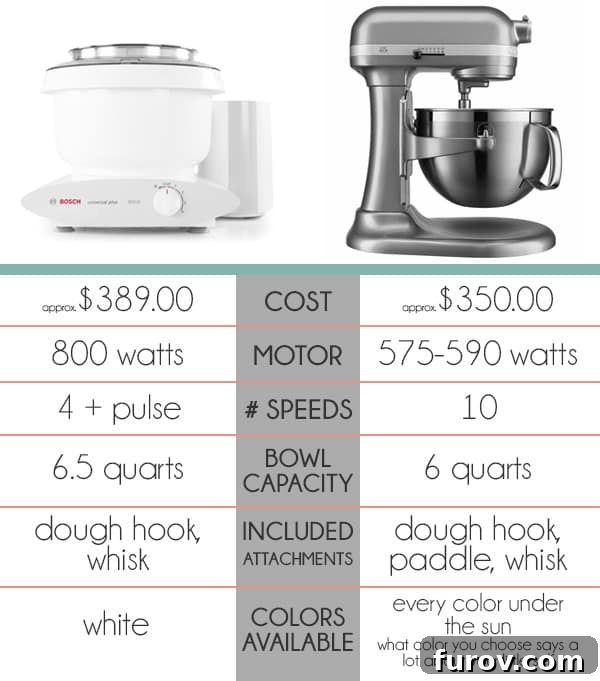
While both mixers demonstrate competitive pricing and similar bowl capacities, the Bosch truly distinguishes itself with its substantially more powerful 800-watt motor. Conversely, when it comes to aesthetic versatility, the KitchenAid remains unrivaled with its dazzling array of color options, allowing it to serve as a stylish centerpiece in any kitchen.
This difference in motor power becomes a critical factor, particularly when tackling demanding tasks like bread making. Anecdotally, it’s a common lament among some KitchenAid owners about their mixer motors burning out under the strain of kneading dense bread dough. While this issue is less prevalent with higher-wattage KitchenAid models (500 watts and above), it remains a concern for many. In stark contrast, I’ve yet to hear a single report of a Bosch mixer motor failing, especially not during bread production. This brings us directly to our first key comparison point: performance with dough.
Bosch: The Undisputed Champion of Bread Making
Without a doubt, the Bosch Universal is the superior stand mixer for anyone serious about making bread. Its design and power are simply unmatched in this specific application.
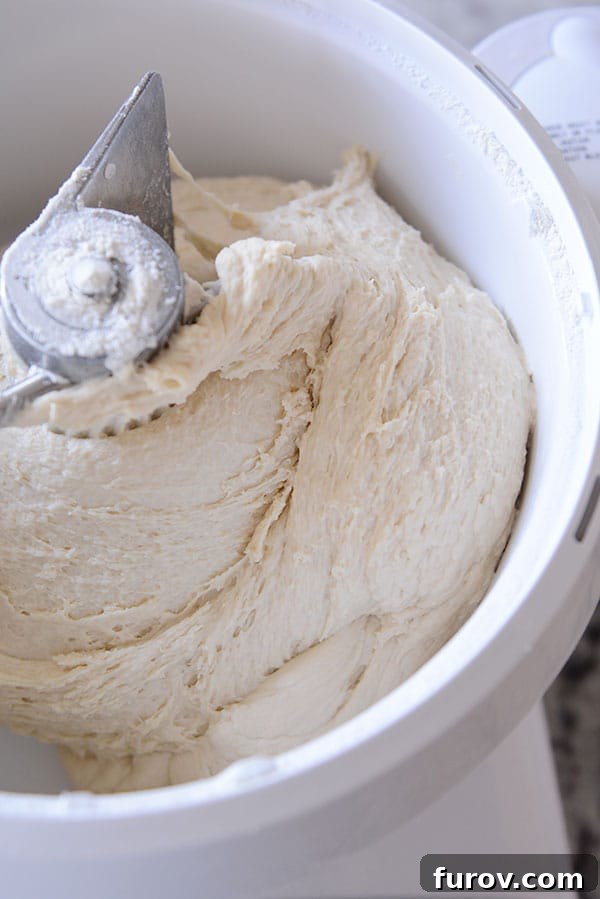
The unique bowl design of the Bosch, where the mixing shaft originates from the bottom rather than the top (as with KitchenAid), combined with its robust high-wattage motor, allows it to effortlessly handle an impressive volume. It can comfortably accommodate upwards of 22 cups of ingredients, transforming dense bread dough with remarkable efficiency. This powerhouse truly mixes bread like a professional machine.
I consistently rely on my Bosch to prepare substantial batches of bread, including my beloved go-to whole wheat bread recipe, which yields a generous 5-6 loaves from a single batch.
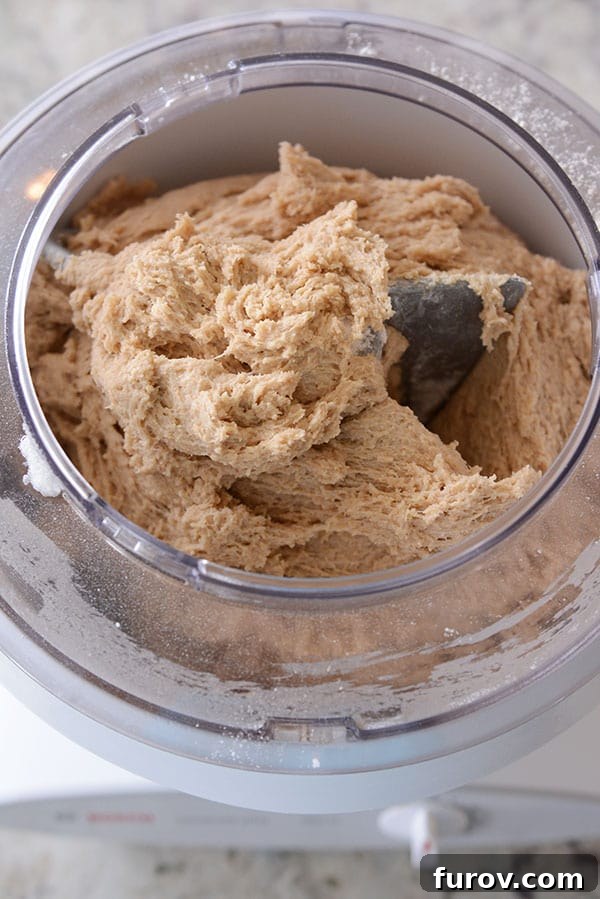
While the Bosch excels with large quantities, it also handles smaller batches of dough quite competently. However, it’s a common piece of feedback that the Bosch can sometimes struggle with very small amounts of ingredients. My secret to success with small batches in the Bosch is to add flour very gradually. Without this technique, you might end up with unmixed dry patches as the dough simply spins around the bowl without fully integrating all the ingredients. Patience and a slow pour are key.
KitchenAid’s Performance with Bread Dough
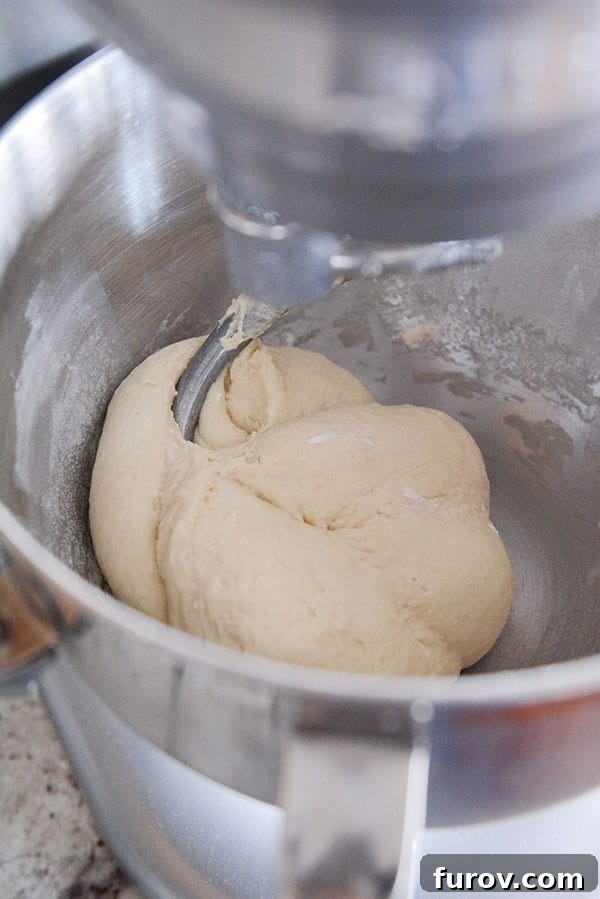
Now, let’s turn our attention to the KitchenAid and its capabilities when it comes to bread making. I have occasionally used my KitchenAid for smaller bread batches, such as preparing these divine breadsticks. It performs adequately, but I’ve found it’s far easier to accidentally over-flour the dough in the KitchenAid. This is largely due to how the dough hook moves within the bowl, which can make consistent incorporation challenging.
Attempting large batches of bread dough in the KitchenAid is, in my opinion, generally ill-advised for its long-term health. While smaller batches can work, I frequently find myself needing to stop the mixer and scrape down the sides of the bowl to ensure all the flour is incorporated – a task I rarely, if ever, encounter when making bread in my Bosch. This highlights a key difference in their mixing actions.
Before delving into more side-by-side comparisons, here’s a quick reference chart offering an immediate overview of how these two popular stand mixers stack up against each other in key areas:
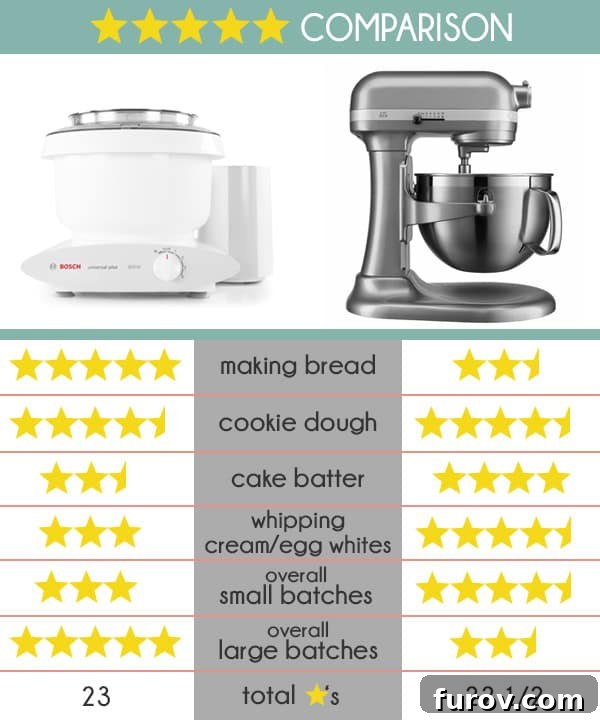
Cookie Making: KitchenAid vs. Bosch Universal
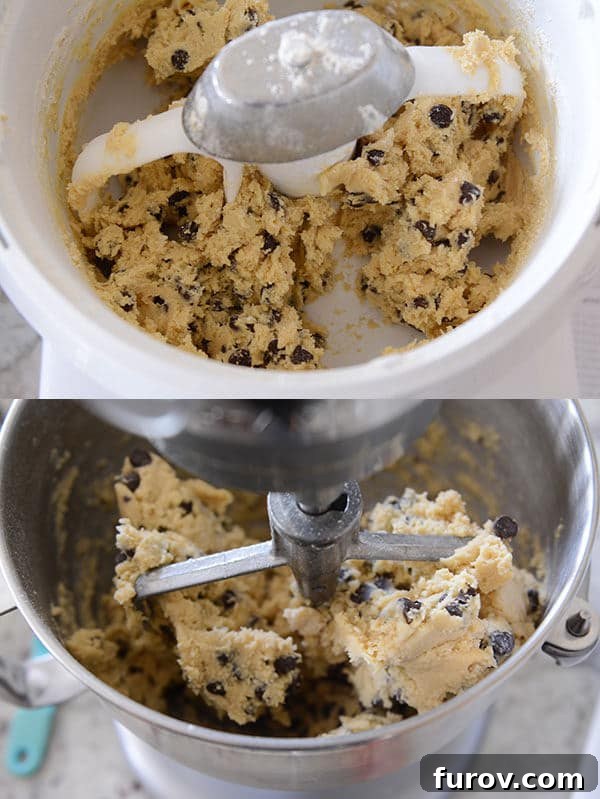
Both the Bosch and KitchenAid stand mixers truly shine when it comes to the delightful task of making cookies. To provide a direct comparison, I prepared the exact same chocolate chip cookie recipe simultaneously in each mixer.
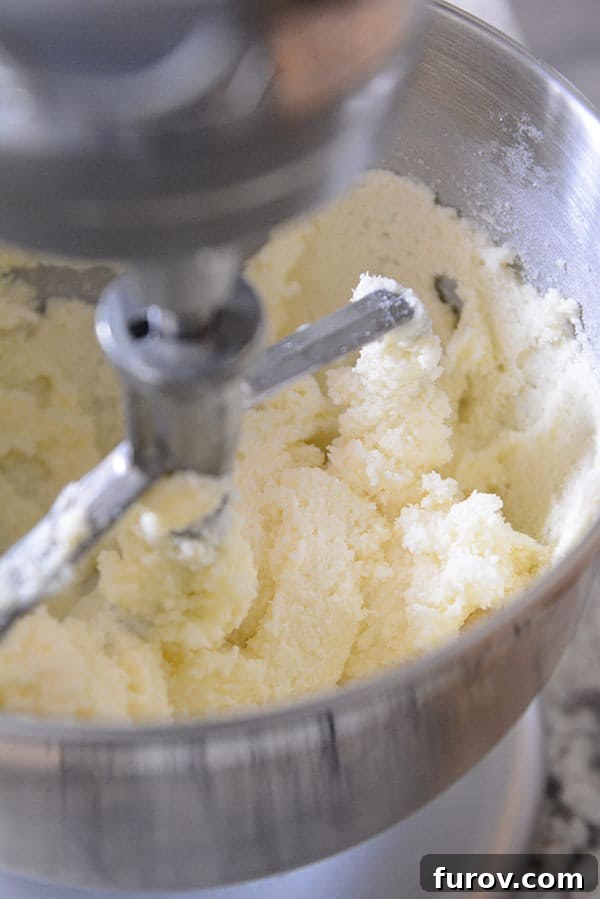
Initially, the Bosch demonstrated a slight edge in its ability to seamlessly incorporate the butter and sugar. The butter was less prone to clinging to the cookie paddles in the Bosch compared to the KitchenAid. It’s worth noting that the specialized cookie paddles are not a standard inclusion with the Bosch mixer but are an absolutely worthwhile additional purchase, typically around $20. I find myself using either the dough hook or these cookie paddles for virtually everything I prepare in my Bosch.
UPDATE: Over time, I’ve evolved my approach. I now often begin by using the cookie paddles to cream the soft ingredients, then switch to the dough hook once I start adding the dry ingredients (this change came after a couple of cookie paddles broke on me). In many instances, I simply use the dough hook from start to finish. I’ve also found that this particular dough hook, sold separately, is a true game-changer for the Bosch. It significantly reduces dough climbing up the center column and generally achieves a superior mix for all ingredients. I sincerely wish this improved dough hook came standard with the Bosch!
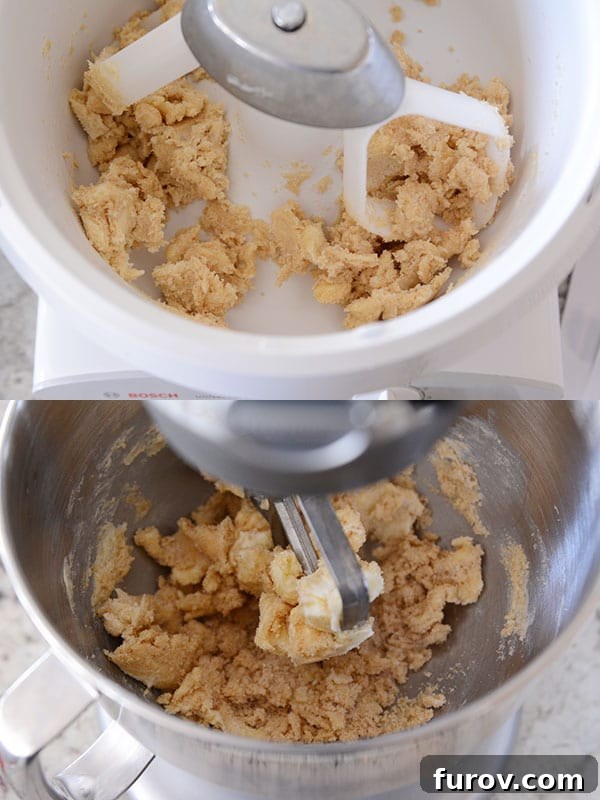
After a brief pause to scrape butter from the paddle, the KitchenAid quickly catches up, performing admirably. Interestingly, both mixers demonstrated a slight challenge in fully incorporating the eggs into the cookie dough without requiring some manual scraping to ensure even distribution.
This brings us to a rather significant observation: both the KitchenAid and Bosch mixers can encounter issues with ingredients adhering to the very bottom of the bowl, particularly with wetter batters or doughs. Despite adjusting the KitchenAid’s paddle height, the design inherent in both mixers often necessitates some manual scraping to achieve complete incorporation. It’s a common quirk that dedicated bakers learn to navigate.
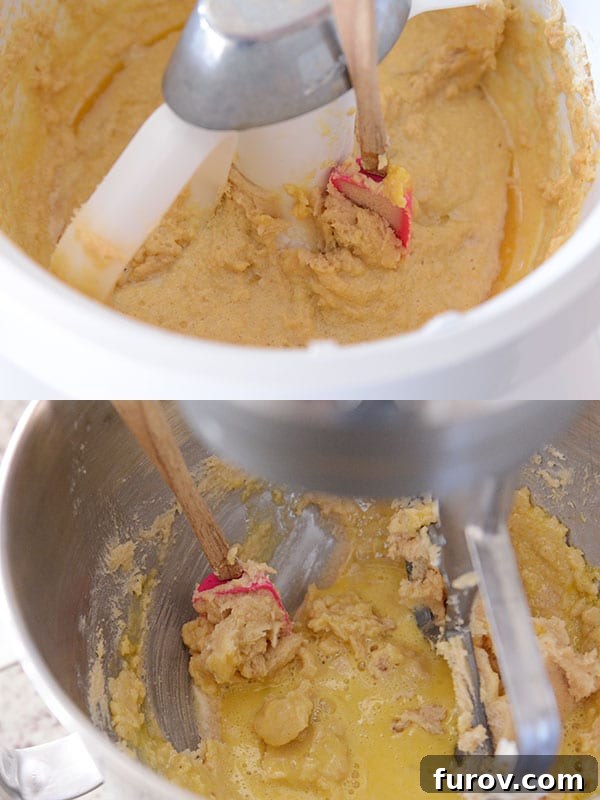
However, this “bottom-of-the-bowl” issue is significantly mitigated, if not entirely eliminated, when doubling a standard cookie dough recipe in the Bosch. The increased volume of ingredients seems to facilitate better engagement with the paddles, ensuring everything is picked up and mixed effectively. When attempting to double a cookie dough recipe in the KitchenAid, however, I still found myself needing to scrape lingering bits of butter and sugar from the bottom of the bowl, though less so from the sides.
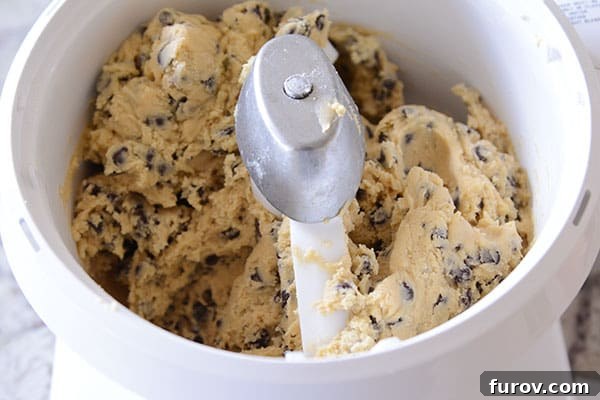
Once the initial creaming and egg incorporation stages are complete, both mixers handle the subsequent addition of dry ingredients and the final mixing of cookie dough with the professional efficiency one would expect from top-tier appliances.
Building on the discussion of ingredient incorporation, let’s explore another crucial aspect: how each mixer performs with smaller batches and thinner batters.
Handling Small Batches and Thinner Batters
My beloved Bosch, while a powerhouse for heavy-duty tasks, does have a significant drawback: its performance with very small batches of ingredients. While its specifications claim it can whip even a single egg white to stiff peaks (a feat I haven’t personally tested), in practice, when dealing with small, and especially thinner or wetter recipes, I find myself resorting to frequent and extensive scraping. This is particularly true for ingredients that tend to pool at the bottom of the bowl or adhere to the central shaft.
A specialized bowl scraper attachment is available for the Bosch, but as I haven’t personally used it, I can’t vouch for its effectiveness in resolving this issue. Even with such an attachment, it wouldn’t fully address the ingredients that cling to the central column or stubbornly stick to the very bottom of the bowl. The most reliable solution I’ve found for the Bosch is often to simply double the recipe – a workaround that, I acknowledge, isn’t always practical or desirable. For instance, a small batch of frosting that might require constant scraping often mixes perfectly when doubled.
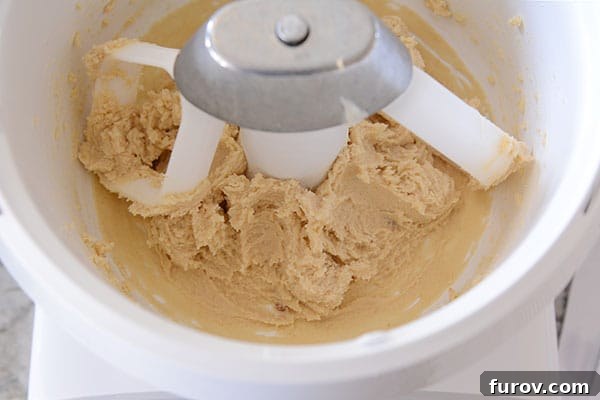
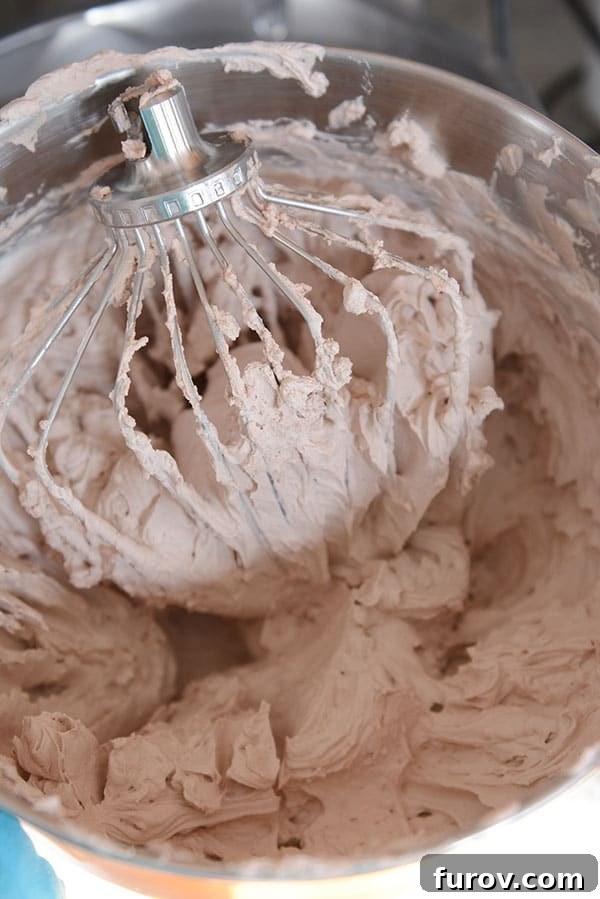
The KitchenAid, however, truly distinguishes itself when mixing wet batters, such as those for cakes or frosting, or when whipping cream and egg whites. Despite its initial need for some scraping to fully incorporate ingredients from the bottom, it truly shines in these applications. Its planetary mixing action ensures a more thorough blend for these lighter, more fluid mixtures.
A scraper attachment is also available for KitchenAid mixers. Again, I don’t personally own one, but it could potentially offer assistance. My primary concern with the KitchenAid, even after adjusting the mixer’s head height, remains the ingredients that stubbornly linger at the bottom of the bowl.
Despite this minor persistent quirk, the KitchenAid remains, without a doubt, the superior choice for standard-sized recipes involving thinner or wetter ingredients. Its performance in these areas is consistently excellent.
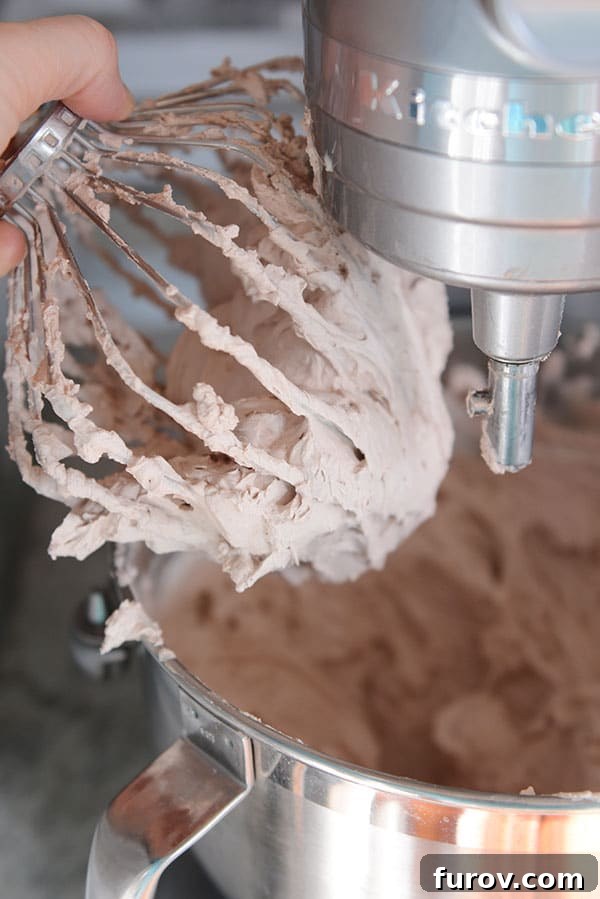
It’s my go-to for recipes like my perfected yellow cake recipe. Interestingly, when I originally developed that recipe through 17 iterations, I didn’t even own a stand mixer, relying instead on a trusty handheld mixer (more on those below) to achieve perfection.
Ergonomics and Ease of Use
I won’t sugarcoat it: there have been moments when I’ve wanted to express a healthy amount of frustration while attempting to add ingredients to the KitchenAid while it’s actively mixing. My measuring cups often collide with the side of the mixer bowl when I’m pouring in flour or other dry ingredients. It can be quite a challenge to ensure all the flour makes it into the bowl without resorting to banging the measuring cup against the side like a frantic chef just to dislodge the last few specks. If you have the luxury of pausing the mixer and lowering the bowl, the process becomes significantly smoother. However, for recipes that demand gradual ingredient addition, such as small-batch bread doughs or certain batters, it can certainly be a nuisance.
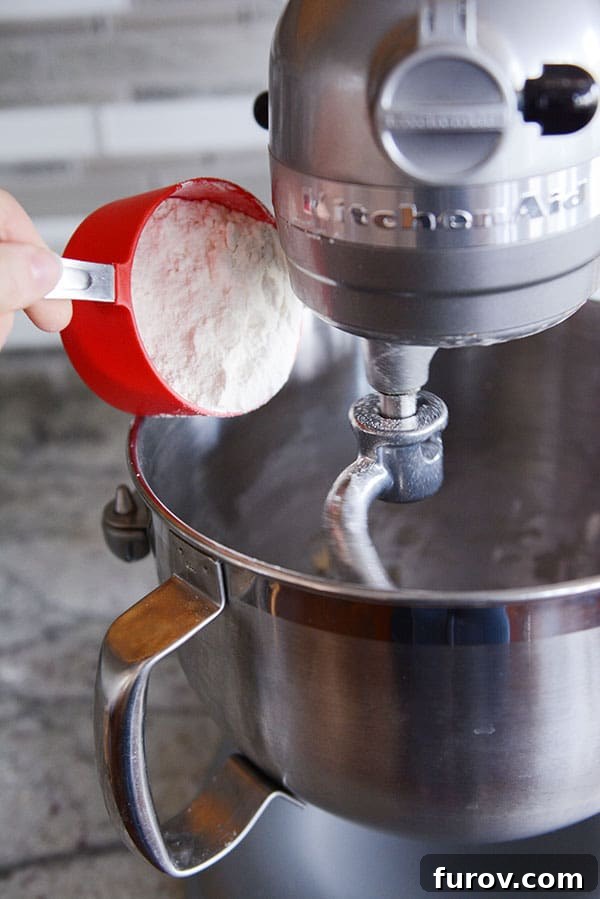
Interestingly, adding liquid or wet ingredients, such as eggs or milk, seems to be a much more straightforward affair with the KitchenAid. It might be the design of my measuring cups, or simply the nature of liquids, but the experience of adding ingredients to the KitchenAid is definitely a mixed bag for me.
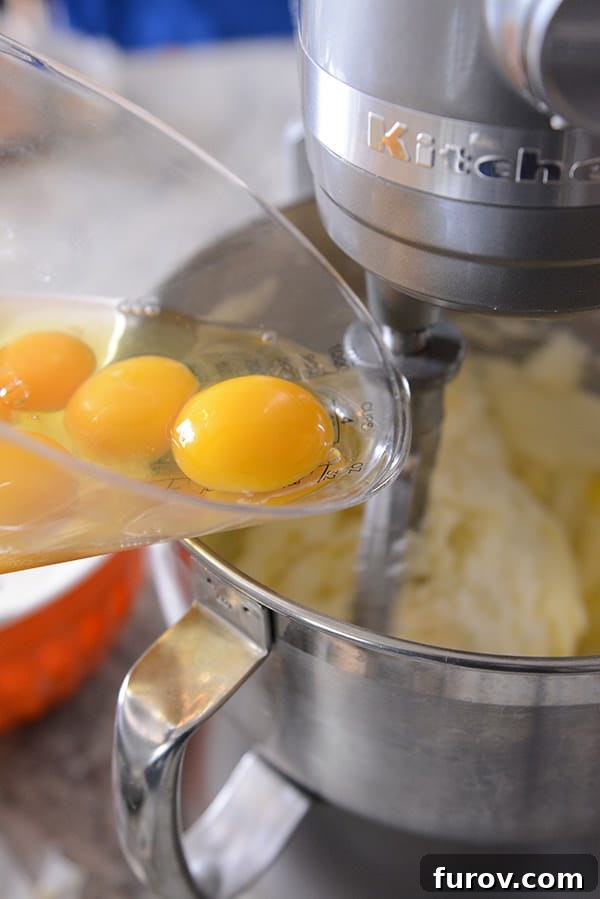
The Bosch, conversely, offers a much more user-friendly experience when adding ingredients while the mixer is operating, largely thanks to its expansive, open-top bowl design. This allows for easy pouring and scraping without obstruction.
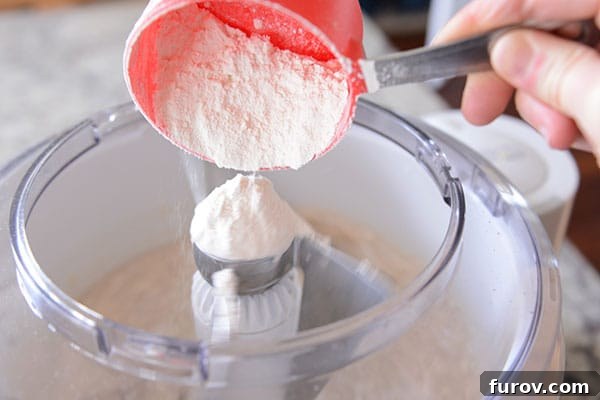
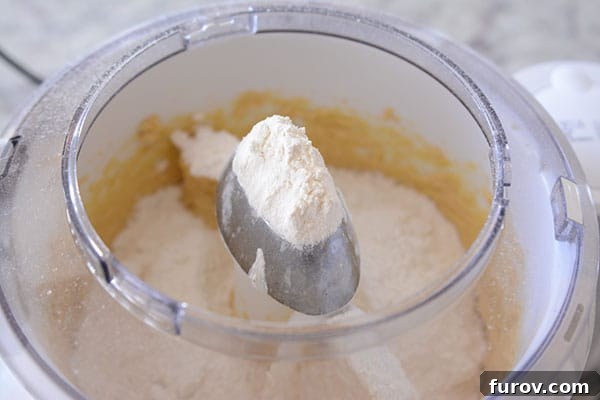
However, after adding dry ingredients to the Bosch, a quick, light sweep is often necessary to remove any excess flour or powdered sugar that might settle on the metal drive shaft. Additionally, a word of caution: be mindful of the occasional plumes of fine flour or powdered sugar that can puff out of the mixer, potentially leading to minor coughing fits. This is primarily a risk if one positions their face too close to the mixer during the dry ingredient addition process – not that I would ever make such a rookie mistake, of course! Cookie makers, in particular, should exercise a bit of caution.
The Verdict: Which Mixer is Right for You?
If you’ve journeyed through this detailed comparison (and if so, you’ve earned a cookie!), it’s likely clear by now that there isn’t one single, undisputed “winner” in the KitchenAid vs. Bosch debate. Instead, both stand mixers possess unique strengths and weaknesses that cater to different baking styles and needs.
Ultimately, the decision of which stand mixer to invest in largely hinges on your primary baking activities and the types of recipes you intend to make most often.
For serious bread makers, home bakers who regularly tackle large batches, or those who frequently prepare dense doughs, the Bosch Universal stands out as an exceptionally strong contender. Its robust motor and unique design are optimized for power and capacity, making light work of demanding tasks.
Conversely, for individuals who primarily enjoy baking average-sized batches of cookies, whipping up delicate cakes, or preparing lighter batters and frostings more frequently than bread, the KitchenAid might prove to be the most suitable option. Its planetary mixing action is particularly effective for these lighter applications, delivering consistently smooth results.
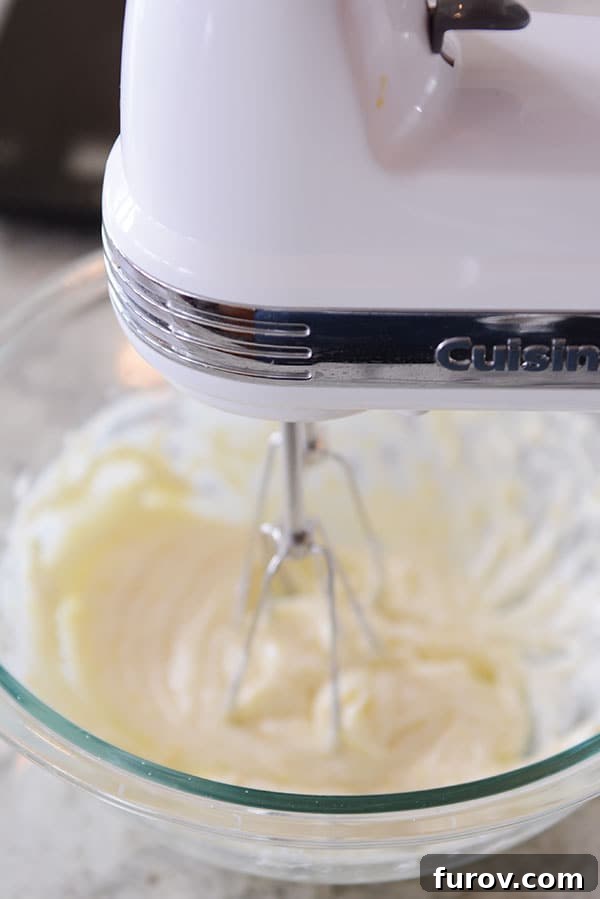
To add another layer of nuance, I must confess that in addition to my two stand mixers, I heavily rely on my everyday hand mixer. For the longest time – over a decade, in fact – my kitchen arsenal consisted solely of my trusty Bosch and this versatile hand mixer. I used the hand mixer for smaller batches of frosting, delicate cake batters, and other tasks where a full-sized stand mixer might be overkill or less efficient. Perhaps it’s a creature of habit, but I still find immense value in having it around for those specific jobs.
Since I’m clearly enjoying creating visual aids, here’s a quick recap of which mixer I tend to use for specific types of recipes:
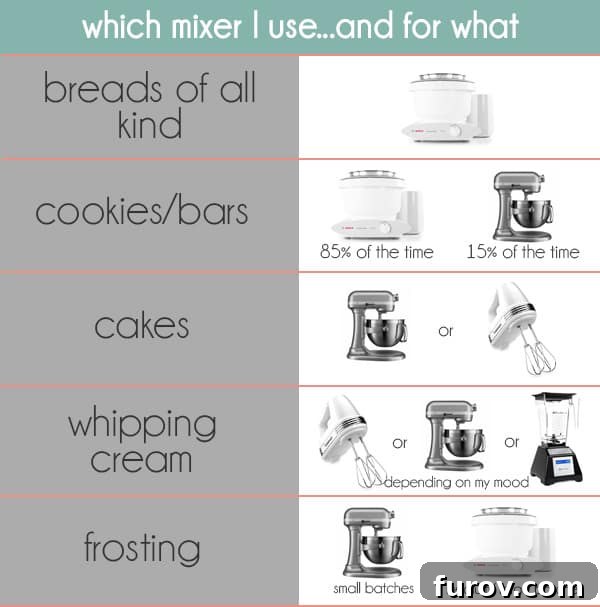
It’s probably abundantly clear from this entire post that I hold a deep appreciation for the formidable Bosch Universal. I can’t help it; it has been a steadfast companion in my kitchen for well over a decade, proving its unwavering reliability and strength. If I were forced to choose just one stand mixer, I would unequivocally opt for the Bosch Universal. For my day-to-day cooking and baking operations, a Bosch coupled with a reliable hand mixer (perfect for those thinner batters) provides everything I need.
However, the beloved KitchenAid should certainly not be underestimated. It remains an excellent choice for general-purpose use, especially for those whose baking habits don’t frequently involve large quantities of bread or intensive, large-batch baking. Its versatility and consistent performance for a wide range of recipes make it a kitchen staple for many.
And let’s be honest, if aesthetics and kitchen glamour are high on your priority list, the KitchenAid undoubtedly offers a significant “ooh-la-la” factor. Its sleek design and vibrant color options make it a stylish statement piece. The Bosch, by contrast, is a more unassuming, workhorse appliance. It isn’t designed to be flashy or come in a kaleidoscope of colors; its strength lies in its humble, hard-working efficiency and robust functionality.
But here’s a liberating thought: you can absolutely live a full, joyful, and delicious life in the kitchen without ever owning a stand mixer!
Now, it’s your turn to share! If you’re a proud stand mixer owner, which brand and model do you have? What are the specific reasons you adore your mixer? I’d love to hear your insights!
Thank you for sticking with me through this in-depth post (and if you did, truly, you’re a baking champion!). Please feel free to pose any additional questions or requests for clarification in the comments section below. Happy baking, everyone!