
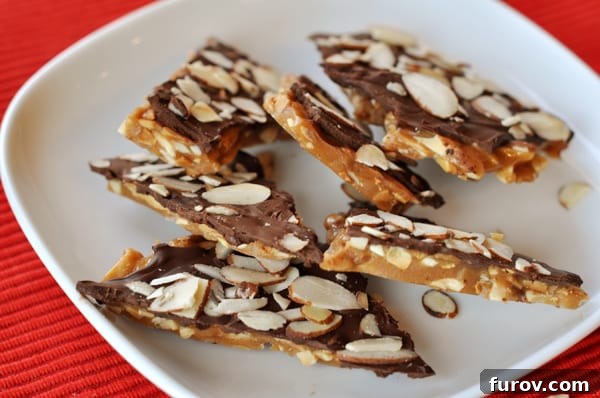
Homemade Almond Roca: Your Guide to Becoming a Confectionery Superstar
This homemade almond roca recipe is so incredibly delicious and satisfying, it has the power to elevate you to a true Christmas confectionery rock star! Discover the secrets to crafting this irresistible toffee at home.
For many, the thought of homemade candy evokes images of holiday warmth and festive cheer. Yet, I know some of you are seasoned candy-making aficionados – and honestly, I admire your skill! Others might feel a pang of apprehension, perhaps even outright avoidance, at the mention of a candy thermometer. Believe me, I completely understand that hesitation.
Candy making is often a journey of trial and error. Even the most experienced confectioners encounter their share of failed batches. It’s a craft that demands precision, patience, and a little bit of adventurous spirit.
Embracing the Art of Candy Making: Your Path to Sweet Success
While I’m far from a master confectioner, I’ve dedicated more time to experimenting with candy recipes, and the experience has been incredibly rewarding and, dare I say, fun! There’s a unique thrill that comes with creating something so decadent from scratch, a feeling that truly makes you feel like a culinary rock star in your own kitchen.
My goal is for you to experience that same joy. To unlock a world of confections and delicacies, we first need to get you comfortable with an essential tool: the candy thermometer. This seemingly intimidating gadget is actually your best friend in candy making, providing the precision needed to achieve perfect textures every time.
Mastering Your Candy Thermometer: A Foundational Skill
Your success with a candy thermometer hinges on two main factors: accurate calibration and proper usage. Before you even start cooking, take a few moments to calibrate your thermometer. This crucial step ensures that your thermometer is reading temperatures correctly, preventing common issues like undercooked or overcooked candy.
To calibrate, simply place the thermometer in boiling water. At sea level, water boils at 212°F (100°C). If your thermometer reads differently, note the difference. For example, if it reads 210°F, you’ll know to subtract 2 degrees from any recipe’s target temperature. This simple adjustment can save you a lot of frustration. Also, consider investing in a reliable thermometer; digital models often offer quick and precise readings.
Second, be prepared to practice. Don’t be discouraged if your first attempt isn’t flawless. Candy making is a skill, and like any skill, it improves with repetition. Each batch, whether perfect or imperfect, teaches you something new about sugar, heat, and timing. Third, and perhaps most importantly, follow the recipe *exactly*. This isn’t the time to freestyle or add a “bam!” of extra ingredients. Precision is paramount when working with sugar, as even slight deviations can alter the final texture and consistency.
The Irresistible Allure of Homemade Almond Roca
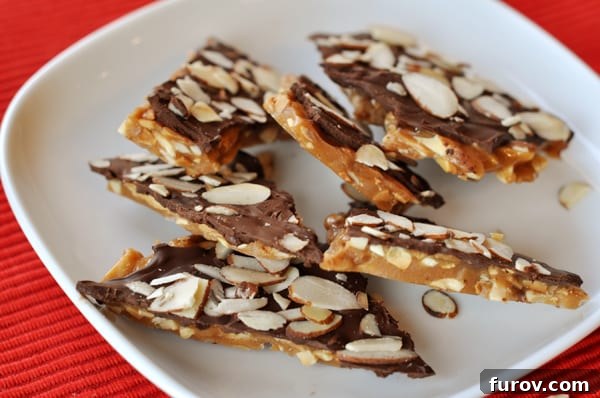
Now, let’s talk about the star of the show: Almond Roca. I’ve been making this recipe for years, and while my declarations of love for various treats on this site might make you question my self-control (a bit rude, but fair!), I can honestly say I can usually walk away from most goodies after about 20 taste tests.
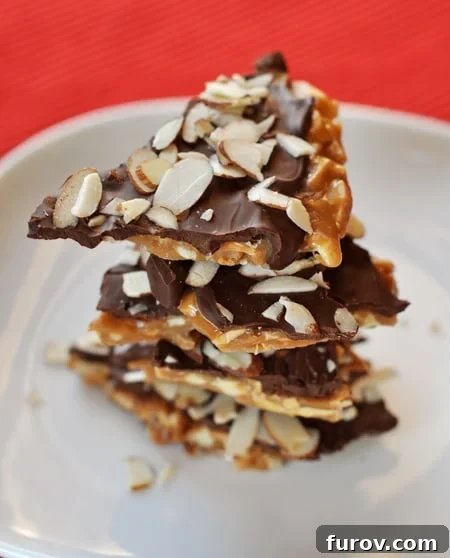
But not this, my friends, not this. Almond Roca is in a league of its own. It’s so incredibly delicious that it’s notoriously difficult to stop eating. Imagine perfectly toasted almonds, enveloped in a rich, buttery, and satisfyingly crunchy toffee. This delightful base is then generously drenched in a smooth layer of melted chocolate, which is then topped with a final scattering of delicate slivered almonds, adding an extra dimension of texture and flavor to this caloric masterpiece.
This exquisite combination creates a symphony of textures and flavors in every bite – the crisp snap of the toffee, the creamy melt of the chocolate, and the nutty crunch of the almonds. It’s truly a confectionery triumph that promises to impress anyone lucky enough to taste it. I guarantee that mastering this recipe will make you feel like a true confectionery rock star. Because, really, isn’t that what we’ve all secretly aspired to be? (Or maybe that’s just me…)
Beyond its delicious taste, homemade almond roca makes a fantastic gift. During the holidays, a beautifully packaged tin of this candy is a thoughtful and impressive present that truly shows you care. It’s also perfect for sharing at gatherings or simply enjoying as a well-deserved personal indulgence.
P.S. Below the recipe, you’ll find comprehensive step-by-step photos and invaluable troubleshooting tips to ensure your almond roca turns out perfectly every time.
One Year Ago: Coconut Macadamia Nut Triangles
Two Years Ago: Holiday Morning Buns
Almond Roca: The Ultimate Homemade Toffee
Pin
Rate
SaveSaved!
Ingredients
- 1 cup (227 g) unsalted butter (or salted, see notes)
- 1 cup (212 g) granulated sugar
- 2 packages (3-ounces each) (170 g) slivered almonds
- 2 cups (340 g) chocolate chips (milk or semi-sweet)
- 1 (3-ounce) package (85 g) sliced almonds, for topping
Instructions
-
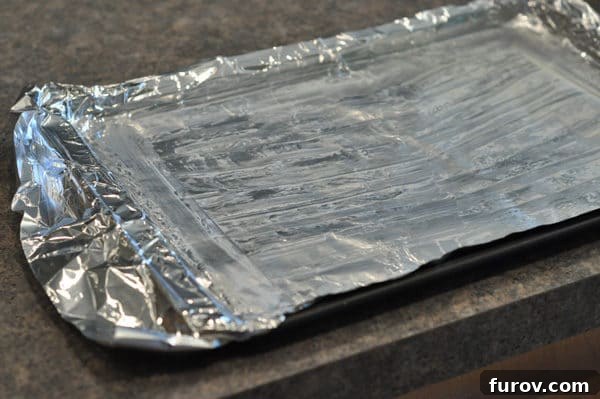
Prepare your baking surface: Line a large, rimmed baking sheet with aluminum foil. This prevents sticking and makes cleanup much easier. Lightly butter the foil, ensuring an even coating, and set it aside. This readiness is key as toffee cools and hardens very quickly.
-
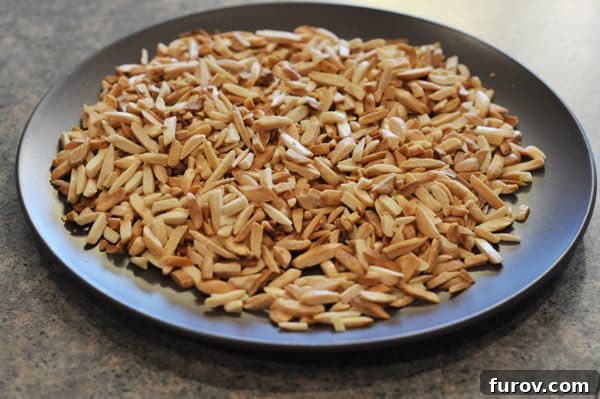
Toast the slivered almonds: Spread the slivered almonds in a single layer on a separate baking sheet. Toast them in a preheated oven at 300°F (150°C) for approximately 5-6 minutes. Watch them closely, stirring occasionally, until they turn a beautiful golden brown and become fragrant. Over-toasting can make them bitter, so vigilance is important. Remove them from the oven and set them aside to cool completely. This step enhances their nutty flavor and adds depth to the roca.
-
Begin the toffee base: In a medium-sized, heavy-bottomed saucepan, combine the butter and sugar over low heat. Stir constantly with a heatproof spatula until the butter is completely melted and the sugar has fully dissolved. This initial step is critical and should not be rushed. It may take anywhere from five to six minutes for the sugar to dissolve, but maintaining a low heat prevents scorching and ensures a smooth toffee. Once the sugar is dissolved and the butter is melted, increase the heat to medium. Continue to stir gently as the mixture slowly comes to a boil. Again, patience is key here, as this can take a few minutes. Once a steady boil is achieved, clip a calibrated candy thermometer to the side of the pan. Ensure the tip is immersed in the candy mixture without touching the bottom of the pan. Continue stirring gently in a figure-eight motion, avoiding scraping the sides of the pan. The mixture will gradually transform, darkening from a light amber to a rich, deeper brown. Cook until the mixture reaches the hard crack stage, which registers exactly 300°F (150°C) on your candy thermometer.
-
Finish the toffee: The moment the toffee reaches 300°F, immediately remove the saucepan from the stove. Quickly stir in the toasted slivered almonds. Pour the hot candy onto your prepared baking sheet. Be careful not to scrape the bottom or sides of the pot; leave any sugar crystals behind to prevent graininess in your final product. Using an offset spatula, swiftly spread the toffee into an even, thin layer on the baking sheet. Work quickly, as the toffee cools and hardens rapidly, making it difficult to spread once it starts setting.
-
Add chocolate and final almonds: While the toffee is still hot, sprinkle the chocolate chips evenly over its surface. Immediately tent the baking sheet with foil. This creates a warm, steamy environment that helps the chocolate melt smoothly and evenly. Let the chocolate melt undisturbed for 2-3 minutes. Remove the foil and, using an offset spatula, gently spread the melted chocolate into a uniform layer over the toffee. Finally, sprinkle the remaining sliced almonds over the top of the melted chocolate. Set the candy aside in a cool, dry place to allow the chocolate to fully set and the almond roca to cool completely. While tempting to refrigerate for quicker setting, rapid cooling can sometimes cause “blooming” – white streaks or blotches on the chocolate’s surface. This doesn’t affect taste but impacts appearance.
-
Break and serve: Once the almond roca is completely cool and the chocolate is firm, break it into irregular, bite-sized pieces. Store in an airtight container at room temperature for up to two weeks, or in the refrigerator for extended freshness.
Notes
Recommended Products
Almond Roca Troubleshooting Tips
Even with careful attention, candy making can present a few challenges. Here are common issues and how to resolve them, ensuring your almond roca turns out perfectly:
-Why did my toffee separate, forming a greasy, buttery layer?
Toffee and caramel can sometimes separate, resulting in a distinct layer of butter either on top of the boiling mixture or after it’s poured onto the pan. This phenomenon is often triggered by sudden and drastic temperature shifts. To prevent this, always maintain a steady, consistent medium-low to medium heat throughout the cooking process. Avoid abruptly cranking the heat up or down. If separation occurs while the mixture is boiling, try stirring vigorously to reincorporate the butter. Some experienced candy makers also suggest adding a tiny pinch of baking soda, stirring until the mixture becomes cohesive again. Should you notice a layer of butter on top of the toffee after pouring it onto the baking sheet, you can gently blot it away with paper towels before proceeding with the chocolate and almonds. This won’t significantly impact the flavor or texture.
-Why did my roca/toffee turn to sugar or crystallize, becoming grainy and coarse?
Sugar crystallization is a common and frustrating issue in candy making. It happens when sugar crystals, often clinging to the sides of the pot, fall back into the boiling syrup. These rogue crystals act as seeds, causing the entire batch to crystallize, resulting in a grainy, coarse, or gritty texture instead of smooth, crunchy toffee. To prevent this, exercise extreme care during the cooking stage:
- **Avoid scraping the sides:** As you stir the toffee mixture, focus on gently stirring in the center and scraping the bottom of the pot to prevent scorching. Do not continuously scrape down the sides, as this brings crystallized sugar back into the mixture.
- **Use a wet pastry brush:** Periodically, use a clean pastry brush dipped in water to gently wash down any sugar crystals that form on the sides of the saucepan above the candy line. This dissolves them before they can fall back into the boiling syrup.
- **Don’t scrape the pot when pouring:** When pouring the finished toffee onto the prepared baking sheet, resist the urge to scrape every last bit from the pot. Leave any sugar crystals that may have formed on the bottom or sides of the pot behind. It’s better to lose a tiny bit of toffee than to ruin the entire batch with a gritty texture.
By following these meticulous steps, you can significantly reduce the risk of crystallization and achieve a beautifully smooth, crunchy almond roca every time.
Step-by-Step Visual Guide to Perfect Almond Roca
Here are detailed images to guide you through each stage of making this delightful homemade almond roca. Seeing each step can significantly boost your confidence and ensure a flawless outcome.
The prepared baking sheet, lined with buttered foil, awaits the addictive toffee. This readiness is crucial for a smooth and quick pour.
My slivered almonds, expertly toasted to a golden hue and cooled on a plate, are poised and ready to be incorporated into the hot toffee at the precise moment.
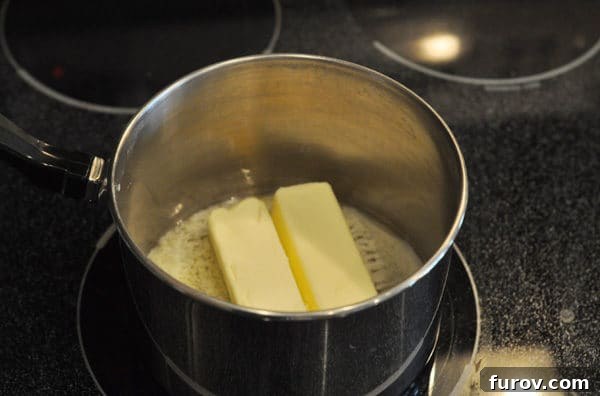
Two sticks of butter begin their melting journey in a sturdy saucepan over medium-low heat. This slow melting is essential for a smooth toffee base.
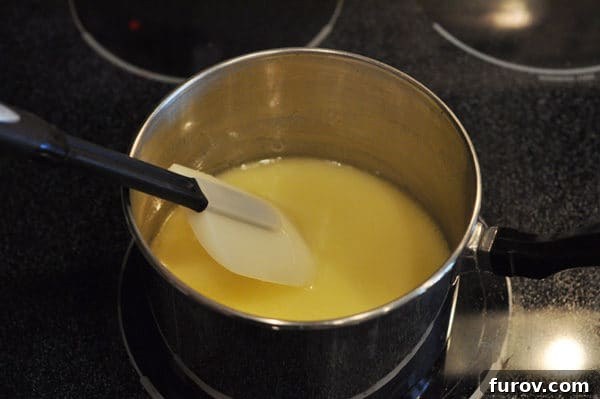
Once the butter is largely melted, add the granulated sugar and stir continuously to ensure it fully combines and dissolves.
This stage requires patience. Keep the heat moderate and continue stirring until the mixture is visibly smooth, indicating that all sugar crystals have dissolved. Resist the urge to increase the heat too quickly.
As the mixture heats, it will begin to bubble vigorously. This is a sign that your toffee is progressing nicely towards the boiling point.
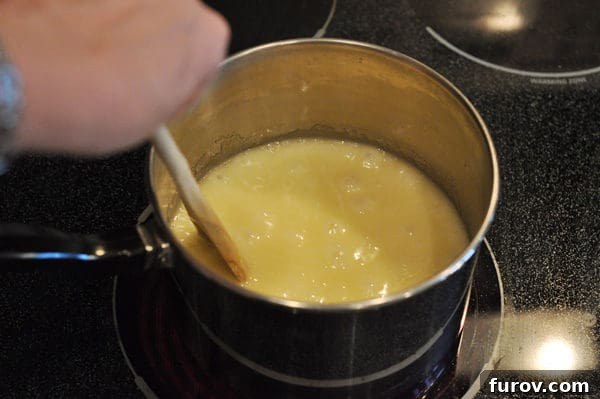
Once the toffee reaches a full boil, clip your candy thermometer securely to the side of the pot. Ensure the thermometer’s tip is submerged in the candy without touching the bottom, as per the manufacturer’s instructions.
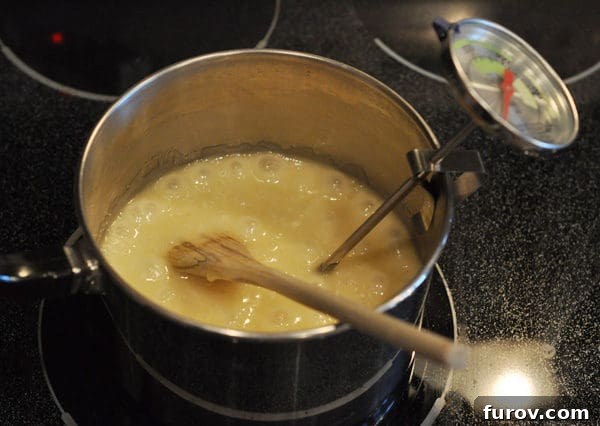
Continue stirring gently and patiently as the toffee cooks, allowing the temperature to gradually rise. Precision and consistent stirring are vital here.
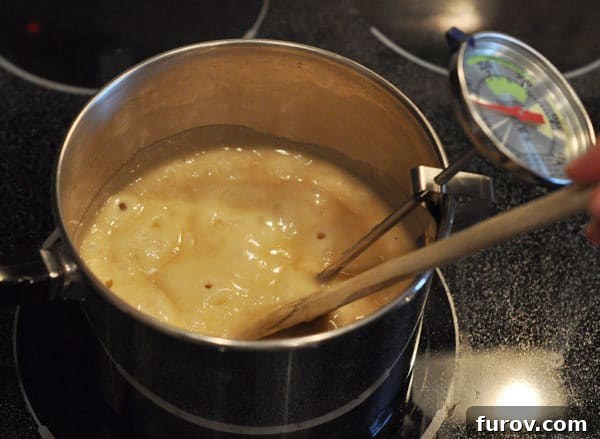
The mixture will begin to take on a beautiful golden color, a visual cue of its caramelization process. It’s getting closer to the perfect toffee stage!
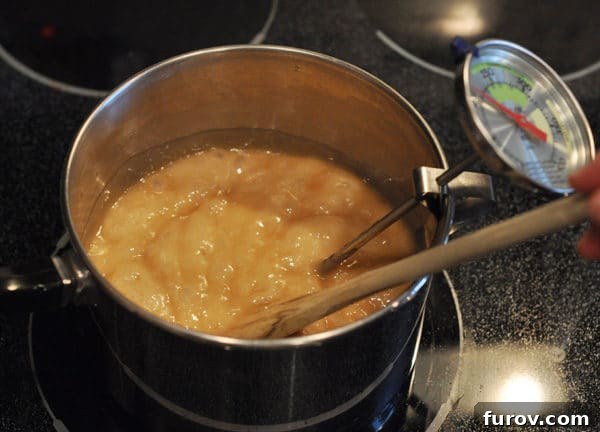
As it continues to cook, the toffee will deepen into a rich, darker shade of golden brown, indicating it’s almost at the hard crack stage (300°F).
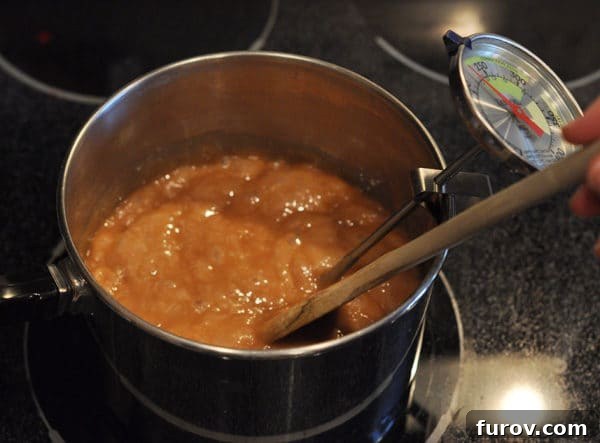
Once the toffee reaches 300°F, stir in the toasted almonds, then quickly pour the mixture onto your prepared baking sheet. Remember to avoid scraping the pot’s bottom to leave any potential sugar crystals behind.
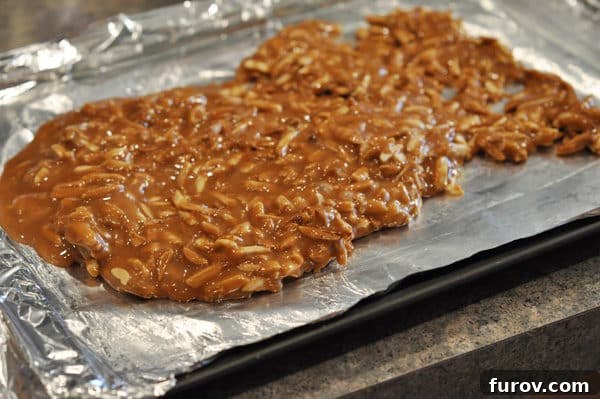
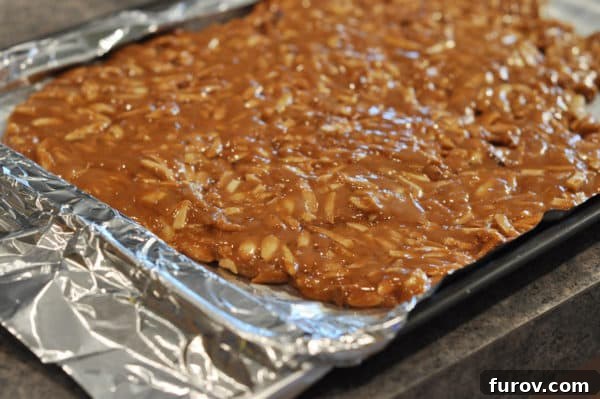
Work swiftly to spread the hot roca into a uniform, thin layer across the baking sheet using an offset spatula. It sets very fast, so precision and speed are key!
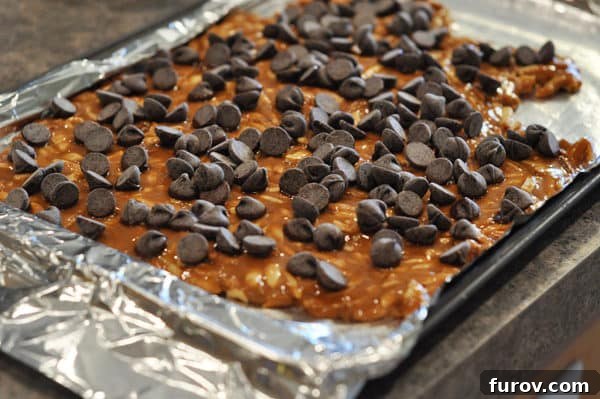
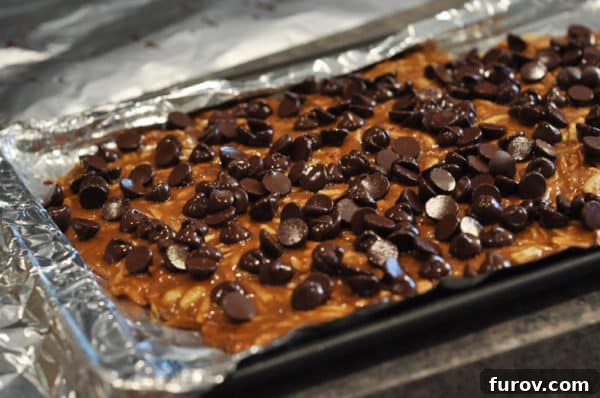
Generously sprinkle chocolate chips over the hot toffee. The residual heat will begin to melt them, preparing for the next step.
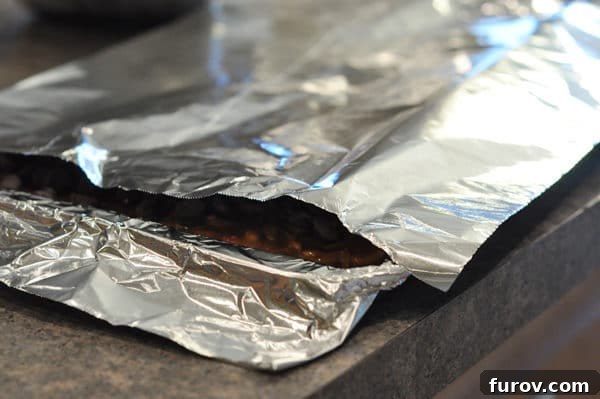
Cover the baking sheet with foil, creating a warm tent that helps the chocolate chips melt into a smooth, luscious layer. Let them sit for a few minutes.
Lift the foil to reveal beautifully melted chocolate, glistening and ready to be spread. Notice how smooth and shiny it looks.
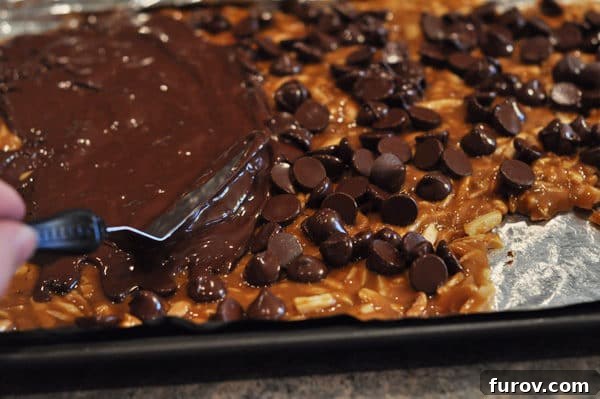
Carefully spread the melted chocolate evenly across the toffee. Try your best not to lick the spatula just yet – though it’s incredibly tempting!
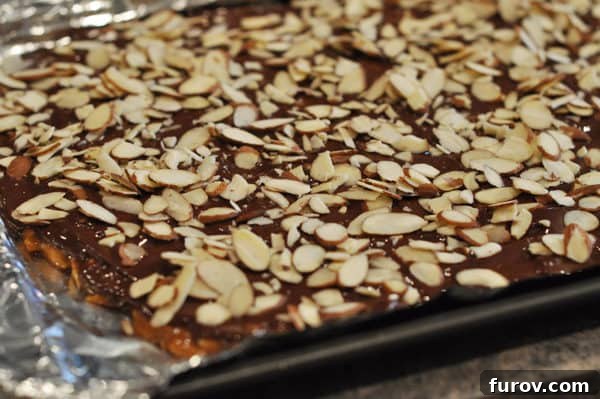
Finally, sprinkle the remaining sliced almonds on top for an added crunch and beautiful finish. Now, let the entire confection cool completely and set before breaking into pieces.
Why Homemade Almond Roca is the Best Sweet Treat
There’s something uniquely special about homemade almond roca that store-bought versions simply can’t match. The fresh, high-quality ingredients, the perfect balance of sweet and salty, and that unmistakable buttery crunch make it an unparalleled indulgence. It’s not just a candy; it’s an experience, a delightful testament to the joy of making something from scratch.
Perfect for Gifting and Sharing
Almond roca is an ideal gift for any occasion, especially during the festive holiday season. Package it in pretty tins or cellophane bags with ribbons, and you have a thoughtful, impressive present that everyone will adore. It’s also fantastic for potlucks, parties, or simply to have on hand for an unexpected craving. Imagine the delight on your friends’ faces when they discover this homemade gem!
Storage Tips for Freshness
To keep your almond roca fresh and crunchy, store it in an airtight container at room temperature. It will maintain its quality for up to two weeks. For longer storage, you can freeze it in an airtight container for several months. Just be sure to let it come to room temperature before serving to fully appreciate its texture and flavor.
Ready to try your hand at more delightful homemade toffee and candy recipes? Explore some of our other favorites: