

Welcome, fellow parents! Let’s be honest right from the start:
Transforming Picky Eaters: 10 Proven Strategies for Raising Adventurous Foodies
As a parent, I understand the daily mealtime struggles all too well. My own children have certainly had their moments—from dramatic gags and tears to elaborate “playing dead” scenarios just to avoid a rogue tomato in their pasta. The battle against picky eating is real, and it can feel like an uphill climb.

However, I’m thrilled to share that those challenging moments are now largely behind us. My five children (ages 9, 7, 5, 4, and 1), though not “perfect” eaters, have evolved into what I proudly call “adventurous eaters.” This transformation didn’t happen overnight, nor does it mean they’re clamoring for exotic dishes like marinated jellyfish. Instead, it signifies their willingness to embrace a wide variety of foods and, for the most part, enjoy everything I prepare for dinner.
From flavorful Coconut Shrimp Curry to hearty White Bean and Sausage, Kale and Tomato Ragout, complemented by various steamed vegetables and diverse quinoa and grain dishes, my kids are now open to culinary exploration. Essentially, most recipes featured on this site are fair game for our dinner table.
While not every meal is met with enthusiastic cheers, they’ve learned to anticipate and willingly try new and different foods. It’s a continuous journey, but I’m excited to share 10 practical strategies we employ at home to foster fearless, adventurous, and healthful eating habits. Please view this not as a rigid guide, but rather a collection of ideas from which you might find a few helpful gems. Additionally, I’ll be sharing my kids’ top 10 all-time favorite meal requests—think healthy, fun, and kid-approved options that rarely fail. Let’s dive in!
1. Cultivate a Fun and Consistent Family Mealtime
Dinnertime in our home is more than just eating; it’s a cherished ritual. While we certainly strive to instill good table manners (a battle I often feel I’m losing), it’s also a time for lively conversation, laughter, and creating some of our most treasured family memories. These are often the “you had to be there” moments, uniquely hilarious to us.
This daily gathering is our family’s opportunity to reconnect after a busy day, serving as a vital touchstone. You might wonder how this contributes to adventurous eating, but I firmly believe it’s foundational. When children understand that dinnertime is a consistent expectation—not only to sit and eat as a family but also to enjoy what I’ve prepared—and when this happens within a fun, relaxed, and non-threatening atmosphere, introducing new foods becomes significantly easier. A positive environment dramatically increases the likelihood of success. The act of eating together (not necessarily the cooking, which can sometimes be a chore!) is one of the most enjoyable parts of our day.
I am a strong advocate for family dinnertime. It strengthens our family bonds and has undeniably played a crucial role in shaping my children’s adventurous eating habits. I acknowledge that our current structure benefits from having young children not yet heavily involved in extracurriculars and fortunate work schedules that align with being home for dinner. While this might evolve, for now, it’s a system that works beautifully for us.

2. Embrace a Spectrum of Colors and Diverse Foods
The mantra “eat your colors” echoes through our home approximately 53 times a day. My boys are utterly captivated by this concept, though we’ve had extensive discussions clarifying that fruit snacks and Jolly Ranchers do not count! The focus is strictly on natural colors. Before any meal officially begins, we take a moment to count the colors present on our plates. One memorable evening, while enjoying black bean and sweet potato burritos, honey lime fruit salad, and steamed broccoli, my 7-year-old was ecstatic to announce he’d eaten nine colors! This playful competition has truly motivated them, even adding a fun challenge for me, the primary cook, to incorporate a vibrant array of ingredients.
Beyond the fun, there’s a significant nutritional benefit: generally, the more naturally colorful a food, the richer its health benefits. The world is full of incredibly adventurous and colorful foods waiting to be discovered: vibrant kale, sweet potatoes, all kinds of berries, roasted red peppers, jicama, kiwi, and avocado, to name just a few. “Eating your colors” not only makes meals exciting but also guarantees a nutrient-dense diet.
In addition to colors, a primary objective is to serve our family a wide variety of foods. While we adore classic family favorites like spaghetti and tacos, these beloved meals are regularly interspersed with a plethora of new recipes. I aim to include seafood a couple of times a month, a meatless meal once a week (which encourages exploration of various vegetables and legumes), and a rotation of other meats such as pork, beef, and chicken. Moreover, I love to vary the culinary style, incorporating many Indian-inspired dishes, classic American comfort food, Italian-esque pasta dishes, and Tex-Mex/Mexican-style cuisine.
When children become accustomed to the same foods and flavors repeatedly, they are less inclined to try new things. By consistently introducing new and interesting flavors and dishes, my children have become incredibly adaptable. This approach has led to two key outcomes:
a) They rarely question new foods, sometimes offering a skeptical eyebrow lift but generally expecting the unexpected.
b) They enthusiastically celebrate when familiar favorites like spaghetti make an appearance on the menu.
3. Avoid Short-Order Cooking at All Costs
Our philosophy for breakfast and dinner is simple: eat what is lovingly served, or choose not to. There are no alternative options. The only exception is our one-year-old, Cam, who is still exploring many new foods and sometimes dictates her preferences with a firm pound of her tiny fists. However, for children aged three and older, the menu is set. I cook it; they eat it.
While this might sound strict, I encourage you to read the subsequent tips for a more nuanced understanding (rest assured, no one goes hungry in our home). If I allowed my boys to manipulate mealtime by pushing aside a dish they didn’t initially like, they would quickly learn that a cheese quesadilla, for example, is always an option. This is our approach, and while it may not suit every family, it has proven effective for us in cultivating a more adventurous palate and reducing mealtime battles.
4. Guarantee One “Slam Dunk” Food at Every Meal
If the previous tip caused you any heart palpitations, fear not! Our secret weapon against mealtime drama is ensuring there’s always at least one universally liked food on the table. This is paramount because I believe dinnertime should be a safe and “non-threatening” space, as mentioned earlier. So, even if I introduce an adventurous, challenging dish, there will always be a plate of beloved apple slices or a side dish that everyone genuinely enjoys.
As I said, no one leaves our table hungry. Furthermore, if dipping a carrot, cucumber, or any other vegetable helps a child eat it, then dipping is absolutely encouraged. Whether it’s ketchup, ranch dressing, or another favorite, dipping is perfectly acceptable, provided things don’t get too messy. I’ve been pleasantly surprised by how many foods my kids initially resisted were eagerly consumed once dipped. Interestingly, over time, the reliance on dip often lessens, and they continue to enjoy the food on its own.

5. Embrace the “One Bite” Rule
When dinner commences, I serve a small portion—a truly small portion—of every dish to each child. My older boys are learning to serve themselves with the understanding that starting small is key, as their mother is not a fan of wasted food. I advocate for small portions to prevent children from feeling overwhelmed by a large, unfamiliar plate. They can always ask for more!
The cardinal rule in our home is simple: they must take just ONE bite of everything. That’s it. You might hear triumphant cheers like “Let’s hear three cheers for Ty!” followed by a family chorus of “Hip Hip Hooray!” three times, celebrating Ty’s brave spoonful of beans, his quiet consumption of dinner, or his pioneering attempt at a new quinoa dish. The “one bite” rule is a powerful tool for encouraging exploration.
Sometimes, to my delightful surprise, an initial “I-know-this-will-make-me-gag” attitude transforms into a request for more. I attribute this success directly to the one-bite policy. You might ask, “What if they absolutely refuse a bite?” Ah, yes, stubborn souls exist in every family, including ours. When resistance occurs, we offer strategies: hide the bite in another food, follow it with a big drink of milk, plug their nose, hum a song, or race against a timer. If all else fails, we calmly state they can either put the bite in their mouth themselves or we will assist them, a point we’ve never had to go beyond. They prefer to maintain their independence.
This strategy is deeply rooted in consistency. We’ve upheld this expectation for so long that it’s simply part of our family dinner routine, no longer questioned. While implementing it initially presented challenges, the long-term benefits of this routine are invaluable.
6. Lead by Example: Monkey See, Monkey Do
This tip is straightforward yet profoundly effective: we never expect our children to eat something we aren’t willing to eat ourselves. If peas are served, peas appear on all seven plates at our table. My husband, Brian, bless his heart, isn’t always thrilled about vegetables. In fact, he might often forgo them if not for the watchful eyes of his children. However, he consistently takes a serving of whatever is offered (sometimes after a subtle but firm kick under the table from me!), ensuring the boys see both parents eating the exact same meal.
Interestingly, there have been occasions when dinner was genuinely awful (e.g., pork chops so dry even I couldn’t swallow them). In such instances, if it’s unpalatable for mom and dad, no one is expected to eat it, and cheers often erupt as the “gag-dinner” is replaced by a trusty PB&J. It’s a unified, group effort, demonstrating that even parents have limits.
While I may have my hypocritical moments elsewhere—like secretly snacking on chocolate chips in the pantry while telling the kids “no sweets right now”—at dinner, we all partake in the same meal, whether we love it or not. This consistent modeling sends a powerful message.

7. Treat Dessert as a Privilege
Our family admittedly loves sweets, and there’s no shame in that! However, when it comes to dinner, everyone understands that dessert is a privilege, not a right. We reserve more elaborate desserts for Sunday dinners. Yet, because I personally crave a little something sweet after a meal, there’s usually a cookie from the freezer or a few chocolate chips to enjoy post-dinner. These modest treats, whether big or small, are earned by those who have eaten their dinner.
I strongly dislike the “clean your plate” philosophy due to its potential to encourage overeating. However, since my kids start with very small portions of dinner (refer back to Tip #5), to earn dessert, they must eat the majority of what’s on their plate. Not every single crumb, but a significant portion, demonstrating their best effort.
They are always welcome to leave the table or forgo dessert after fulfilling the “one bite rule.” But to earn the privilege of dessert, they must truly engage with and consume their dinner. It’s a simple, clear expectation. This rule is so ingrained that we rarely need to discuss it; it’s generally accepted. Very few nights see someone willing to sacrifice those precious chocolate chips. It seems they’ve inherited my chocolate-loving DNA!
8. Prioritize Food Over Drinks at Mealtime
At our everyday dinners, drinks are deliberately kept simple. I’ve found that serving juice or anything out of the ordinary often leads to whiny children who prefer to drink their calories rather than eat their nutritious meal. Therefore, our standard options are milk or water. It might seem boring, but it’s incredibly functional, ensuring that their focus remains on consuming the solid food essential for their growth and development.
9. Empower Kitchen Helpers to Become Good Eaters
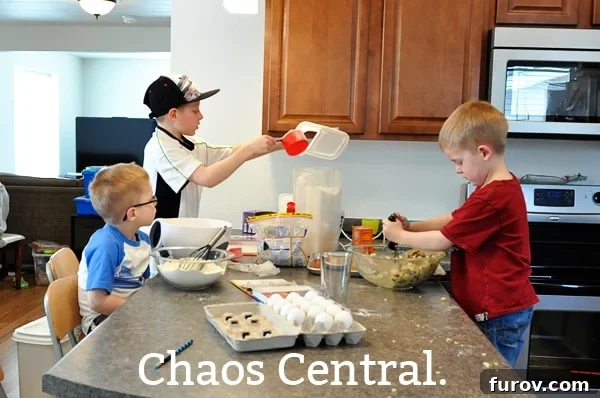
My children absolutely adore helping in the kitchen. As many parents can attest, these sweet offers of assistance can sometimes make me inwardly cringe, as they often create more work than they alleviate. However, I’ve observed a clear and scientific correlation between helping to cook and willingness to eat. Meals my boys help prepare are eaten with 100 times more enthusiasm than those they haven’t been involved in.
It’s truly amazing how a red bell pepper, roughly chopped by a 4-year-old wielding a butter knife, tastes completely different than one meticulously sliced by a 35-year-old mom with a sharp santoku. Plus, you can bet I encourage all sorts of “snitching” on ingredients while they’re chopping. If it gets them to try something new, I’m all for it! My 9-year-old recently developed a keen interest in cooking, frequently consulting his birthday cookbook. He’s prepared family dinner several times, and I’m genuinely shocked (jaw-droppingly so!) at the complexity of some meals he’s tackled and how eagerly he and his brothers devour them. They slurp up every bite, exclaiming about the delicious spinach pesto or the fabulously creamy peas and potatoes, insisting I document it to prove I’m not the only cook in the house.
I swear, if I had prepared those exact same meals, I would have faced a far more skeptical audience. I’ve become a firm believer that my boys’ adventurous eating truly blossomed when I relaxed a bit (still a work in progress for me!) and actively encouraged their participation in meal preparation.
10. The Power of Repetition: Repeat, Repeat, and Repeat Again
I cannot stress this tip enough. If my boys weep, wail, and plead for the earth to swallow them whole because of a particular dinner, their theatrics are in vain. That very meal will appear again. And again. And most likely, again.
They might not be enthusiastic the first time, and honestly, there are some meals that one or two of my boys still don’t love even after multiple exposures. However, typically, after the same dinner has appeared for the third time, and they realize it won’t actually eat them first, they will consume it without complaint. Sometimes, they even ask for seconds, which often causes me to fall off my chair in shock. A few years ago, we faced a significant challenge with two of the most basic foods on the planet: potatoes and beans (legumes). Seriously, what kids dislike these staples? Ours did.
Thus began The Great Bean and Potato Crusade. For an entire month, every single dinner featured either beans or potatoes. The first few nights were brutal; the gagging and tears were genuinely painful to witness. But do you know what? It. Totally. Worked. I am now the proudest mom in the world because my kids do something most kids already do: they eat beans and potatoes without complaint. In fact, they don’t even bat an eye now when these appear on the dinner table, and my 5-year-old has even declared himself the “potato king” due to his immense love for potatoes (especially these skillet ones). If you had told Brian and me a few years ago that this transformation was possible, we would have laughed and probably cried. But constant repetition made a profound difference. True, I personally didn’t want to see another potato or bean after that month, but my kids will never know that!
Above all, it’s crucial to understand that change doesn’t happen overnight! As I mentioned, we are still navigating this path for our family, but I’ve witnessed tremendous growth in our children’s palates and their sense of adventure about eating over the past few years. It brings me immense joy to know that we can go almost anywhere, and my kids aren’t likely to throw a tantrum over what’s served for dinner (please no judgment if I’m at your house next week and my 7-year-old suddenly develops an aversion to carrots!).
One final, yet vital, note: throughout the implementation of all these tips, our main goal has always been to maintain a positive attitude with the kids and genuinely encourage them to try new things. They experience a huge sense of satisfaction when they tally the colors they’ve eaten or get to brag to friends about the “strange” food they tried last night that they can barely pronounce. Making it a fun challenge and trying new foods alongside them has worked wonders for their adventurous spirit. We are also very open with them about the foods each of us doesn’t particularly like (Brian: pickles, beets, and cabbage; me: Brussels sprouts, capers, and Kalamata olives). I want them to understand that it’s perfectly okay not to like something, but they must be willing to step out of their comfort zone and try it a few times before making a final decision.

Now, by popular demand, I’ve polled my boys, and here are the top 10 meals they would happily eat every single day if given the choice. If you’re searching for kid-pleasing, reliable fare, this list is for you! You’ll notice that for weeknight meals, I keep side dishes incredibly simple (embarrassingly so, perhaps), but sometimes, just getting dinner on the table is victory enough, right?
Top 10 Meal Requests in Our Home:
- Sweet and Sour Chicken (always served with steamed broccoli or peas, rice, and some kind of fruit or green salad)
- Creamy Alfredo Sauce (my boys would devour this daily; to boost nutrition, we always pair it with chopped fresh vegetables like red peppers, carrots, celery, cauliflower, or steamed vegetables such as green beans, broccoli, peas, edamame, etc.)
- Honey Lime Tilapia (again, accompanied by vegetables, fresh fruit, and usually barley pilaf or rice pilaf)
- Indian Butter Chicken (if I’m feeling ambitious, with naan made with whole wheat flour, and always a side of vegetables)
- Ground Beef Stroganoff (yes, with mushrooms and all, though they can easily be omitted)
- Cheesy Ham and Broccoli Quinoa Bites (served with cottage cheese and plenty of fresh fruit)
- Asian Lettuce Wraps (served with fresh fruits and vegetables, often cottage cheese or applesauce)
- Spaghetti Pie (served with any of the above options: a vegetable and often fruit too)
- The Best Tacos (with abundant toppings, fresh vegetables, sometimes cornbread often made with whole wheat flour, fruit, and frequently cottage cheese or yogurt)
- Broccoli Beef (served with rice and fresh fruit)
I feel a slight panic that this list seems incomplete! There are many more meals my boys crave and request, such as meatball subs, shrimp curry, and shrimp penne. Enchiladas and sloppy joes. Tomato soup with grilled cheese. But this provides a fantastic starting point!
I sincerely hope these tips and meal suggestions will assist you in your journey to raise adventurous eaters. Do you have any additional tips to share? Fantastic! I would love to hear them and learn from your experiences.