
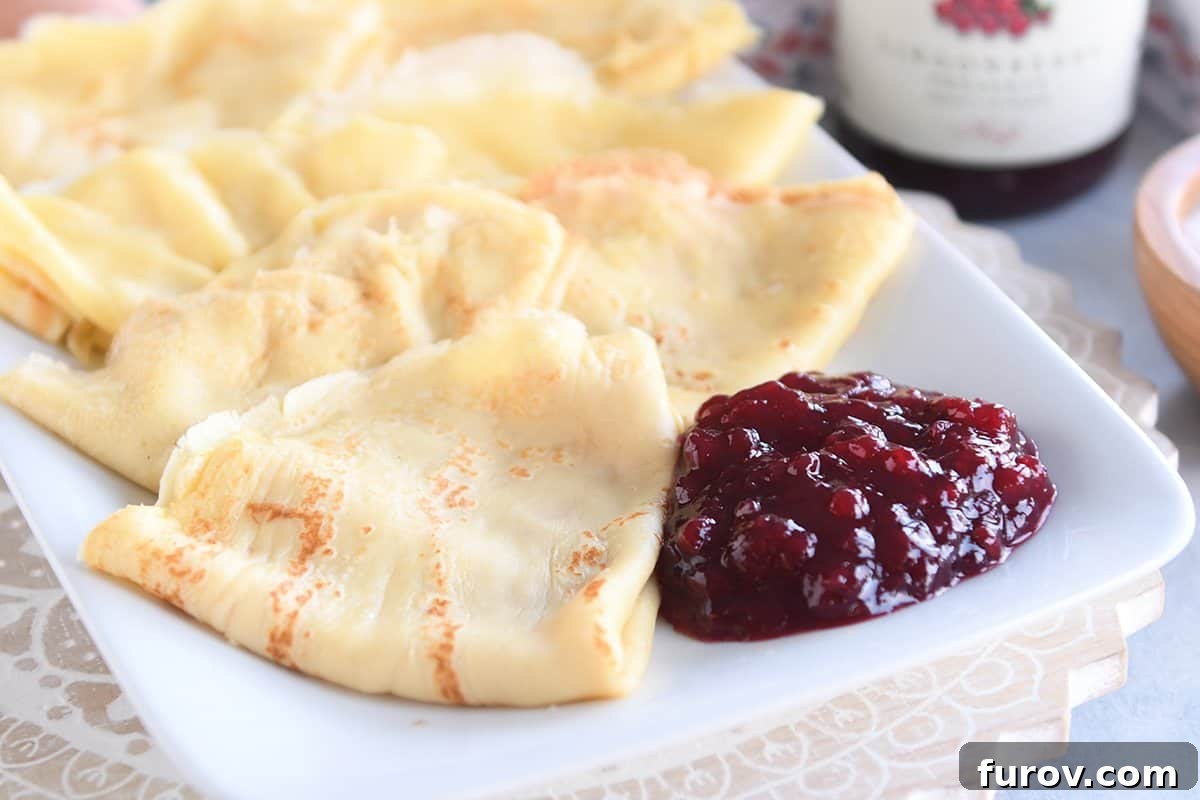
This Swedish pancakes recipe is simply the best! Slightly thicker and more substantial than delicate crepes, yet wonderfully thin, these Swedish pancakes are incredibly easy to make and utterly delicious. They’re a cherished breakfast tradition that will bring smiles to your table.
There’s something universally appealing about a thin, tender pancake that can be rolled, folded, and filled with your favorite toppings. My family, like many others, absolutely adores this style of pancake, and these Swedish pancakes strike the perfect balance.
They offer a comforting texture that’s a touch heartier than a classic French crepe, yet lighter and more pliable than a typical American rollup pancake. This makes them an ideal choice for anyone seeking that sweet spot between thin and fluffy, ensuring everyone at the breakfast table finds their happy medium.
What is the difference between crepes and Swedish pancakes?
Upon extensive recipe research and culinary exploration, it becomes clear that French crepes and Swedish pancakes share a remarkable similarity. In fact, many recipes for one are virtually identical to those for the other, leading to lively discussions among culinary enthusiasts regarding the “authenticity” of specific recipes.
However, subtle distinctions often emerge. Traditional Swedish pancake recipes frequently call for a slightly higher flour-to-liquid ratio and the incorporation of melted butter directly into the batter. This often results in a slightly thicker, richer pancake compared to many crepe recipes, which sometimes use water or a thinner milk base. Once cooked, Swedish pancakes typically present with a marginally more substantial texture. Conventionally, they are served simply with jam and a sprinkle of sugar, highlighting their delicate flavor. Crepes, on the other hand, boast a broader versatility, commonly gracing tables with both sweet and savory fillings, from fruit and chocolate to cheese and ham.
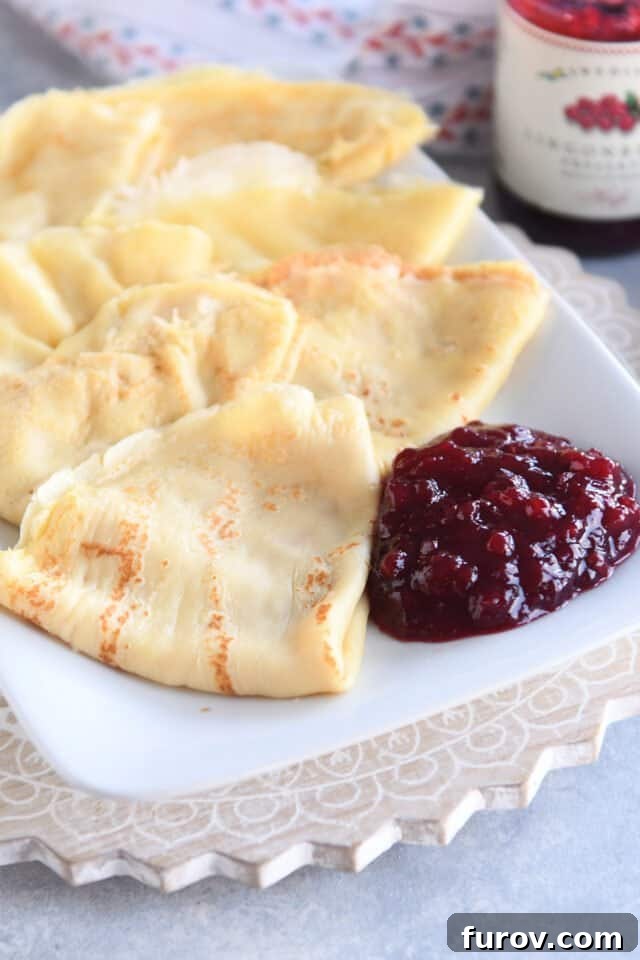
Beyond the recipe, the serving tradition also plays a key role. Swedish pancakes are a staple for fika (Swedish coffee break) or breakfast, often enjoyed rolled or folded into neat triangles, creating a delightful presentation that complements their simple, wholesome appeal.
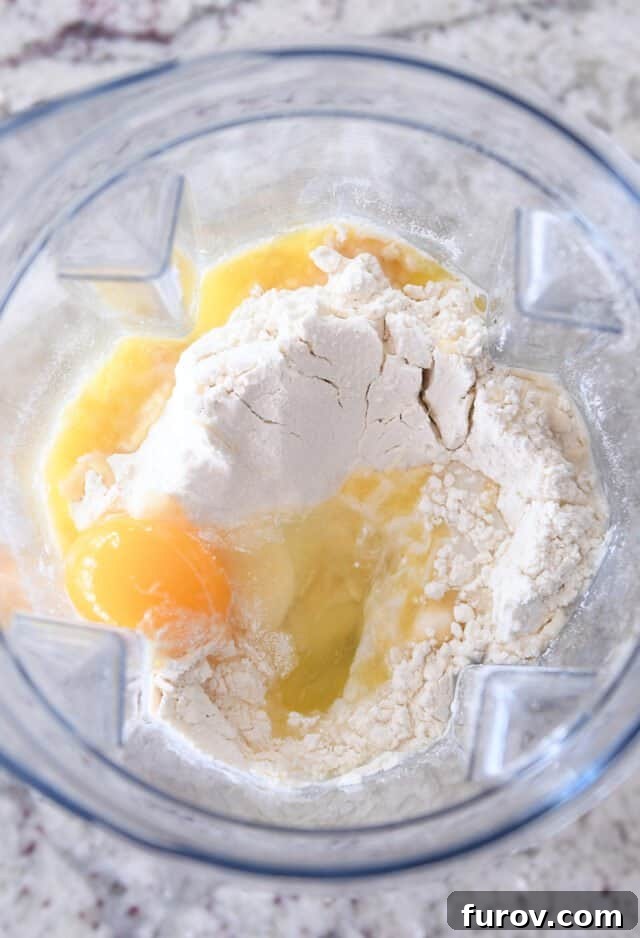
Crafting the Perfect Swedish Pancake Batter
Creating the batter for Swedish pancakes is remarkably simple and straightforward, requiring just a handful of basic ingredients that you likely already have in your pantry.
- Eggs: Provide structure and richness, contributing to the signature thinness and pliability.
- All-Purpose Flour: Forms the base of the pancake, giving it body without making it heavy.
- Milk: Adds essential moisture and creates a smooth batter consistency. Whole milk is often preferred for a richer flavor, but any milk will do.
- Salt & a Touch of Sugar: Salt balances the flavors, while a small amount of sugar enhances the overall sweetness and promotes golden-brown edges.
- Melted Butter: A key ingredient in Swedish pancakes, melted butter adds a wonderful richness and subtle flavor, distinguishing them from many crepe recipes. It also helps achieve that desirable tender texture.
For ultimate ease and a silky-smooth batter, I highly recommend combining all the ingredients in a blender and processing until completely smooth. This method ensures there are no lumps and the ingredients are perfectly incorporated. Alternatively, you can achieve excellent results by whisking everything together vigorously in a large bowl, taking care to eliminate any flour pockets.
Once mixed, consider letting your batter rest for at least 15-30 minutes, or even overnight in the refrigerator. This resting period allows the flour to fully hydrate and the gluten to relax, resulting in even more tender and uniform pancakes. While not strictly necessary, it can noticeably improve the final texture.
Mastering the Art of Cooking Swedish Pancakes
Cooking Swedish pancakes requires a bit of technique to achieve that signature thinness and golden hue, but with a little practice, you’ll be flipping like a pro. These delicate delights can be cooked either in a traditional nonstick skillet or on a flat electric griddle. I’ll walk you through both methods, and a little further down, I confess my strong preference for one over the other!
Before you begin, ensure your pan or griddle is properly heated and lightly greased. The first pancake is often a “test pancake” – it helps you gauge the correct temperature and batter consistency. Don’t worry if it’s not perfect; it’s a rite of passage for pancake making!
To cook the pancakes in a skillet:
- Heat a 10-inch nonstick skillet over medium heat. Allow it to get sufficiently hot, but not smoking.
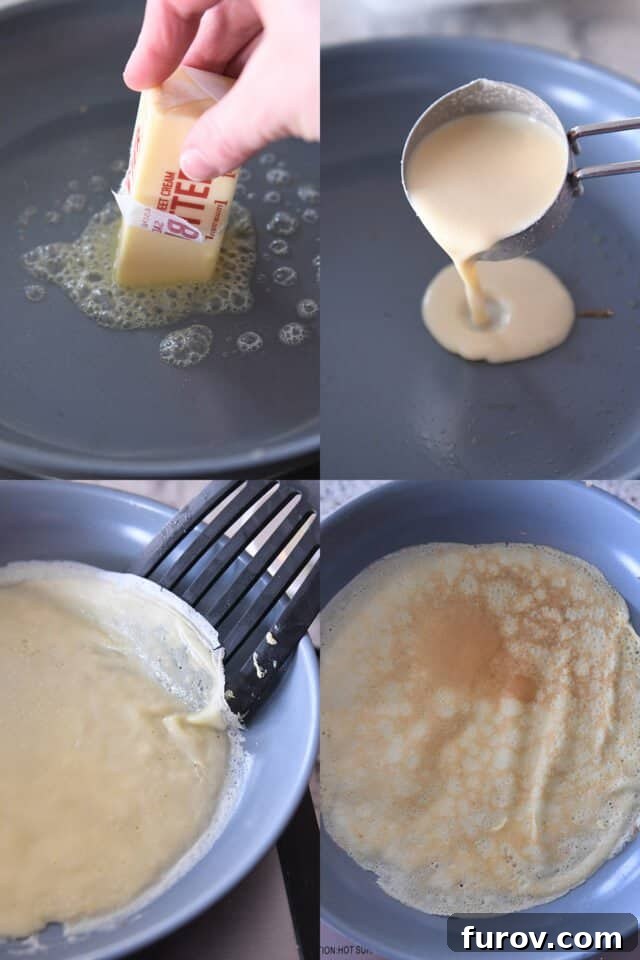
- Lightly brush the bottom of the skillet with melted butter or a neutral cooking oil. Just enough to coat; too much will make the pancakes greasy.
- Pour approximately 1/4 to 1/3 cup of batter into the center of the hot skillet.
- Immediately and quickly lift the pan and gently swirl it around in a circular motion. This action spreads the thin batter evenly across the entire bottom surface of the pan, forming a large, delicate circle.
- Cook for 1-2 minutes until the pancake is golden on the bottom and the edges begin to appear set and slightly dry.
- Carefully slide a thin, flexible spatula underneath the pancake and flip it over. Cook on the second side for another 30-60 seconds until lightly browned and cooked through.
- Remove the cooked pancake to a plate and repeat with the remaining batter, re-greasing the pan as needed.
To cook the pancakes on a griddle:
- Preheat an electric griddle to a medium temperature, typically between 325-350 degrees F (160-175 C). Consistent heat is key for multiple pancakes.
- Lightly brush the heated griddle with melted butter or oil. The flat surface makes this easy and even.
- Using a 1/4 to 1/3 cup measuring cup, pour portions of batter into separate circles on the griddle, leaving enough space between them.
- Immediately and quickly use the bottom of the measuring cup to gently spread each dollop of batter outwards into a wider, thinner circle. Work swiftly, as the batter sets quickly.
- Cook for 1-2 minutes until the bottom of each pancake is golden brown and the edges begin to bubble and look set.
- Slide a thin, flexible spatula underneath each pancake and carefully flip it. Cook on the second side for another 30-60 seconds until lightly browned.
- Transfer the cooked pancakes to a plate and continue with the remaining batter, brushing the griddle with butter as needed. The griddle allows for cooking several at once, significantly speeding up the process.
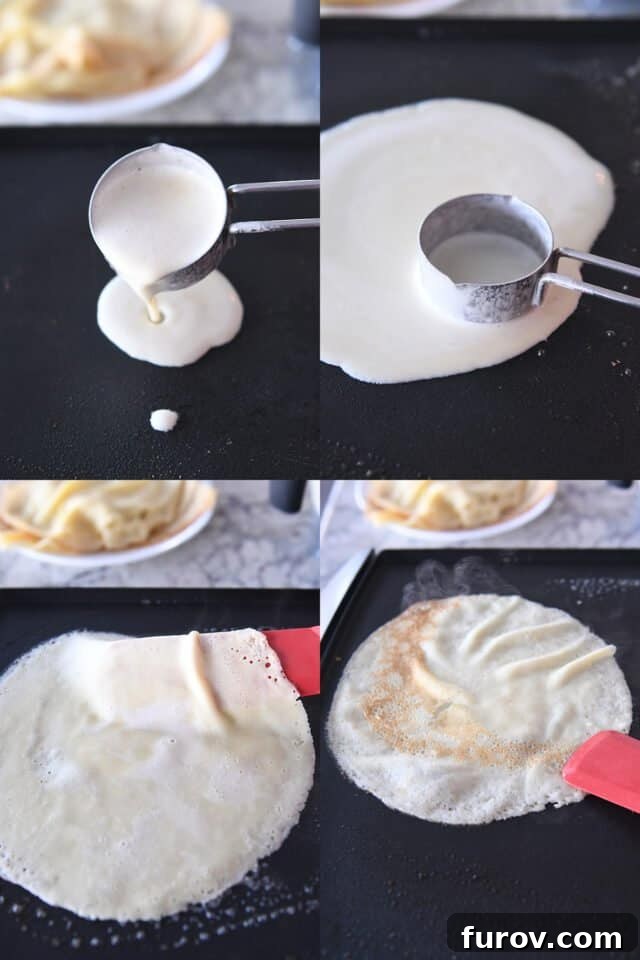
My Preference for Cooking Swedish Pancakes: Griddle vs. Skillet
While the skillet method is traditional and perfectly viable, I must confess my unwavering preference for cooking Swedish pancakes on an electric griddle. It’s not necessarily the most “authentic” way, but for the home cook focused on efficiency and ease, it’s a game-changer.
Firstly, the ability to cook multiple pancakes simultaneously on a griddle significantly speeds up the process. When you’re making a batch for a hungry family, this is an invaluable time-saver. No more waiting impatiently for one pancake at a time to finish!
Secondly, and perhaps most crucially for delicate thin pancakes, a flat griddle surface makes flipping incredibly easy. With a skillet, the curved edges can sometimes make it challenging to get the spatula cleanly underneath the thin pancake without tearing it. On a flat griddle, the spatula glides effortlessly, leading to fewer ripped pancakes and far less frustration.
In short, I experience significantly fewer tears, less frustration, and achieve consistently beautiful pancakes when I opt for the griddle. This translates to a much more enjoyable cooking experience, and frankly, far fewer exasperated expletives in my kitchen. So, to preserve both my soul and my sanity, the electric griddle is my preferred tool for Swedish pancake mastery.
(I use an older version of this griddle aff. link; it has served me well for many years and continues to be a reliable kitchen workhorse.)
Swedish Pancakes for Breakfast: Deliciously Versatile
This Swedish pancakes recipe has earned a permanent spot in our breakfast rotation, and for good reason. They are incredibly adaptable and make mornings special, even on busy days.
One of my favorite hacks for streamlining mornings is to prepare a large batch of these pancakes the night before. While listening to a podcast or audiobook, I’ll cook them up, stack them, and then store them in the refrigerator. This means that when the early morning hour hits and no one (myself included!) feels quite ready to function, a delightful, ready-to-eat breakfast is waiting. It’s a small act of self-care that makes a big difference to the start of our day.
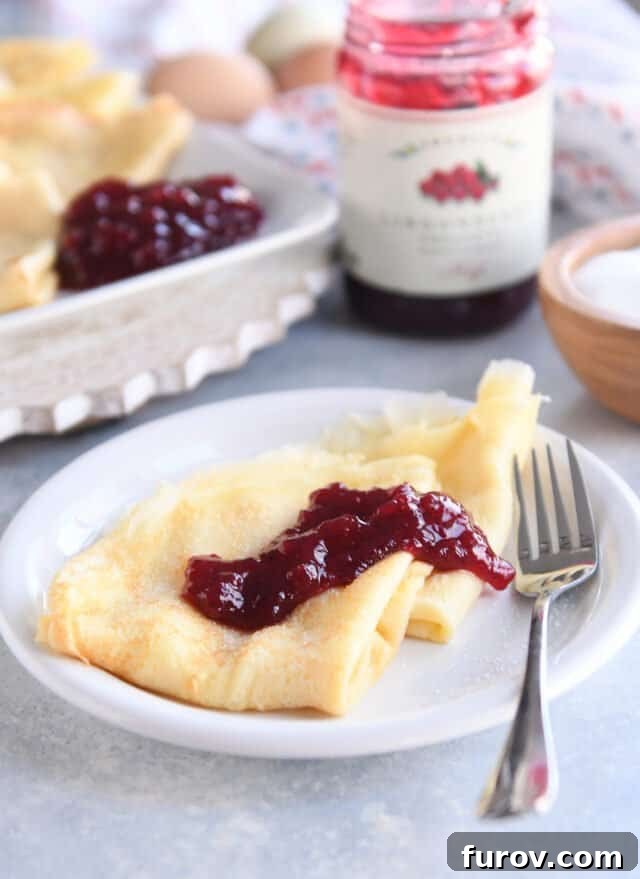
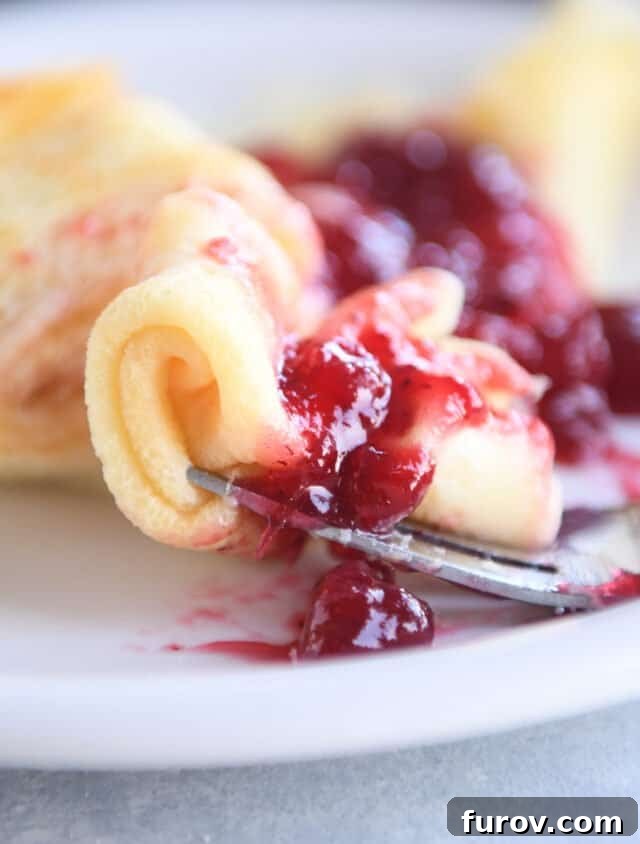
When it comes to serving, there’s truly no wrong way to enjoy Swedish pancakes. Traditionally, they are often sprinkled with granulated sugar and served alongside a dollop of fruit jam, or simply rolled up with a generous drizzle of maple syrup. The simplicity allows the inherent delicate flavor of the pancake to shine through.
Recently, I embraced my inner IKEA enthusiast and ordered some authentic lingonberry jam aff.link to pair with these. While it wasn’t an instant hit with everyone in the family, I absolutely loved it. Its unique tart-sweet profile has made it one of my all-time favorite jam flavors, adding an authentic Scandinavian touch to our breakfast spread.
Beyond the traditional, feel free to get creative with toppings! Fresh berries like strawberries, blueberries, or raspberries are always a winner. A dollop of whipped cream, a dusting of powdered sugar, a spread of Nutella, or even a squeeze of lemon juice can transform these pancakes into new culinary experiences. While typically sweet, their mild flavor also makes them a surprisingly good candidate for savory fillings, like cream cheese and smoked salmon, if you’re feeling adventurous and want to lean more into a crepe-like serving style.
For storage, allow cooked pancakes to cool completely before stacking them with parchment paper in between to prevent sticking. Store them in an airtight container in the refrigerator for up to 3-4 days. To reheat, you can gently warm them in a microwave, a lightly greased skillet, or even a toaster oven until soft and heated through.
One Year Ago: Triple Chocolate Scones
Two Years Ago: Loaded Baked Potato Soup
Three Years Ago: Super Easy S’Mores Chocolate Pie {or Tart}
Four Years Ago: Incredible Fluffy Overnight Buttermilk Pancakes
Five Years Ago: Chinese Cashew Chicken {30-Minute Meal}
Six Years Ago: Double Chocolate Quick Bread
Seven Years Ago: Healthier Banana Bread Chocolate Chip Oat Snack Bars
Eight Years Ago: Family Style Shrimp Scampi {20-Minute Meal}
Nine Years Ago: Chocolate Tres Leches Cake
Ten Years Ago: Crème Fraiche {How-To} and Caprese Focaccia
Swedish Pancakes
16
pancakes
20 minutes
mins
20 minutes
mins
40 minutes
mins
Pin
Rate
Ingredients
-
2 ½ cups
(568 g)
milk -
1 ¼ cups
(178 g)
all-purpose flour -
3 large
(150 g out of shell)
eggs -
2 tablespoons
(28 g)
melted butter -
1 tablespoon
(13 g)
granulated sugar -
½ teaspoon
salt
Instructions
-
Combine all of the ingredients in a blender and process until smooth (or whisk the ingredients together in a medium bowl until smooth).
-
Griddle Cooking: Preheat an electric griddle to medium heat (about 325 to 350 degrees F). Brush griddle with melted butter. Pour 1/4 to 1/3 cup batter into a circle and quickly use the bottom of the measuring cup to lightly spread the batter into a large thin circle.
-
Cook until the bottom is turning golden and the top of the pancake is mostly dry (with no runny wet batter spots). Use a thin spatula to flip. Cook until the second side is lightly browned.
-
Skillet Cooking: Place a 10-inch nonstick skillet over medium heat. Brush the bottom of the pan with butter. Pour 1/4 to 1/3 cup batter into the pan. Quickly lift the pan while rotating/swirling in a circle to spread the batter evenly over the bottom of the pan.
-
Cook until the edges are bubbling and the bottom has golden spots. Use a thin spatula to flip. Cook until the second side is lightly browned.
-
Stack the Swedish pancakes on a plate (or fold into triangles). Serve sprinkled with granulated sugar and jam (or with syrup, whipped cream, strawberries, etc.).
Mel Gunnell
Breakfast
American
Stovetop
Serving:
1
pancake
,
Calories:
80
kcal
,
Carbohydrates:
10
g
,
Protein:
3
g
,
Fat:
3
g
,
Saturated Fat:
1
g
,
Cholesterol:
40
mg
,
Sodium:
115
mg
,
Fiber:
1
g
,
Sugar:
3
g