
Unraveling the mystery behind baking cocoa: Discover the essential differences between Dutch-process, natural, and unsweetened cocoa powder in this comprehensive guide!
Mastering Cocoa Powder: Your Essential Guide to Dutch-Process vs. Natural Unsweetened
Welcome to the definitive guide on cocoa powder! If you’ve ever found yourself puzzled by recipes calling for “Dutch-process cocoa” or wondered how it truly differs from the “regular” natural unsweetened variety in your pantry, you’re not alone. The world of baking cocoa can seem complex, but understanding these fundamental differences is key to achieving perfect chocolatey results every time. This comprehensive guide aims to demystify cocoa powder, offering clear explanations, expert insights, and practical advice to elevate your baking. Get ready to transform your chocolate creations with newfound confidence!
The Core Distinction: Natural Unsweetened vs. Dutch-Process Cocoa
At its heart, the choice of cocoa powder significantly impacts the flavor, color, and even the texture of your baked goods. There are two primary types of cocoa powder commonly used in baking: Natural Unsweetened Cocoa Powder and Dutch-Process Cocoa Powder. While both originate from cocoa beans, their processing methods diverge, leading to distinct characteristics and preferred applications.
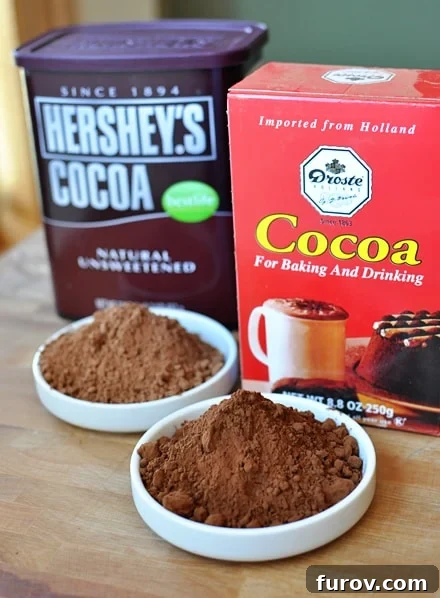
Most home bakers are familiar with natural unsweetened cocoa powder, often found in popular brands like Hershey’s and Nestlé. It’s the go-to for many recipes due to its accessibility and classic chocolate flavor. Dutch-process cocoa, while perhaps less common in everyday pantries, is highly esteemed in culinary circles for its ability to deliver a rich, deep chocolate experience, often resulting in darker baked goods. Understanding what sets them apart is the first step toward becoming a cocoa connoisseur.
What is Dutch-Process Cocoa and How Does It Compare to Natural Unsweetened?
Both natural and Dutch-process cocoa powders begin their journey as cacao beans. These beans are fermented, dried, roasted, and then ground into a paste known as cocoa liquor. The fat (cocoa butter) is then pressed out, leaving behind solid cocoa “press cake,” which is subsequently ground into a fine powder. The crucial difference lies in an additional step for Dutch-process cocoa.
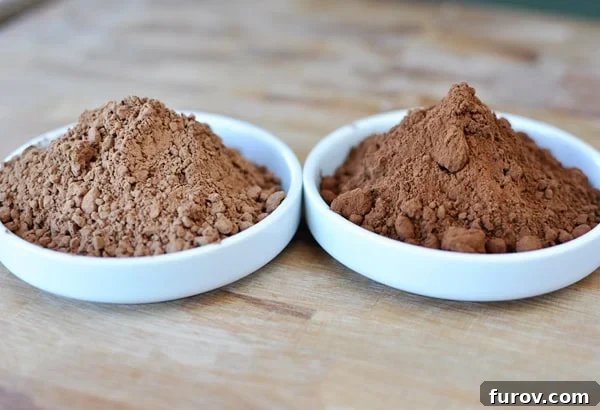
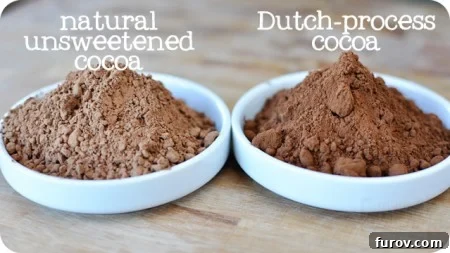
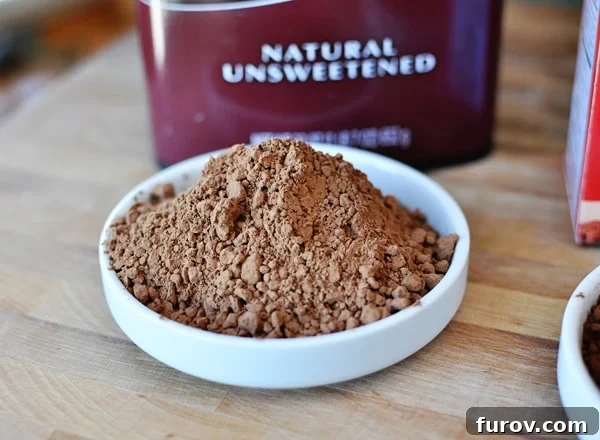
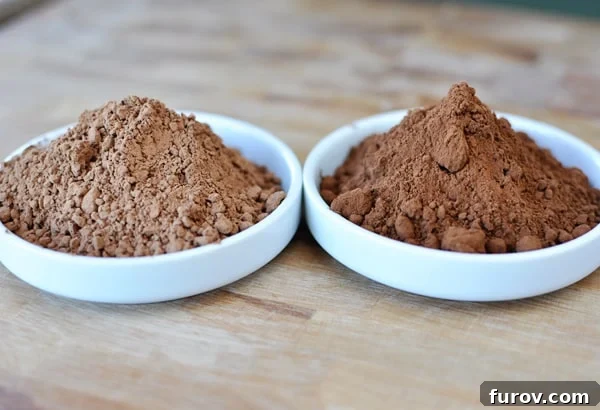
- Natural Unsweetened Cocoa Powder: This cocoa is made directly from roasted and ground cocoa beans. It is naturally acidic, with a pH level typically between 5.0 and 6.0. This acidity contributes to its sharp, somewhat bitter, and fruity chocolate flavor, reminiscent of raw cacao. Its lighter brown color is also characteristic.
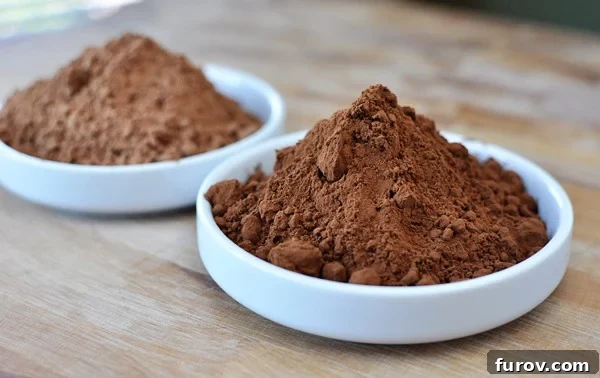
- Dutch-Process Cocoa Powder (Alkalized Cocoa): With Dutch-process cocoa, the cocoa beans or cocoa liquor are treated with an alkaline solution (such as potassium carbonate) before, during, or after grinding. This process, known as “Dutching” or alkalization, neutralizes the natural acidity of the cocoa. The result is a cocoa powder that is darker in color, ranging from deep reddish-brown to almost black, and possesses a milder, less bitter, and more mellow chocolate flavor. The alkalization process significantly reduces the acidity, bringing the pH up to 7.0 or higher.
The impact of this alkalization extends beyond just color and flavor. The reduced acidity in Dutch-process cocoa makes it less reactive with leavening agents, a critical factor we’ll explore in the next section. For years, I approached the claim of Dutch-process cocoa’s superior flavor with skepticism. However, after conducting my own side-by-side taste tests, particularly with brownies, I became a firm believer. The difference in bitterness and depth of flavor is genuinely noticeable, with Dutch-process cocoa offering a smoother, more profound chocolate experience.
The Leavening Connection: Can You Substitute Cocoa Powders?
The question of interchangeability is perhaps the most debated topic when it comes to cocoa powders. While it might seem like a minor detail, the acidity of your cocoa powder plays a pivotal role when a recipe calls for a leavening agent. This is where baking soda and baking powder come into play.
Baking Soda vs. Baking Powder: A Chemical Balancing Act
Understanding the chemistry of leavening is crucial:
- Baking Soda (Sodium Bicarbonate): This is a pure alkaline compound. For baking soda to produce carbon dioxide gas (and thus leaven a baked good), it requires an acidic ingredient. Natural unsweetened cocoa powder, with its inherent acidity, is a perfect partner for baking soda, creating the necessary reaction for lift.
- Baking Powder: This is a pre-mixed leavening agent that contains baking soda, an acid (like cream of tartar), and a starch. It is designed to create lift without needing an additional acidic ingredient from the recipe itself. Baking powder typically works best in recipes with neutral ingredients, or those using Dutch-process cocoa, which has had its acidity neutralized.
Therefore, if a recipe specifically calls for natural unsweetened cocoa powder and baking soda, substituting Dutch-process cocoa could lead to flat, dense results because the necessary acid for the baking soda to react would be missing. Conversely, using natural cocoa powder in a recipe designed for Dutch-process and baking powder might result in an overly acidic taste or an imbalance in leavening. As a general rule, my primary advice is always to follow the recipe! The recipe creator has likely tested their formula to achieve optimal results with the specified ingredients.
When Substitutions Might Be Acceptable
While strict adherence is often best, there are scenarios where interchangeability is less risky. Many recipes, particularly for dense, fudgy brownies or chocolate sauces, do not rely on leavening agents or use very little. In such cases, where the lift isn’t a primary concern, your choice of cocoa powder becomes more about desired flavor and color than chemical reaction. Here, personal preference can take precedence.
Interestingly, some culinary authorities, like Cook’s Illustrated, have argued for greater interchangeability. After extensive testing, they concluded that Dutch-process cocoa consistently outperforms natural cocoa in taste tests and that, in most home baking scenarios, the leavening issues are often negligible. They even suggested that a home baker might only need to keep Dutch-process cocoa on hand. While their findings are compelling, my own experience, and indeed many other bakers’, suggests that for recipes heavily reliant on leaking, caution is still warranted.
My personal “rule of thumb” has evolved over time. While I wholeheartedly endorse following a recipe as written for guaranteed success, I have, in the past, substituted natural unsweetened cocoa for Dutch-process in a pinch, particularly when a recipe didn’t seem to rely heavily on leavening. However, I’ve learned that the reverse substitution (Dutch-process for natural in a baking soda-dependent recipe) can lead to disappointing results. My recent experience strongly suggests that sticking to the specified cocoa type, especially when leavening is a factor, is the wisest approach to ensure the best possible outcome.
Stocking Your Pantry: Which Cocoa Powders to Keep On Hand?
The question of which cocoa powder(s) to stock often comes down to budget, availability, and your baking habits. For many years, Dutch-process cocoa was either prohibitively expensive or difficult to find in my local grocery stores. This led me to rely heavily on natural unsweetened cocoa and make substitutions when necessary.
However, my approach has since shifted. While I still always have a large container of Hershey’s natural unsweetened cocoa in my pantry (it’s readily available and cost-effective in bulk from places like Sam’s Club or Costco), I now also make an effort to keep Dutch-process cocoa on hand. I’ve found that purchasing quality Dutch-process cocoa online, such as the Droste brand (a consistent favorite in taste tests, second only to Callebaut in some expert reviews), often provides a better balance of price and quality compared to local specialty stores. The convenience of online ordering, sometimes with free shipping, makes this a practical solution.
My journey through baking trials has taught me the value of having both types. While substitutions *can* work, they often compromise the intended flavor or texture. For crucial recipes where the type of cocoa is specified, having the correct ingredient ensures that your delicious efforts yield precisely the results envisioned by the recipe creator. This dual-stocking strategy empowers me to confidently tackle any chocolate baking challenge.
The Taste Test: Is Dutch-Process Cocoa Truly Superior?
This is perhaps the most compelling question for any passionate baker: does Dutch-process cocoa genuinely make a noticeable difference? If you’re someone who delights in meticulously crafted, impeccably flavored baked goods, then the answer is a resounding yes. Investing in quality Dutch-process cocoa will undoubtedly elevate your chocolate creations.
For years, I considered myself a discerning home cook, even a self-proclaimed food snob, yet I exclusively used natural unsweetened cocoa powder. My chocolate cupcakes and brownies, made with trusty Hershey’s, were always met with rave reviews from family and friends. I was perfectly content, unaware of what I might be missing. Then, a few years ago, I ventured into the world of Dutch-process cocoa, and my perspective changed dramatically. The chocolate flavor it imparts, especially in recipes where cocoa is the primary chocolate source, is undeniably deeper, darker, and more decadently rich.
A Brownie Revelation: Side-by-Side Comparison
To truly understand the impact, I conducted a direct comparison using my favorite all-cocoa powder brownie recipe (meaning no melted chocolate, only cocoa powder). This recipe consistently produces incredibly fudgy, intensely chocolatey brownies that perfectly satisfy that “boxed brownie mix” craving my husband loves. Over the years, I’d made them with both natural and Dutch-process cocoa, always finding them delicious. But I had never tasted them side-by-side until recently.
I prepared two batches simultaneously: one with natural unsweetened cocoa powder and the other with Dutch-process cocoa powder. Visually, the Dutch-process brownies were noticeably darker, a characteristic I had observed before. However, the true revelation came with the taste test. While the natural cocoa brownies were certainly good, they simply couldn’t compete with their Dutch-process counterparts. The natural cocoa brownies had a sharper, slightly bitter edge, and a less profound chocolate flavor. In stark contrast, the Dutch-process brownies offered a velvety, mellow, and intensely deep dark chocolate flavor that completely overwhelmed the other batch. As a dedicated dark chocolate lover, the Dutch-process brownies were a clear winner, delivering a richness and complexity that the natural cocoa simply couldn’t match.
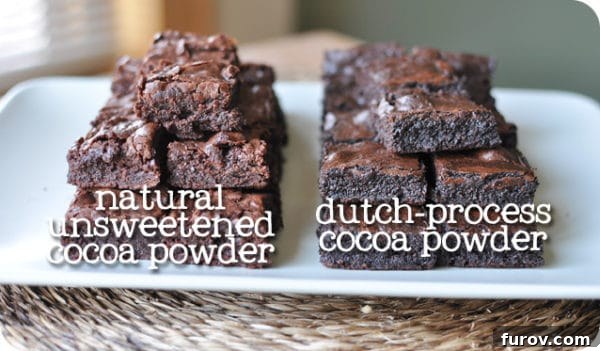
This firsthand experience affirmed what experts have long claimed: Dutch-process cocoa truly does impart a more mellow, deeper chocolate flavor. For all-cocoa powder recipes, especially those where chocolate flavor is paramount, I will continue to use it exclusively. However, natural unsweetened cocoa powder still holds an important place in the baking world, particularly in recipes that rely on its acidity for leavening. Therefore, I’ve committed to keeping both on hand. My plan now is to continue experimenting, even revisiting Cook’s Illustrated’s recommendations, to incorporate Dutch-process cocoa into more of my recipes and explore its full potential.
Beyond the Basics: Tips for Storing and Using Cocoa Powder
To get the most out of your cocoa powders, consider these additional tips:
- Storage: Store cocoa powder in an airtight container in a cool, dark, dry place. Proper storage helps prevent clumping, preserves its flavor, and extends its shelf life. While cocoa powder doesn’t truly “go bad” in the sense of becoming unsafe, it can lose its potency and flavor over time. Generally, it’s best used within two years of opening.
- Sifting: Cocoa powder, especially natural unsweetened, can be prone to clumping. Sifting it with other dry ingredients ensures a smooth, lump-free batter and even distribution of flavor and leavening.
- Blooming Cocoa: For an intensified chocolate flavor, try “blooming” your cocoa powder. Whisk it with hot liquid (like hot water, coffee, or milk) before adding it to your batter. This technique helps the cocoa solids to dissolve and releases more flavor compounds, resulting in a richer, deeper chocolate taste and often a darker color in the final product.
- Quality Matters: While budget-friendly brands are great for everyday baking, experimenting with higher-quality cocoa powders from specialty brands can reveal new dimensions of flavor. Look for single-origin cocoas or those with a high-fat content for a richer experience.
I hope this deep dive into the world of cocoa powder has clarified the distinctions between natural unsweetened and Dutch-process varieties, empowering you to make informed choices in your baking. Whether you’re aiming for a sharp, fruity chocolate note or a deep, mellow indulgence, understanding your cocoa is the first step. Feel free to share your own cocoa powder questions, experiences, and favorite brands in the comments below!