

Welcome to the ultimate guide for navigating the back-to-school season! This comprehensive post compiles years of proven strategies and invaluable tips designed to help families conquer the daily challenges of school lunches, weeknight dinners, and the general hustle of life during this busy time of year. We understand the unique pressures parents face as children return to school or embark on homeschooling adventures, and it can often feel overwhelming just to manage meals and routines. This guide is crafted to simplify your life, offering practical advice, organizational tools, and encouraging insights to help you not just survive, but truly thrive.
As the leaves begin to change and the familiar rhythm of academic life resumes, many families find themselves grappling with a sudden increase in demands. The transition from relaxed summer days to structured school schedules can be jarring, often leading to a scramble for effective systems that support both children and parents. From the endless task of preparing nutritious school lunches to the daily query of “What’s for dinner?”, these challenges can quickly pile up, making it feel like an insurmountable mountain. But it doesn’t have to be. We’ve gathered the best of our collective wisdom and shared experiences into one convenient resource, specifically tailored to ease your load and foster a smoother, more enjoyable back-to-school experience.

Beyond the logistical hurdles of meal preparation, the back-to-school period often brings an added layer of stress to overall family life. It’s easy to feel stretched thin, juggling various responsibilities from school drop-offs and homework help to extracurricular activities and household chores. This intense period can sometimes push parents to their limits, leading to moments where finding a quiet corner (perhaps with a bag of chocolate chips) feels like the only coping mechanism. Recognizing this universal struggle, we’ve developed a robust collection of “How to Survive Back to School” strategies over the years. This post serves as the definitive compilation, bringing together all the great advice and adding some fresh, extra help to truly empower you. Because, let’s be honest, we could all use a little extra support during these demanding times.
Mastering School Lunches: Smart Strategies for Busy Mornings
For many families, packing school lunches is a daily ritual that can quickly become monotonous and time-consuming. Assuming your children bring lunches from home, this is one area where efficiency and delegation can make a significant difference. In previous discussions, we’ve explored the revolutionary concept of entrusting children with the responsibility of packing their own lunches. While this might not seem groundbreaking, it represents a substantial shift for parents who, like me, have often been “control freaks” when it comes to ensuring their kids have the “perfect” lunch. Of course, there are days when parental assistance is needed, or a partner steps in (though some might readily admit it’s their least favorite chore!).
Embracing the philosophy of nurturing independent and functional adults, I decided it was time to loosen the reins and allow my children to develop crucial life skills in the process. With none of my kids showing interest in school cafeteria meals or salad bars, home-packed lunches became the default. The challenge, then, was to create a system that ensured nutritious choices without leading to a lunch bag filled solely with snacks (like a 13-year-old’s dream of Doritos). The solution? A simple yet effective School Lunch Checklist.
This checklist, taped to the inside of the cupboard where lunches are packed each evening or morning, serves as a clear guide. It’s not complex or overly fancy, but this practical tool empowers my children to make acceptable and balanced lunch choices while also offering optional items if they desire more variety or a heartier meal. The beauty of this system lies in its simplicity and clarity, fostering autonomy without sacrificing nutrition. So far, the kids are absolutely loving this newfound responsibility, and it has undeniably made my life easier as well.
The linchpin of this successful system, from a parent’s perspective, is maintaining a well-stocked pantry and refrigerator with most of the items listed on the checklist. To prevent the constant need for retyping lists as items go out of stock or new groceries are introduced, I quickly laminated the checklist using my incredibly inexpensive home laminator – a device that has, honestly, saved my sanity on numerous occasions. This lamination allows me to use a whiteboard marker to jot down temporary additions, like fruit leathers picked up from Costco, and easily wipe them off when they’re gone. The items included on the typed list are standard staples that are generally available in our home, ensuring consistency and ease of use.
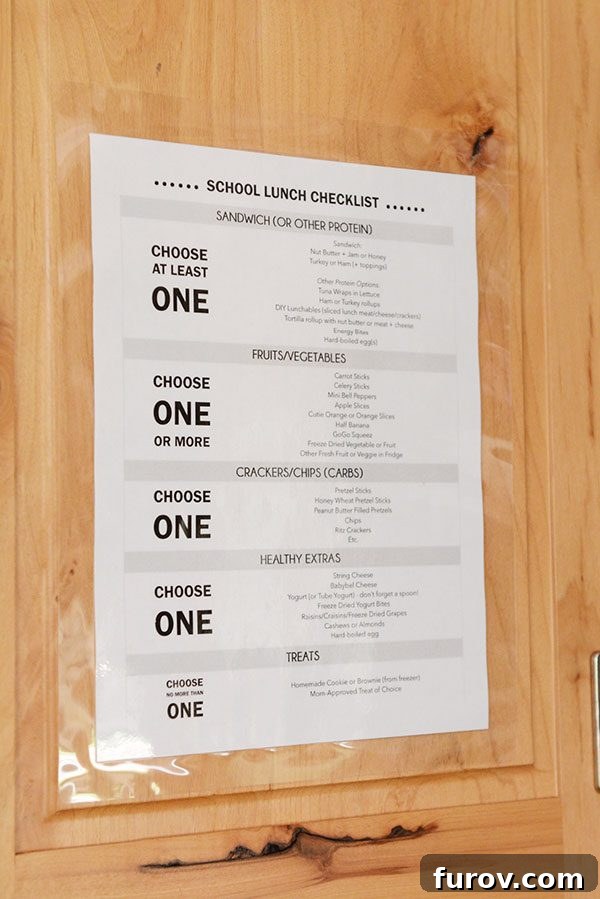
While my specific list of school lunch foods may not perfectly align with every family’s dietary preferences, the core principle of a guided checklist remains universally applicable. You are warmly invited to download a FREE copy of this checklist; it can be a fantastic starting point for adapting to your family’s needs and making your school lunch packing routine smoother than ever. It’s about empowering kids with choices within a structured framework, making meal prep less of a chore and more of a collaborative effort.
Download Your Free School Lunch Checklist HERE!
Click to Download the Printable School Lunch Checklist
For even more in-depth information and a treasure trove of collective wisdom, be sure to explore these additional resources on school lunch solutions:
School Lunch Solutions {Part One}: Dive into foundational strategies, creative ideas for packing variety, and common pitfalls to avoid. The comment section alone is a goldmine of reader tips!
School Lunch Solutions {Part Two}: Further expand your repertoire with more innovative ideas, bento box inspiration, and solutions for picky eaters. Don’t miss the incredibly helpful discussions in the comments!

Simplifying Dinnertime: Essential Strategies for Stress-Free Meals
Ah, dinnertime. For some, it’s the least favorite topic on the planet, a daily culinary conundrum that looms large. Yet, regardless of family size, the fact remains: everyone needs to eat. And if you’re cooking for a crowd, or even just for yourself, embracing the inevitability of dinnertime can transform it from a source of dread into an opportunity for connection and nourishment. The key to conquering the dinner dilemma, especially during the hectic back-to-school season, lies in thoughtful preparation and effective meal planning.
Over the years, I’ve consistently championed the power of menu planning, and for good reason. It’s a game-changer that minimizes stress, saves money, reduces food waste, and ensures your family enjoys balanced, wholesome meals even on the busiest evenings. Instead of last-minute panic over what to cook, a well-structured menu plan provides clarity and a roadmap for your week. It empowers you to shop smarter, prep more efficiently, and enjoy more quality time around the table.
Here are a few indispensable menu planning resources to get you started:
1) This invaluable post provides you with FOUR free, easy-to-follow menu plans that encompass breakfast, lunch, and dinner meals. Beyond just meal ideas, it includes an attached grocery list and step-by-step planning and prep suggestions, making it a complete resource for streamlining your week. These plans are designed with simplicity in mind, ensuring delicious meals without excessive effort.
2) Explore a quick “Let’s Talk” post dedicated to those nights when time is scarce or the desire to cook has completely evaporated. This resource lists all our favorite super-fast meal ideas perfect for “those” nights – you know, the ones where you need a delicious and minimal-effort solution. From quick pantry staples to clever shortcuts, it’s a lifesaver for busy evenings.
3) Access a helpful link to a comprehensive 30-day meal plan featuring only 30-minute recipes. While you might customize some recipes or incorporate leftover nights and dine-out evenings, this plan offers an excellent foundation for quick, easy, and satisfying family meals. It’s perfect for families seeking efficiency without compromising on taste or nutrition.
4) Don’t overlook our dedicated menu planning section, often hidden amidst the plethora of other delicious content! This section is undergoing an exciting overhaul with many new menu plans on the horizon, but it currently houses a vast archive of free, downloadable menu plans that you can adapt to suit your preferences and family’s needs. It’s a treasure trove of inspiration for consistent meal planning.
Today, I’m thrilled to share one of my favorite menu plans, previously featured in my weekly newsletter. This plan is a testament to easy meals, complete with a convenient grocery list, and even includes breakfast, lunch, and treat ideas. It’s pure culinary awesomeness, designed to make your week flow smoothly and deliciously.
Click the image below to download this incredible menu plan and start simplifying your dinnertime routine!
Beyond Meals: Essential Life Management Tips for a Balanced School Year
Navigating the rigorous schedules of the school year demands more than just meal planning; it calls for a holistic approach to life management. This year, I’ve personally committed to integrating a couple of practices I’d previously resisted, proving that stepping out of one’s comfort zone, though initially challenging, can yield profound benefits. And believe me, I’m not naturally inclined to leave my comfort zone!
The first significant change has been monumental, even a little traumatizing at first. For the past decade, I’ve been diligent about fitting in 30-minute exercise videos (shoutout to Shaun T!), but I’m equally skilled at inventing excuses to skip a workout. My primary motivation for exercise has always been to support my eating habits. However, as my metabolism began its inevitable slowdown approaching 40, I realized things were, shall we say, becoming a bit sluggish. The time for a serious adjustment had arrived.

Though I used to roll my eyes at people who needed to go to a gym to work out (my apologies!), a powerful desire to make substantial changes to this “mom bod” before my upcoming birthday (my birthday is practically canceled if I can’t do a pull-up!) led me to convince Brian to join me. We now wake up at 4:30 a.m. to attend a local CrossFit gym that my sister has been enthusiastically recommending. While opinions on the “best” exercise vary widely, six weeks in, despite occasionally wanting to playfully punch the excessively cheerful 5 a.m. trainer, I am astonished by how much stronger I feel. It’s a remarkably low-key, low-pressure gym that doesn’t demand I deadlift 4,000 pounds (I’m perfectly happy with my modest trainer bar, thank you very much). For those in the area, it’s Sergeant’s Fitness in Caldwell. The most striking benefit has been the dramatic increase in my productivity throughout the rest of the day, with the exception of hitting an existential “I’m-going-to-die-I’m-so-tired” wall around 3:23 p.m., a clear indicator that waking up this early is pushing human limits. This early start has significantly shifted my blogging work hours to when my youngest is at morning kindergarten, requiring only a short hour or so of work after the kids are in bed, thus creating a more productive and balanced daily cycle.
The second crucial element focuses on balancing demanding schedules with vital one-on-one time with each child, especially during this incredibly busy period. With five children and a whirlwind of varied schedules, I frequently grapple with “mom guilt” – guilt over not spending enough quality time during the day, or over prioritizing routines and schedules instead of nurturing individual connections. This pervasive feeling can weigh heavily on parents, making it difficult to feel truly present and connected amidst the chaos.

To counteract this, we’ve reinstated a beloved family program called “Extras” (a super fancy name, I know!). My mom implemented a similar system with me and my siblings when we were growing up, and it’s something we still fondly reminisce about as adults. Eager to replicate that meaningful connection, I started “Extras” with my own children several years ago, though we’d recently fallen out of the habit. The premise is beautifully simple, yet incredibly powerful:
Each child gets a designated night of the week when they are allowed to stay up 15-20 minutes later than their siblings. If an older sibling is still working on homework, we simply retreat to a quiet space to ensure dedicated alone time. During their “Extra” time, they choose to spend it with either mom or dad, and they have complete freedom to choose *any* activity, whether inside or outside the home. The possibilities are endless: playing a favorite board game, watching hilarious YouTube videos together on the iPad, reading a captivating book, helping dad build something in the garage, going for a jog, practicing backflips on the trampoline, or even battling it out on Mario Kart on the Wii. Whatever sparks their interest, they’ve likely chosen it as their “Extra” activity.

The magic of “Extras” lies in this dedicated, undivided attention with just mom or dad. It might not seem like a significant time commitment, or that it would make a substantial difference, but the small sacrifice Brian and I make (as parents who cherish the quiet of regular bedtimes) has been justified countless times over. As our children have grown, this has become the precious window when they feel comfortable opening up about personal challenges, discussing things they hear at school (like the trials of middle school, which they thankfully don’t bring up at dinner around their younger sister), or even breaking down every intricate detail of the last BYU football game with their dad. While not every “Extra” night is an earth-shattering experience of parent-child bonding, it is consistently a time the kids eagerly anticipate, and so do we. We aim to do “Extras” twice a month, dedicating two weeks out of each month to this program. It creates a quiet, treasured island of time to connect with our children amidst the incessant whirlwind of life’s craziness, which often starts the minute we wake up and doesn’t cease until bedtime. These intentional moments are incredibly effective in strengthening family bonds and fostering open communication.
In conclusion, navigating the back-to-school season doesn’t have to be a period of overwhelming stress and exhaustion. By implementing smart strategies for school lunches and dinnertime, embracing personal growth through new routines, and intentionally carving out quality time for family connection, you can transform this demanding period into one of efficiency, joy, and stronger relationships. We hope these compiled tips and insights provide you with the tools and encouragement you need to make this school year your best yet.
Share Your Back-to-School Survival Skills!
Now, it’s your turn! We’d love to hear from you. What are your go-to back-to-school survival skills? Share your best tips, tricks, and strategies in the comments below to help our community thrive this academic year. Your experiences are invaluable!
Love ya.