


From Couch Potato to Marathoner: My Life-Changing Journey and Essential Running Wisdom
For many, the mere thought of running a mile can feel like an insurmountable challenge, a grueling test of endurance reserved for the exceptionally fit. I know this feeling intimately because I once harbored a deep-seated aversion to running. It wasn’t just a mild dislike; I genuinely hated it. The burning lungs, the aching muscles, the relentless monotony – it all felt like a punishment rather than a pastime. Yet, life has a peculiar way of introducing us to our greatest passions through unexpected inspirations. My personal transformation from a reluctant observer to a dedicated marathoner began with a single, profound experience that reshaped my entire perspective on what my body and mind were capable of achieving.
The pivotal moment arrived in 2007 when I witnessed my younger brother conquer the Chicago Marathon. It was a scorching hot day, with temperatures soaring into the upper 80s, so severe that the race had actually been called off for many slower participants due to safety concerns. Despite the brutal conditions, he pushed through, mile after agonizing mile. I joined him for the final six miles, a small gesture of support that put me right in the heart of his incredible struggle and unwavering determination. Watching him battle exhaustion and the elements to cross that finish line was, without a doubt, the most inspirational display of human spirit I had ever witnessed. It was then, in the midst of his monumental effort, that a powerful realization struck me: I needed to run my own marathon.
Embracing the Challenge: The Path to My First Marathon
Upon returning home to San Francisco, the idea of running a full marathon felt both exhilarating and utterly terrifying. Up until that point, I had never run more than six miles in my life. The prospect of covering 26.2 miles seemed like an impossible feat, a distance reserved for superhuman athletes. However, the fire ignited by my brother’s achievement burned brightly. I made the courageous decision to sign up for the 2008 San Francisco Marathon, a declaration of intent that committed me to this daunting new goal.
Recognizing the enormity of the task ahead, I wisely chose to join the San Francisco Marathon’s official training group. This decision proved to be one of the best I ever made on my running journey. Running alongside a community of like-minded individuals provided not only essential accountability but also invaluable camaraderie. Suddenly, what felt like an isolating endeavor transformed into a shared adventure. We celebrated small victories, commiserated over challenging runs, and drew strength from each other’s presence. Through this group, I absorbed a wealth of knowledge, from proper running form and injury prevention to nutrition strategies and mental fortitude techniques. The collective energy and shared purpose made the seemingly impossible goal of running 26.2 miles feel attainable.
Since that inaugural marathon, my passion for running has only deepened. I’ve completed a total of eight full marathons and numerous half marathons, each race adding another layer to my evolving identity as a runner. For several years, I even had the privilege of serving as a pacer for the SF training group, guiding others toward their finish line dreams and sharing the wisdom I had gained. The most cherished memories, however, are undoubtedly those marathons I ran alongside my brother, transforming an initial inspiration into a shared bond and countless unforgettable moments.
Life, as it often does, brought new priorities. Since the birth of my daughter two and a half years ago, marathon training has taken a backseat. But the desire to run remains as strong as ever. My current goal is to return to the iconic streets of Chicago and run the Chicago Marathon again this year, a dream contingent upon winning a spot in the lottery. This journey has instilled in me a profound belief: anyone, at any fitness level, possesses the potential to complete a half marathon or even a full marathon. The true key, and often the greatest hurdle, lies in consistently making time for the dedicated training required. It demands meticulous planning, unwavering support from family, friends, and even co-workers, and a deep commitment to yourself. And here’s a secret for aspiring runners: it gets easier. The more you run, the more enjoyable and less arduous it becomes. Soon, you’ll find yourself eagerly anticipating those long runs, chasing that unparalleled feeling of accomplishment that comes with achieving a running goal, no matter the distance.
Essential Wisdom for Every Runner: My Top 10 Tips
Embarking on a running journey, whether it’s your first 5K or an ambitious marathon, comes with its own set of challenges and triumphs. Based on my years of experience and countless miles, I’ve compiled a list of practical tips and suggestions designed to help you navigate your training, stay injury-free, and truly savor the experience. These insights are born from personal trial and error, shared wisdom from the running community, and a deep understanding of what it takes to get to that start line and across the finish line with a smile.
-
Find Your Tribe: Run with a Friend or Join a Group
Running can sometimes feel like a solitary sport, but it doesn’t have to be. Finding a running buddy, a local running club, or a training group can be a game-changer. This provides invaluable accountability, ensures you show up for those crucial runs, and offers much-needed companionship on long, challenging miles. Shared experiences, conversations, and encouragement can make the time fly by and transform a chore into an enjoyable social activity. Plus, running with others often brings a sense of safety, especially during early morning or evening runs.
-
Invest in Your Feet: Get Properly Fitted Running Shoes
Your running shoes are your most critical piece of equipment. Many common running injuries, such as shin splints, plantar fasciitis, and knee pain, can stem from wearing ill-fitting or worn-out shoes. Visit a specialized running store where experts can analyze your gait and recommend shoes that suit your foot type, running style, and arch support needs. Remember to replace your shoes regularly—typically every 300-500 miles—as cushioning and support degrade over time, even if the shoes look fine on the outside. Treating your feet well is paramount to a sustainable running journey.
-
Embrace the Plan: Follow a Training Schedule and Rest Days
Consistency and smart progression are key to long-term running success and injury prevention. Don’t simply run as far or as fast as you can every day. Instead, find a reputable training plan tailored to your goal distance (5K, half marathon, marathon) and stick to it. These plans incorporate a mix of long runs, speed work, tempo runs, and crucially, rest days. Rest days are not a sign of weakness; they are essential for muscle repair, recovery, and preventing overuse injuries. Showing up to the start line healthy and injury-free should always be your primary goal.
-
Prioritize Your Runs: Schedule Your Training Time
Your runs won’t magically happen; you need to intentionally carve out time for them. Treat your training sessions like non-negotiable appointments in your calendar. Whether it’s waking up earlier, utilizing your lunch break, or dedicating specific evenings, proactive scheduling ensures consistency. Communicate your training needs to your family, friends, and even co-workers so they can offer support and understanding. Making running a priority helps solidify it as a consistent and integral part of your lifestyle.
-
Practice What You Preach: Test Your Race Day Gear
The golden rule for race day is “nothing new.” This applies unequivocally to your running clothes, shoes, socks, and any other gear. During your training runs, especially your longer ones, wear the exact outfit and shoes you plan to use on race day. This allows you to identify any potential issues like chafing from a new shirt, blisters from untried shoes, or discomfort from an annoying tag. The last thing you want is an unexpected gear malfunction to derail your performance or enjoyment on race day.
-
Stick to the Familiar: Race Day Nutrition and Routine
Just like with your gear, your race day nutrition and routine should be meticulously practiced and consistent with your training. Eat the exact same dinner the night before the race that you’ve practiced during training. Consume the same breakfast on race morning at a similar time to your long practice runs. Avoid experimenting with new sports drinks, energy gels, or unfamiliar foods on the course. I learned this the hard way: once, I decided to add a generous portion of pie to my pre-marathon dinner. Let’s just say I spent far too much time visiting the portable toilets during the race. Consistency prevents unpleasant surprises and ensures your digestive system cooperates when it matters most.
-
Hydration is Key: Stay Adequately Hydrated During Runs
Proper hydration is crucial for optimal performance and overall well-being, especially during longer runs and in warmer weather. Learn your body’s hydration needs and practice carrying and drinking from a water bottle, hydration vest, or belt during your runs. Don’t wait until you feel thirsty; sip water or an electrolyte drink regularly to prevent dehydration. Understanding how much fluid you need will help you plan your intake for both training and race day.
-
Fuel Your Engine: Strategically Fuel Your Body During Runs
For runs lasting longer than an hour, your body will need external fuel to maintain energy levels. Experiment during your training to find what works best for you: energy gels, chews, blocks, or even real food like bananas or pretzels. Pay attention to the recommended timing for consumption to avoid “hitting the wall” or bonking. Practicing your fueling strategy during long runs is essential to ensure your stomach can handle it and you know exactly when and what to take on race day.
-
Wear Your Name with Pride: The Power of Crowd Support
This might seem like a small detail, but it makes a monumental difference on race day. Have your name clearly visible on the front of your shirt. You can get custom shirts made (just remember the “practice your gear” rule!), or simply use masking tape and a marker. When people in the crowd see your name, they’ll shout personalized words of encouragement. “Go, [Your Name]! You got this!” or “Looking strong, [Your Name]!” Hearing your name and an uplifting cheer when you’re feeling depleted during a race can provide an incredible psychological boost and rekindle your motivation. It’s truly a secret weapon against fatigue.
-
Cherish the Finish Line: Soak in Every Moment
The moment you cross the finish line of a race, whether it’s a 5K or a marathon, is an experience unlike any other. It’s a culmination of weeks or months of hard work, dedication, and perseverance. Don’t rush past it. Soak it all in. Feel the surge of emotion, the physical relief, the immense sense of accomplishment. Remember that feeling always. Each time you achieve a running goal, big or small, that finish line moment is a deeply personal, life-changing experience. It truly is the best feeling ever, and I promise you’ll carry that memory with you long after the race is over.
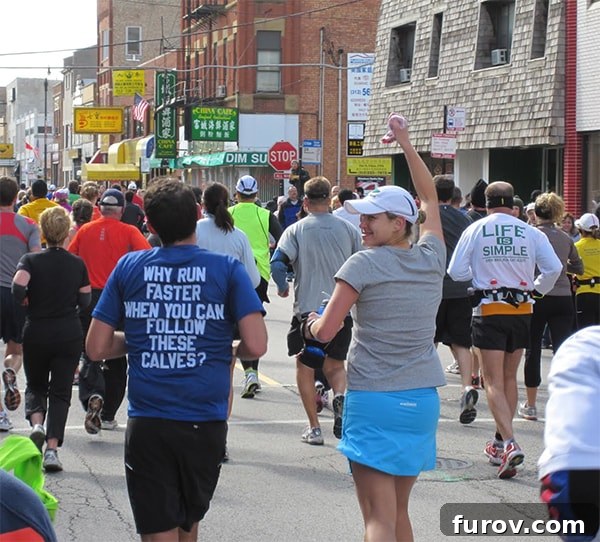
The attached picture captures a truly special moment: my brother and I running the 2009 Chicago Marathon. He’s wearing a custom shirt I made for him, and I have my arm triumphantly in the air. We were nearing mile 20, feeling on top of the world, having just spotted my husband and knowing that, figuratively speaking, we were almost at the finish line. It’s a snapshot of shared joy, determination, and the incredible bond forged on the running course.
Thank you, Jessica! I’m going to trust your wisdom that some day I really will look forward to these long runs! You are a rock star.