Embracing the Heart of Norwegian Tradition: My Journey into the World of Lefse
Living in a community often means more than just existing within its geographical boundaries; it means immersing oneself in its unique culture, traditions, and, perhaps most deliciously, its culinary heritage. For me, fully embracing my surroundings has come to mean embracing lefse – that iconic, incredibly thin Norwegian flatbread that holds a special place in the hearts of many.
What Exactly is Lefse? A Glimpse into Norwegian Culinary Delights
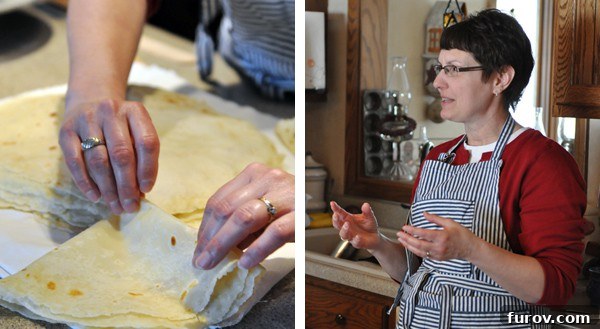
Have you ever encountered lefse? If not, allow me to introduce you to this understated culinary marvel. Lefse is a traditional Norwegian soft flatbread, distinguished by its delicate, almost crepe-like texture. Its magic lies in its simple yet profound ingredients: creamy potatoes, rich butter, fresh cream or milk, a touch of flour, and sometimes a hint of sugar and salt. The result is a subtly savory, incredibly comforting bread that is remarkably soft and utterly delicious. While traditionally enjoyed with nothing more than a whisper of butter, I confess a personal fondness for it lightly dusted with sugar – a dreamy combination that elevates its humble origins.
The history of lefse is as rich as its taste. It’s a staple in Norwegian homes, especially during holidays like Christmas, and has traveled across oceans with Norwegian immigrants, becoming a beloved tradition in many Scandinavian-American communities. It represents connection, heritage, and the warmth of family gatherings. More than just food, lefse is a story, a memory, and a testament to enduring cultural identity.
The Art of Making Lefse: A Labor of Love and Laughter
My fascination with lefse grew steadily, fueled by a few thinly veiled hints dropped to my dear friend Joni. Sensing my keen interest, Joni graciously extended an invitation to her home, promising to initiate me into the sacred art of lefse-making. What followed was an experience I won’t soon forget – a truly heartwarming and hilarious “labor of love.”
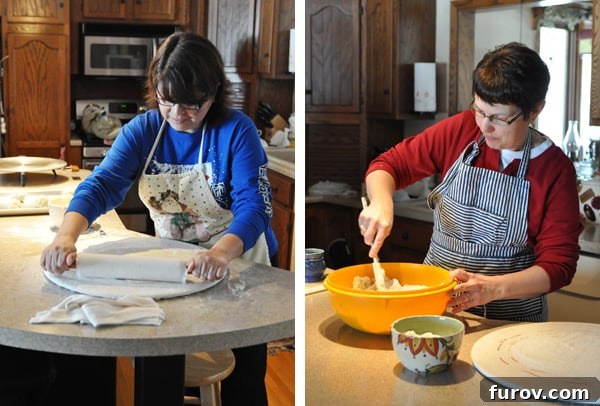
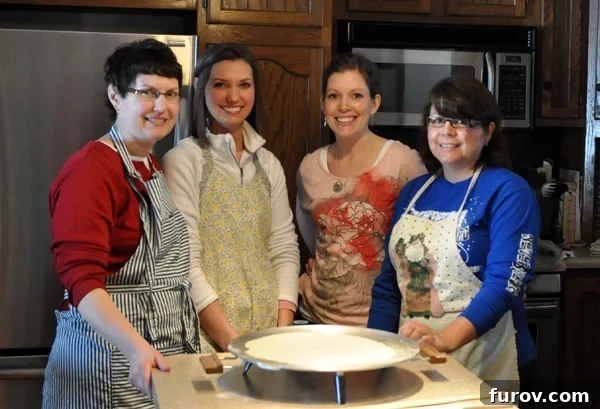
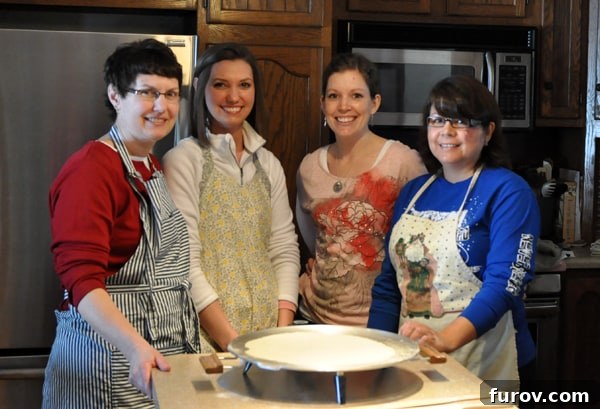
When I say we “slaved for hours,” it’s important to clarify my role in this culinary marathon. While Joni, Veronica, and Amanda diligently mixed, kneaded, and rolled, I primarily served as the enthusiastic observer, chief photographer, and, crucially, the designated taste-tester. But make no mistake, my learning curve was steep. I absorbed every technique, every tip, and every unspoken tradition that unfolded before me. And yes, for rigorous research purposes, I engaged in extensive tasting throughout the process!
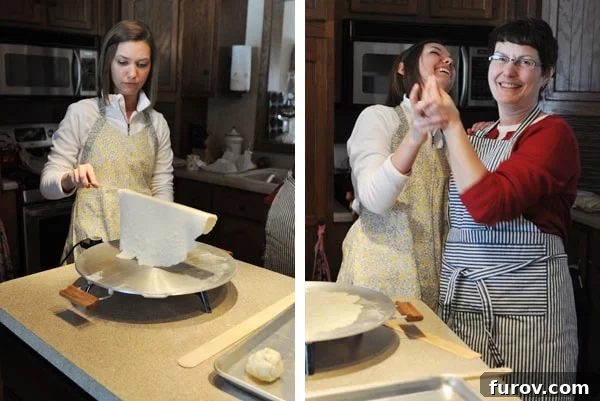
The process of making lefse is intricate and requires a certain finesse. It begins with boiling and ricing potatoes, then mixing them with the other core ingredients to form a smooth dough. This dough is then chilled, divided, and rolled out to an astonishing thinness using a special grooved lefse rolling pin. The goal is a wafer-thin circle that will cook evenly on a hot lefse griddle. Using a long, thin turning stick, each piece is carefully flipped until it achieves those characteristic light brown spots. It’s a dance of precision, patience, and a bit of culinary choreography.
Unforgettable Moments and Generational Wisdom
Among the many delightful aspects of that day, several moments stand out vividly. Listening to Joni recount family stories and traditions passed down through generations while her hands deftly worked the dough was truly enchanting. Making lefse isn’t just about the recipe; it’s profoundly about the narratives, the shared memories, and the living history that each batch carries. These stories seasoned the flatbread with an extra layer of meaning, making every bite even more special.
I was also absolutely mesmerized watching Veronica, who hails from Mexico and was making lefse for the very first time, effortlessly roll the most perfectly round and thin lefse discs. Her natural talent was astounding, a testament to the universality of culinary artistry. It was a beautiful moment, transcending cultural backgrounds and celebrating the joy of creation.
And then there was the laughter – oh, the laughter! The absolute highlight was witnessing Joni playfully throw flour in Amanda’s face, a spontaneous act of mother-daughter love and lighthearted teasing that had us all in stitches. It was a perfect encapsulation of the warm, familial atmosphere that lefse-making inherently fosters – a joyous blend of tradition, learning, and sheer fun.
The Tools of the Trade: Essential Lefse Equipment
To truly embark on a lefse-making adventure, a few specialized tools become indispensable. The most critical is a good quality lefse griddle, typically a large, round electric griddle designed for even heat distribution. Next is the aforementioned lefse rolling pin, which has shallow grooves that prevent the dough from sticking and help achieve the desired thinness. A lefse turning stick, a long, slender wooden tool, is essential for lifting and flipping the delicate rounds on the hot griddle without tearing them. Finally, a pastry board and cover (often made of canvas or special lefse cloth) are used to prevent sticking and absorb excess flour during the rolling process. These tools, while specific, are an investment in perpetuating a cherished tradition.
Serving Suggestions: Beyond Butter and Sugar
While the classic way to enjoy lefse is simply with butter, or butter and sugar (my personal favorite), its versatility allows for a variety of delightful permutations. For those with a sweet tooth, a sprinkle of cinnamon-sugar, a dollop of fruit jam, or a spread of lingonberry preserves are exquisite choices. The soft, neutral flavor of the lefse perfectly complements these sweet toppings. But don’t limit yourself to sweet! Lefse can also be a fantastic savory wrap. Imagine it with cream cheese and smoked salmon, or perhaps thinly sliced ham and Swiss cheese. Some even use it as a base for hotdogs or other creative fillings, treating it like a very thin, soft tortilla. The possibilities are truly endless, making lefse a wonderfully adaptable addition to any meal or snack.
Why Lefse is More Than Just a Flatbread: Its Enduring Appeal
Lefse transcends its identity as a simple food item; it’s a cultural touchstone. It embodies hospitality, community, and the comforting flavors of home. The process of making it, often done in groups, fosters connection and strengthens bonds, as evidenced by my day with Joni, Veronica, and Amanda. It’s a sensory experience – the smell of cooked potatoes and butter, the feel of the soft dough, the taste of tradition. For many, it evokes powerful memories of childhood, holidays, and gatherings with loved ones who are no longer with us. It’s a tangible link to ancestry and a living legacy passed from one generation to the next. This profound connection is what truly makes lefse a “labor of love” – the effort put into its creation is repaid manifold in joy, remembrance, and shared experience.
My Future with Lefse: A New Tradition Begins
After such an enriching and thoroughly enjoyable experience, I have an undeniable feeling that lefse will become a significant part of my future culinary adventures. It’s not just a food item I learned to appreciate; it’s a tradition I now feel connected to, a skill I aspire to master, and a story I want to keep telling. The warmth of the company, the delightful taste, and the sheer fun of the process have cemented its place in my heart.
So, consider this your open invitation! If you’re curious about traditional Norwegian cuisine, eager to learn a unique skill, or simply in search of a delicious and heartwarming experience, come on over. We’ll gather the ingredients, dust the countertops with flour, share some laughs, and together, we’ll make lefse. It’s an experience that truly feeds the soul, one perfectly rolled, buttered, and sweetened bite at a time.