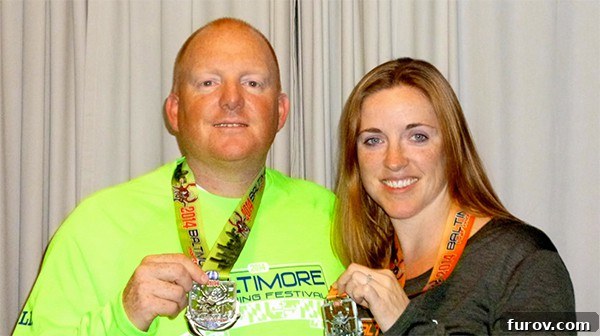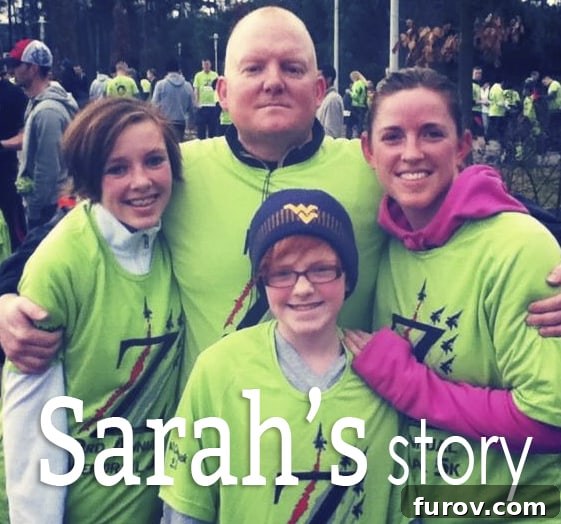
From Non-Athlete to Half Marathon Runner: Sarah’s Inspiring Transformation Story
Every once in a while, a story comes along that truly resonates, demonstrating the power of perseverance and the incredible capacity for self-transformation. Sarah’s journey is precisely one such tale – an inspiring testament to pushing past self-imposed limits and discovering an inner strength previously unknown. Her remarkable shift from a self-proclaimed “non-athlete” to a multi-half marathon finisher is not just about running; it’s about the profound confidence and empowerment that comes from embracing a challenge, even when every fiber of your being tells you to quit.
This is Sarah’s story, shared in her own words, detailing the mental and physical hurdles she overcame to cross those finish lines. It’s a narrative many can relate to, filled with candid admissions of fear, doubt, and ultimately, triumph. Get ready to be inspired by a mom of five who dared to redefine what she thought she was capable of.
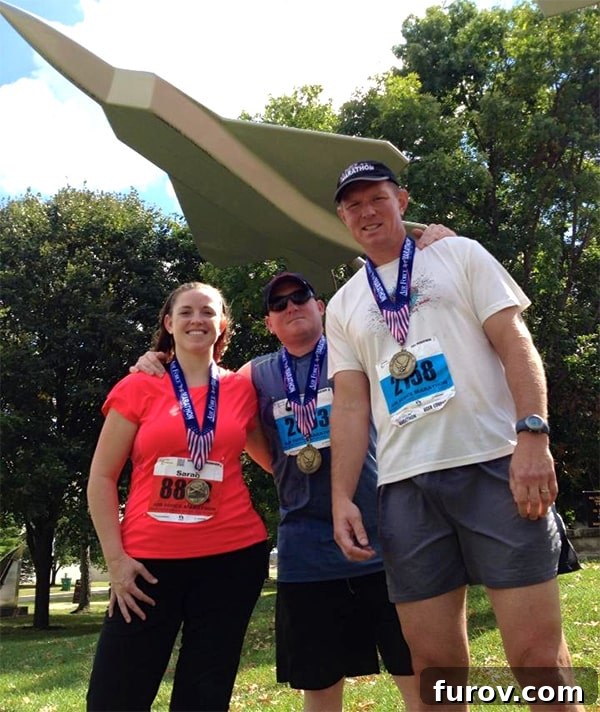
Meet Sarah: The Accidental Runner
Hello, I’m Sarah. I’m 36 years old, a proud mom to five amazing daughters, and wife to an incredible military man. If you had asked me just a few years ago to describe myself, “athlete” would have been the absolute last word I’d use. In fact, I would have confidently declared that I am *not* an athlete, and for good reason. My childhood and adolescence were devoid of organized sports. While other kids were on the soccer field or basketball court, I was happily immersed in show choir, where my talents leaned more towards singing and dancing than competitive physical activity.
I vividly recall instances where I tried to participate in sports, mostly to be with friends, but never truly enjoyed them. Take, for example, the church volleyball games during my teenage years. I wanted to be there for the camaraderie, but the moment the ball came sailing over the net in my direction, my instinct wasn’t to hit it back. Instead, I’d either skillfully step out of the way, hoping someone more athletic would take my place, or instinctively cover my face with my hands. The thought of a fast-flying ball heading straight for me was enough to send me retreating. This pattern of avoidance solidified my self-perception: I was simply not built for sports.
The Unlikely Challenge: A Half Marathon Invitation
Life continued in this vein until early 2013, when an unexpected proposal from my husband dramatically altered my trajectory. He, being a very persuasive individual, somehow convinced me to sign up for the Air Force Half Marathon, an event held every September in Dayton, Ohio. Looking back, I’m still not entirely sure how he managed it, given my distinct lack of enthusiasm for running. My husband, however, had a vision: for us to train together and complete the race side-by-side. His genuine excitement and belief in us were compelling, even for someone as sports-averse as me.
Signing up for a race nine months in advance seemed like a good idea at the time, providing ample opportunity to prepare. In reality, it provided ample opportunity to procrastinate. The first half of the year passed by in a blur of excuses and deferred plans. Running and training became an abstract concept, something I would “start tomorrow” or “next week.” By mid-June, with race day looming large on the horizon, the stark reality hit: if I had any hope of making it to the starting line, let alone the finish line, I *had* to begin my training, and immediately.
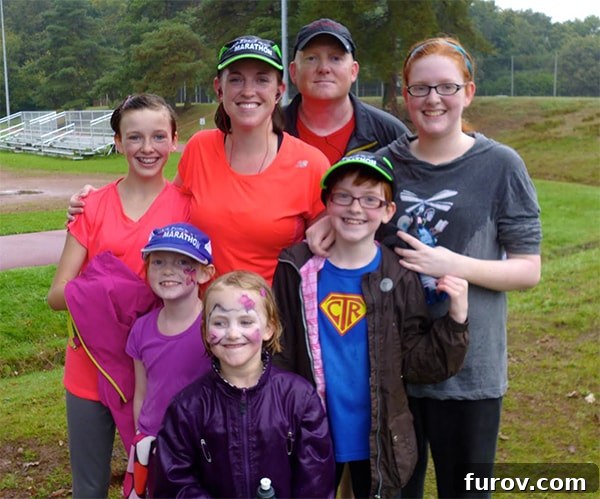
Battling Inner Demons: The Training Ordeal
As I finally embarked on my official twelve-week training program, I quickly discovered a harsh truth: being a sedentary “slug” might have been acceptable as a teenager, but nearly two decades and five children later, it undeniably catches up to you. Every run felt like a monumental effort. My body, unaccustomed to such sustained exertion, protested with aches, pains, and a general sense of rebellion. Beyond the physical discomfort, a far greater battle raged within me – the battle against my own mind.
Throughout those twelve weeks, I became a master of rationalization, constantly conjuring up reasons not to run. “It’s too hot.” “It’s too cold.” “I’m too tired.” “The kids need me.” The excuses were endless, each one a whisper of my underlying fear of failure. This fear was so pervasive that I even found myself secretly hoping for an escape route. Any minor ache or niggle in my knee or foot would spark a desperate hope that it would be severe enough to force me to bow out gracefully. I’d visit the doctor, meticulously detailing my symptoms, all the while silently crossing my fingers, wishing to be told, “Sarah, I’m sorry, but you simply have to stop running.”
The Fear of Failure: A Deep-Seated Barrier
The root of this pervasive reluctance lay deep within my personality. I’ve always been someone who prefers to attempt things only when I’m reasonably sure of success. The thought of putting myself out there, giving it my all, and then falling short was deeply unsettling. Running, for me, was a massive unknown. Given my self-perceived lack of athletic ability and complete inexperience, I truly wasn’t convinced I’d be any good. The overwhelming desire was simply not to fail, not to make a “big fat fool of myself” in front of everyone, or even just in my own estimation.
This internal struggle was perhaps the most exhausting part of the entire training process. It wasn’t just about lacing up my shoes; it was about silencing the constant chorus of doubt, pushing past the discomfort, and confronting the deeply ingrained belief that I wasn’t an athlete, and therefore, couldn’t be a runner. Each training run, no matter how short or challenging, became a small victory against this mental barrier.
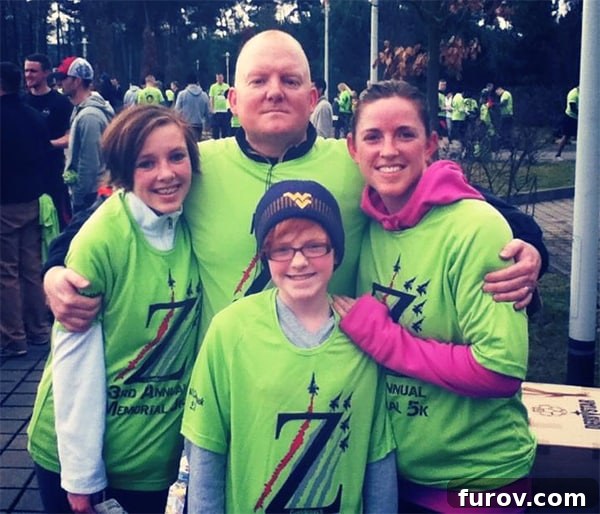
Race Day Revelation: Proving Doubts Wrong
Despite my secret wishes that it would somehow disappear, race day inevitably arrived. The air was buzzing with anticipation, a mix of nervous energy and excitement. For me, it was pure apprehension. There was no turning back; the only thing left to do was run. My training runs had been a mixed bag of progress and struggle. The absolute longest distance I had managed to run without stopping was six miles. All of my more extended training sessions had been a strategic combination of running intervals interspersed with walking breaks.
With this in mind, I formulated my race strategy: I would aim to run for approximately five miles, and then, as soon as I felt the need, I would allow myself walking breaks. My primary goal wasn’t to achieve a specific time or pace; it was simply to finish. To cross that finish line, no matter how long it took. I wanted to prove to myself that I could complete what I had started.
The Unforeseen Breakthrough
The race began, and I settled into a comfortable, albeit slow, pace. Mile after mile, I kept going, focusing on the rhythm of my breath and the support from the crowd. The strangest thing happened: the need to walk, which I had anticipated so vividly, never materialized. After an hour of running, I still felt strong. After an hour and a half, the thought of walking hadn’t even crossed my mind. Even after two hours, I was still putting one foot in front of the other, propelled by an unexpected surge of energy and determination.
I adopted a singular focus: “one mile and one aid station at a time.” This simple mantra helped break down the daunting distance into manageable segments. Each aid station became a small checkpoint, a victory in itself. As I passed them, grabbing water or an electrolyte, I allowed myself a brief moment of internal applause before refocusing on the next mile. To my absolute astonishment, I completed the *entire* half marathon without stopping to walk at all! The feeling of crossing that finish line, not only having finished but having surpassed my own expectations, was indescribable – a profound mix of exhaustion, elation, and sheer disbelief.
Embracing the Runner Within: A New Identity
That first half marathon was more than just a race; it was a pivotal moment, a revelation. The accomplishment delivered a monumental boost to my self-confidence, a feeling I hadn’t experienced in such a profound way before. I genuinely amazed myself, reflecting on what I had achieved despite all the doubts and internal resistance. It was concrete proof that I was capable of far more than I had ever given myself credit for.
Now, with two half marathons and numerous shorter races under my belt, I still don’t instinctively label myself an “athlete.” The perception ingrained from years of avoiding sports is hard to shake completely. However, I can no longer deny the undeniable shift within me. There’s a persistent, quiet feeling that maybe, just maybe, I *am* a runner, or at the very least, I am undeniably becoming one. The initial fear of failure has been replaced by a quiet confidence, the resistance by a growing sense of purpose.
The Empowering Power of Running
The word “empowering” might sound a little overused these days, but it is truly the perfect term to describe what running has become for me. It’s empowering because it showed me that consistency, discipline, and a willingness to step outside my comfort zone can lead to incredible results. It’s empowering because it taught me to trust my body and my mind, even when they conspired against me. It’s empowering because it’s a constant reminder that I can set a challenging goal and, through sheer grit, achieve it.
Running has transformed not just my physical health, but also my mental landscape. It has cultivated resilience, patience, and a deeper understanding of my own capabilities. It has provided an invaluable outlet, a time for self-reflection and mental clarity amidst the beautiful chaos of raising five daughters. What began as a reluctant agreement with my husband has evolved into a fundamental part of who I am, a source of personal pride and strength.
Lessons for Aspiring Runners (and Life-Long Learners)
For anyone reading this who might resonate with my story – the “non-athlete” feeling the call of a challenge, or simply someone battling self-doubt – here are a few things I’ve learned:
- Start Small: You don’t have to sign up for a half marathon immediately. Begin with short walks, then gradually introduce short running intervals.
- Embrace the “Run/Walk” Method: It’s a legitimate and effective strategy, especially for beginners or longer distances. Don’t feel pressured to run continuously from day one.
- Listen to Your Body (and Your Mind): Acknowledge discomfort, but learn to differentiate between genuine pain and mental resistance.
- Find Your “Why”: Whether it’s for health, stress relief, or a specific race, having a clear motivation helps immensely during tough times.
- Celebrate Small Victories: Every mile run, every workout completed, every time you choose to go instead of procrastinate, is a win.
- Don’t Fear Failure: The biggest failure is not trying at all. Every attempt, regardless of outcome, is a step forward.
My journey from a volleyball-dodging teenager to a half marathon finisher is proof that transformation is always possible. It’s a testament to the fact that our self-perceptions can evolve, and our capabilities often far exceed what we initially believe. If I, Sarah, the self-proclaimed non-athlete, can find my stride and an empowering passion in running, then truly, anyone can. It simply begins with one step, one decision, and the courage to say, “Maybe I can.”