
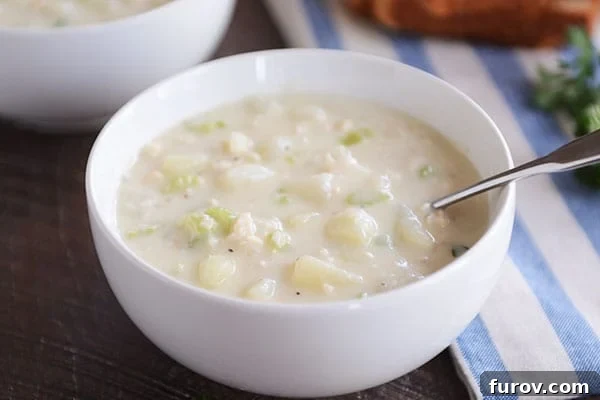
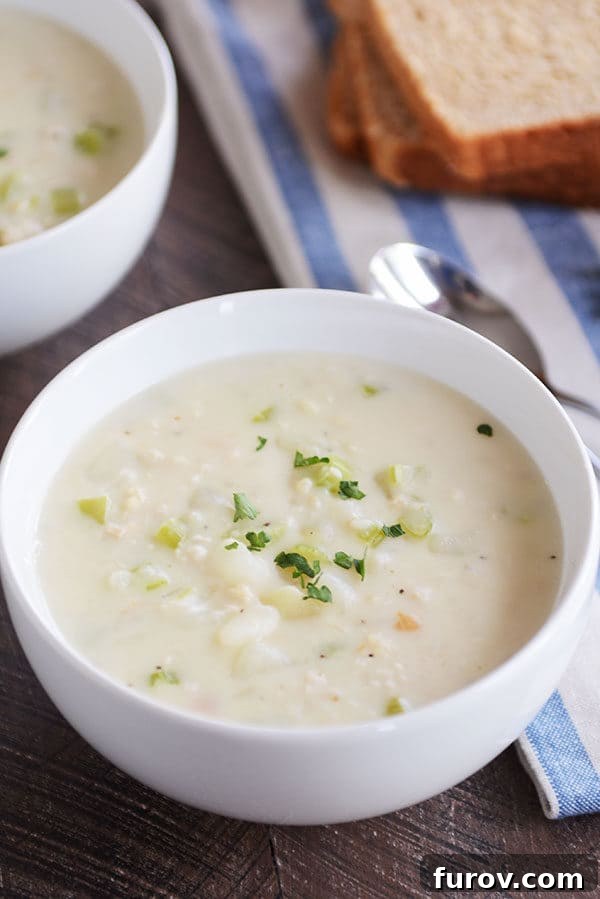
Experience the ultimate comfort food with this New England Clam Chowder recipe, a creamy, hearty, and undeniably perfect rendition of a classic.
For years, my appreciation for clam chowder was merely lukewarm. I enjoyed it, certainly, but it never sparked that passionate craving some dishes do. That all changed with this recipe. This isn’t just a good clam chowder; it’s the kind of New England Clam Chowder that transforms preferences, converting even the mildest admirer into a devoted enthusiast. It has quickly become not only my husband Brian’s long-standing favorite soup (surpassing our previous go-to Boston clam chowder recipe, which was good, but this version truly excels) but mine as well.
I embarked on a mission to create a truly stellar version, one that would evoke pure culinary joy. A recipe so exceptional, it might just bring tears of happiness to your eyes. After several meticulous variations and countless taste tests, I am thrilled to say that this is it. The pursuit of perfection, while at times emotionally exhausting (one can only consume so much clam chowder in a row!), was absolutely worth it. The journey through “Clam Chowder Bonanza 2016” ultimately led to this triumphant creation, and I couldn’t be prouder.
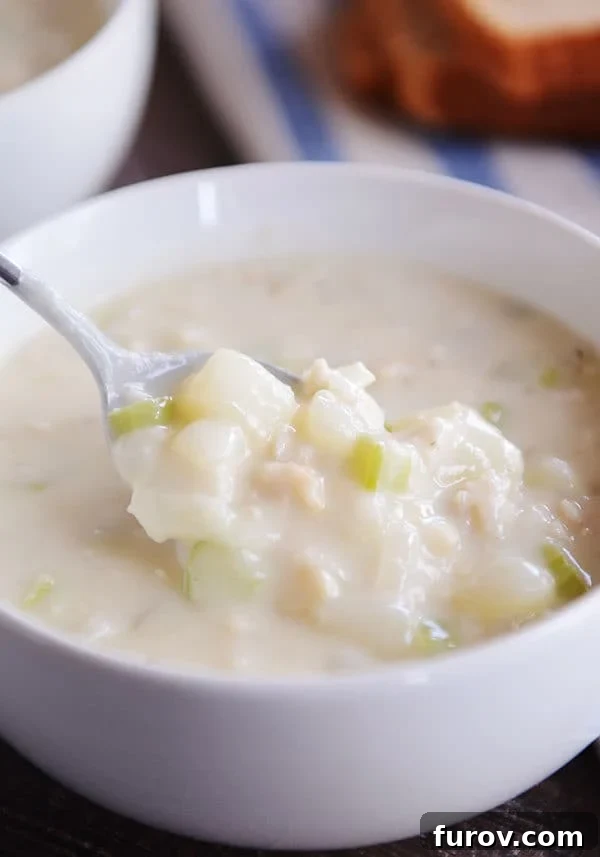
Why This New England Clam Chowder Recipe Stands Out
What makes this New England Clam Chowder recipe the best? It’s a harmonious blend of simple, high-quality ingredients that culminate in a magical, rich, and deeply satisfying experience. Every spoonful is a testament to the balance of flavors and textures, making it truly perfect. It’s a bold claim, perhaps, but one I stand by wholeheartedly. This creamy, hearty seafood soup embodies everything a classic New England chowder should be, and then some.
One of the key discoveries during my recipe development involved the humble potato. I experimented with various types, and surprisingly, found that russet potatoes delivered a superior result compared to red potatoes, which I often prefer in other dishes. While Yukon Golds make an acceptable substitute, russets are my absolute favorite for this chowder. Their soft, starchy texture breaks down just enough to contribute to the chowder’s luxurious creaminess without becoming mushy, perfectly complementing the tender clams.
I understand that clam chowder can be a deeply personal and often polarizing subject. People have strong opinions on thickness, consistency, and the potato-to-clam ratio. However, for our household, the rich, creamy, and traditional New England- or Boston-style clam chowder is the undisputed champion. And among all the versions I’ve tasted and created, this specific recipe is destined to be a long-standing family favorite. Its robust flavor profile and comforting texture make it an instant classic.
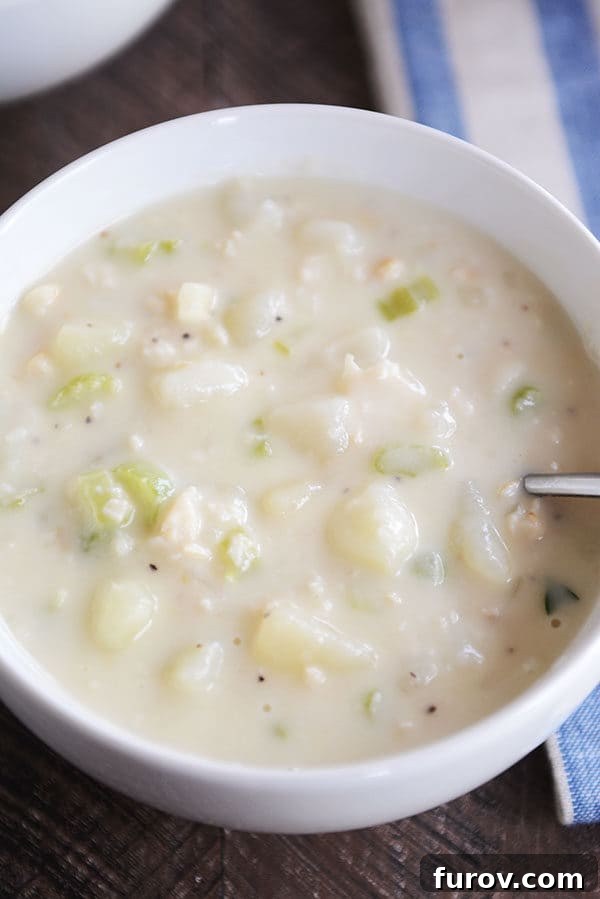
Tips for Serving & Enjoying Leftovers
One of the many virtues of this fantastic soup is how beautifully it reheats. In fact, some might argue that the flavors deepen and meld even more wonderfully the next day. You’ll notice it thickens considerably as it cools and stands, especially after an overnight stay in the refrigerator. If you prefer a slightly thinner consistency when reheating, simply stir in a splash of reserved clam juice, milk, or even a little chicken broth until it reaches your desired texture.
And speaking of leftovers, I confess to being a proud lover of cold leftovers. While my husband, Brian, might side with those who find the thought revolting, I find this clam chowder delicious straight from the fridge. Perhaps it’s my impatient nature – why wait for the microwave when instant gratification is an option? I’m happy to report that many of my kids share this unconventional preference, making cold chowder a surprisingly popular snack in our home. But for those who prefer it warm, a gentle reheat on the stovetop ensures it’s just as delightful as the first serving.
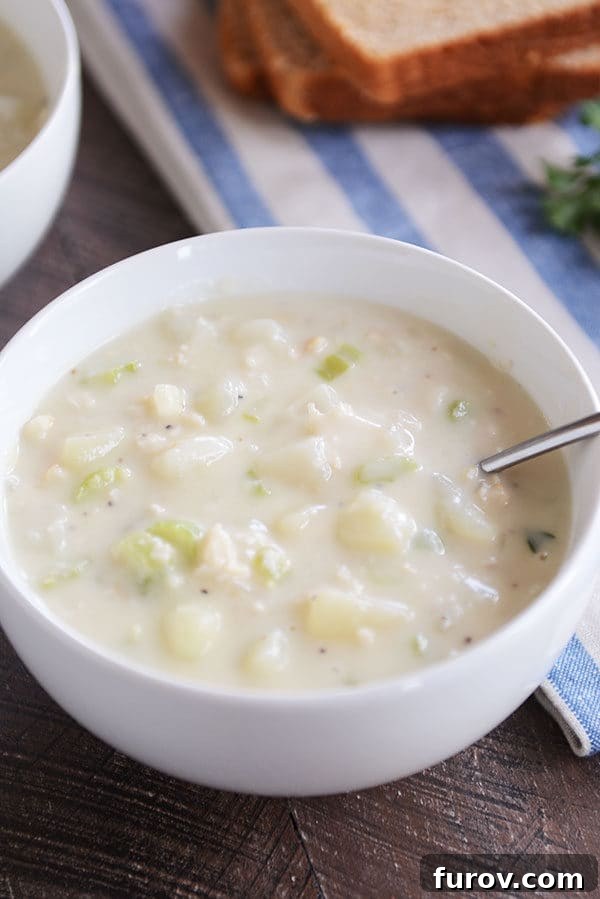
If you’ve been searching far and wide for an authentic, rich, and utterly satisfying New England clam chowder recipe, your quest ends here. I have a strong suspicion that after tasting this incredibly delicious, homemade version, you too will be completely converted into a devout clam chowder aficionado. There’s truly nothing quite like a warm, comforting bowl of this classic seafood soup on a chilly day. Gosh, I truly adore soup season!
One Year Ago: Apple Pie Cinnamon Rolls
Two Years Ago: My Favorite Halloween Food Ideas
Three Years Ago: Loaded Broccoli Cheese and Bacon Soup
New England Clam Chowder
Pin
Rate
Save
Ingredients
- 5 cans (6.5-ounces each) chopped clams
- 2 bottles (8-ounces each) clam juice
- 1 cup low-sodium chicken broth
- 1 ½ pounds russet or yukon gold potatoes, peeled and small diced (about 3 medium potatoes)
- 1 bay leaf
- 4 tablespoons butter
- 2 tablespoons olive oil
- 1 cup finely diced onion
- 1 cup diced celery, about 4 medium stalks
- 2 garlic cloves, finely minced or pressed through a garlic press
- ½ cup all-purpose flour
- 1 cup milk
- 1 cup half and half
- 1 teaspoon salt
- ½ teaspoon pepper
- 1 tablespoon red wine vinegar
Instructions
-
Begin by carefully draining the canned clams, making sure to reserve all of the clam juice. Set both the drained clams and the reserved juice aside for later use. This clam juice is crucial for developing the authentic flavor of the chowder.
-
In a substantial 5- or 6-quart pot, combine the reserved clam juice, the low-sodium chicken broth, and the small-diced potatoes. Ensure the potatoes are diced finely, as they should just barely be covered by the liquid. Bring this mixture to a gentle simmer over medium heat. Once simmering, add the bay leaf to infuse the liquid with aromatic notes. Continue to cook until the potatoes are tender when pierced with a fork, which typically takes about 8-10 minutes. Avoid overcooking to prevent them from becoming too soft.
-
While the potatoes are simmering, prepare the roux base in a separate, equally sized pot. Heat the butter and olive oil over medium heat until the butter is completely melted and shimmering. Add the finely diced onions and celery, stirring occasionally. Cook these aromatics until they have softened and become translucent, usually within 5-7 minutes. Then, stir in the minced or pressed garlic cloves and cook for another minute until fragrant, being careful not to burn the garlic.
-
To the softened vegetables, stir in the all-purpose flour. Cook this mixture for 30 seconds to a minute, allowing the flour to cook out its raw taste and combine with the butter and oil, creating a roux. Gradually whisk in the milk and half-and-half, pouring slowly while stirring quickly and continuously to prevent any lumps from forming. Bring this creamy mixture to a simmer and cook, stirring frequently, until it has thickened to a rich, velvety consistency, which should take about 4-5 minutes.
-
Carefully stir the thickened creamy mixture into the pot with the tender potatoes, whisking briskly until everything is thoroughly combined. If the bay leaf becomes cumbersome, remove it at this point. Stir in the salt, pepper, and the red wine vinegar. The vinegar adds a subtle, bright note that enhances the overall flavor of the chowder. Finally, add the reserved chopped clams. Bring the entire soup to a gentle simmer and cook for another 4-5 minutes, allowing the flavors to meld beautifully and the clams to heat through.
-
Before serving, assess the chowder’s consistency. If you prefer a thinner soup, you can stir in some of the remaining reserved clam juice until it reaches your desired thickness. Personally, we enjoy a robustly thick chowder, so I often omit this step. Serve this exquisite New England Clam Chowder hot, perhaps with a sprinkle of fresh parsley or a side of oyster crackers. Enjoy the rich, comforting flavors!
Calories: 383kcal,
Carbohydrates: 45g,
Protein: 11g,
Fat: 18g,
Saturated Fat: 9g,
Cholesterol: 44mg,
Sodium: 931mg,
Fiber: 3g,
Sugar: 7g
Recommended Products
Recipe Source: This perfected recipe is a proud creation of Mel’s Kitchen Cafe, refined through extensive testing and inspiration drawn from numerous sources including an earlier Boston clam chowder recipe on my site and Epicurious’s New England Clam Chowder, among others.