
The Ultimate Guide: How to Keep Asparagus Fresh for Weeks, Not Days
Are you frequently disappointed when your vibrant, fresh asparagus transforms into a limp, sad shadow of its former self just a few days after you bring it home? This is a common culinary frustration for many home cooks. Asparagus, while delicious and nutritious, often has a reputation for quickly losing its crispness and appeal. But what if we told you there’s a deceptively simple, yet incredibly effective, kitchen hack that can extend the life of your fresh asparagus for up to two weeks, sometimes even longer? Get ready to put an end to food waste and enjoy perfectly crisp, flavorful asparagus whenever you desire.
This isn’t a complex gourmet technique; it’s a practical, everyday tip that genuinely makes a difference. The inspiration to share this revelation came from a friend who, upon opening our refrigerator and spotting our perfectly preserved spears, exclaimed, “What?! Why have you never told me about this? You absolutely have to share this with everyone!” So, consider this your essential guide to never having wilted asparagus again. Prepare to revolutionize your approach to vegetable storage!
The Asparagus Conundrum: Understanding Its Rapid Decline in Freshness
To truly appreciate the solution, it helps to understand the problem. Asparagus spears are essentially the tender, edible stems of a plant that continue to “live” and respire even after they’ve been harvested. This biological process means they are constantly losing moisture and consuming their stored nutrients. Unlike root vegetables, which are designed for longer-term dormancy, asparagus is quite delicate and highly susceptible to dehydration. When left exposed to the dry air of a refrigerator or improperly stored in a sealed bag (which can trap moisture and accelerate decay rather than prevent it), asparagus quickly succumbs to wilting, becomes soft, and loses its vibrant green hue.
The key to extending its freshness lies in mimicking its natural growing environment as closely as possible, allowing it to stay hydrated and slow down the processes that lead to spoilage. Once you grasp this fundamental principle, keeping your asparagus fresh becomes an intuitive, effortless task, preventing it from turning into a rubbery disappointment just days after purchase.
The Revolutionary Storage Method: A Detailed Step-by-Step Guide
This ingenious method is remarkably straightforward, drawing inspiration from how florists keep cut flowers vibrant and fresh. It allows the asparagus to continuously draw water, effectively putting it into a state of suspended animation in your fridge. Follow these simple steps to ensure your asparagus stays crisp and delicious for much longer:
Step 1: Preparing Your Asparagus
- Start Fresh: The success of this method begins with the quality of your asparagus. Choose bunches that have firm, bright green stalks and tight, closed tips. The fresher it is at the outset, the longer it will maintain its quality.
- Keep the Rubber Band On: Don’t remove the rubber band that typically holds the asparagus spears together. This helps keep the stalks neatly bundled, making them easier to handle and ensuring they stand upright uniformly in your container.
- Optional – Trim the Ends: While not strictly mandatory for the storage method to work effectively, trimming about an inch off the dry, woody ends of the asparagus stalks can enhance their ability to absorb water. Think of it like recutting the stems of flowers; it opens up the vascular system for better hydration.
Step 2: Selecting the Perfect Container
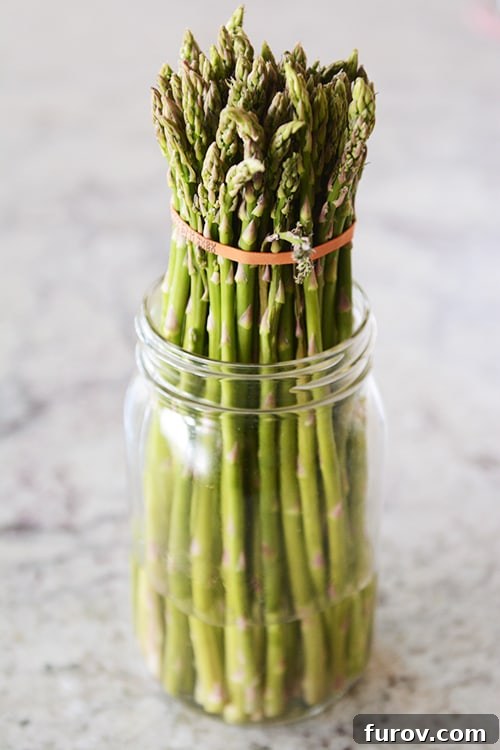
- The Ideal Choice: A quart-sized (or larger, depending on the size of your bunch) mason jar is often considered the gold standard for this method. Its wide mouth provides excellent stability and makes it easy to place and retrieve the asparagus.
- Alternative Containers: If a mason jar isn’t available, don’t worry! Any tall, sturdy glass, a standard pitcher, or even a narrow vase will work perfectly. The key is that the container should be tall enough to support the asparagus upright and have a base stable enough to prevent tipping.
- Cleanliness is Key: Always ensure your chosen container is thoroughly clean to prevent any bacterial growth that could compromise the freshness of your asparagus.
Step 3: Adding the Water
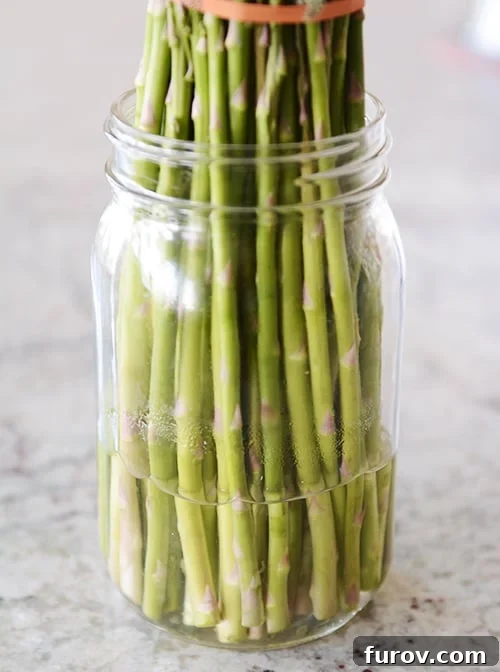
- Cool Water is Best: Pour approximately one to two inches of cool, fresh tap water into the bottom of your container. This amount should be sufficient to submerge the very ends of the asparagus stalks without soaking the entire bundle.
- The Hydration Principle: This water acts as a vital source of hydration. The asparagus stems will actively “drink” the water, allowing them to maintain their turgor pressure – the internal water pressure that keeps plant cells rigid and, in turn, the spears crisp.
Step 4: Positioning the Asparagus
- Stand Upright: Carefully place the bundled asparagus into the water-filled container, ensuring that the trimmed ends (or natural ends) are submerged in the water.
- Ensure Stability: Arrange the spears so they stand relatively straight and are stable within the container, preventing them from flopping over.
Step 5: Refrigeration is Crucial
- Optimal Environment: Once assembled, gently transfer the entire setup – the jar with the asparagus and water – into your refrigerator.
- Strategic Placement: Choose a spot where it’s unlikely to be knocked over, such as a corner of a shelf or a less-trafficked area on the door. The cool temperature of the fridge further slows down the asparagus’s metabolic processes, enhancing its longevity.
Step 6: Optional Covering for Extended Freshness
- Added Protection: To provide an extra layer of defense against dehydration and to prevent the asparagus from absorbing unwanted odors from other foods in your refrigerator, you can loosely cover the top of the asparagus bundle.
- Covering Options: A simple plastic sandwich bag slipped over the top and secured with the existing rubber band, or a piece of plastic wrap draped loosely over the container, works wonders. While optional, this step creates a humid microclimate around the spears, significantly extending their crispness and preserving their pure flavor.
The Science Behind the Success: Why This Method Works Wonders
This ingenious storage technique isn’t just an old wives’ tale; it’s rooted firmly in plant biology, effectively counteracting the primary reasons why asparagus deteriorates. Let’s delve into the scientific explanations:
Continuous Hydration and Capillary Action
By keeping the cut ends of the asparagus submerged in water, you facilitate a process known as capillary action. This is the very same mechanism through which plants draw water from the soil to nourish their entire structure. The asparagus stalks continuously absorb moisture, directly combatting dehydration, which is the leading cause of limpness and wilting. This constant rehydration keeps the cells within the asparagus plump and firm, maintaining its desirable crisp texture.
Reduced Respiration and Nutrient Preservation
Even after harvest, asparagus continues to respire, consuming its stored sugars and nutrients. This metabolic activity leads to a gradual loss of flavor, sweetness, and overall nutritional value. Storing asparagus in a cool, hydrated environment significantly slows down this respiration rate. By doing so, you preserve both the delectable taste and the essential vitamins, minerals, and antioxidants that make asparagus such a healthy choice.
Protection from Dehydration in the Refrigerator
While the refrigerator provides a cool environment, its air can also be surprisingly dry, actively drawing moisture away from exposed produce. Placing the asparagus in water provides a localized, humid environment specifically around its vulnerable cut ends. Furthermore, the optional plastic cover helps to trap this humidity, creating a microclimate that effectively prevents excessive moisture evaporation from the entire length of the spears, further safeguarding their freshness.
Maintained Crispness, Flavor, and Vibrancy
The synergy of continuous hydration, slowed metabolic processes, and protection from ambient dryness directly results in a vastly superior product. Asparagus stored using this method consistently retains its vibrant green color, its characteristic snappy crispness, and its fresh, earthy flavor for significantly longer periods. Instead of tasting dull and watery, your asparagus will remain as flavorful and delightful as the day you brought it home, ready to elevate any meal.
Beyond Freshness: The Myriad Benefits of This Simple Hack
The advantages of extending the life of your asparagus go far beyond merely having fresh produce. This simple kitchen tip offers several practical, economic, and environmental benefits:
- Significant Reduction in Food Waste: This is arguably the most impactful benefit. By preventing spoilage, you are not only saving money but also making a conscious effort to reduce the amount of edible food that ends up in the bin, contributing to a more sustainable and responsible kitchen.
- Tangible Cost Savings: Less waste directly translates to fewer trips to the grocery store for replacement produce. Over time, these savings can add up, making your food budget stretch further.
- Unmatched Convenience: Imagine the ease of always having fresh, crisp asparagus at your fingertips. No more last-minute runs to the store or compromises on your meal plans because your asparagus went bad. It’s ready whenever inspiration strikes!
- Optimal Nutritional Intake: Fresh vegetables are at their peak nutritional potency, brimming with vitamins, minerals, and antioxidants. By keeping your asparagus fresh longer, you ensure that you and your family are consistently receiving the maximum health benefits from this powerhouse vegetable.
- Enhanced Culinary Experience: Crisp, firm asparagus offers a far superior texture and flavor profile for cooking. Whether you’re roasting, grilling, steaming, or stir-frying, firm spears hold up beautifully, absorbing flavors better and providing a more satisfying eating experience than their limp counterparts.
Troubleshooting and Frequently Asked Questions (FAQ)
How long will asparagus truly stay fresh using this method?
With proper execution, asparagus stored using this technique typically remains fresh and delightfully crisp for up to two weeks. Under optimal conditions, some home cooks report it lasting even a bit longer. Always perform a quick visual and smell check before use; if it appears slimy, develops an off-odor, or becomes excessively soft, it’s best to discard it.
Is it necessary to change the water?
Yes, it is highly recommended to change the water every two to three days. This prevents the water from becoming cloudy due to bacterial growth, which can accelerate spoilage. Fresh, cool water ensures the asparagus continues to absorb clean hydration efficiently.
What if my asparagus looks a little less vibrant after a week?
It’s normal for produce to slightly lose its initial “just picked” luster over time. As long as the spears remain firm to the touch, don’t smell off, and show no signs of sliminess, they are perfectly good to eat. The primary goal of this method is to maintain crispness and prevent premature wilting.
Can I use this method to store cooked asparagus?
No, this particular method is exclusively designed for storing raw, fresh asparagus. Cooked asparagus should be stored in an airtight container in the refrigerator and consumed within 3-4 days for optimal safety and flavor.
Can this technique be applied to other vegetables or herbs?
Absolutely! This hydration-based storage method is fantastic for a variety of other stem-based herbs and vegetables. Parsley, cilantro, dill, green onions, and even celery stalks can have their shelf life significantly extended by standing them upright in a glass of water in the refrigerator. It’s a versatile tip for anyone looking to reduce produce waste.
Creative Ways to Enjoy Your Perpetually Fresh Asparagus
With a reliable supply of fresh, crisp asparagus always at your command, you’ll have endless opportunities to incorporate this versatile and nutritious vegetable into your culinary repertoire. Here are some inspiring ideas to get you started:
- Classic Roasted Asparagus: A timeless favorite. Toss the spears with a drizzle of olive oil, a pinch of salt, freshly ground black pepper, and a dash of garlic powder. Roast until tender-crisp, then finish with a squeeze of fresh lemon juice to brighten the flavors.
- Grilling Perfection: Ideal for barbecue season! Lightly coat the asparagus with olive oil and grill until they develop beautiful char marks and are tender yet still slightly firm. A sprinkle of Parmesan cheese post-grilling is sublime.
- Simple Steamed or Blanched: For a clean, healthy preparation that truly allows the natural sweetness of asparagus to shine. Serve with a simple pat of butter, a light vinaigrette, or a sprinkle of flaky sea salt.
- Elevate Breakfast and Brunch: Add chopped fresh asparagus to your morning omelets, frittatas, and quiches. It also makes a fantastic, elegant side dish for poached or fried eggs.
- Delicious Pasta Pairings: Incorporate blanched or roasted asparagus into your favorite pasta recipes. Its texture and flavor complement both creamy and lighter, olive oil-based sauces beautifully.
- Fresh Salads: Thinly shaved raw asparagus or lightly blanched spears add a wonderful crunch and fresh flavor to spring and summer salads.
- Creamy Asparagus Soup: If you find yourself with an abundance, a smooth and creamy asparagus soup is a comforting and elegant way to utilize its delicate flavor.
Having a consistently fresh supply truly opens up a world of culinary possibilities, making it easier and more enjoyable to integrate this wonderful vegetable into a healthy diet.
Embrace the Simplicity of Smart Asparagus Storage
In the bustling world of cooking, it’s often the simplest, most intuitive tricks that deliver the most profound and satisfying results. This straightforward method for keeping asparagus fresh is a perfect embodiment of that principle. By taking a mere minute to understand the basic needs of this wonderful spring vegetable and providing it with a little tender loving care in its storage, you can dramatically enhance its longevity, significantly minimize food waste, and ensure that you always have access to crisp, flavorful asparagus that tastes as good as the day you bought it.
So, the next time you return from the market with a beautiful bundle of green spears, resist the urge to simply toss them into a drawer. Take that extra moment to set them up in their refreshing water bath. You will undoubtedly be astonished by the remarkable difference it makes. Like our friend, you’ll likely wonder how you ever managed without this essential kitchen secret. Happy cooking, and may your asparagus always be perfectly fresh and crisp!