
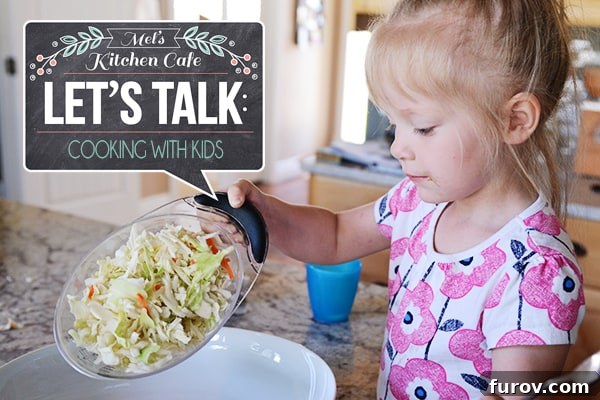
Discover how to make cooking a joyful family affair! We’re diving deep into practical tips, age-appropriate chores, and the incredible benefits of inviting your children into the kitchen.
Welcome, friends! I’m absolutely thrilled to pull up a chair and finally delve into a topic that’s close to my heart and central to my daily life: cooking with kids. For years, I’ve wanted to share my insights and experiences on transforming the kitchen into a vibrant hub of family activity, and today is the day we make it happen.
Embracing the Journey: My Path to Cooking with Kids
It’s probably no shock to hear that I’m a bit of a stickler for control, especially when it comes to the rhythm of my home. In the early years, when my children were tiny tots, doing all the cooking myself often seemed like the path of least resistance. While it saved some immediate mess, it also meant navigating the kitchen with three little ones vying for attention, clinging to legs and arms – a challenge many parents can surely relate to.
However, a few years back, I had an epiphany: I needed to relax my grip and consciously invite my children into the culinary process. Given how much time I spend in the kitchen, I truly wanted it to evolve into a family endeavor. Over time, through a blend of trial, error, and patience, we’ve successfully cultivated a wonderfully effective system for cooking together.
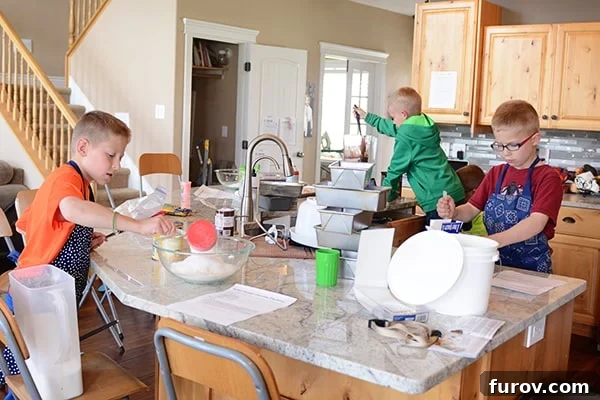
Now, whenever I’m preparing a meal and my children are home, it’s almost a given that at least one, if not all, will enthusiastically bound into the kitchen, eager to lend a hand. Their motivation might occasionally stem from the opportunity to “snitch” a stray ingredient or two – a perk I’m more than willing to overlook for the sake of their involvement!
I confess, there was a time when the very thought of them helping would trigger a cascade of anxieties: Messy! Inefficient! Not enough patience! Nooooo! But I’ve learned to shift my perspective. Because I want my children to develop essential cooking skills, and frankly, because I genuinely enjoy their company, I’ve discovered that no matter what I’m preparing, there’s always an appropriate task for them to tackle.
The Undeniable Benefits of Kids in the Kitchen
Beyond simply having an extra pair of hands, one of the most significant (and utterly transformative) advantages of involving my children in cooking is the remarkable way it has expanded their palates. If they’ve taken ownership of making the creamy avocado lime dressing, carefully shelled the shrimp, or meticulously chopped the leeks, they are far more likely to try and enjoy that dish at dinner. It often boils down to a sense of pride and accomplishment – they helped create it, so they’ll eat it! This transformation into more adventurous eaters is a reward in itself.
But the benefits extend far beyond adventurous eating. Cooking with kids offers a rich learning environment that nurtures a multitude of vital life skills:
- Practical Life Skills: They learn to follow instructions, measure ingredients (basic math!), understand cause and effect, and manage their time.
- Confidence and Independence: Successfully completing a task, no matter how small, boosts their self-esteem and fosters a sense of capability.
- Family Bonding: The kitchen becomes a shared space for connection, conversation, and creating lasting memories.
- Healthy Eating Habits: When children participate in preparing meals, they develop a better understanding of where food comes from and are more inclined to make nutritious choices.
- Creativity and Problem-Solving: They learn to adapt, experiment, and think critically when a recipe doesn’t go exactly as planned.
- Patience and Teamwork: Cooking requires waiting, sharing tasks, and collaborating towards a common goal – dinner!
Age-Appropriate Tasks: Empowering Little Chefs
To help you get started, here are some of the tasks I commonly delegate to my children, organized by activity level and general age suitability, though every child develops at their own pace:
1. Grating Cheese
Perfect for: Ages 5+ (with supervision)
Grating cheese is an excellent task for developing fine motor skills and strength. I use one of these sturdy, old-fashioned box graters, which is robust enough not to wobble or topple over easily. Always ensure children use the larger holes first, and teach them to keep their fingers curled back, away from the grater’s surface.
2. Opening Cans
Perfect for: Ages 7+ (with supervision)
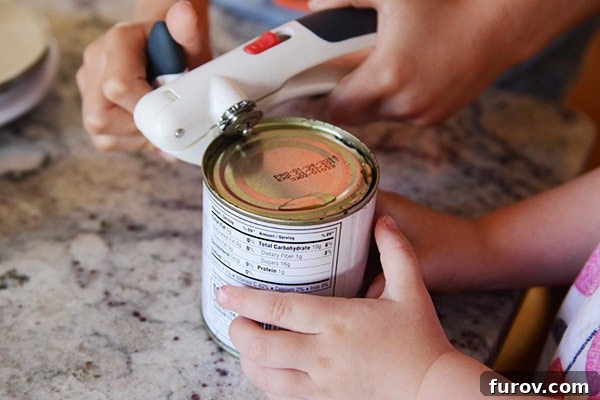
A reliable can opener is key here. I’ve owned this particular can opener for what feels like an eternity, and I cannot sing its praises enough. It’s incredibly easy for my kids to operate because it stays smooth and rust-free. A high-quality, easy-to-turn can opener makes this task safe and accessible for older children.
3. Pouring and Measuring
Perfect for: Ages 3+ (with assistance), 6+ (independently)
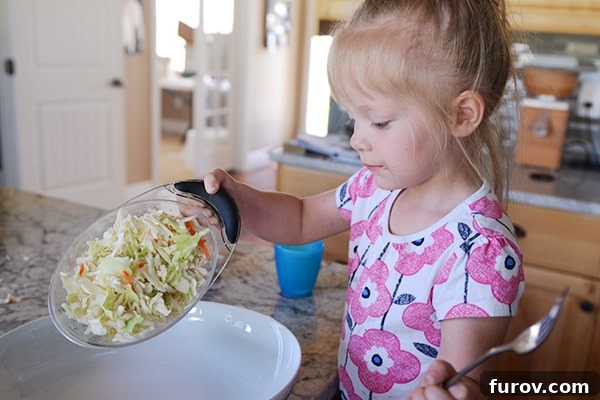
Pouring is a fantastic activity for even the youngest helpers. My three-year-old loves holding a measuring spoon while I carefully pour in vanilla extract or soy sauce. Older children can confidently pour ingredients from larger measuring cups into mixing bowls. This task hones hand-eye coordination and introduces them to basic measurements.
4. Whisking and Stirring
Perfect for: Ages 4+
This is where the fun really begins! Whisking eggs, stirring batter, or mixing dry ingredients are tasks that almost all children enjoy. Yes, sometimes powdered sugar will inevitably create a cloud across the kitchen, but it’s a small price to pay for their enthusiastic participation and the joy they get from contributing. It’s also a great way to build arm strength and coordination.
5. Cutting and Slicing Ingredients
Perfect for: Ages 6+ (soft ingredients), 9+ (harder ingredients, with close supervision)
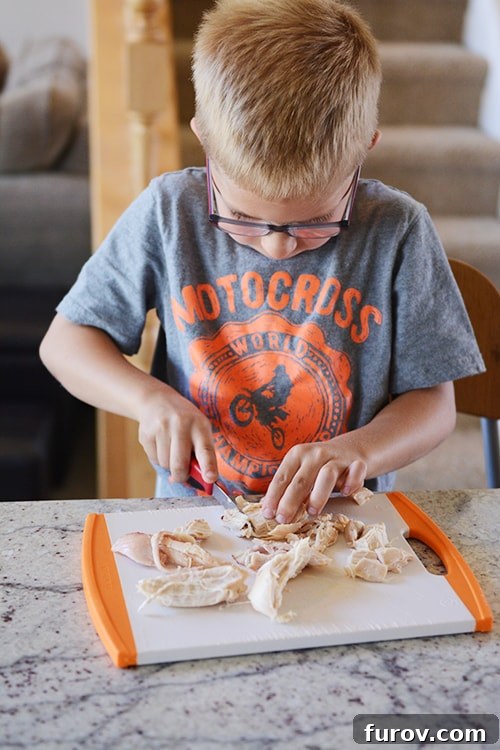
This is often the most intimidating task for parents to delegate, and safety is paramount. I ensure my boys have developed steady fine motor control before entrusting them with a knife. We start with very soft ingredients like olives, grapes, cheese, avocados, and cherry tomatoes. My 6-year-old can handle these, while harder chopping tasks (carrots, herbs, firmer vegetables) are reserved for my 9- and 11-year-olds.
Safety First: I never leave them unsupervised while they are chopping. Constant reminders to keep their non-cutting fingers curled into a “claw” shape, away from the blade, are essential. We’ve had a minor nick or two over the years – nothing requiring an emergency room visit, thankfully – but these small lessons quickly teach them respect for the knife.
Kid-Friendly Knives: I don’t let them use my large chef’s knife. Instead, they use either a small Komachi knife or, my absolute favorite for them, an inexpensive little serrated Victorinox knife. These knives are designed for better control and safety for smaller hands. (If you have a Cash and Carry locally, check there for the Victorinox!) These tools empower them without overwhelming them.
6. Zesting
Perfect for: Ages 7+
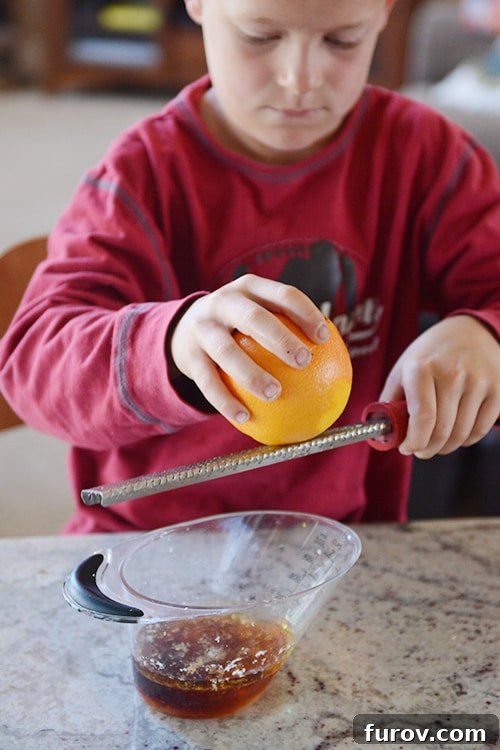
This might be the task my kids compete over the most! For some reason, using the microplane/rasp grater (an indispensable tool in my kitchen) to zest oranges, lemons, or limes, or to grate frozen ginger, is a highly coveted job. It requires precision and attention, making it incredibly satisfying when done right.
Pro Tip: As an aside, a lesson learned the hard way: have your child zest the citrus over a plate or paper towel, rather than directly over the bowl. Two seconds after taking the photo below, the orange slipped, tipping over the measuring cup and sending soy sauce dressing everywhere! Learning moments like these are part of the journey.
7. Oven Duty
Perfect for: Ages 8+ (with close supervision)
Understandably, my children were initially quite apprehensive about putting items into and taking them out of a hot oven. This changed entirely once I invested in some heavy-duty, full-coverage oven mitts. The ones I found at Costco (about a year ago; not sure if they’re still stocked) are fantastic because they extend far up the arm, providing superior protection. Now, they confidently open the oven and maneuver trays with remarkable ease, feeling like true culinary heroes.

8. Washing Produce
Perfect for: Ages 3+
A simple yet effective task for even the littlest hands. Setting up a bowl of water and letting them wash fruits and vegetables teaches them about hygiene and engages them directly with their food.
9. Cracking Eggs
Perfect for: Ages 5+
Cracking eggs can be messy but is an excellent exercise in gentle precision. Start by teaching them to crack eggs into a separate small bowl first, to easily remove any shell pieces before adding them to the main mixture.
10. Setting the Table and Serving
Perfect for: Ages 4+
While not strictly “cooking,” involving children in setting the table and serving the prepared meal instills a sense of responsibility and teaches them about presentation and hospitality. It completes their involvement in the meal preparation cycle.
Navigating the Bumps: Tips for a Successful Family Kitchen
Let’s be real: there will be accidents. There will be spills. There will be moments when I feel a scream rising and want to banish everyone from the kitchen immediately. But I can genuinely testify that as an uptight mom who once dreaded having my kids help in the kitchen, I have transformed. I now truly cherish having them right there beside me.
They consistently amaze me with what they can accomplish, whether with a little guidance or entirely on their own. Their cooking and baking confidence is skyrocketing. When they run out of assigned tasks, they often pull out the kitchen scale and begin weighing everything in sight. (Yes, they’ve even tried to weigh their baby sister – an adorable error!).

Especially during school breaks, they frequently ask to bake muffins, cookies, brownies, or banana bread. Our current rule is simple: if they commit to cleaning up thoroughly – including tackling some of the larger dishes by hand – they can make almost anything they wish, provided time allows. My 6-year-old has perfected the fudgy coconut oil brownie bites, and my older boys can independently whip up pao de queijo and chocolate chip cookies, among many other delicious treats.

Cultivating Culinary Independence: Beyond Basic Tasks
While we’ve covered many hands-on tasks today, the journey of cooking with kids extends even further. Consider involving them in:
- Menu Planning: Letting them choose a dish or ingredient for the week can significantly increase their enthusiasm.
- Grocery Shopping: Taking them to the store to find ingredients for the meal they helped plan connects the entire process.
- Assigning “Dinner Nights”: As they get older, giving them full responsibility for a family dinner night (with appropriate guidance) is a huge step towards independence.
- Teaching and Motivating Cleanup: This is crucial! Emphasize that cooking isn’t just about creating, but also about tidying up afterwards. Make it a team effort.
These deeper levels of involvement will not only enhance their culinary prowess but also instill a profound appreciation for the entire food cycle, from planning to preparation to plate and finally, to cleanup.
Share Your Kitchen Stories!
Thank you for giving me the opportunity to chat about this incredibly rewarding aspect of family life. I’m eager to hear your thoughts, ingenious ideas, and funny anecdotes about cooking with your children. What tasks do your kids love? What challenges have you overcome? Please leave a comment below and chime in!
{Please note: Several links within this article are unsponsored, Amazon associate links for products I personally love and recommend. Feel free to shop around for the best deals – my recommendations come with no strings attached!}