
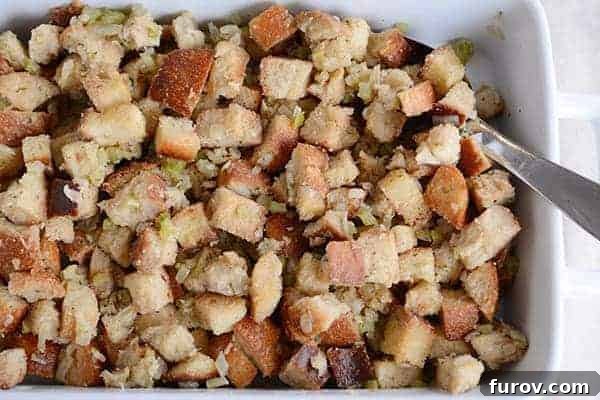
Homemade Thanksgiving stuffing is a million times tastier than boxed stuffing. The flavor is fresh, unprocessed and completely delicious.
For many, Thanksgiving dinner is the culinary Olympics, a day filled with ambitious cooking projects, multiple dishes vying for oven space, and a certain amount of organized chaos. In this whirlwind, it’s easy to reach for shortcuts, and prepackaged, boxed stuffing often makes a major appearance on holiday tables. The convenience is undeniable, and part of me completely understands the appeal of saving a few precious minutes when the oven is doing quadruple duty and every timer is beeping simultaneously.
However, there’s another part of me – the culinary enthusiast – that truly hopes to inspire a shift, to bring the unparalleled joy and flavor of homemade stuffing back to the Thanksgiving table. Once you experience the difference, there’s simply no going back to the mass-produced alternatives.
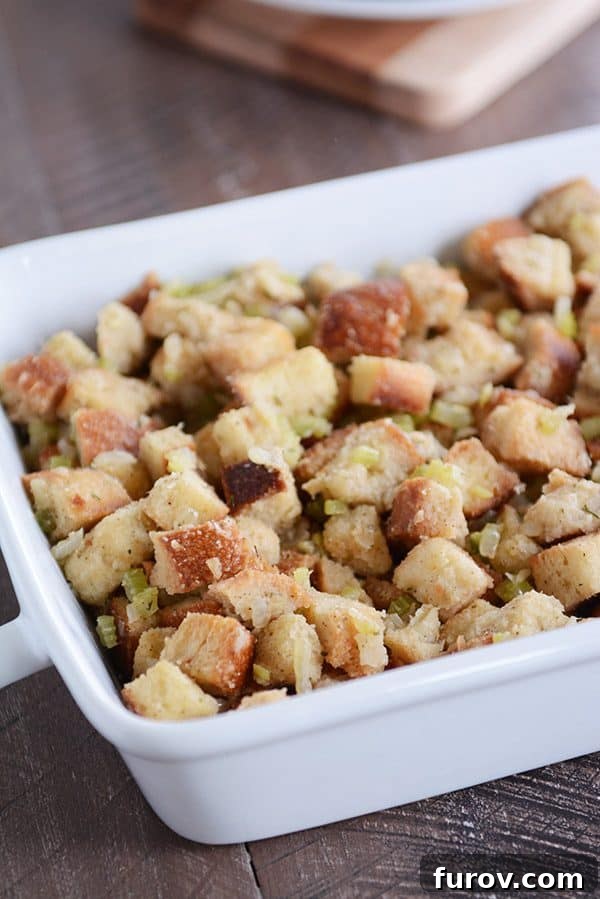
The Unrivaled Taste of Homemade Thanksgiving Stuffing
The first time I tasted truly homemade stuffing was four years ago, and it was a revelation. It instantly rendered all previous “stuff”ing experiences obsolete. The difference between a classic homemade stuffing and its boxed counterpart is like night and day. Imagine a symphony of fresh, aromatic ingredients coming together in a way that processed mixes simply cannot replicate. The flavors are vibrant, robust, and utterly authentic, a true reflection of the care and quality put into each component.
This isn’t just about avoiding preservatives or artificial flavors, though those are certainly bonuses. It’s about building layers of complex taste from scratch. The herbs are more fragrant, the vegetables more tender, and the bread transforms into something truly special, absorbing all those incredible flavors. Every bite is a testament to fresh, unprocessed ingredients, resulting in a dish that is completely delicious and uniquely yours.
Achieving Your Perfect Stuffing Texture
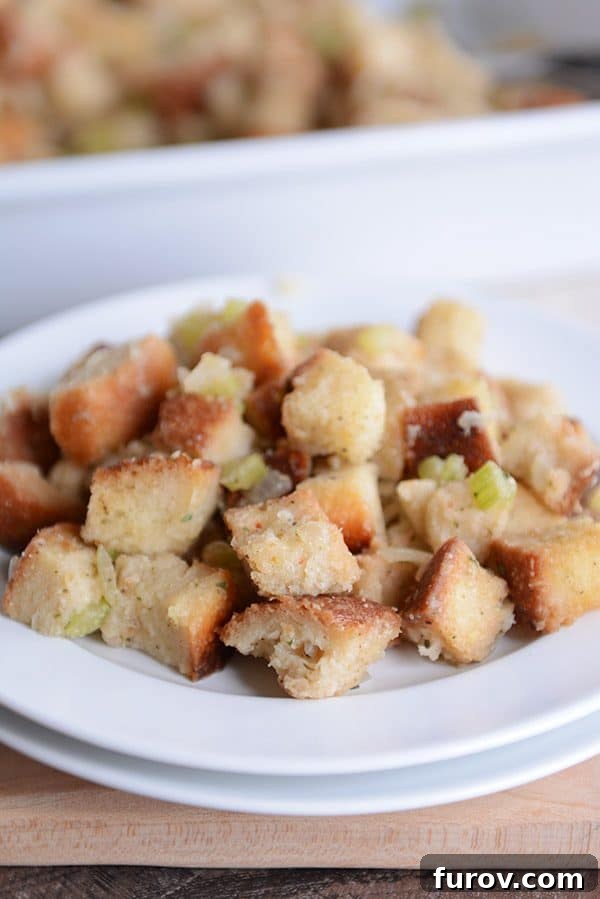
One of the greatest advantages of making stuffing from scratch is the complete control you have over its texture. In my household, we have a clear preference: we like our stuffing to be a bit on the chewy and delightfully crunchy side. No soggy bread for us, thank you very much! That beautiful golden-brown crust, crisp at the edges, is what truly elevates the experience.
However, the dreamy thing about this particular recipe is its versatility. Whether you prefer a stuffing that is soft and, dare I say, almost mushy in its tender goodness, or one that’s firm, savory, and boasts a wonderful textural contrast, this recipe can be adapted to suit your taste. It’s all about how you treat the bread and how much liquid you add, allowing you to fine-tune it to your ideal consistency. Either way, prepare for what many consider to be the best stuffing they’ve ever had.
Making Thanksgiving Easier: Essential Make-Ahead Tips
Make Ahead Tip:
When I make this stuffing, I always toast the bread in the oven the night before. This step is crucial for texture and can easily be done in advance. I also chop up all the vegetables – onions, celery, and garlic – and cook them until golden and soft the night before, refrigerating them once cooled. Finally, I combine all the dry seasonings (poultry seasoning, sage, thyme, rosemary) in one small bowl, ready to go. The day of Thanksgiving, I can simply throw everything together and bake it quickly, significantly reducing stress and cooking time on the big day.
Thanksgiving can be notoriously hectic, and while homemade stuffing is absolutely worth the effort, smart planning can make the process much smoother. The make-ahead tip above is a game-changer, but let’s expand on how to truly streamline your holiday cooking with this recipe:
- **Bread Prep is Key:** Toasting your bread cubes the day before is essential. Not only does it dry out the bread, which prevents a soggy stuffing, but it also develops a deeper flavor. Store the cooled, toasted bread cubes in a large airtight container or a paper bag overnight to maintain crispness.
- **Aromatics in Advance:** Chopping and sautéing your onions, celery, and garlic ahead of time is a huge time-saver. Once cooked and cooled, these can be stored in the refrigerator for up to 2-3 days. The flavors will even meld and deepen slightly, contributing to an even more delicious final product.
- **Herb Harmony:** Measure and combine all your dried herbs (poultry seasoning, sage, thyme, rosemary) in a small bowl or airtight container. If using fresh parsley, you can chop it the day before and store it in the refrigerator, wrapped in a damp paper towel.
- **Broth Ready:** Have your chicken broth measured out and ready to use.
- **Eggs at Room Temperature:** On Thanksgiving morning, take your eggs out of the refrigerator an hour or so before you plan to assemble the stuffing. Room temperature eggs mix more easily and evenly into the other ingredients.
By preparing these components in advance, you transform stuffing assembly on Thanksgiving Day into a quick, low-stress task, allowing you more time to focus on the turkey, gravy, or simply enjoying the company of your loved ones.
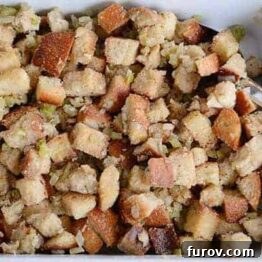
Classic Thanksgiving Stuffing
Ingredients
- 7 tablespoons butter, plus more for dish and baking
- 1 loaf rustic/artisan/crusty white bread, cut into 1/2-inch cubes (about 9 1/2 cups bread cubes)
- Salt and Pepper to taste
- 2 tablespoons extra-virgin olive oil
- 5 stalks celery, thinly sliced on the diagonal
- 2 medium onions, halved lengthwise and thinly sliced in half-moons
- 2 cloves garlic, finely chopped
- ½ to 2 cups chicken broth
- ½ teaspoon poultry seasoning
- 3 tablespoons coarsely chopped fresh flat-leaf parsley
- 1 teaspoon dried sage
- 1 teaspoon dried thyme
- 1 teaspoon dried rosemary, rubbed between fingers to crumble lightly
- 3 to 4 large eggs, lightly beaten
Instructions
-
Preheat the oven to 350°F (175°C). Melt 5 tablespoons of butter in the microwave. In a large bowl, toss the melted butter with the bread cubes until evenly coated. Spread the buttered bread cubes in a single layer on 1 or 2 rimmed baking sheets. Toast in the preheated oven, tossing once halfway through, until golden and crisp, which should take about 20 minutes. Remove from oven and let cool completely.
-
In a large skillet, heat the olive oil and the remaining 2 tablespoons of butter over medium-high heat until the butter has melted and is shimmering. Add the sliced celery, onions, and finely chopped garlic, along with a generous pinch of salt. Cook, stirring occasionally, until the vegetables are golden brown and softened, typically about 10 minutes. This step is crucial for developing deep, savory flavors.
-
To bake all of the stuffing in a dish (this is the preferred method for optimal crispness): Transfer the cooked vegetable mixture and the cooled toasted bread cubes into a very large mixing bowl. Stir in the poultry seasoning, all the dried herbs (sage, thyme, rosemary), and 2 cups of chicken broth. Mix gently until the bread cubes begin to absorb the liquid. Finally, stir in 4 lightly beaten eggs until the bread mixture is well coated and cohesive. Spoon the stuffing mixture into a buttered 13-by-9-inch baking dish. Dot the top generously with extra pats of butter. Cover the baking dish tightly with aluminum foil and bake in a 375°F (190°C) oven for 25 minutes. After 25 minutes, remove the foil and continue to bake for another 10 to 15 minutes, or until the top is beautifully golden brown and crispy.
-
To stuff inside a turkey: In a large bowl, combine the cooked vegetable mixture and the toasted bread cubes. Stir in 1 cup of chicken broth (or more, depending on desired moisture), the poultry seasoning, and all the dried herbs; season with salt and pepper to taste. Stir in 3 lightly beaten eggs. Lightly stuff the mixture inside the turkey cavity just before roasting. Ensure the turkey is not over-stuffed, as the stuffing expands during cooking. Follow standard turkey roasting guidelines for safety.
Recipe Source: adapted from Martha Stewart
The Heart of Thanksgiving: Why Stuffing Matters
Stuffing, or dressing as it’s often called when baked outside the bird, is more than just a side dish; it’s an integral part of the Thanksgiving experience, deeply woven into the fabric of holiday traditions. The aroma of sage, celery, and toasted bread wafting through the house is often the first true signal that Thanksgiving has arrived. It evokes warmth, comfort, and memories of family gatherings.
Choosing to make stuffing from scratch allows you to tap into this deep well of tradition and create new, cherished memories. It offers a chance to connect with the ingredients, to infuse the dish with personal touches, and to truly savor the process of cooking for those you love. While the boxed varieties offer convenience, they simply can’t deliver the depth of flavor, the satisfying texture, or the soulful experience that comes with a homemade classic.
Key Ingredients for Unforgettable Stuffing
A truly great stuffing relies on a few core components, each playing a vital role in its overall success:
- **The Bread:** This is the backbone of your stuffing. Opt for a rustic, artisan, or crusty white bread. Avoid soft sandwich breads that can turn to mush. The key is to cut it into 1/2-inch cubes and toast them until golden. This drying process is critical; it creates porous cubes that readily absorb all the delicious liquids and flavors without becoming soggy.
- **Aromatics:** Onions, celery, and garlic form the aromatic base. Sautéing them slowly in butter and olive oil until soft and golden sweetens them and releases their essential flavors, creating a rich foundation for the stuffing.
- **Herbs:** Fresh and dried herbs are what give stuffing its characteristic holiday flavor. Poultry seasoning is a classic blend, but individual dried sage, thyme, and rosemary are indispensable. Fresh parsley adds brightness and a pop of color. Rubbing dried rosemary between your fingers helps release its oils and intensifies its flavor.
- **Fat:** Butter and olive oil are used to toast the bread and sauté the vegetables. They contribute richness and help achieve that coveted crispy exterior.
- **Liquid:** Chicken broth is the liquid that brings everything together, moistening the bread and infusing it with savory flavor. The amount can be adjusted based on your desired moisture level.
- **Binder:** Eggs are crucial for binding the stuffing ingredients together, preventing it from crumbling apart. They also contribute to the stuffing’s texture as it bakes.
Tips for Stuffing Success
- **Don’t Rush the Bread:** Properly dried and toasted bread is the secret to non-soggy stuffing. Don’t skip this step!
- **Flavor Development:** Cook your vegetables until they are truly softened and slightly caramelized. This takes time but is essential for deep flavor.
- **Adjust Moisture to Taste:** Start with the lower amount of broth and add more incrementally until the bread is thoroughly moistened but not swimming in liquid. You want it damp, not soaking.
- **For Crispier Stuffing:** Bake the stuffing uncovered for a longer period at the end, or even broil for a few minutes (watch carefully!) to get a beautiful golden-brown crust. You can also press extra pats of butter on top before baking.
- **Safety First for Turkey Stuffing:** If baking inside the bird, ensure the stuffing reaches an internal temperature of 165°F (74°C). For food safety, it’s generally recommended to bake stuffing separately in a dish.
Embracing the tradition of homemade Thanksgiving stuffing is a deeply rewarding experience. It’s a chance to create something truly special, filled with fresh flavors and made with love. This classic recipe provides the perfect foundation, allowing you to create a side dish that will undoubtedly become a highlight of your holiday feast. Say goodbye to the box and hello to the best Thanksgiving stuffing your table has ever seen.