
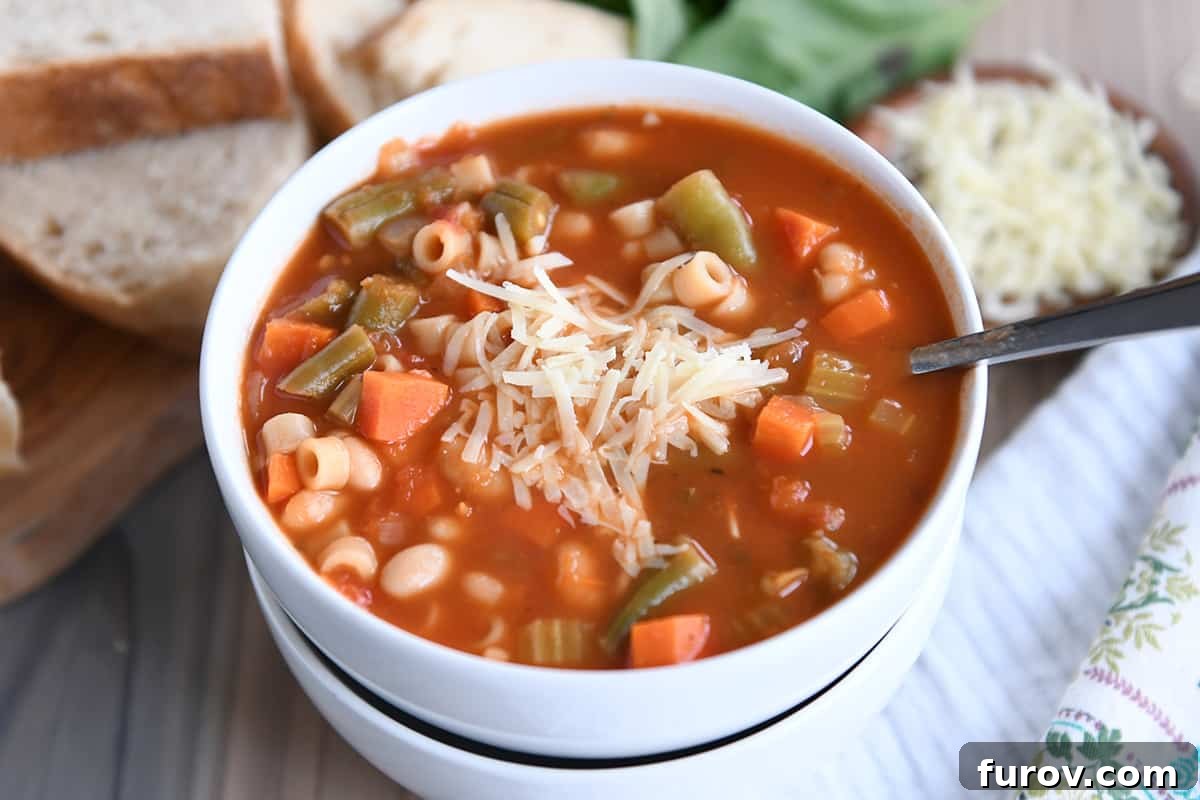
Warm, hearty, and bursting with vibrant flavors, this classic minestrone soup is packed with an array of fresh vegetables, wholesome beans, and tender pasta, making it the ultimate easy and delicious weeknight dinner solution.
There’s an undeniable charm to a perfectly crafted bowl of classic minestrone soup. It’s a dish that transcends seasons, offering comfort and nourishment with every spoonful. This Italian-style vegetable soup, known for its hearty nature and rich blend of ingredients, isn’t just a meal; it’s an experience. Every time I prepare this beloved recipe, I’m reminded of its simple elegance and how it effortlessly brings a taste of authentic Italian warmth to the dinner table. It’s a gentle nudge to incorporate more of this wholesome goodness into our weekly menu.
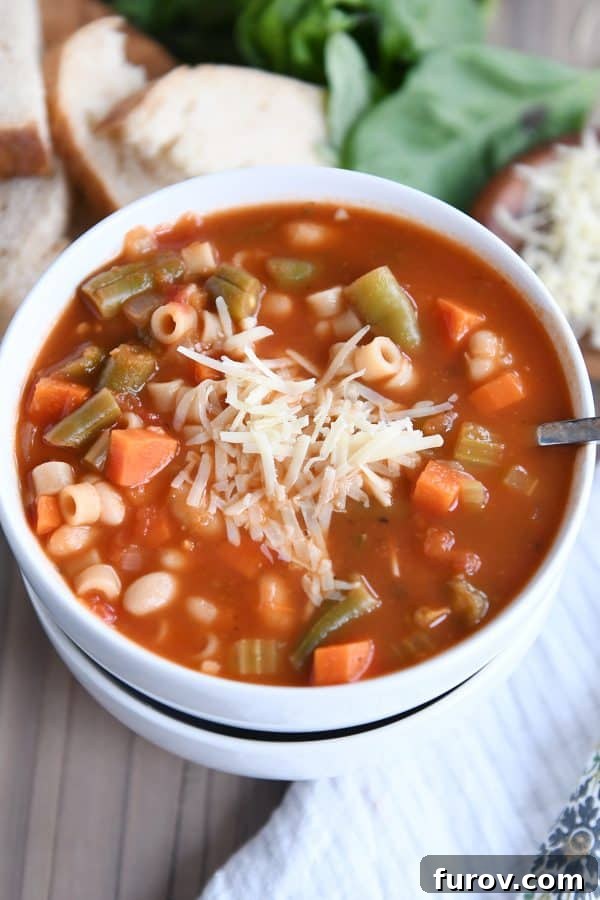
This vibrant minestrone is a celebration of garden-fresh vegetables, protein-rich beans, and delightful small pasta shapes, all simmered in a savory broth. It’s truly fantastic when served with a generous sprinkle of freshly grated Parmesan cheese and accompanied by a crusty loaf of artisanal bread, perfect for dipping and soaking up every last drop of the flavorful broth.
What makes this specific minestrone soup recipe a true winner is how quickly and effortlessly it comes together. It’s a tried-and-true formula that simplifies meal prep, inviting even the busiest home cooks to join the growing fan club of this timeless Italian favorite. Forget complex cooking techniques or exotic ingredients; this recipe focuses on wholesome simplicity and maximum flavor.
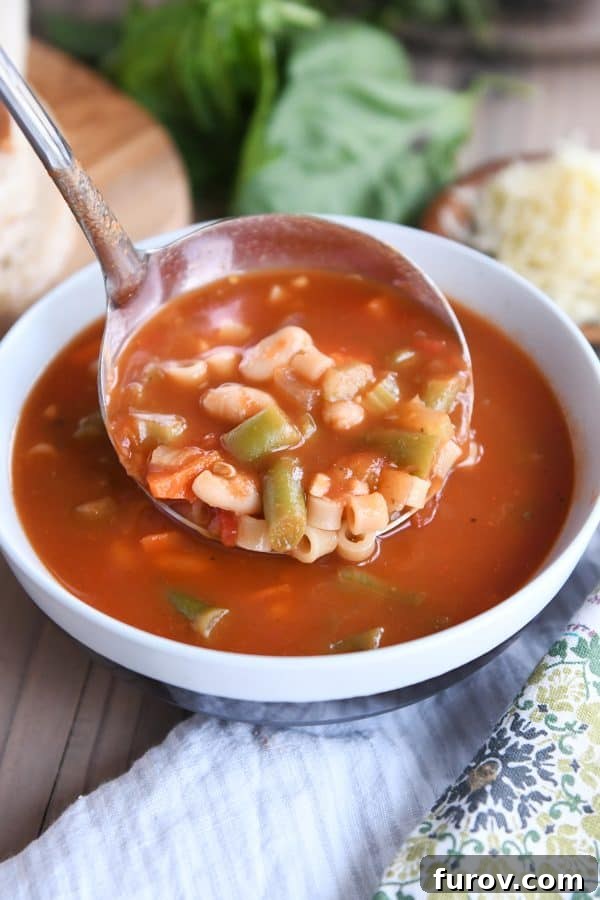
The Enduring Appeal of This Classic Minestrone Recipe
Minestrone soup is a quintessential Italian comfort food, renowned for its thick, hearty consistency and its diverse blend of vegetables, beans, and pasta. While its core concept remains simple – a robust vegetable soup – its beauty lies in its adaptability and the depth of flavor it achieves. There are countless variations of minestrone, each offering a unique seasonal twist, such as Autumn Minestrone Soup or a Winter Minestrone with Pesto and Garlic Bruschetta. However, there’s nothing quite like returning to the comforting embrace of a truly classic minestrone, and this recipe delivers just that.
Here’s why this particular classic minestrone soup will become a staple in your kitchen:
- Effortlessly Quick & Hands-Off: With a total cooking time often under 30 minutes, this soup is designed for busy schedules. Most of the time is spent simmering, allowing you to focus on other tasks while dinner practically makes itself.
- Incredibly Easy & Fuss-Free: Beyond a little initial chopping of your vegetables and a quick sauté, this recipe is essentially a “dump-and-cook” affair. It’s perfect for novice cooks or anyone looking for a low-stress meal that doesn’t compromise on taste.
- Pantry Powerhouse: This recipe leverages common pantry ingredients like canned tomatoes, beans, and dried pasta, meaning you likely have most components on hand already. This makes impromptu soup nights a breeze and helps minimize grocery runs.
- Health-Conscious Choice: Loaded with a colorful assortment of vegetables and legumes, this minestrone is naturally rich in fiber, vitamins, and minerals. It’s a delicious way to boost your daily nutrient intake without feeling like you’re eating “diet food.”
- Family-Friendly Favorite: The mild, comforting flavors and customizable nature of minestrone make it a hit with both adults and children. It’s an excellent way to introduce more vegetables into your family’s diet in a way they’ll actually enjoy.
- Budget-Friendly: Made with inexpensive staple ingredients, this minestrone offers incredible value. It’s a satisfying meal that can feed a crowd without breaking the bank, making it ideal for large families or meal prepping.
Essential Ingredients for a Perfect Classic Minestrone
The beauty of minestrone lies in its humble, yet powerful ingredients. While adaptable, these core components lay the foundation for a truly delicious and authentic soup:
- Crushed Tomatoes: These form the rich, flavorful base of your soup. While crushed tomatoes offer a smoother texture, you can certainly use half crushed and half diced tomatoes if your family enjoys a chunkier consistency. The quality of your canned tomatoes can significantly impact the final flavor, so opt for a good brand.
- Broth: The choice between vegetable broth and chicken broth is yours. Both provide an excellent liquid base. Using a low-sodium version allows you to control the saltiness of the soup, seasoning it perfectly to your taste.
- Beans: White beans are traditional in minestrone. Great Northern or Cannellini beans are excellent choices, offering a creamy texture and nutty flavor. Canned beans are perfectly acceptable for convenience; just be sure to rinse and drain them thoroughly to remove excess sodium and improve digestibility.
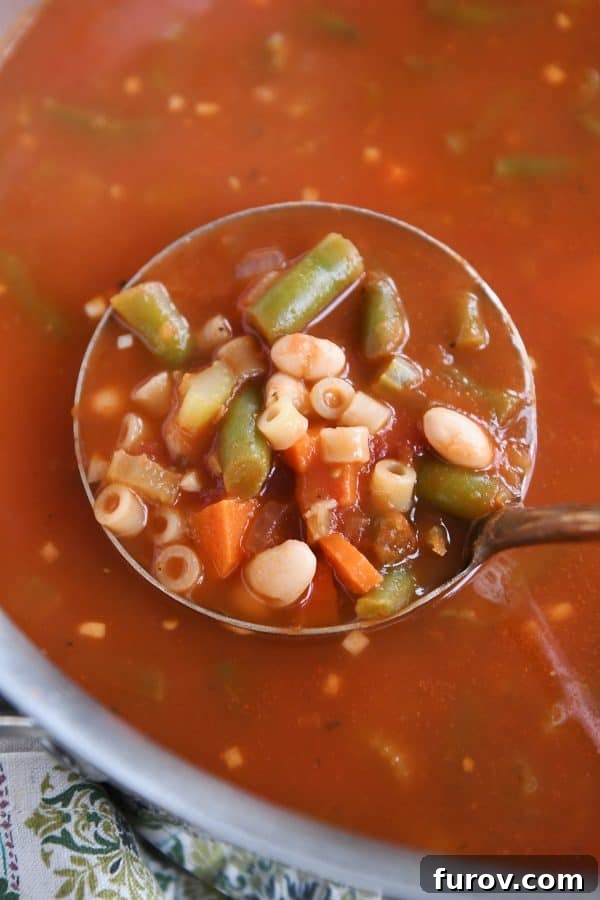
- Vegetables: The classic mirepoix of carrots, celery, and onions forms the aromatic backbone of the soup, adding fundamental sweetness and depth. Green beans provide a lovely color and tender crunch. Feel free to use either fresh or frozen vegetables, depending on what’s available and convenient.
- Pasta: Small-shaped pasta is ideal for minestrone, as it cooks quickly and is easy to eat with a spoon. Ditalini, small shells, or elbow macaroni are all excellent choices. The pasta adds a comforting chewiness and helps thicken the soup slightly.
- Aromatic Herbs & Spices: Garlic, dried basil, oregano, salt, and black pepper are crucial for building the characteristic Italian flavor profile. Freshly minced garlic is always preferable, but garlic powder can be used in a pinch.
- Olive Oil: A good quality olive oil is essential for sautéing the vegetables and adding a touch of richness to the soup’s base.
- Parmesan Cheese (for serving): A sprinkle of freshly grated Parmesan cheese before serving is non-negotiable for many, adding a salty, umami kick that perfectly complements the soup’s flavors.
Customizing Your Minestrone Soup: Endless Variations
One of the most wonderful aspects of this classic minestrone soup is its incredible versatility. It truly shines when adapted to your personal preferences or whatever fresh ingredients you happen to have available. Think of this recipe as a flexible template, inviting you to experiment and make it your own.
- Vegetable Swaps & Additions: Feel free to incorporate or substitute other vegetables. Zucchini, yellow squash, butternut squash (cubed), diced potatoes, spinach, kale, or even frozen mixed vegetables can all be wonderful additions. Add heartier vegetables like potatoes or squash earlier in the cooking process to ensure they soften sufficiently. Leafy greens like spinach or kale should be stirred in during the last few minutes of cooking to prevent overcooking.
- Fresh vs. Frozen Produce: Both fresh and frozen vegetables work beautifully in this soup. Frozen vegetables can be a fantastic time-saver, eliminating chopping and often retaining their nutritional value. There’s no need to thaw them before adding them to the pot.
- Bean Alternatives: While white beans are traditional, don’t hesitate to swap them for another variety. Kidney beans (light or dark), chickpeas, or even a mix of different beans can offer a slightly different flavor and texture profile. If you’re not a fan of beans, you can simply omit them, though they do add valuable protein and fiber.
- Pasta Shapes: Any small-shaped pasta will work well. Consider small shells, ditalini, elbow macaroni, or even broken spaghetti pieces. For a gluten-free option, use your favorite gluten-free pasta and follow package directions for cooking time. If you plan to freeze the soup, you might consider cooking the pasta separately and adding it to individual bowls upon reheating to prevent it from becoming too mushy.
- Protein Boost: For a more substantial meal, consider adding cooked ground sausage, shredded chicken, or even small meatballs during the last stages of simmering. This transforms the minestrone into an even heartier, protein-packed dish.
- Herb Enhancements: While dried herbs are convenient, fresh basil, parsley, or oregano, finely chopped and stirred in just before serving, can elevate the soup’s aroma and freshness.
Indeed, there’s no single “right” way to make minestrone. If you were to gather ten different home cooks and ask them to prepare this dish, you might very well end up with ten wonderfully distinct soups. This incredible adaptability, and the freedom to tailor it to your pantry and palate, is precisely the beauty of minestrone. It’s a testament to its rustic Italian roots, where cooks traditionally used whatever seasonal ingredients they had on hand.
Frequently Asked Questions About Classic Minestrone Soup
Absolutely! This recipe is incredibly flexible. For a doubled batch, simply ensure you use a significantly larger pot to accommodate the increased volume. When halving the recipe, use a 15-ounce can of crushed tomatoes. For the beans, you can either refrigerate the unused half of a can for another recipe or add the full can for an extra thick and bean-rich soup – it’s all about preference!
Minestrone soup freezes reasonably well, but there are a few considerations. The pasta tends to absorb more liquid and can become slightly softer or mushier upon thawing and reheating. The soup will also become noticeably thicker after cooling, whether in the fridge or freezer, as the pasta continues to absorb liquid. To mitigate this, you can add extra broth when reheating, or, if you know you’ll be freezing the entire batch, undercook the pasta by a minute or two from the package directions before freezing. For best results, some prefer to cook and add the pasta fresh when serving.
Yes, absolutely! Customization is a hallmark of minestrone. The beauty of this soup is its adaptability. Most of the ingredients, especially the vegetables, beans, and pasta, are highly customizable. Refer to the “Customizing Your Minestrone Soup” section above for a wealth of ideas and suggestions.
Properly stored in an airtight container, minestrone soup will last for 3-4 days in the refrigerator. The flavors often meld and deepen overnight, making it even more delicious the next day.
This recipe is inherently vegetarian if you use vegetable broth instead of chicken broth. To make it vegan, simply omit the Parmesan cheese or use a dairy-free Parmesan alternative for serving.

Classic Minestrone Soup
8
servings
30 minutes
25 minutes
55 minutes
Pin
Ingredients
-
1
tablespoon
olive oil -
½
cup
finely chopped onion -
¾
cup
chopped celery,
about 2-3 ribs celery -
1
cup
chopped carrots,
about 2-3 medium carrots -
1 ½
cups
frozen or fresh chopped green beans -
3
cloves
garlic, finely minced or 1 teaspoon garlic powder -
1
teaspoon
dried basil -
1
teaspoon
salt -
½
teaspoon
dried oregano -
¼
teaspoon
black pepper -
1
can
(28-ounces) crushed tomatoes -
6
cups
chicken or vegetable broth,
I use low-sodium -
1
can
(15-ounces) white beans, rinsed and drained (see note) -
1
cup
small pasta, like shells, ditalini or elbow -
Parmesan cheese,
for serving
Instructions
-
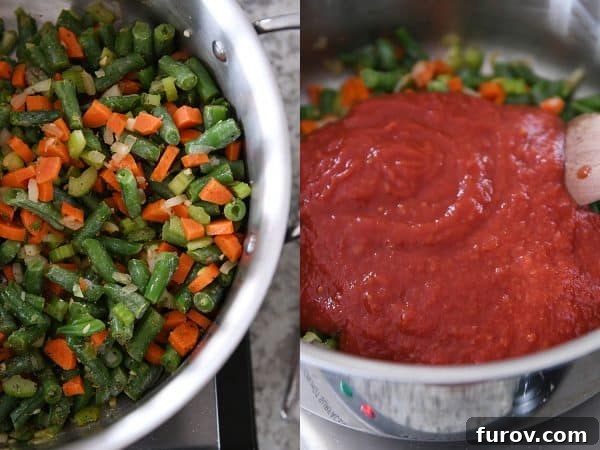
In a large 6-quart pot or Dutch oven, heat the olive oil over medium heat. Add the finely chopped onion, celery, and carrots. Sauté, stirring occasionally, until the onions begin to soften and become translucent, which typically takes about 4-5 minutes.
-
Next, add the green beans (fresh or frozen), minced garlic, dried basil, salt, dried oregano, and black pepper to the pot. Continue to cook for another minute or so, stirring frequently to ensure the aromatics are well distributed and fragrant.
-
Stir in the crushed tomatoes and the chicken or vegetable broth. Bring the entire mixture to a gentle simmer. Allow the soup to cook uncovered for 8-10 minutes, giving the initial vegetables a chance to soften further and for the flavors to meld beautifully.
-
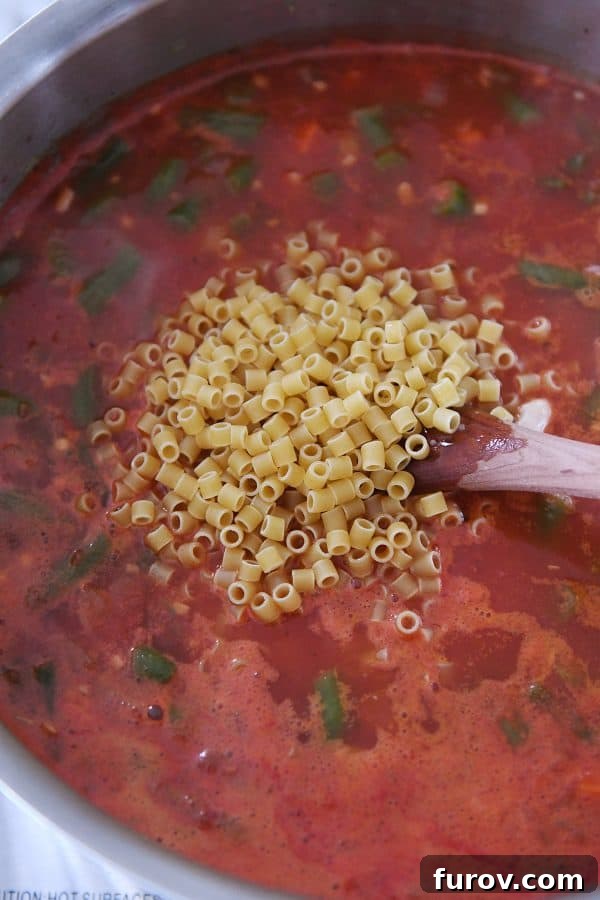
Finally, add the rinsed and drained white beans and the small pasta to the simmering soup. Continue to cook for an additional 10-11 minutes, or until both the pasta and the vegetables are tender to your liking. The pasta should be al dente, offering a slight chew.
-
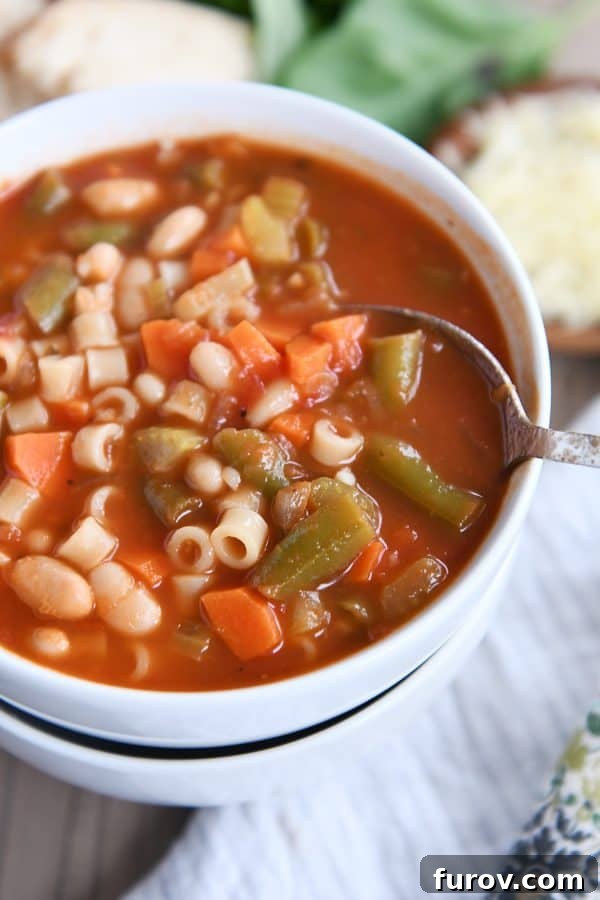
Taste the soup and adjust seasonings with additional salt and pepper as needed. Ladle the hot minestrone into bowls and serve immediately. Garnish generously with freshly grated Parmesan cheese, if desired, and enjoy with crusty bread.
Notes
Beans: This recipe calls for Great Northern or white kidney beans, which provide a lovely creamy texture. Light or dark kidney beans are also excellent substitutes if preferred or if that’s what you have on hand.
Mel
Soup
American
Stovetop
Nutrition Information
Serving:
1
serving
,
Calories:
197
kcal
,
Carbohydrates:
35
g
,
Protein:
10
g
,
Fat:
3
g
,
Saturated Fat:
1
g
,
Sodium:
1091
mg
,
Fiber:
7
g
,
Sugar:
7
g
Recommended Products
Recipe Source: Inspired by Mel’s Kitchen Cafe