
Navigating the Mat: A First-Time Parent’s Guide to the Youth Wrestling Season
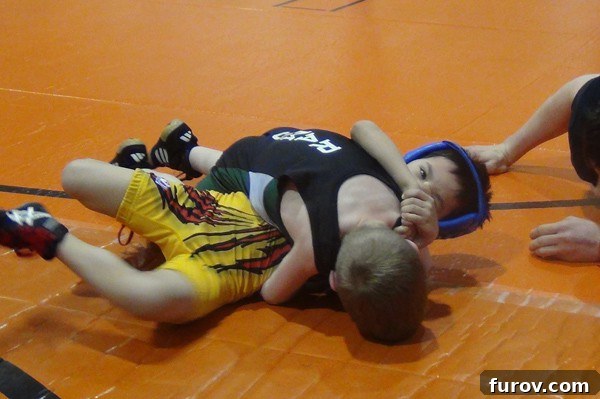
Our lives, quite unexpectedly, have been entirely consumed by the world of wrestling. This year marks a significant turning point as my two eldest sons embarked on their journey as newbie wrestlers. For me, it has been an absolute crash course, an immersive education in a sport I knew little about beyond its surface. My husband, Brian, on the other hand, comes with a rich history, having wrestled through college. He still relishes the distinct, earthy aroma of a sweaty wrestling room – a scent I confess to finding less appealing, often prompting a silent gag. What he loves even more is demonstrating intricate moves like the “whizzer” and the “crossface,” typically using me as his unsuspecting mannequin. His goal? To showcase the “right” method (his flawless execution) versus the “wrong” method (my flailing attempts) to our boys. Apparently, shrieking while experiencing a crossface is strictly forbidden in the sport. But can you blame me? I tend to emit a high-pitched cry when someone attempts to detach my nose.
This wrestling season, despite its steep learning curve and occasional bodily discomfort, has been remarkably illuminating. I’ve gathered a collection of insights – some humorous, some genuinely valuable – that I’d be delighted to share with you, especially if you’re a fellow parent venturing into the vibrant, often chaotic, world of youth sports.
The Roar of the Crowd: Mastering Sideline Etiquette in Youth Wrestling
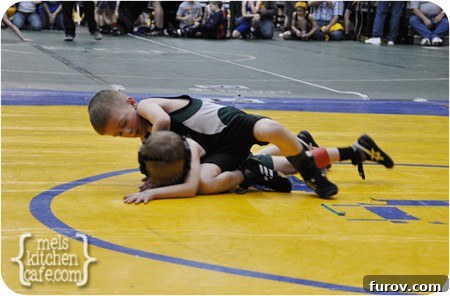
One of the first and most hilarious lessons I learned revolved around parental vocalization. When your child is locked in a wrestling match, it’s generally advisable to refrain from shouting directives like, “Shove his face in the mat, son!” particularly when everyone else around you is offering far more productive and technically sound advice, such as “Half-nelson!” This guidance becomes exponentially more crucial if, like me, your voice possesses an uncanny ability to carry across an entire gymnasium. I quickly realized that while my enthusiasm was genuine, my tactical advice was, shall we say, unrefined. The real coaches are the ones calling the shots and providing specific instructions. As parents, our primary role from the sidelines should be to offer unwavering encouragement, celebrate effort, and simply be present. We’re there to be their biggest fans, not their loudest, most unhelpful strategists. Over-coaching from the stands can be distracting for the young athlete and often creates an uncomfortable atmosphere for everyone involved. A simple “Go, son!” or “You got this!” is often far more impactful and appreciated than an amateur coaching clinic from the bleachers. Learning to channel that intense parental energy into positive reinforcement, rather than misguided aggression, is a vital skill for any youth sports parent.
Celebrating Every Endeavor: The Power of Inclusive Awards in Youth Sports
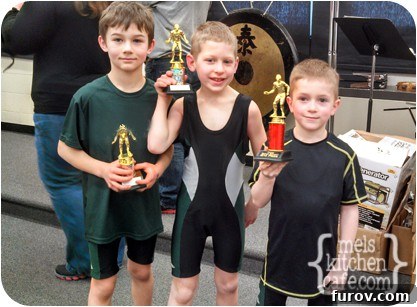
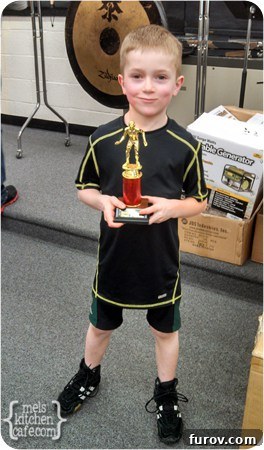
My heart swells with appreciation for every single individual who has dedicated their time and effort to organizing the wrestling tournaments we’ve attended this season. A special commendation goes to those who have judiciously decided that every single wrestler, regardless of their final placement – whether they stand atop the podium or are just starting their journey – will receive a trophy or a medal. This simple, yet profound, act has an immeasurable positive impact on these young athletes. My children, in particular, return home feeling like true Olympians, beaming with pride as they show off their hard-earned accolades. In a world that often emphasizes winning above all else, this approach teaches invaluable lessons about participation, perseverance, and the sheer joy of competition. It validates the immense effort, discipline, and courage it takes for a young person to step onto the mat. By acknowledging every participant, these tournaments foster a love for the sport, encourage continued involvement, and build self-esteem, especially in beginners who are still grappling with the fundamentals. It’s a powerful reminder that success isn’t solely defined by a first-place finish, but by the dedication shown and the experience gained.
Capturing the Action: Tips for Videotaping Youth Wrestling Matches
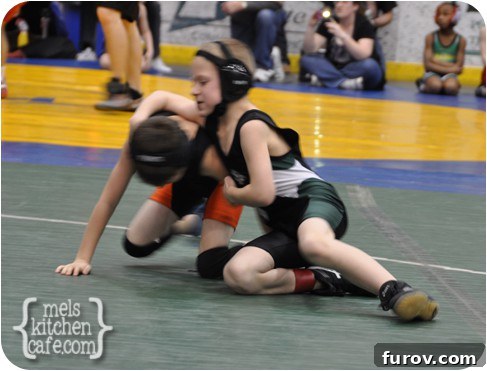
If you, like me, possess a penchant for expressing strong emotions vocally – a characteristic I’ve already confessed to – then for all that is good and righteous, please, let someone else videotape the matches. I learned this the hard way. My well-intentioned attempts to capture my boys’ wrestling prowess invariably resulted in footage where my own high-pitched shrieks and gasps completely overshadowed the actual sounds of the match. Upon playback, I couldn’t focus or discern a single coherent sound from the mat, which, as you can imagine, proved incredibly frustrating for everyone. Our children, eager to review their technique and, perhaps more importantly, see “how big their muscles looked” during their key moves, were left annoyed by the audio interference. The purpose of recording matches, after all, is twofold: to create cherished memories and to allow the wrestlers (and their coaches) to review their performance for improvement. Neither of these goals is achieved when the soundtrack is dominated by a parent’s impassioned, albeit unhelpful, commentary. Consider delegating this important task to a calmer family member or friend, or commit to a stoic, silent recording stance. Trust me, your future self, and your wrestling stars, will thank you.
Beyond “Cute”: Affirming a Wrestler’s Strength and Determination
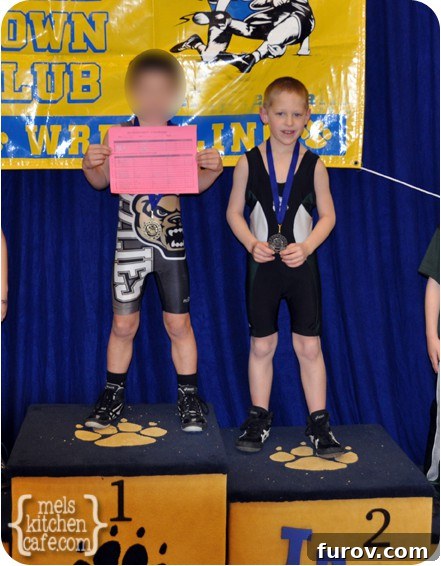
Whatever you do, absolutely never tell your little wrestler he looks “cute” when he’s standing on the podium, or indeed, at any point during a tournament. This, I’ve discovered, is strictly not okay. Wrestling is a tough sport, demanding immense physical and mental fortitude. Wrestlers, regardless of their age, are cultivating an image of strength, resilience, and determination. They are pushing their limits, engaging in intense physical contests, and learning to overcome challenges. When they step onto that mat, they are not aiming to be perceived as “cute.” They are striving to be tough, focused, and powerful. Using the word “cute” can inadvertently undermine their efforts and the serious identity they are building as athletes. Instead, opt for empowering adjectives that truly reflect their dedication and performance. Tell them they look “strong,” “fierce,” “determined,” “resilient,” or “focused.” These words validate their hard work and reinforce the very qualities that wrestling helps to instill. Your language as a parent plays a significant role in shaping your child’s self-perception and their commitment to their athletic journey.
Navigating Victory and Defeat: Handling Referee Calls and Sportsmanship
This is perhaps one of the most challenging lessons for any sports parent: learning to manage your emotional response to referee calls, especially when they go against your child. It’s incredibly difficult not to glare at the first-place finisher and their parents, even if you firmly believe the high school referee made an erroneous call, like declaring a pin on your son when he was clearly, unequivocally, not pinned. In those moments, the competitive fires burn hot, and it feels intensely personal. However, it’s crucial to remember that youth wrestling is, fundamentally, a friendly competition. It’s not a matter of life or death, even though your son, in your parental opinion, should have undeniably emerged victorious. This experience provides a vital opportunity to model good sportsmanship for your children. Teaching them to respect officials’ decisions, even when they’re perceived as unfair, and to handle disappointment with grace, are invaluable life lessons that extend far beyond the wrestling mat. It’s about teaching resilience, humility, and the understanding that sometimes, things don’t go your way, and that’s okay. Focus on your child’s effort and growth, rather than getting caught up in the outcome or officiating disputes.
Beyond the Mat: The Enduring Life Lessons of Youth Wrestling
As you can see, our family’s venture into youth wrestling has been far more than just a sport; it’s become a dynamic classroom for countless valuable life lessons. Beyond the five points I’ve shared, wrestling instills a profound sense of discipline and dedication. The commitment to practices, conditioning, and weight management teaches young athletes the importance of routine and perseverance. It cultivates immense physical and mental toughness, pushing children to understand their limits and then helping them discover how to push past them. The strategic thinking required in each match, the ability to adapt to an opponent’s moves, and the sheer willpower to continue when fatigued, all contribute to developing strong character. Furthermore, wrestling fosters a deep sense of respect – respect for oneself, for opponents, for coaches, and for the rules of the sport. It builds camaraderie among teammates who train and compete together, sharing victories and defeats. These aren’t just skills for the mat; they are foundational attributes that will serve them well throughout their lives, whether in academics, future careers, or personal relationships.
Conclusion: Embracing the Wrestling Journey
Our journey through this wrestling season has been an enriching, albeit sometimes noisy and emotionally charged, experience. It has underscored the profound impact that youth sports can have, not just on the children involved, but on the entire family. My boys are not just learning wrestling moves; they are building character, resilience, and a deep understanding of effort and reward. As for me, I’m learning to be a more supportive, less vocally intrusive, sports parent, finding the balance between passion and perspective. We are eagerly anticipating what the last few weeks of the wrestling season will bring – hopefully, more personal triumphs, continued growth, and, on a lighter note, a distinct absence of common wrestling ailments like ringworm or the dreaded cauliflower ear! The lessons learned on and off the mat are priceless, making this unexpected foray into wrestling one of the most valuable adventures our family has undertaken.
If you’d like to check out past Snapshot Saturdays, click HERE.