
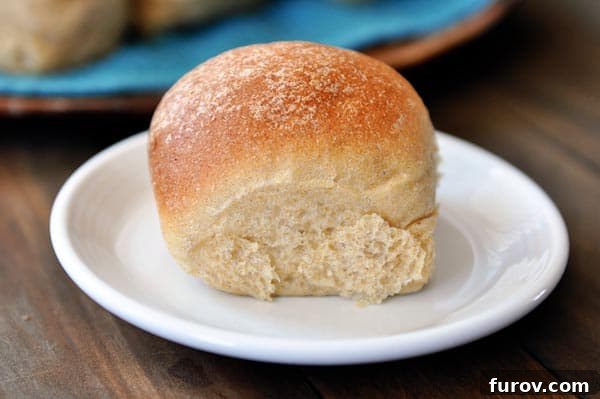
Fluffy Whole Wheat Dinner Rolls: A 100% Whole Wheat Recipe You’ll Adore
Imagine dinner rolls so incredibly light, soft, and utterly delicious that you’d never guess they were made with 100% whole wheat flour. This isn’t a dream; it’s the reality this recipe delivers. Prepare to transform your baking with these perfect fluffy whole wheat dinner rolls, proving that wholesome doesn’t mean compromising on taste or texture.
For too long, whole wheat rolls have been unfairly relegated to the “dense and brick-like” category. It’s a common misconception that baking with whole wheat flour automatically means a heavy, crumbly texture. But we’re here to shatter that myth!
These fluffy whole wheat dinner rolls are every bit as light, tender, and incredibly scrumptious as their traditional white flour counterparts. Forget those recipes that boast “whole wheat” while only incorporating a token quarter cup of wheat flour into six cups of white. When we say whole wheat, we mean it—this recipe champions the real deal, utilizing 100% whole wheat flour for a truly wholesome and satisfying bake.
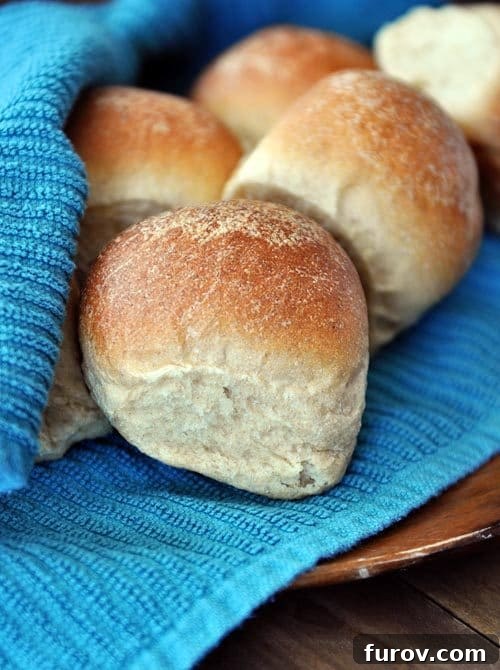
The Quest for the Perfect Whole Wheat Roll
My journey to perfecting the whole wheat dinner roll has been a long one, marked by experimentation and a desire to elevate the everyday dinner table with healthier options. For years, I would attempt to sneak in whole wheat flour into beloved recipes, like my classic French Bread rolls. The results were… acceptable. They weren’t terrible, but they certainly didn’t possess the same irresistible fluffiness and delicate texture of their all-white flour versions. While my family, bless their hearts, never openly complained, I always knew deep down that there was room for improvement – a million times more fluffy, a million times more yummy. There had to be a way to achieve that perfect balance of nutrition and deliciousness.
Baking with whole wheat flour has become a staple in my kitchen, especially with my trusty wheat grinder always ready for action. It’s a running joke that white bread is like a rare dessert for my kids; if the bread isn’t brown, they think something truly extraordinary (or perhaps apocalyptic!) must be happening. This commitment to whole grains fueled my determination to craft a whole wheat roll that everyone would genuinely rave about, without the slightest hint of compromise.
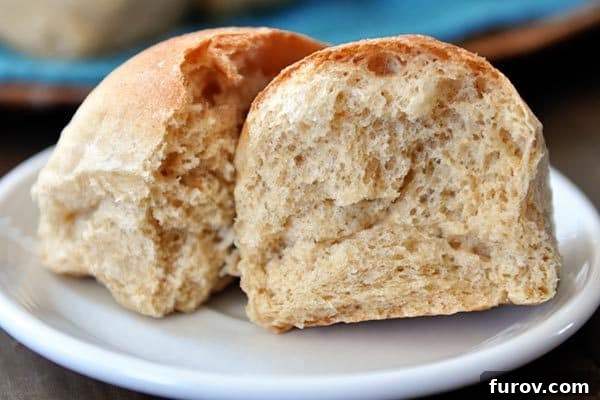
The Secret to Unbelievably Fluffy Whole Wheat Rolls
Who would have thought the solution to my whole wheat baking dilemma would be so simple? It came from an ingredient I already used in my reliable whole wheat bread recipe. By incorporating a small amount of this magical component into this roll recipe, alongside 100% whole wheat flour, the transformation was astounding. What resulted were the most amazing, fluffiest whole wheat dinner rolls you could ever imagine. They defy expectations and prove that healthy eating can be incredibly indulgent. It’ll be our little secret that there isn’t a single speck of white flour in these tender, golden beauties!
If you’ve previously tried my French Bread rolls, you’ll know they are incredibly foolproof—an excellent starting point for anyone new to baking with yeast. This whole wheat adaptation maintains that simplicity. Despite a few extra minutes of kneading time, the process is equally straightforward and rewarding. The key, as with all yeast breads, is to avoid overflouring the dough. Doing so can quickly lead to those undesirable “brick-ish” lumps, and your heart certainly won’t be singing praises to the fluffy roll heavens!
Why Choose 100% Whole Wheat? Beyond Just the Rolls
Opting for 100% whole wheat flour isn’t just about making delicious rolls; it’s about embracing a wealth of nutritional benefits. Whole wheat flour retains the entire wheat kernel—the bran, germ, and endosperm—unlike refined white flour, which primarily consists of the endosperm. This means every bite of these rolls comes packed with more fiber, protein, vitamins (B vitamins like thiamine, riboflavin, niacin, and folate), and minerals (iron, magnesium, selenium). The fiber content aids in digestion, helps maintain healthy blood sugar levels, and contributes to a feeling of fullness, making these rolls a more satisfying and beneficial addition to any meal.
Moreover, the distinct, nutty flavor of whole wheat adds a depth to the rolls that white flour simply can’t match. It’s a flavor that complements a wide array of dishes, from hearty stews to light salads. By committing to 100% whole wheat, we ensure maximum nutritional impact without sacrificing the beloved texture and taste that makes a dinner roll so comforting and appealing.
Understanding Vital Wheat Gluten: The Game Changer
The “secret ingredient” that elevates these whole wheat rolls from good to extraordinary is vital wheat gluten. But what exactly is it, and how does it work its magic? Vital wheat gluten is essentially wheat flour from which most of the starch has been removed, leaving behind a highly concentrated protein powder. This concentrated gluten, when added to dough, significantly boosts its elasticity and strength.
Whole wheat flour contains bran, which has sharp edges that can cut the delicate gluten strands during kneading, resulting in a less elastic dough and a denser finished product. Vital wheat gluten counteracts this by providing extra gluten structure, allowing the dough to rise higher, hold its shape better, and develop that signature soft, fluffy texture that’s often challenging to achieve with whole wheat alone. It’s truly a game-changer for whole grain baking, helping you achieve professional-level results at home. You can typically find it in the baking aisle of most grocery stores, often near specialty flours, or at health food stores and organic mills.
Tips for Whole Wheat Baking Success
Baking with yeast, especially whole wheat yeast doughs, can feel intimidating at first, but with a few key tips, you’ll be a master in no time:
- Yeast Activation is Crucial: Ensure your water is warm, but not hot. Around 105-115°F (40-46°C) is ideal for active dry yeast to thrive without being killed by excessive heat. Instant yeast is more forgiving and can often be mixed directly with dry ingredients, but proofing it first with warm water and a pinch of sugar confirms its viability.
- The “Feel” of the Dough: This is perhaps the most important tip. The exact amount of flour can vary based on humidity, altitude, and even the type of flour you’re using. Instead of rigidly sticking to the recipe’s flour quantity, pay attention to the dough’s texture. It should be soft, smooth, and slightly tacky, but not overly sticky. As you knead, the dough will become less sticky. Resist the urge to add too much flour too soon.
- Proper Kneading: Whole wheat dough benefits from thorough kneading. This develops the gluten, creating a strong, elastic network that traps the gases produced by the yeast, leading to a lighter, airier roll. In a stand mixer, aim for 7-10 minutes. By hand, it might take 10-15 minutes. The dough should pass the “windowpane test”—stretch a small piece until it’s thin enough to see light through it without tearing.
- Ideal Rising Conditions: Yeast loves warmth! Find a cozy, draft-free spot in your kitchen for the dough to rise. A lightly oiled bowl covered with greased plastic wrap prevents a crust from forming and helps trap warmth and moisture.
- Gentle Shaping: After the first rise, gently punch down the dough to release excess gas. When shaping the rolls, try to handle the dough minimally but firmly. A quick video tutorial can be very helpful for mastering the technique of creating perfectly round, smooth rolls that rise beautifully.
- Don’t Rush the Second Rise: The second rise (proofing) is vital for achieving a light, airy texture. Give the shaped rolls enough time to double in size. This usually takes less time than the first rise.
- Baking Temperature: A hot oven helps the rolls achieve a quick burst of rise (oven spring) and a golden-brown crust. Keep an eye on them, as baking times can vary slightly.
Fluffy Whole Wheat Dinner Rolls Recipe
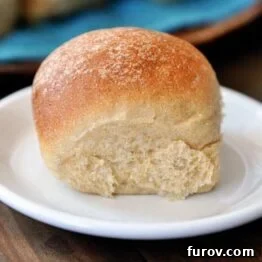
Fluffy Whole Wheat Dinner Rolls
12 rolls
2 hrs 15 mins
15 mins
2 hrs 30 mins
Pin
Rate
Ingredients
- 1 ½ cups warm water
- ¾ tablespoon instant yeast (or 1 tablespoon active dry yeast)
- 2 tablespoons granulated sugar
- 2 tablespoons canola or vegetable oil
- 1 teaspoon salt
- ¼ cup vital wheat gluten (see note below)
- 3-4 cups (426-568 g) whole wheat flour (give or take a little, see note below)
Instructions
- In the bowl of a stand mixer or in a large bowl by hand, combine the warm water, yeast, sugar, oil, salt, gluten, and 2 cups of the flour. If you are using active dry yeast instead of instant yeast, let the yeast proof in the warm water and sugar for about 3-5 minutes until it is foamy and bubbly before adding the oil, salt, gluten, and flour.
- While mixing, gradually add the rest of the flour until the dough has pulled away from the sides of the bowl. Judge the dough by how it feels, not necessarily by the exact flour amount called for in the recipe (for a detailed tutorial on working with yeast, click here). The dough should be soft and smooth but still slightly tacky to the touch.
- Knead the dough in the stand mixer or by hand until it is very smooth and elastic. This typically takes about 7 minutes in a stand mixer or 10-12 minutes by hand. As the dough is kneaded, it will continue to absorb some of the liquid and become less sticky. Take care not to overflour at first, as the texture will change as it kneads; you can always add a bit more flour partway through if it seems overly sticky.
- If kneading by hand, try using a bit of oil or cooking spray on the counter to help prevent stickiness instead of flour. This method helps ensure the dough doesn’t get overfloured. Lightly spray a large bowl with cooking spray and place the dough in the bowl. Cover the bowl with lightly greased plastic wrap. Let the dough rise in a warm, draft-free place until it has doubled in size, which usually takes 1-2 hours.
- Lightly punch down the dough to release the air and turn it out onto a lightly greased countertop. Divide the dough into 12 equal pieces. Form each piece into a round ball. For a visual guide on shaping the dough into perfect rolls, watch this video tip here.
- Place the shaped rolls on a lightly greased or Silpat-lined baking sheet, ensuring they are about an inch or two apart. Cover the rolls loosely with lightly greased plastic wrap. Allow the plastic wrap to gently drape over the sides of the pan to fully cover the rolls without pressing them down. Let the rolls rise until doubled in size again, approximately 45 minutes.
- Preheat your oven to 400 degrees Fahrenheit (200 degrees Celsius). Bake the rolls for 12-14 minutes, or until they are lightly golden brown on top and cooked through.
Notes
Flour Amount: As with all yeast doughs, the flour amount listed in the recipe should be used as a guideline rather than a strict rule. Factors like humidity, temperature, and altitude can significantly affect how much flour your dough will need. Always judge when to stop adding flour by observing the dough’s texture, look, and feel, rather than simply measuring. This tutorial on working with yeast offers excellent guidance on identifying a perfectly floured dough. Additionally, here’s a video tutorial on how to expertly shape dinner rolls.
Vital Wheat Gluten: This ingredient is essentially wheat flour that has had the wheat bran and starch removed, resulting in a product very high in protein and low in carbohydrates. When added to yeast breads, especially those made with whole wheat flour, it significantly aids in developing the natural gluten in the wheat, providing a lightness and fluffiness that can be difficult to achieve otherwise. It has a very fine texture and a light brownish/yellowish color. You can typically find it in the baking aisle of most grocery stores near the other flours. Check your local organic mills or specialty stores for potential sources.
Whole Wheat Flour Types: If you’re new to using whole wheat, exploring the different types can be enlightening. Here is a series on the different types of wheat and another on grinding wheat at home. I almost exclusively use hard white wheat berries for grinding because I prefer the texture and lightness they impart compared to hard red wheat, which can sometimes result in a slightly denser crumb and a more robust flavor.
Mel
Bread
American
Bake
Nutrition Information (per roll):
- Calories: 140kcal
- Carbohydrates: 24g
- Protein: 6g
- Fat: 3g
- Sodium: 197mg
- Fiber: 3g
- Sugar: 2g
Recommended Products
Recipe Source: Mel’s Kitchen Cafe (adapted from these French Bread Rolls)
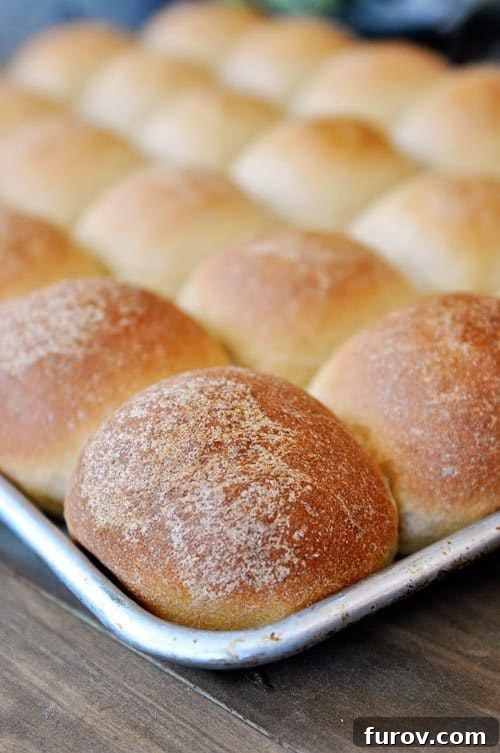
Serving Suggestions & Storage Tips
These fluffy whole wheat dinner rolls are incredibly versatile and perfect for any occasion. Serve them warm with a pat of butter, a drizzle of honey, or your favorite jam for a delightful breakfast or brunch. They make an excellent accompaniment to a comforting bowl of soup, a hearty stew, or a festive holiday meal. Split them open and fill them with your favorite sandwich fillings for a quick and nutritious lunch, or enjoy them simply on their own as a satisfying snack.
To keep your rolls fresh, store them in an airtight container at room temperature for up to 2-3 days. For longer storage, these rolls freeze beautifully. Once completely cooled, place them in a freezer-safe bag or container and freeze for up to 3 months. When you’re ready to enjoy, simply thaw them at room temperature and warm them in the oven for a few minutes until soft and fragrant.
Frequently Asked Questions About Whole Wheat Dinner Rolls
Can I make these rolls without vital wheat gluten?
While you can omit vital wheat gluten, the results will likely be denser and not as fluffy. Vital wheat gluten is the key to achieving the light, airy texture with 100% whole wheat flour. If you must leave it out, you might consider using a blend of whole wheat and bread flour to get a similar texture, but then they wouldn’t be 100% whole wheat.
Can I prepare the dough ahead of time?
Yes, you can! After the first rise, you can punch down the dough, shape the rolls, and then cover them tightly with greased plastic wrap. Refrigerate overnight (up to 12-18 hours). The next day, let them come to room temperature and undergo their second rise (which might take a bit longer coming from the fridge) before baking as directed.
How can I ensure my rolls are perfectly golden brown?
For a beautiful golden-brown crust, you can brush the tops of the rolls with a little milk, melted butter, or an egg wash (one egg beaten with a tablespoon of water) before baking. This not only enhances color but can also add a subtle sheen.
What if my dough isn’t rising?
The most common reasons for dough not rising are inactive yeast or cold temperatures. Double-check your yeast expiration date and ensure your water is in the ideal temperature range (105-115°F or 40-46°C). Also, ensure your rising environment is warm and draft-free. If your kitchen is cool, you can place the covered bowl in a slightly warmed (but turned off) oven or near a sunny window.