
Life often throws unexpected challenges our way, sometimes with a timing that feels almost ironic. While this isn’t an April Fool’s joke, the story I’m about to share is profoundly personal, stepping away from my usual culinary posts to touch on a topic I hope resonates deeply and offers valuable insights. My journey through a significant health scare has led me to believe that sharing such experiences can genuinely make a difference, perhaps helping even just one person navigating their own path.
Over the years, as this blog has grown beyond my wildest dreams, I’ve felt an increasing desire to contribute more than just delicious, tried-and-true recipes. My hope is to connect with you on a deeper level, offering support and awareness in other meaningful ways. Today, that means opening up about a very vulnerable chapter of my life, one that highlights the critical importance of skin health and vigilant self-care.
Before we delve into the details, a word of caution: this post includes several personal photographs documenting my experience, some of which may be perceived as graphic or intense, depending on your comfort level. You’ll also encounter more selfies than I’ve ever taken in my life, serving as a raw, unfiltered chronicle of my healing process. Sharing this story requires considerable courage, and I kindly ask for your understanding and empathy in the comments. I’m not seeking compliments, but rather a space for respectful dialogue and shared learning.
The Unexpected Diagnosis: From a Back Spot to Basal Cell Carcinoma
My journey into the world of dermatological concerns began last fall. I made an appointment to have a suspicious spot on my back checked. After a deep, elliptical biopsy and the removal of 12 stitches, an anxious week of waiting finally yielded good news: it was not melanoma, as initially suspected, but a dysplastic nevus – a precursor to melanoma, but a much more favorable diagnosis. The relief was immense.
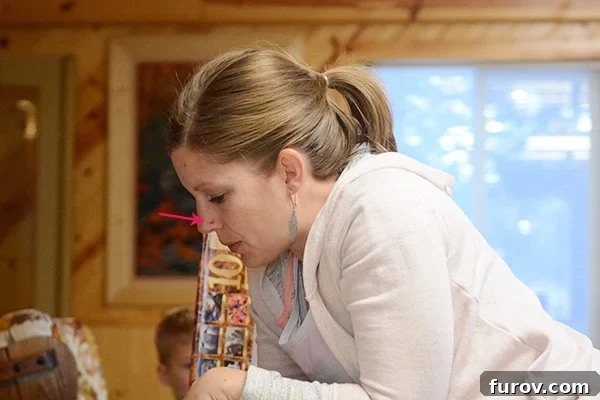
During that same appointment, almost as an afterthought, I decided to ask the doctor about a tiny spot on my nose. It had been there for a couple of months, resembling a persistent scab that simply wouldn’t heal. I felt a little foolish bringing it up, assuming it was nothing serious, but figured there was no harm in asking since I was already there. Little did I know, this casual inquiry would be a pivotal moment.
You can see the seemingly innocuous spot here, captured during a Thanksgiving puzzle session last year (I was either whistling intently or engaging in some serious trash talk with the puzzle pieces!):
Within a mere three seconds of examination, my doctor’s expression shifted, and he was 99% sure it was basal cell carcinoma (BCC). The words hung in the air, a stark contrast to my casual dismissal of the spot. A week later, a biopsy confirmed his suspicions: that tiny, seemingly harmless blemish was indeed basal cell carcinoma. Basal cell carcinoma is the most common form of skin cancer, often appearing as a persistent sore, a red patch, a shiny bump, or a scar-like area. While it rarely spreads to other parts of the body, it can be disfiguring if not treated promptly, gradually eroding skin, cartilage, and even bone. My dermatologist emphasized its seriousness, despite its commonality.
Surprisingly, I didn’t completely freak out. Perhaps it was the small size of the spot, or a misguided sense of confidence that it would be easily resolved. I convinced myself it would be a straightforward procedure, a minor inconvenience quickly dealt with.
Navigating MOHS Surgery: A Personal Account
Fast forward several weeks to December 1st, the day scheduled for my MOHS surgery. MOHS micrographic surgery is a specialized procedure for removing skin cancers, particularly effective for areas like the face where preserving healthy tissue is crucial. It involves removing cancer in stages, one layer at a time, and examining each layer under a microscope until all cancer cells are gone. This meticulous process ensures complete removal while minimizing damage to surrounding healthy skin.
I understood the basics: a local anesthetic (oh, those needles in the nose – a genuine ouch!), then the doctor would meticulously remove layers of skin, sending each sample to the lab for immediate microscopic examination. I would wait in the room, a nervous anticipation building with each passing minute, until the margins were declared clear – meaning, no more cancer cells detected. I was absolutely convinced it would be a single, small removal, and I’d be out of there in no time.
The reality, however, was far different. That incredibly tiny spot on my nose had, unbeknownst to me, decided to spread its roots beneath the surface. What followed were several agonizing cuts (and more incredibly painful injections into my nose!) before clear margins were finally achieved. The outcome was a surprisingly significant and quite deep hole on the side of my nose. This unexpected depth underscored the aggressive nature of what appeared to be a minor surface blemish.
{Click here for the super graphic surgery photos – these images are probably not suitable for young children or anyone prone to feeling queasy at the sight of surgical imagery.}
Remarkably, thanks to those “terrible but blessed” local anesthetic shots, I felt no physical pain during the procedure itself. My doctor’s calm competence also prevented any immediate panic. That composure, however, shattered the moment he presented the area in a mirror. He then used a black marker to trace a line along my nose, indicating where he would need to make another incision to create a skin flap. This flap would be pulled down to cover the crater left by the cancer removal, an alternative chosen after ruling out a skin graft due to the near impossibility of perfectly matching the color and tone of my nose. The images of this reconstructive phase are simply too vivid and graphic for a cooking blog, but suffice it to say, a wave of profound panic washed over me. It was more than a little; it was overwhelming.
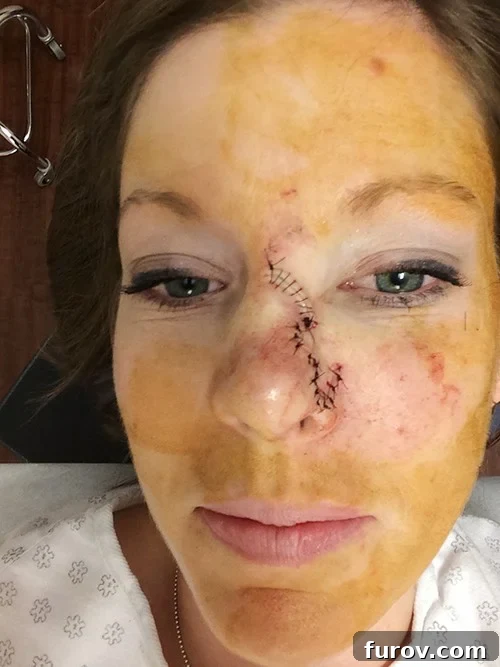
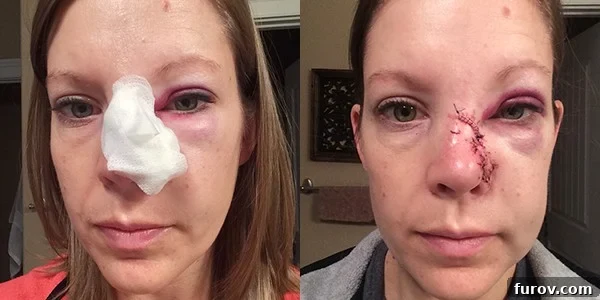
An hour later, I was the new owner of over 20 stitches, prominently displayed on the front and center of my face, with many more hidden beneath the skin’s surface. A generous application of iodine added a rather dramatic enhancement to my natural coloring. The immediate visual impact was shocking.
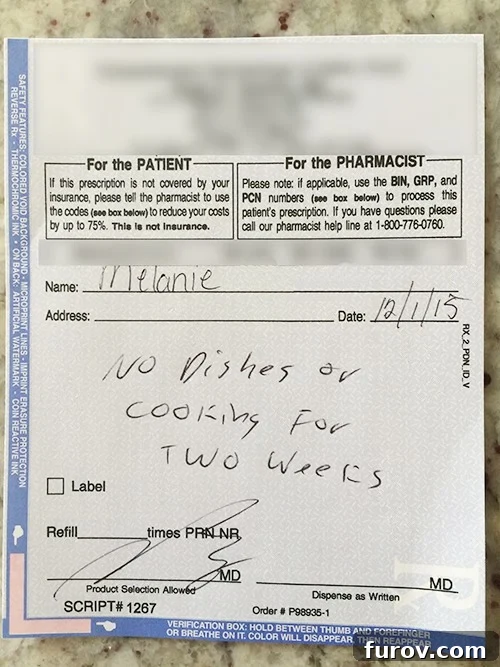
My doctor also handed me this note. I’ll give you one guess as to whether I managed to obey doctor’s orders:
Leaving the office, I broke down. I bawled all the way home, a decision I now recognize as a significant mistake. Driving myself while in such a state of shock, with shaking hands, tear-blurred vision, and fogged-up contacts, was incredibly dangerous. I am profoundly grateful I made it home in one piece, a testament to sheer instinct amidst overwhelming emotion.
The Road to Recovery: Physical and Emotional Healing
For the first few days, the large bandage covering my nose provided a deceptive sense of security. While the pain was intense – like the devil himself was setting up shop on my face – the visible wound was hidden. However, once the bandage came off, the full extent of the bruising and swelling became apparent. The area was excruciatingly tender to the touch, and the emotional pain began to settle in. Despite knowing it could have been far worse, I struggled with the gnawing fear that my face would never look “normal” again, a sentiment that weighed heavily on my self-image.
During my appointments, and even before, with the dysplastic nevus episode, I received a stinging but entirely deserved lecture from my doctor about the critical importance of sunscreen. It served as a harsh but necessary wake-up call. While I’ve been diligent about sunscreen and protective clothing since having children and entering my thirties, my earlier years were a different story. Sunscreen was an afterthought. I never used tanning beds, but I spent countless hours outdoors as a teenager and in my twenties, chasing a tan and believing that a bronzed complexion was desirable and attractive. This notion is laughable now, given my fair skin which invariably burns and rarely tans, leaving me perpetually pale despite my efforts.
This personal history, combined with growing up in a generation where many mothers didn’t routinely apply sunscreen to their children (my mom carries a lot of guilt about this, which is unnecessary, as she was one of millions letting their kids blister in the sun during the ’70s and ’80s), created a perfect storm for basal cell carcinoma. The sobering truth is, I was never a bikini-wearing, beach-bound sun worshipper, spending hours baking in the sun. Therefore, I am absolutely certain that if this can happen to me, it can happen to anyone. This realization became a driving force behind my desire to share my story.
The Social and Personal Impact of Recovery
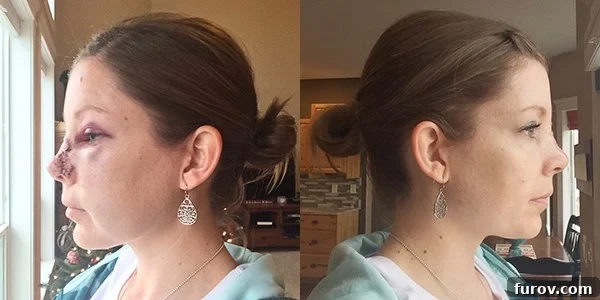
To say our holiday season was low-key would be a massive understatement. I didn’t leave the house for several weeks, finding solace in the quiet solitude of home. My 8-year-old son, bless his honest heart, couldn’t look at me for quite a while. He gently explained, “I’m not trying to be mean, Mom, but your face gives my tummy the jigglies.” I couldn’t blame him; the sight was indeed alarming. While I knew I shouldn’t be self-conscious, I was, and candidly, a little bit still am, despite the incredible healing progress I’ll show you shortly.
My makeup routine has always been minimal – just mascara and a touch of eyeshadow. Suddenly, I found myself wondering how on earth I would ever cover this once it healed a bit. (Spoiler alert: I’m still embracing the no-makeup look; old habits, as they say, die hard.) The persistent swelling decided to settle stubbornly into the left side of my face, taking its sweet time to subside. And what about that natural eyeshadow effect I was rocking? Who needs makeup anyway when you have post-surgical bruising to complete your look?
You may or may not have noticed the absence of cooking videos over the past few months. This “basal cell carcinoma experience” put many projects on hold. It’s also the reason, if you know me personally, that I became even more of a homebody recluse from December to February than I already was. The emotional and physical toll made public appearances feel daunting.
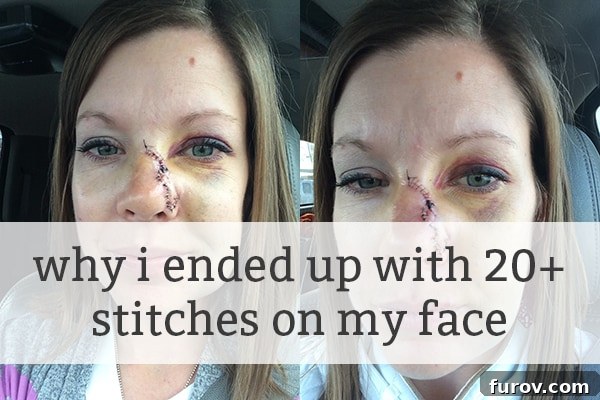
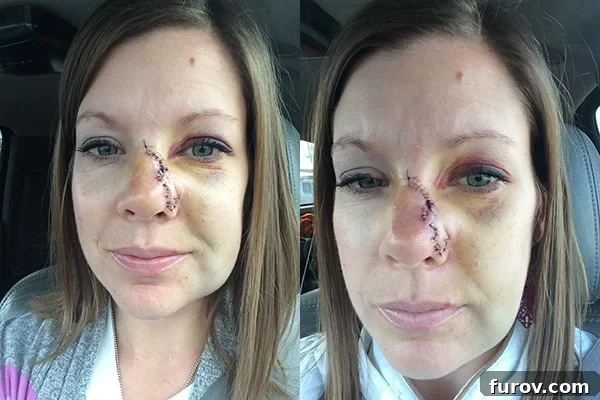
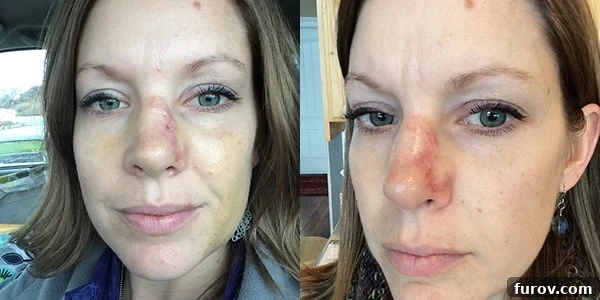
The day the stitches finally came out was an immense relief. Can you observe how my left eye appears to be slightly pulled down at the corner? This peculiar distortion bothered me considerably for several months. I couldn’t fully close my eye, and my contact lens constantly felt like it was on the verge of falling out. To add to the annoyance, wearing my glasses was out of the question; they rested precisely where the stitches ended at the top of my nose, causing too much pain for an extended period.
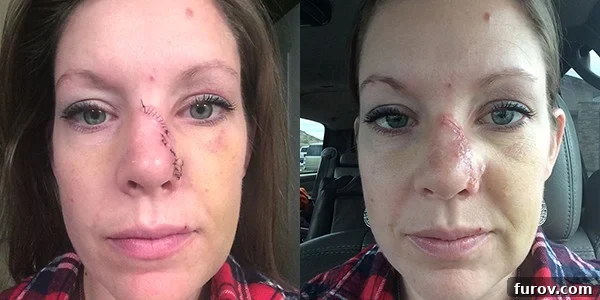
As the weeks progressed, witnessing the remarkable progress of healing was nothing short of amazing. I have no doubt that countless prayers played a significant role, alongside diligent application of essential oils and Mederma scar cream. (Please excuse the death glare in the picture on the right; apparently, I take my selfies very seriously, even when recovering!)
For my scar care regimen, I used a potent combination of several essential oils: rosehip oil, frankincense oil, helichrysum oil, and lavender oil. These were applied gently to aid in skin regeneration and reduce scarring, alongside the clinically proven benefits of Mederma.
Lessons Learned and a Call to Action: Prioritizing Sun Protection
Reflecting on this entire process, I am beyond grateful that I was in the dermatologist’s office that early fall day for the suspicious mole on my back. I truly believe it was divine intervention. I never, ever would have made a separate appointment for a “silly” spot on my nose. Being able to ask the doctor about it during an already scheduled visit was pure providence. Who knows what the outcome would have been had the cancer been given even more time to grow and spread?
This experience has profoundly reshaped my perspective on sun control, not just for myself but also for my children. More importantly, by sharing this vulnerable story with all of you, I hope to raise critical awareness about how genuinely important sunscreen and adequate sun protection truly are. My family already has a separate cancer history (from seven years ago), and combined with this latest basal cell carcinoma diagnosis (and the data indicating a high chance of recurrence, especially on my face), I am more determined than ever to implement significant changes to protect my future health. Even though we’ve been diligent about sunscreen and hats for well over a decade, this has shown me that “diligent” might not be enough.
I am throwing away any lingering pride and fully embracing the fact that this summer, I might be the only one at the lake, on the boat, at the park, working in the yard, or attending soccer games wearing a large-brimmed hat, carrying an umbrella, donning head-to-toe sunscreen, a long-sleeve swimsuit, and even a long skirt at times. And you know what? That’s perfectly okay. It’s more than okay; it’s a small, manageable price to pay for healthy skin and peace of mind. I absolutely do not want to relive the events of the last few months.
Your Skin, Your Health: Take Action Now
Will you take a moment to seriously consider your sun exposure and that of your children, if you have them? For me, it’s about constant vigilance. Please think about it deeply and explore ways you can proactively protect yourself and your family. This includes choosing the right broad-spectrum sunscreen with an SPF of 30 or higher, reapplying it frequently (every two hours, or more often if swimming or sweating), wearing wide-brimmed hats, seeking shade during peak sun hours (typically 10 AM to 4 PM), and opting for protective clothing with a UPF (Ultraviolet Protection Factor) rating when possible. These simple habits can make an enormous difference in preventing future skin damage and cancer.
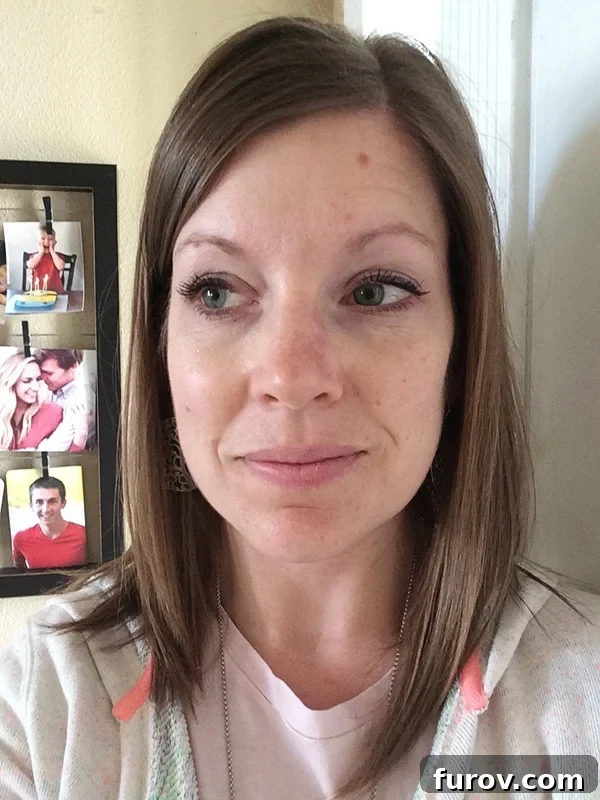
After spending countless hours online (why do we do this to ourselves?), poring over other stories and cases of basal cell carcinoma and MOHS surgery, I am immensely grateful that, in the end, my cancer spot and the removal area were relatively small compared to what could have been. My doctor shared stories of spending 15+ hours chasing skin cancer across patients’ faces; I wanted to kiss his feet in gratitude that my procedure only took a couple of hours. It truly is miraculous how the human body can heal. If you had told me last December that I would actually want to look in a mirror come March, I would have laughed (or more likely, cried) in your face. But here I am, so blessed and thankful that I have healed remarkably well and continue to mend each day.
Please, learn from my experience. Be smart! And stay safe in the sun, okay?
Love ya.
UPDATE: The Incredible Impact of Sharing
I truly cannot express how overwhelmed I’ve been by your heartfelt response to this post. Your kindness and empathy have brought me to tears more times than I can count. Beyond that, the stories you’ve shared – your own experiences with skin cancer or those of your loved ones – have had an even deeper impact. Many of you have reached out to me personally via email and left comments below, letting me know that because of this post, you or a family member went in to see a doctor. The outcome? Some were able to preempt a potential skin cancer situation, while others discovered they had skin cancer that desperately needed attention and treatment. In all my years of blogging, I have never been so profoundly affected by your comments and stories, and once again, by your incredible kindness. Thank you a million times over for turning my personal vulnerability into a powerful catalyst for awareness and action.