
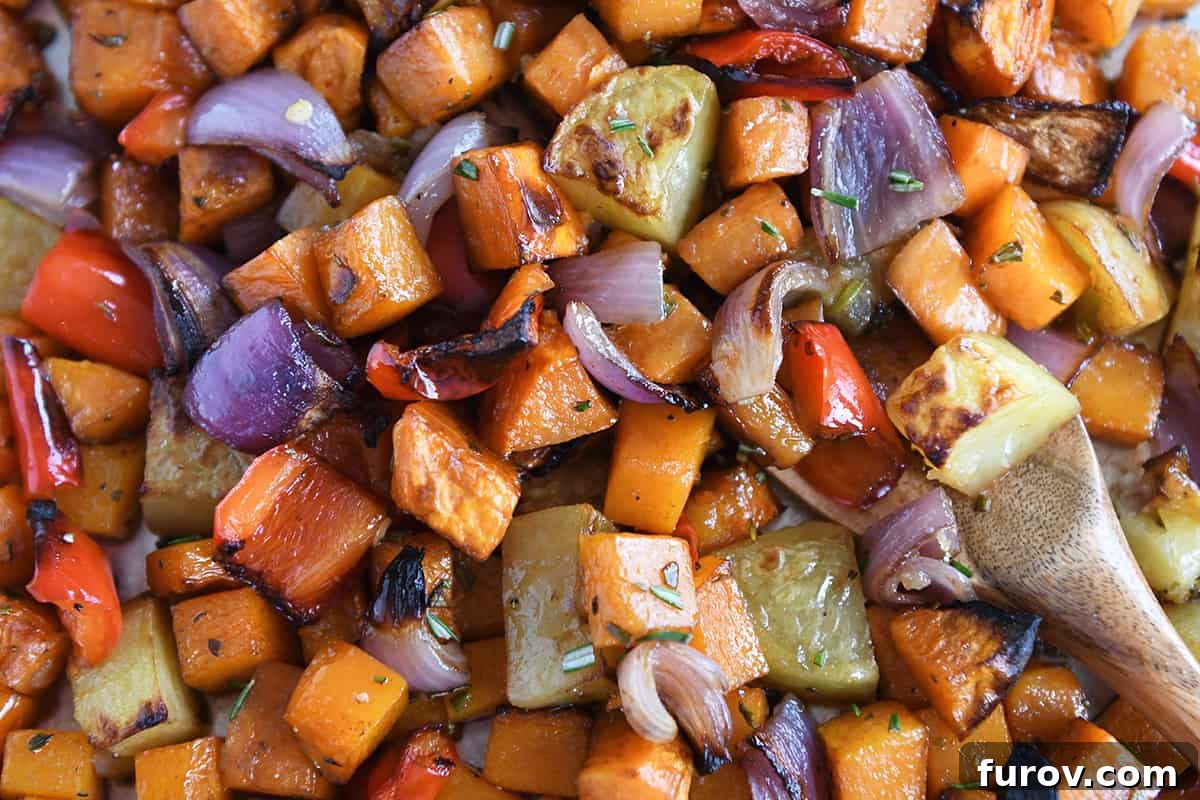
These easy roasted balsamic winter vegetables are a symphony of flavors, delivering a delicious and intensely satisfying experience with every bite! This versatile recipe allows for effortless adaptation of both the seasonings and the vegetables, making it a perfect staple for any kitchen.
Roasting transforms humble vegetables into golden-brown delights, caramelizing their natural sugars and unlocking profound depths of flavor. The edges become wonderfully crisp, and the centers turn tender, creating a texture that is simply irresistible. This method isn’t just about taste; it’s one of the easiest and healthiest ways to enjoy a bounty of seasonal produce, making it a favorite for busy weeknights and special occasions alike.
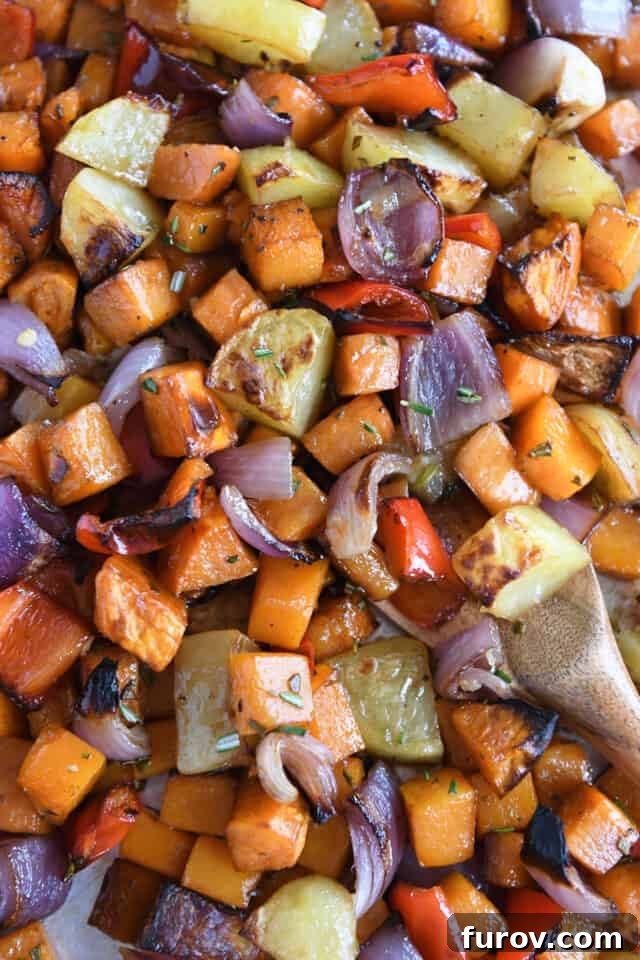
Why You’ll Love Roasting Winter Vegetables
Winter brings a fantastic selection of hardy vegetables that truly shine when roasted. Their inherent robustness holds up beautifully to high heat, allowing them to soften inside while developing a delightful crispness on the exterior. Beyond their incredible taste, roasted winter vegetables are packed with essential nutrients, offering a wholesome and comforting addition to any meal during the colder months. The simple process of roasting enhances their natural sweetness and creates a depth of flavor that can’t be achieved with other cooking methods.
Mastering the Art of Roasting: A Step-by-Step Guide
Selecting and Preparing Your Winter Harvest
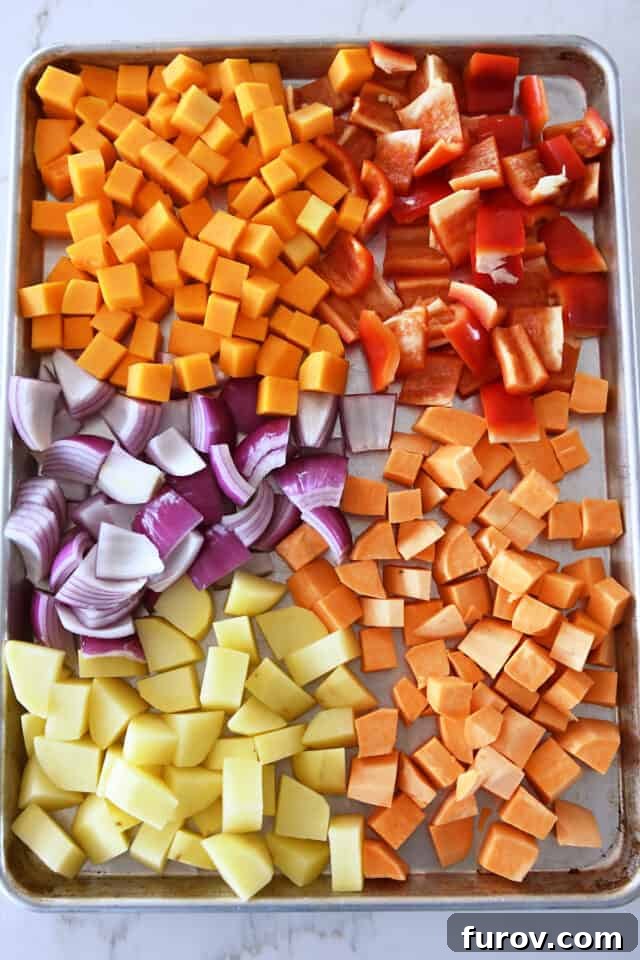
For this particular recipe, we’ve carefully selected a combination of vegetables known for their complementary flavors and textures once roasted. The key to successful roasting begins with proper preparation and uniform cutting. Our chosen stars include:
- Sweet Potatoes: Offering a sweet, earthy flavor and a soft texture.
- Yukon Gold Potatoes: Known for their creamy texture and buttery taste, they roast beautifully.
- Red Bell Peppers: Adding a touch of sweetness and vibrant color, they become wonderfully tender.
- Red Onions: Roasting mellows their sharp bite, turning them sweet and caramelized.
- Butternut Squash: A quintessential winter squash, providing a rich, nutty sweetness and a smooth, tender consistency.
Each vegetable is peeled, cored, and prepared according to its specific needs, then cut into pieces of approximately the same size. This consistency in size is crucial for ensuring that all vegetables cook evenly and finish roasting at the same time. If pieces are too varied, some might burn while others remain undercooked. Aim for 1-inch cubes or chunks for most items, with slightly smaller 1/2-inch pieces for quicker-cooking vegetables like butternut squash and sweet potatoes to synchronize their doneness.
While this selection is fantastic, feel free to experiment with other winter favorites like carrots, parsnips, Brussels sprouts, broccoli, or cauliflower. The versatility of roasting allows you to customize your vegetable medley to your preferences or what’s available seasonally.
Crafting the Perfect Balsamic Herb Dressing
The magic truly happens with a simple yet incredibly flavorful dressing that elevates these roasted winter vegetables. Before they hit the oven, a quick whisk of a few staple ingredients creates a marinade that infuses every piece with aromatic goodness and a hint of tang. For this dressing, you’ll combine:
- High-quality olive oil
- Rich balsamic vinegar
- Fine sea salt and freshly ground black pepper
- Fragrant fresh thyme
- Earthy fresh rosemary
While dried herbs can be used as a convenient substitute, we strongly encourage using fresh rosemary and thyme if possible. Their vibrant, pungent oils release a much more intense and aromatic flavor during roasting, providing that extra punch that makes this dish truly exceptional. Fresh herbs are often readily available even in winter produce sections, making them an easy upgrade. If using dried, remember to use about one-third the amount of fresh herbs, as their flavor is more concentrated.
Beyond this classic combination, don’t hesitate to personalize your herb selection. Sage offers a warm, peppery note, while oregano provides a Mediterranean flair. A touch of garlic powder or onion powder can also deepen the savory profile. The balsamic vinegar itself can be an adventure – while regular balsamic is excellent, specialty flavors like cranberry balsamic or fig balsamic can introduce intriguing new dimensions.
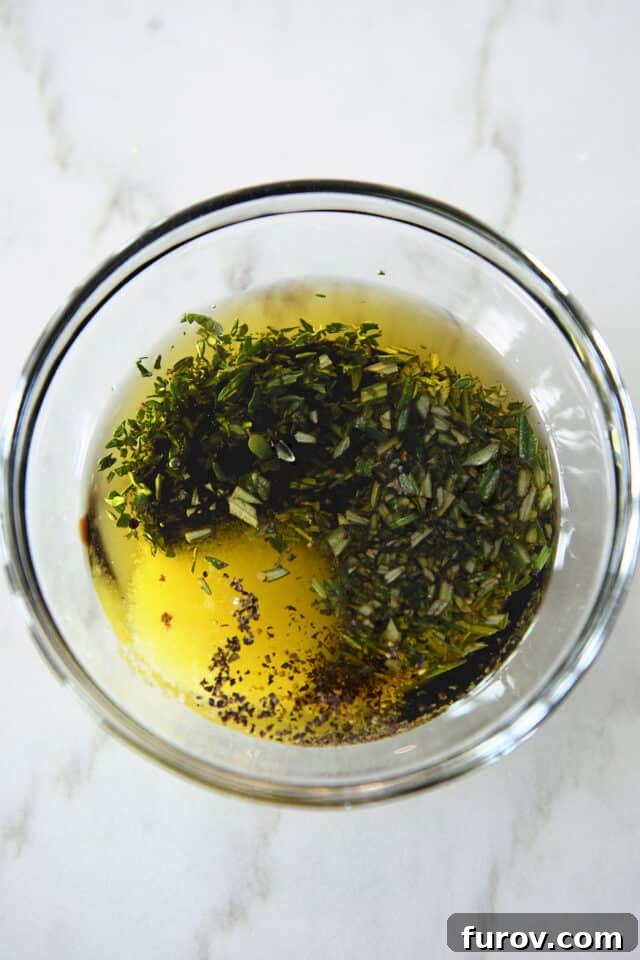
Once whisked, generously drizzle this aromatic dressing over your prepped vegetables. Toss everything together thoroughly, ensuring each piece is evenly coated. This coating is what will help the vegetables caramelize beautifully and develop those coveted browned edges.
Achieving Perfect Roast: Temperature and Technique
The secret to perfectly roasted vegetables lies in high heat and proper spacing. Preheat your oven to a blazing 450 degrees Fahrenheit (230°C). This high temperature is crucial for encouraging the Maillard reaction – the chemical process responsible for browning and developing complex flavors – and for caramelizing the natural sugars in the vegetables.
Spread the dressed vegetables onto a half sheet pan, ensuring they are in a single, even layer. It’s important to give them enough space; if the pan is overcrowded, the vegetables will steam instead of roast, resulting in a soggy, rather than crispy, outcome. If your medley feels too dense, divide it among two sheet pans or opt for a larger 3/4-size sheet pan to provide ample breathing room. The more space there is between the veggies, the crispier their edges will become.
For maximum crispiness and optimal browning around the edges, avoid stirring the vegetables halfway through roasting. While some recipes suggest flipping, letting them be undisturbed allows them to develop a deeper, golden crust on the side touching the hot pan. With a high cooking temperature and no-stirring approach, you’ll still achieve wonderfully tender interiors and gorgeously browned, flavorful edges. Roast for 35 to 40 minutes, or until the vegetables are fork-tender and beautifully golden.
These roasted balsamic winter vegetables are incredibly versatile and delicious, whether served warm directly from the oven or at room temperature. Their robust flavors hold up well, making them an excellent candidate for meal prep.
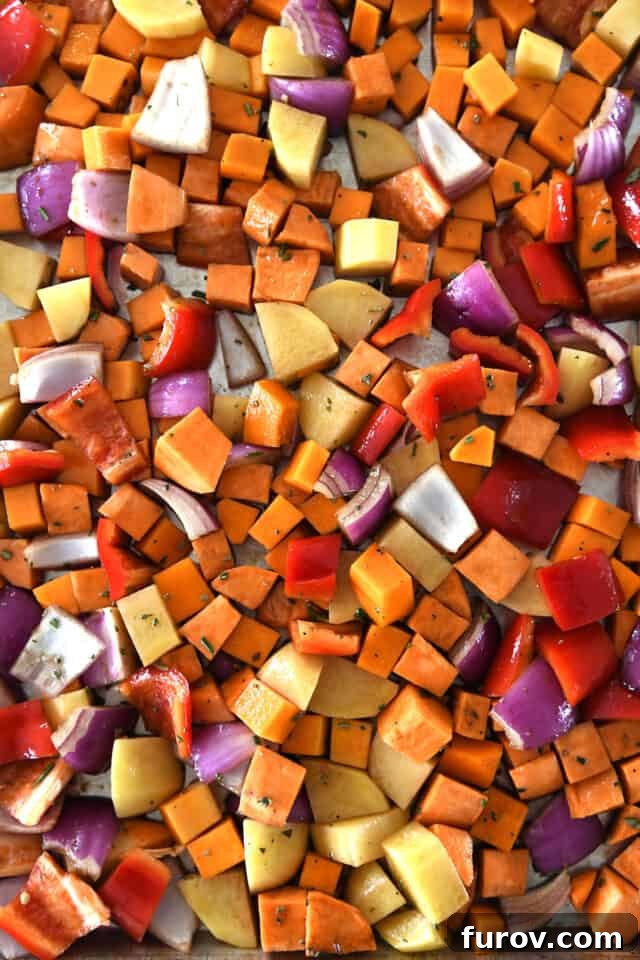
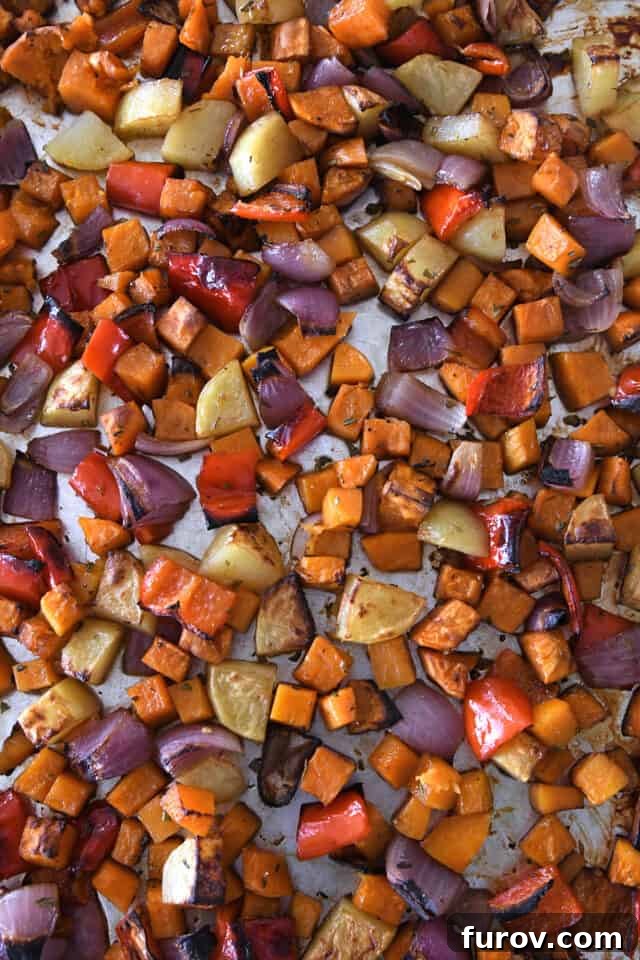
These veggies are so delicious, they are truly “eat-the-whole-pan-worthy!” Their rich flavor makes them highly addictive.
Roasted Balsamic Winter Vegetables
6 servings
25 mins
40 mins
1 hr 5 mins
Pin
Ingredients
Vegetables:
- 2 medium Yukon gold potatoes, peeled and cut into 1-inch cubes
- 2 medium red bell peppers, seeds and membranes removed and cut into 1-inch pieces
- 1 large sweet potato, peeled and cut into 1/2-inch pieces
- 1 medium red onion, peeled and cut into 1-inch chunks
- ½ medium butternut squash, peeled, seeds removed and cut into 1/2-inch pieces
Dressing:
- 3 tablespoons olive oil
- 2 tablespoons balsamic vinegar
- 2 tablespoons finely chopped fresh rosemary (see note for dried herbs)
- 1 teaspoon finely chopped fresh thyme (see note for dried herbs)
- 2 teaspoons coarse, kosher salt
- Pinch of black pepper
Instructions
-
Preheat the oven to 450 degrees F (230°C).
-
Scatter the vegetables evenly on a half sheet pan, ensuring they are in a single layer to avoid overcrowding.
-
In a small bowl, whisk together all the ingredients for the dressing. Drizzle the dressing over the vegetables and toss to coat evenly.
-
Spread the vegetables back into an even layer and bake for 35 to 40 minutes until tender and golden brown. Avoid stirring for crispier edges.
-
Season to taste with additional salt and pepper, if needed. Serve warm.
Notes
Vegetables: To prevent steaming and ensure crispiness, avoid overcrowding the sheet pan. If you have too many vegetables for a single layer on one half sheet pan, divide them between two sheet pans or use a larger 3/4-size sheet pan.
Sheet Pans: Ample space between vegetables allows for better air circulation and crispier results. While you can stir halfway through, leaving the vegetables undisturbed often leads to more desirable browning and golden edges due to direct contact with the hot pan.
Mel Gunnell
Side Dish
American
Bake
Nutrition Information (Per Serving)
- Serving: 1 serving
- Calories: 218 kcal
- Carbohydrates: 37g
- Protein: 4g
- Fat: 7g
- Saturated Fat: 1g
- Sodium: 817mg
- Fiber: 6g
- Sugar: 8g
Recommended Products
Recipe Source: adapted from a beloved recipe shared by my mom’s friend, Kim L., originally from Mel’s Kitchen Cafe. A huge thank you to Kim and my mom for this delicious inspiration!
Beyond the Side Dish: Versatility and Meal Ideas
These roasted balsamic winter vegetables are incredibly versatile, extending far beyond a simple side dish. They can serve as a flavorful meatless main course, making them ideal for vegetarian meals, or perfectly complement a variety of proteins. Consider pairing them with succulent dishes like this balsamic glazed pork or a tender slow cooker turkey breast for an amazing, balanced meal. The savory, sweet, and tangy notes of the vegetables enhance rich meats beautifully.
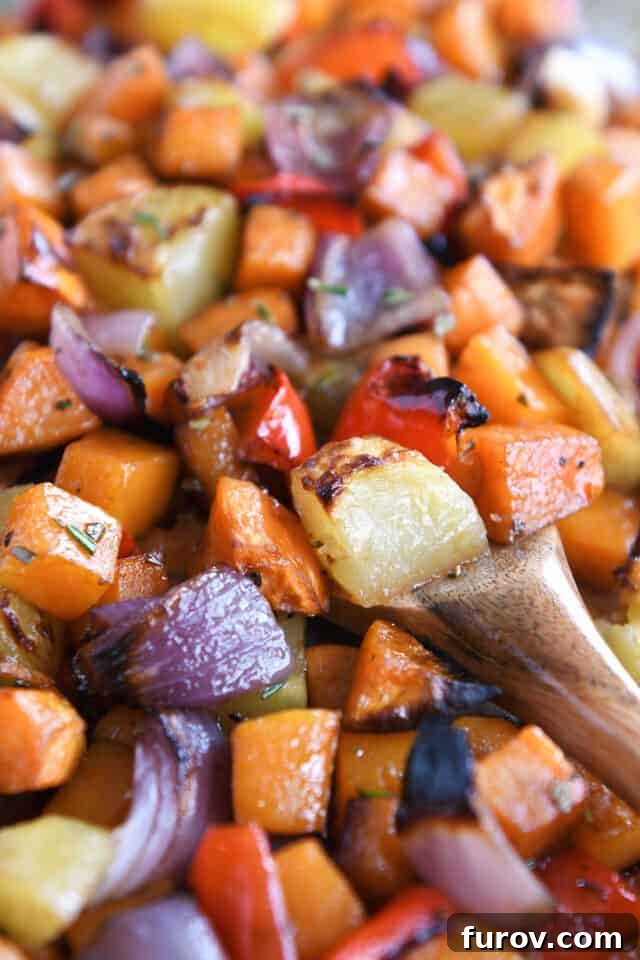
Lately, I’ve found immense pleasure in making a large batch of these roasted veggies at the beginning of the week and enjoying them throughout for lunch. A particularly delightful combination involves serving them with one or two perfectly fried eggs, allowing a runny yolk to mingle with the warm, caramelized vegetables. It’s a simple, comforting, and incredibly satisfying meal that proves how adaptable these vegetables truly are.
Exploring More Flavor Combinations & Tips
The beauty of this roasted vegetable recipe lies in its adaptability. Feel free to unleash your culinary creativity and experiment with different ingredients to suit your taste or seasonal availability:
- Vary the Vegetables: Don’t limit yourself to the suggested list. Carrots and parsnips add more earthy sweetness, while Brussels sprouts or broccoli florets introduce a delightful slight bitterness and vibrant green color when roasted. Just ensure all vegetables are cut to a similar size for even cooking.
- Spice It Up: For an extra layer of flavor, consider adding a pinch of smoked paprika for a smoky depth, a touch of garlic powder or onion powder for savory notes, or a dash of red chili flakes if you enjoy a little heat.
- Vinegar Variations: While balsamic is classic, explore other vinegars. Red wine vinegar can offer a brighter, tangier profile, while a high-quality apple cider vinegar can add a subtle fruitiness. For a gourmet twist, try infused balsamic vinegars like fig, pear, or even a spicy jalapeño variety.
- Brighten with Citrus: A squeeze of fresh lemon juice over the roasted vegetables just before serving can add a wonderful bright, zesty finish that cuts through the richness and enhances overall flavor.
- Add a Touch of Sweetness: For an even deeper caramelization and a hint of extra sweetness, a drizzle of maple syrup or honey can be added to the dressing. This pairs exceptionally well with squash and sweet potatoes.
Frequently Asked Questions about Roasting Vegetables
What are the best vegetables for roasting?
Hearty root vegetables like potatoes, sweet potatoes, carrots, parsnips, and beets are excellent choices. Other great options include sturdy cruciferous vegetables such as broccoli, cauliflower, and Brussels sprouts, as well as onions, bell peppers, and various types of squash (butternut, acorn). The key is choosing vegetables that can withstand high heat and develop rich, caramelized flavors.
How do I prevent my roasted vegetables from getting soggy?
Several factors contribute to crispy roasted vegetables:
- High Heat: Always roast at a high temperature (400-450°F / 200-230°C) to promote browning and prevent steaming.
- Don’t Overcrowd the Pan: Give vegetables ample space in a single layer. Overcrowding traps moisture, leading to steaming. Use multiple pans if necessary.
- Dry the Vegetables: Ensure vegetables are thoroughly dry before tossing with oil. Excess moisture will steam rather than roast.
- Enough Oil: Use just enough oil to lightly coat the vegetables. Too little and they might stick; too much makes them greasy.
- Don’t Stir Too Often: Let them cook undisturbed for most of the roasting time to allow a crust to form.
Can I use frozen vegetables for roasting?
Yes, you can roast frozen vegetables, but the results may differ slightly. Frozen vegetables contain more moisture, so they tend to be less crispy than fresh ones. For best results, spread them in a single layer directly from the freezer onto a preheated sheet pan (without thawing). Roasting at a slightly higher temperature or for a bit longer can help some of that excess moisture evaporate, promoting better browning.
How long do roasted vegetables last?
Properly stored roasted vegetables will last for 3-5 days in an airtight container in the refrigerator. They are excellent for meal prepping and can be reheated in the oven or microwave. While reheating, they might lose some of their crispness, but the flavor remains fantastic.
These Roasted Balsamic Winter Vegetables are a testament to the simple joy of cooking and eating real food. With minimal effort, you can create a dish that is both deeply comforting and incredibly flavorful, a perfect addition to your culinary repertoire all season long.
One Year Ago: Banana Oat Chocolate Chip Snack Cake
Two Years Ago: Quick and Easy Chinese Chicken and Broccoli
Three Years Ago: Amazing Instant Pot Lemon Curd
Four Years Ago: Loaded Cheesy Cauliflower Soup
Five Years Ago: Asian-Style Meatballs with Sweet Chili Sauce
Six Years Ago: Tender Greek Pork {Instant Pot or Slow Cooker}
Seven Years Ago: Blueberry Cream Cheese Muffins
Eight Years Ago: Whole Grain Cinnamon Applesauce Bread
Nine Years Ago: Skillet Turkey Meatballs with Lemon Rice
Ten Years Ago: Korean Beef and Rice {Or Quinoa}: Simple 20-Minute Meal