Last year, I embarked on a significant culinary adventure, overseeing all food operations for a large church girls’ camp. This endeavor involved feeding a substantial group of 260-270 individuals for nearly an entire week. Recognizing the unique challenges and valuable insights gained from such an undertaking, I made a conscious effort to document every detail, meticulously taking extensive notes to share a comprehensive guide with you.
For anyone tasked with planning and executing meals for youth camps, family reunions, or any large group event, you’ll understand that each situation presents its own set of unique constraints and circumstances, such as:
- Budget Limitations: A primary factor dictating choices and strategies.
- Group Size & Demographics: The number of attendees and their specific needs.
- Location & Available Facilities: Access to stoves, refrigerators, power, and kitchen infrastructure significantly impacts meal preparation.
- Navigating Food Allergies: A critical consideration requiring careful planning and execution.
- Duration of the Event: The length of the camp or gathering affects menu variety and prep cycles.
While budgets and cooking on a shoestring are vital aspects, they vary too widely to delve into deeply here. This guide will focus on universally applicable strategies rather than specific financial advice.
I also acknowledge the vast spectrum of cooking environments – some may be roughing it with coolers and campfires, while others might be blessed with a state-of-the-art kitchen and multiple refrigerators (a luxury I certainly envied!). Regardless of your setup, the principles outlined here are designed to be adaptable and effective.
The practical insights I’m sharing in this extensive guide are specifically tailored to help you with:
- Efficient food preparation tips and strategies
- Accurate quantity estimations for bulk cooking
- Suggested menus suitable for large groups
- Helpful resources and essential equipment
- Effective strategies for managing diverse food allergies
- And many other logistical considerations
My sincere hope is that this information will prove incredibly helpful and directly applicable, whether you’re orchestrating meals for a church camp nestled in the mountains or a family reunion basking on a sunny beach.
MASTERING LARGE GROUP MEALS: MY TOP THREE ESSENTIAL TIPS FOR SUCCESS
Tip #1: Assemble an Unwavering Committee
A strong, dedicated committee is the absolute cornerstone of a successful large-scale food operation. I was incredibly fortunate to have six of the most remarkable women on my committee. Their unwavering support, tireless work ethic, and infectious enthusiasm were truly invaluable. This monumental task simply would not have been possible without them. I can confidently say that if I were ever to undertake such a challenge again, it would come with the firm prerequisite of having the very same committee by my side. (A slightly increased budget of an additional $2,000 would also be a fantastic bonus, just saying!)
Managing food for a group of this magnitude isn’t a last-minute endeavor; it requires months of meticulous planning. Our committee officially held two in-person meetings, but the bulk of our strategizing and coordination happened efficiently through text messages, making the most of everyone’s busy schedules.
Several committee members juggled full-time jobs and significant life events in the months leading up to camp. Their primary contributions included brainstorming menu ideas, crucial grocery shopping (especially in the final days before camp), and providing hands-on assistance during the camp itself. Other members with more flexible schedules dedicated their time to instrumental tasks like preparing and freezing food in advance.
During the camp week, it was truly “all hands on deck.” Our days began at 5:30 a.m. and didn’t end until 9:30 p.m., with everyone contributing tirelessly.
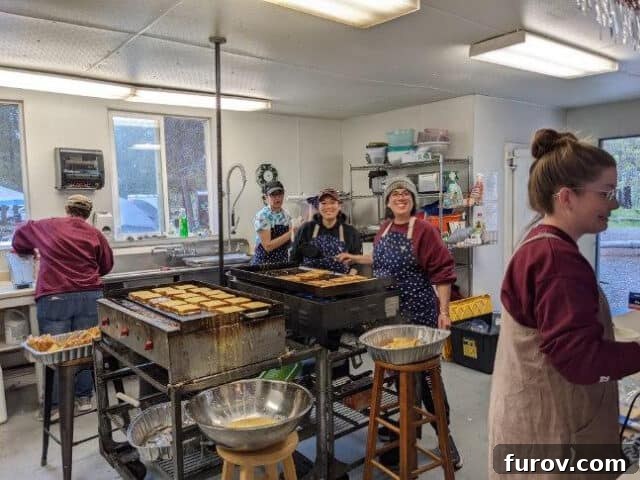
Each evening, before retiring for the night, we meticulously reviewed the next day’s schedule. This collective review allowed us to strategically assign tasks, ensuring efficient use of our time and providing opportunities for quick, much-needed breaks. While we all instinctively helped wherever a need arose, this proactive assignment system significantly boosted our productivity.
In truth, the camp’s culinary operations ran incredibly smoothly, a testament to my committee’s remarkable qualities: low-drama, high-working efficiency, and a wonderfully fun-loving spirit. This synergy was an immense blessing.
When selecting your committee, seek individuals with whom you can plan, laugh, work tirelessly, and still deeply appreciate each other once the immense undertaking is complete!
Tip #2: Proactive Food Allergy Management
Addressing food allergies must be your very first step, even before any menu planning begins. As early as possible, collaborate with attendees to gather comprehensive information on all food allergies and dietary restrictions you’ll need to accommodate.
Identifying specific food allergies at the outset proved instrumental. It allowed us to design many meals that were inherently gluten-free and egg-free. Furthermore, with several girls having severe peanut and tree nut allergies, we made a dedicated effort to ensure all meals, snacks, and the entire camp kitchen environment were completely peanut- and tree nut-free.
For meals or food items that couldn’t be made entirely gluten- or egg-free, we thoughtfully provided dedicated allergy-friendly versions. This proactive approach to menu planning, informed by allergy data, significantly streamlined our meal preparation process.
In most instances, adapting baked goods was straightforward, often involving a simple 1:1 substitution of gluten-free flour for all-purpose flour. The notable exception was homemade brownies; for these, I relied on this highly-rated boxed brownie mix {aff. link}, which I can personally attest is absolutely delicious.
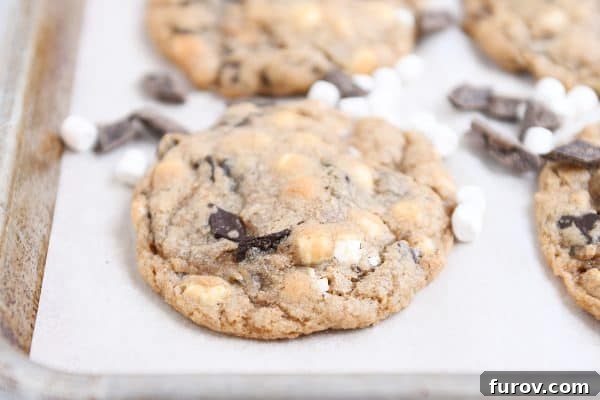
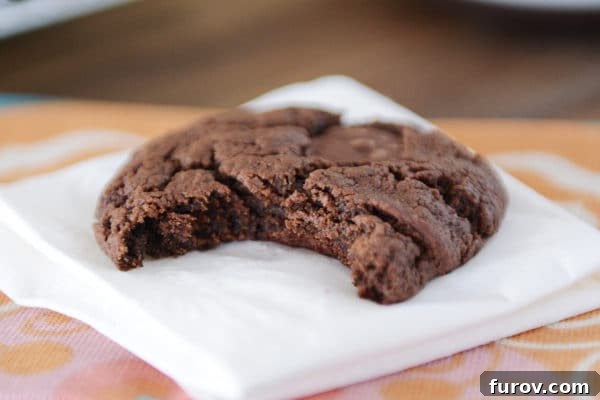
To further ensure safety, I consulted with parents and researched best practices for preventing cross-contamination during preparation and cooking at camp. For our egg-free participants who could consume gluten, I prepared several batches of these delightful egg-free cookies in advance: classic chocolate chip and decadent double chocolate chip.
For the smaller group of attendees with both gluten and egg sensitivities, I prepared the aforementioned boxed brownies, using applesauce as an egg substitute. Additionally, Heavenly Hunks {aff. link} were available as a safe snack/treat option, alongside a special egg-free and gluten-free blondie bar.
Tip #3: Maximize Advance Preparation and Freezing
For our committee, making and freezing as much food as possible ahead of time was our ultimate superpower in feeding 260 people at girls’ camp. This strategy was absolutely critical to our success.
After finalizing our menu as a committee, I developed a detailed prep calendar spanning from March through the first week of June. Each week, a specific food priority was assigned.
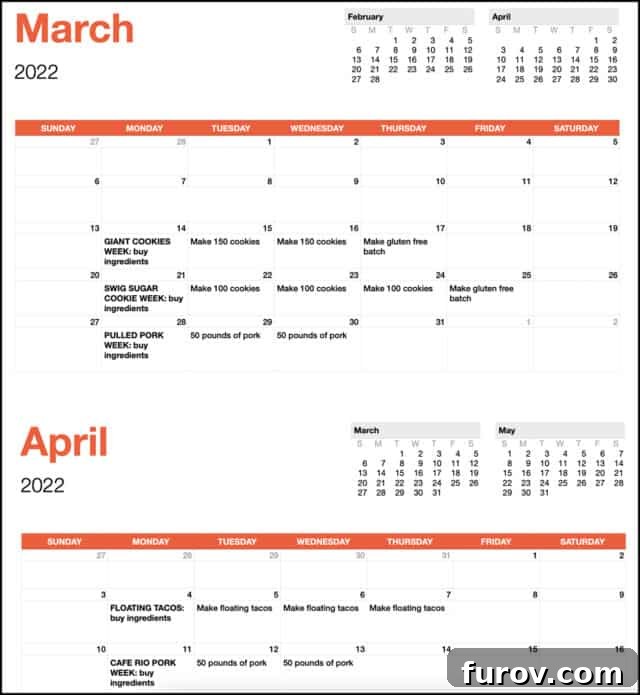
I would text my committee the week prior, announcing, for instance, “Next week is pulled pork week” or “cookie week.” Those who could assist with cooking or baking that week would respond, and we would divide and conquer the tasks efficiently.
Typically, a committee member or I would visit the grocery store on Monday, then distribute the necessary ingredients to whoever was helping that week.
I personally managed all the gluten-free and egg-free desserts and meal adaptations. I designated specific days for this, ensuring no cross-contamination by avoiding other cooking or baking on those days.
Essentially, we prepared and cooked everything that would freeze well ahead of time.
This extensive prep meant transporting a substantial amount of frozen food to camp, which was approximately two hours away. The ingenious part was that we didn’t require coolers for all of it. Since most items were frozen in freezer bags, we simply layered them into large totes. They remained perfectly frozen during transit to camp, where they were transferred to refrigerators for a slow, controlled thaw.
Another significant advantage of this comprehensive prep-ahead strategy was eliminating the need to handle, prepare, or cook raw meat on-site. This not only saved time but also simplified sanitation. (A major impetus for our rigorous prep was the uncertainty surrounding the camp kitchen’s oven, which only became partially functional the week before camp. We were immensely grateful for having cooked almost everything beforehand!)
Securing ample freezer space in the months leading up to camp was a logistical challenge we had to address. We sent out a request to several local church congregations, and a few generous individuals with large chest freezers offered their space. This communal effort provided more than enough capacity to freeze everything we prepped.
ESSENTIAL PREP-AHEAD TIPS AND TOOLS
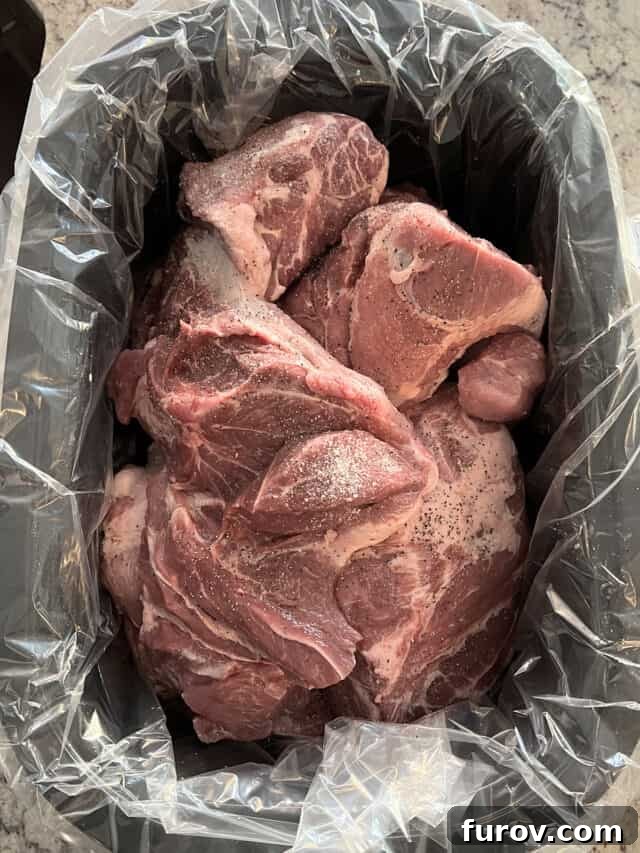
- Meat Preparation: All meat was cooked in advance using large electric roasting pans (and a few slow cookers) {aff. links}, then shredded or portioned and frozen.
- Revolutionary Roaster Liners: These liners for electric roasting pans and these for slow cookers were an absolute game-changer. They saved countless hours of scrubbing crusty pans, both during prep and for reheating at camp {aff. links above}. UPDATE: Please note that based on recent comments, there might be manufacturing changes causing melting issues with these liners. Use with caution.
- Generous Freezer Bags: These 2-gallon freezer Ziploc bags {aff. link} were invaluable for the sheer volume of food we froze, helping to consolidate portions and minimize the number of bags to manage and transport.
- Cookie Storage: All cookies were baked, fully cooled, and then frozen in gallon freezer Ziploc bags and these containers {aff. link}.
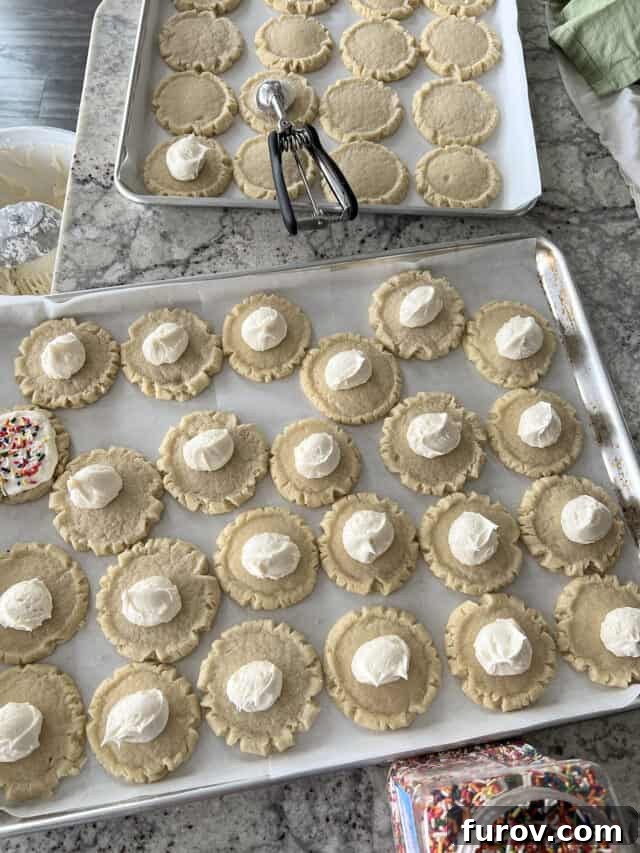
- Frosted Cookie Freezing: Even our beloved Swig sugar cookies were baked, frosted, sprinkled, and then frozen. They thaw beautifully, even with frosting, and were a massive hit at camp!
THE STRATEGIC MENU + PRINTABLE RESOURCES
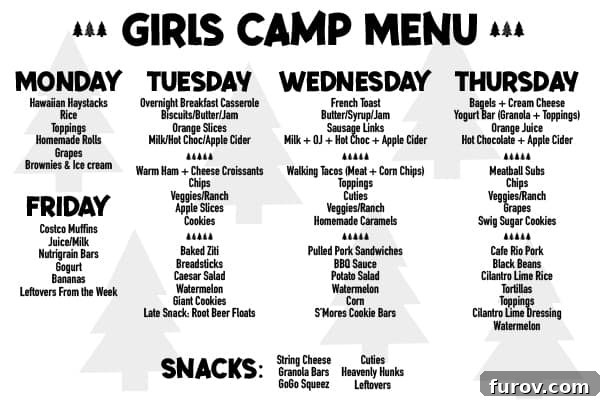
Below, you’ll find the comprehensive menu we served at camp.
My overarching goal was to incorporate one FRESH item for dinner (which, in hindsight, was a major highlight for the girls, particularly the Caesar salad, cucumbers, and watermelon) and one FROM-SCRATCH item to provide that comforting, home-cooked feel.
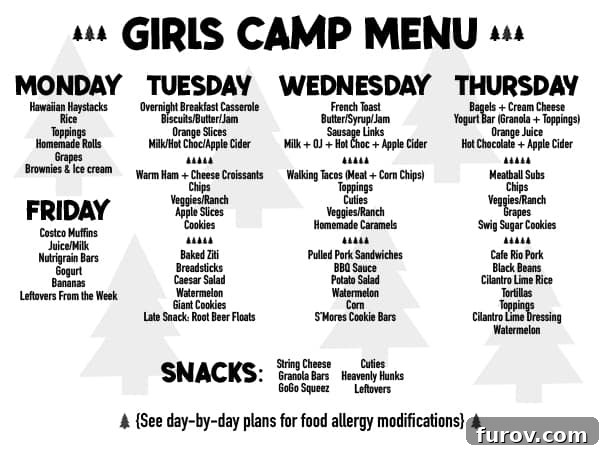
I saved the menu above as a high-resolution PDF and had it printed as an engineering print at Staples – a very inexpensive way to get a large black and white display. We proudly hung this in the camp kitchen, alongside our day-by-day schedules, which I’ll detail further below.
The following sections provide in-depth details for each meal served at camp.
**For a printable PDF version of these details with a larger font, click here**
(Keep scrolling, as a wealth of additional crucial information follows these menu charts.)
Hawaiian Haystacks Dinner (for 60 people)
| Meal Item | Preparation & Details | Quantities for 60 Servings | ||
|---|---|---|---|---|
| Hawaiian Haystacks | We adapted this recipe, ensuring it was entirely gluten-free by using cornstarch instead of flour. Prepared the day before, refrigerated, and reheated on-site. This was a top requested meal by youth leaders. | 8X batch of the recipe was sufficient for 60 people | ||
| Rice | Rice was cooked fresh at camp. Method: 8 cups rinsed rice + 1.5 tbsp salt in a large disposable roasting pan, covered with 2.5 quarts boiling water. Tightly foiled, baked at 350°F for 45 mins, then rested 10 mins before fluffing. | 15 cups dry long-grain white rice | ||
| Toppings | Served with a variety: chow mein noodles, chopped tomatoes, chopped olives, canned mandarin oranges and pineapple tidbits (drained), shredded cheese, and other assorted additions. | One #10 can each of mandarin oranges and pineapple tidbits. Approx. 16 cups each of most fresh toppings; 18-20 cups shredded cheese (1/4 cup per person). | ||
| Homemade Rolls | Made and froze batches of this French bread roll recipe in advance. Allergy-Friendly: Gluten-free biscuits were provided (details under “Tuesday breakfast”). |
Planned for two rolls per person. | ||
| Grapes | Red and green grapes were served, cut into small, manageable bunches. | 3 (4-lb) containers were ample. | ||
| Brownies + Ice Cream | Baked, cooled, cut into squares, and froze this brownie recipe ahead of time (thawed before serving). Allergy-Friendly: Used delicious gluten-free boxed brownies {aff. link} and GF/EF blondie bars. |
Five batches made, each 9×13 pan cut into 12 servings. 7 quarts of vanilla ice cream. |
Tater Tot Breakfast Bake (for 60 people)
| Meal Item | Preparation & Details | Quantities for 60 Servings | ||
|---|---|---|---|---|
| Overnight Tater Tot Breakfast Casserole |
Assembled and froze this recipe unbaked. We combined double batches into large disposable pans instead of individual 9x13s. Lesson Learned: Larger pans required significantly longer thawing and baking times than anticipated. Allergy-Friendly: This meal is naturally gluten-free (verify tater tots and sausage ingredients). No egg-free participants in this group. |
7X batch of the recipe for 60 people | ||
| Biscuits Butter/Jam |
Biscuits were generously donated by a local bakery. We reheated and served them with butter and various jams – they were a big hit. Allergy-Friendly: I prepared a batch of gluten-free biscuits (this recipe using GF flour) and baked them fresh that morning. |
Planned for two biscuits per person, but one would have been sufficient. | ||
| Orange Slices | A refreshing fruit option. We planned for leftovers to use as an afternoon snack. | 15-18 sliced oranges (from a 20lb box). | ||
| Milk Hot Chocolate Apple Cider |
Hot chocolate and apple cider were incredibly popular at camp, so much so that we had to limit early morning access to ensure breakfast consumption. Each night, we boiled water and poured it into four 5-gallon insulated water coolers, which kept it piping hot for the next morning. Lesson Learned: Very few people chose milk for breakfast. | One hot chocolate packet per person, one apple cider packet per four people, daily. |
Ham + Cheese Croissant Lunch (for 60 people)
| Meal Item | Preparation & Details | Quantities for 60 Servings | ||
|---|---|---|---|---|
| Warm Ham + Cheese Croissants | Assembled at camp using Costco croissants. A mixture of 1/2 cup melted butter, 4 tbsp Dijon, 3 tbsp honey, 1/4 tsp salt, and a pinch of pepper (14x batch) was brushed on both sides. Layered with thinly shaved deli ham and sliced cheddar. Heated in lined electric roasters at 200°F for a couple of hours until cheese melted (monitor corners to prevent burning). Allergy-Friendly: A separate version was made in a sanitized panini press using gluten-free bread. |
One croissant per person. Cut in half for serving; about 1/3 of the group only took half a sandwich, resulting in some leftovers. | ||
| Chips | Assorted lunch-bag sized chip varieties from Costco. | About 2/3 of the group took chips. Leftovers were served for other lunches and snack times. | ||
| Veggies + Ranch |
Fresh sliced cucumbers, grape tomatoes, carrots, and celery were offered. Cucumbers and grape tomatoes were most popular; celery was less so. Ranch dressing was served in large bowls with small ladles. | 12-15 sliced English cucumbers; 3 (2-lb) containers grape tomatoes; 4 (2-lb) bags baby carrots; 2 (1-gallon) jugs of ranch (lasted for three lunches). | ||
| Apple Slices | Apples were cored, sliced, and presented on large trays. | 24 medium apples for 60 people. | ||
| Cookies | One committee member’s delicious chocolate chip oatmeal cookies were baked, frozen, and thawed. Allergy-Friendly: Numerous GF/EF cookie options were available (refer to Tip #2). |
Planned for one cookie per person. |
Baked Ziti Dinner (for 260-270 people)
| Meal Item | Preparation & Details | Quantities for 260-270 Servings | ||
|---|---|---|---|---|
| Baked Ziti | This evolved into a “lazy pasta bake” using this recipe. Initially, we planned to assemble and freeze it, but the immense freezer/fridge space required was prohibitive. A committee member ingeniously suggested tackling it between lunch and dinner. Although incredibly busy (boiling pasta, simmering sauce, assembling, and baking), it worked beautifully. Allergy-Friendly: Gluten-free/egg-free noodles were boiled in a separate pot, and a dedicated GF/EF batch was prepared. |
17X batch of the recipe fed 260 people. | ||
| Breadsticks | Franz, a local bread outlet, provided discounted Seattle International brown ‘n serve breadsticks. We brushed them with olive oil + Johnny’s garlic spread seasoning and heated them on camp griddles. Allergy-Friendly: Trader Joe’s gluten-free toasted English muffins were offered. |
Planned two breadsticks per person; one per person would have been sufficient as some took two, others none. | ||
| Caesar Salad |
Using Costco’s Caesar salad packets was a huge hit, proving to be incredibly popular. | Approximately 22 bags were used for 250+ people (each bag serves about 12). | ||
| Watermelon | Watermelon was cut into sticks and served in large stainless bowls, easy for grabbing. | 4-5 large watermelons served 260 people. | ||
| Giant Cookies |
These blended oatmeal chocolate chip cookies were baked bakery-style (larger than normal, using two #40 scoops per cookie). Allergy-Friendly: A gluten-free batch (using GF flour and GF oats) was made, and Heavenly Hunks were available for GF/EF options. |
Planned for one cookie per person. Extras were served during snack times. | ||
| Root Beer Floats (Late Night Snack) |
This popular request from camp leaders required a committee member to make a 45-minute round trip to a small town for ice cream due to limited freezer space at camp. | 10 gallons vanilla ice cream; 16 liters of root beer (for 200 servings). |
French Toast Breakfast (for 260-270 people)
| Meal Item | Preparation & Details | Quantities for 260-270 Servings | ||
|---|---|---|---|---|
| French Toast | Texas Toast bread (donated/discounted from local Franz bakery outlet) was used. We whisked milk and eggs for dipping and cooked the French Toast on two large camp griddles, keeping it warm in foil-covered roasting pans in the oven. Allergy-Friendly: Gluten-free bread (cooked in a separate sanitized skillet) and a store-bought vegan egg substitute for egg-free girls (also cooked separately). |
400 slices of French Toast (approx. 25 loaves) for 260 people. Used about 16 dozen eggs and 3-4 gallons of milk. | ||
| Scrambled Eggs |
Scrambled eggs were added for a more substantial breakfast. | 28 dozen eggs scrambled for about 175 servings. | ||
| Butter Syrup Jam |
Tubs of spreadable butter were provided. Syrup was far more popular than jam, though we still had more syrup than needed. | Two large tubs of spreadable butter; 1.5 (64-ounce) jugs of syrup. | ||
| Sausage Links |
Turkey sausage links from Costco were heated in disposable aluminum pans in the oven. We planned for two links per person but had significant leftovers. Allergy-Friendly: We sourced egg- and gluten-free sausage specifically. |
Estimated 1-1.5 sausage links per person. | ||
| Milk OJ Hot Choc Apple Cider |
As noted previously, very few opted for milk or OJ, favoring the popular hot chocolate and apple cider. | One hot chocolate packet per person, one apple cider packet per four people, daily. |
Walking Tacos Lunch (for 260-270 people)
| Meal Item | Preparation & Details | Quantities for 260-270 Servings | ||
|---|---|---|---|---|
| Walking Tacos |
We utilized this recipe, specifically choosing it because the rice content effectively stretched the ground beef, making the meal heartier and more filling. Allergy-Friendly: This recipe is inherently gluten-free. |
22X recipe yielded 260-270 servings. | ||
| Corn Chips | 2-ounce bags of corn chips were purchased online (harder to find than 1-ounce bags). Guests either filled the bag directly or emptied chips onto a plate. | Planned for one bag of chips per person. | ||
| Toppings | A generous spread of lettuce, sour cream, shredded cheese, salsa, olives, and chopped tomatoes was provided. | 7 Costco packs romaine (6 hearts/pack); 1 (64-oz) salsa jar; 5 (2.5-lb) bags Mexican shredded cheese; 2 #10 cans sliced olives; 4 (3-lb) tubs sour cream; 30 cups chopped tomatoes (approx. 30 medium). | ||
| Cuties (Oranges) |
In retrospect, a fruit side dish wasn’t essential for this meal. Very few opted for a clementine cutie. | Planned one cutie per person; ultimately served as snacks due to low consumption at dinner. | ||
| Veggies + Ranch |
Offered cucumbers, grape tomatoes, carrots, and celery. Cucumbers and grape tomatoes were most popular; celery was less so. Ranch dressing was served in large bowls with small ladles. | 12-15 sliced English cucumbers; 3 (2-lb) containers grape tomatoes; 4 (2-lb) bags baby carrots; 2 (1-gallon) jugs of ranch (lasted for three lunches). | ||
| Homemade Caramels |
Used this recipe. These were prepared two weeks in advance and stored in airtight containers at cool room temperature. Allergy-Friendly: These caramels are naturally gluten- and egg-free. |
Planned about two caramels per person. Five double batches made (equivalent to five 9×13-inch pans of caramels). |
Pulled Pork Sandwich Dinner (for 260 -270 people)
| Meal Item | Preparation & Details | Quantities for 260-270 Servings | ||
|---|---|---|---|---|
| Pulled Pork Sandwiches |
Prepared this pork recipe in advance by cooking large quantities in electric roasters, shredding, and freezing (without BBQ sauce). Brioche buns from Costco were used (quite large; smaller buns would also suffice). Allergy-Friendly: Trader Joe’s gluten-free hamburger buns were offered. |
80 lbs boneless pork shoulder cooked for 270 people (calculated 1/3 lb raw meat per person); one bun per person. | ||
| BBQ Sauce | BBQ sauce was served separately, allowing individuals to add it to their preference. | 5 gallons of BBQ sauce. | ||
| Potato Salad |
We purchased prepared potato salad, scooped it into large bowls, and served it. Approximately half the group took a serving, which aligned with our pre-event calculations. | 8 (3-lb) tubs of potato salad for 130-140 servings. | ||
| Watermelon | Watermelon was cut into sticks and served in large stainless bowls for easy access. | 4-5 large watermelons served 260 people. | ||
| Corn | This was arguably the favorite component of this dinner. We mixed varieties of white and yellow frozen corn in large disposable aluminum pans with 1/4 cup sugar and 2 tbsp butter per 5 lbs of corn. Covered with foil and heated in the oven at 350°F until just heated through (avoiding overcooking or boiling). Stirred well and seasoned with salt before serving. | 8 (5-lb) bags frozen corn (mixed white and yellow). | ||
| S’Mores Cookie Bars |
Adapted this recipe into bar form by tripling the batch and dividing it between two half-sheet pans (baked for about 25 minutes). Cut into squares (24 servings per sheet pan), frozen in ziploc bags, and thawed before serving. Allergy-Friendly: Gluten-free cookies from Tuesday were still fresh and offered, along with egg-free cookies and Heavenly Hunks for GF/EF options. |
12 sheet pans of bars made (four triple batches). |
Bagel Cream Cheese + Yogurt Breakfast (for 260-270 people)
| Meal Item | Preparation & Details | Quantities for 260-270 Servings | ||
|---|---|---|---|---|
| Bagels | Plain and blueberry bagels were served (purchased at a significant discount from Franz bakery outlet). Not toasted or heated prior to serving. Allergy-Friendly: Trader Joe’s gluten-free bagels were available. |
30 (6-ct) bags of bagels (plain was generally preferred). | ||
| Cream Cheese |
A variety of plain and flavored WHIPPED cream cheeses were offered. Whipped cream cheese is crucial for easy spreading, especially outdoors on a chilly morning when it’s cold. Flavored options (strawberry, blueberry) were significantly more popular than plain. | 20 cups whipped cream cheese. | ||
| Yogurt | Vanilla, strawberry, and peach yogurts were served. If done again, I would only offer vanilla, particularly with a variety of toppings (vanilla was the first to run out). | 1500 ounces of yogurt. | ||
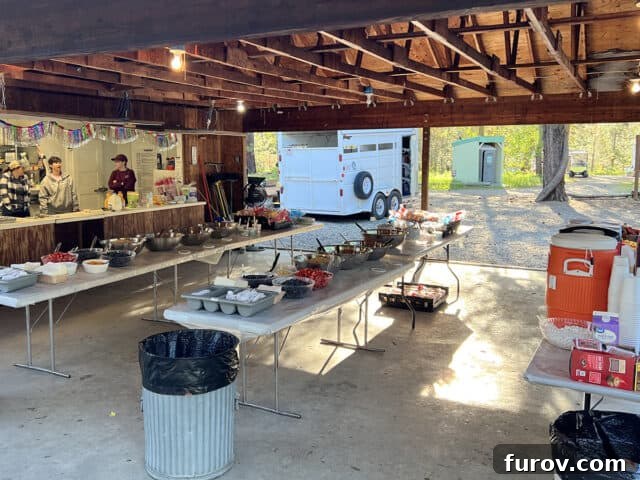
| Granola + Toppings | Honey oat granola (purchased in bulk from US Foods) with a pleasingly piecey (not clumpy) texture, ideal for yogurt parfaits and better for stretching portions. Toppings included blueberries, bananas, and chopped strawberries. Strawberries were far more popular than blueberries, and bananas were hardly touched. Mini chocolate chips were surprisingly the most popular topping! Allergy-Friendly: Gluten-free granola was available. All granola was nut-free. |
10 lbs granola; 40 lbs strawberries (chopped); 5 lbs blueberries; 15-18 cups mini chocolate chips. | ||
| OJ + Hot Choc + Apple Cider |
As previously observed, milk and OJ were largely overlooked in favor of hot chocolate and apple cider for breakfast. | One hot chocolate packet per person, one apple cider packet per four people, daily. |
Meatball Subs Lunch (for 260-270 people)
| Meal Item | Preparation & Details | Quantities for 260-270 Servings | ||
|---|---|---|---|---|
| Meatball Subs | Store-bought frozen meatballs were heated in marinara sauce in large electric roasters. Served on sturdy hoagie buns (a robust bun is essential). Assembled by first sprinkling mozzarella cheese on the bun (to melt nicely), then adding 4 meatballs and sauce. This was one of the most popular meals, a definite favorite among the girls! Notably, this was the ONLY meal we dished out for the girls, which, with two lines, went quickly and was an excellent decision in hindsight. Allergy-Friendly: A batch of GF/EF meatballs was made and frozen for camp, then heated in sauce separately. Served on Trader Joe’s GF hot dog buns. |
6 (6-lb) bags frozen meatballs; 16 #10 cans marinara (Roseli brand); 8 (2-lb) bags shredded mozzarella cheese. | ||
| Chips | Assorted lunch-bag sized chip varieties from Costco. | About 2/3 of the group took chips; extras were served for snack time. | ||
| Veggies + Ranch | Offered cucumbers, grape tomatoes, carrots, and celery. Cucumbers and grape tomatoes were most popular; celery was less so. Ranch dressing was served in large bowls with small ladles. | 12-15 sliced English cucumbers; 3 (2-lb) containers grape tomatoes; 4 (2-lb) bags baby carrots; 2 (1-gallon) jugs of ranch (lasted for three lunches). | ||
| Grapes | Red and green grapes were served, cut into small bunches. | 15 (3-lb) containers. | ||
| Swig Sugar Cookies | Utilized this recipe (substituting baking powder for cream of tartar). These cookies freeze exceptionally well, even frosted and sprinkled. Bake, frost, sprinkle, then freeze in a single layer on a baking sheet. Once frozen, transfer to Ziploc bags (can double layer with parchment/wax paper) and refreeze. Allergy-Friendly: A gluten-free batch was made using 1:1 GF flour. Egg-free cookies (this recipe) were also offered, alongside Heavenly Hunks for GF/EF options. |
250 regular cookies; 1 dozen GF cookies. |
Cafe Rio Meal (for 325 people)
*Accommodated extra visitors/leaders this night*
| Meal Item | Preparation & Details | Quantities for 325 Servings | ||
|---|---|---|---|---|
| Cafe Rio Pork | Prepared this pork recipe in advance: cooked large quantities in electric roasters, shredded, and froze without the finishing sauce and spice mixture. These were brought to camp and combined with the pork for reheating in electric roasters. Allergy-Friendly: Gluten-free ingredients were carefully selected for the pork preparation. |
98-100 lbs boneless pork shoulder cooked for 325 people (calculated 1/3 lb raw meat per person). | ||
| Black Beans | Black beans were heated with store-bought salsa in electric roasters. | 5 #10 cans black beans (drained); 2 (64-oz) jugs salsa. | ||
| Cilantro Lime Rice | To streamline, we purchased Costa Vida’s cilantro lime rice, utilizing savings from discounted/donated bread. Someone brought the rice mid-week. Bags were boiled in water until hot and kept warm in electric roasters. | 50 lbs rice. | ||
| Tortillas | Planned for 275 tortillas for a group of 325, which proved to be an accurate estimate. Allergy-Friendly: Gluten-free tortillas were provided. |
275 flour tortillas; 12 GF tortillas. | ||
| Toppings | Provided lettuce, sour cream, shredded cheese, salsa, olives, chopped tomatoes, and guacamole. We used slightly fewer toppings this night compared to the Walking Tacos, as the meal itself was very hearty. | 5 Costco packs romaine (6 hearts/pack); 1 (64-oz) salsa jar; 4 (2.5-lb) bags Mexican shredded cheese; 2 #10 cans sliced olives; 3 (3-lb) tubs sour cream; 20 cups chopped tomatoes; 4 Costco packs guacamole. | ||
| Cilantro Lime Dressing | A dedicated committee member prepared all the cilantro lime dressing using this recipe, bringing it to camp with other fresh groceries on the day of. Served in large squeeze bottles. | 12X batch of cilantro lime dressing. | ||
| Watermelon | Watermelon was cut into sticks and served in large stainless bowls. Less watermelon was consumed this night due to the substantial nature of the meal. | 4-5 large watermelons served 300+ people. |
Grab-and-Go Breakfast (for 260-270 people)
| Meal Item | Preparation & Details | Quantities for 260-270 Servings | ||
|---|---|---|---|---|
| Leftovers from Week | Initially, we planned for someone to bring 250 Costco muffins for this final grab-and-go breakfast (the morning everyone departed camp).
However, we had an abundance of usable leftovers: orange slices, bagels, bananas, and various snacks (granola bars, applesauce packets). Consequently, we only needed to purchase 100 Costco muffins, which we cut in half. The girls had more than enough to pack in their breakfast bags, ensuring they were well-fed before heading home by noon. |
270 paper bags; 100 Costco muffins (variety of flavors, cut in half). |
Afternoon Snacks (Served Once Daily)
Our mandate included providing an afternoon snack, though in hindsight, its necessity is debatable. The girls often had plenty of their own food, snacks, and treats at their campsites. Furthermore, we consistently put out leftover cookies and items from meals, which the girls happily snacked on if hungry.
Below were the snack items we had on hand to offer, though ultimately, most were repurposed for the grab-and-go breakfast on Friday morning due to surplus:
- String cheese (easy and popular)
- Granola bars (convenient and individually wrapped)
- Applesauce packets (healthy and portable)
- Cuties (mandarin oranges – refreshing)
- Heavenly Hunks (a popular, often allergy-friendly treat)
- Various leftovers from previous meals (reducing waste)
MASTERING QUANTITY CALCULATIONS FOR LARGE GROUPS
While I’ve embedded specific quantity tips within the meal tables above, here’s a broader overview of how I calculated our quantities and the lessons learned from having leftovers in several areas. Accurate estimation is key to both cost efficiency and ensuring everyone is well-fed.
- Meat (for meat-centric meals like pulled pork): Aim for approximately 1/3 pound of uncooked meat per person.
- Meat (for less meat-centric meals like pasta sauce): Around 1/4 pound of uncooked meat per person generally suffices.
- French Toast: Plan for two slices of French toast per person. For the egg/milk mixture, a good ratio is 1 egg + 1/4 cup milk for every 2 slices of bread.
- Watermelon: A typical average to large size watermelon yields about 50 servings when cut into sticks.
- Rice: Calculate 1/4 to 1/3 cup of dry rice per person.
- Pasta: Generally, 2 ounces of dry pasta per person is a good starting point. For our easy pasta bake, we found we needed slightly less, likely due to a group that was already well-fed throughout the day and the abundance of side dishes offered.
- Ice Cream: One gallon of ice cream typically provides 18-20 servings.
- Root Beer (for root beer floats): Allow for 10-12 servings per liter of root beer.
Should you have any other specific quantity questions not covered here, please feel free to ask in the comments. Otherwise, revisit the detailed tables above, as they contain a wealth of practical tips!
CRITICAL KITCHEN EQUIPMENT FOR LARGE-SCALE COOKING
This is the essential equipment that formed the backbone of our camp kitchen. Without these items, our operation would have been significantly more challenging, if not impossible.
- Electric Roasters: We deployed eight of these at camp, strategically spreading them across different outlets when all were in use. They were absolutely invaluable for heating and cooking food, both during our extensive prep phase and continuously at camp.
- Electric Roaster Liners: My entire committee unanimously agreed that these liners were single-handedly our biggest lifesaver. We used the electric roasters for virtually every meal. The ability to avoid scrubbing multiple heavily soiled roasting pans after each meal saved us countless hours and considerable physical effort.
- Handy Chopper: One committee member introduced this chopper to camp. I hadn’t owned one before, but it quickly converted me; I purchased one shortly after. Even with just one, it was revolutionary for rapidly chopping items like strawberries and firm cherry tomatoes (despite descriptions suggesting it might not work for tomatoes). Its efficiency was undeniable.
- Knife Sharpener: Given the sheer volume of chopping required for cucumbers, lettuce, and other fresh ingredients, our knives saw extensive use. A reliable knife sharpener was absolutely critical to maintain their optimal performance throughout the week.
- Disposable Aluminum Pans: We relied heavily on these full-size pans for almost every task: heating, serving, and initial preparation. While we diligently washed and reused many of them during the week, starting with a large, fresh stack was a tremendous advantage.
- Block Ice: For keeping water cold throughout the day, block ice proved far superior to cubed ice. It lasted significantly longer and was much easier to stack and store efficiently in our freezers.
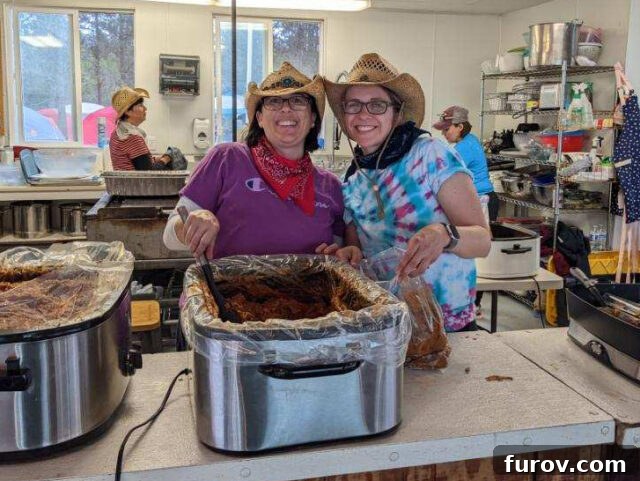
THE POWER OF ORGANIZATION: DAY-BY-DAY CHARTS + SPREADSHEETS
My profound appreciation for spreadsheets runs deep – some might even call it a touch “excessive.” However, these meticulously crafted spreadsheets and charts were my absolute saving grace during the intense planning, shopping, and execution phases of feeding 270 people for an entire week.
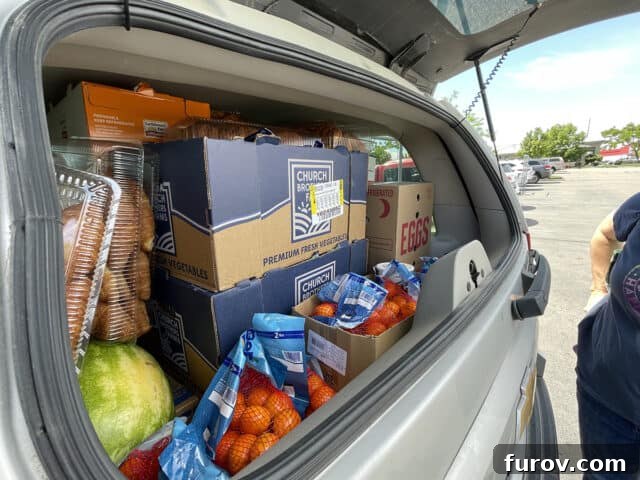
While my original, highly specific spreadsheets wouldn’t directly benefit others, the *types* of spreadsheets I maintained are incredibly valuable. I kept the following spreadsheets meticulously updated:
- Prep Calendar: This detailed calendar outlined what specific food items needed to be made each week in the months leading up to camp.
- Master Meal Planning Spreadsheet: A comprehensive document listing every meal item, all necessary ingredients for each dish and its sub-components, ensuring nothing was overlooked.
- Master Shopping List: Strategically separated by when items needed to be purchased (e.g., pantry staples weeks in advance vs. fresh ingredients the day before) and assigned to specific committee members.
- Budget Spreadsheet: Crucial for tracking all expenditures, detailing what was spent, when, and on what. I’m pleased to report we finished slightly under budget!
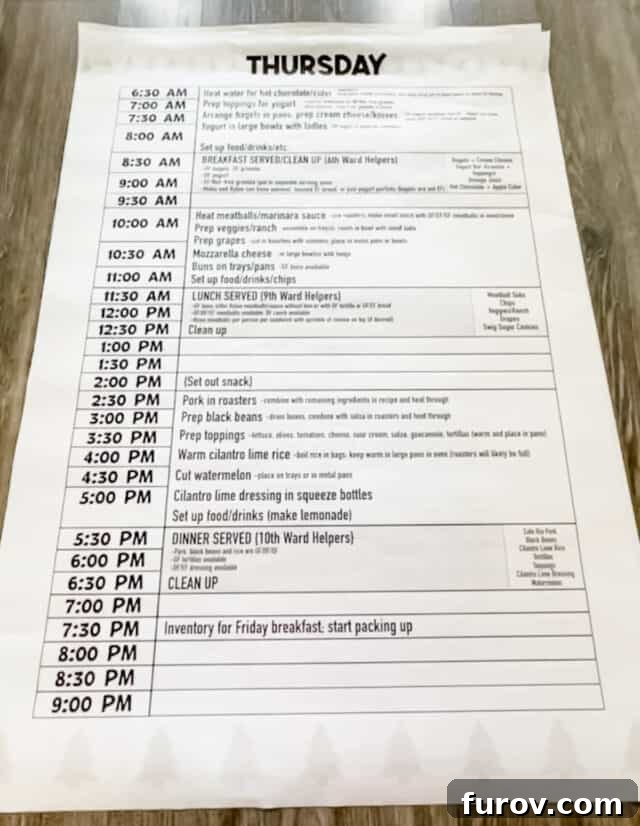
- Day-by-Day Camp Plan Spreadsheet: This was the most intensive of all, providing an hour-by-hour breakdown of tasks at camp. It detailed meal preparation steps, serving methods, appropriate serving containers, and numerous other logistical nuances.
I converted this into large engineering prints (as seen below), which we proudly displayed on the back of the camp kitchen door. This served as our collective roadmap, keeping everyone on track. While some leaders and girls who peeked into our kitchen playfully teased me about my minute-by-minute outlines, my committee universally agreed it was instrumental in ensuring clarity and efficiency.
Here is a PDF version of my day-by-day plan for reference. It includes the level of detail I incorporated (with personal identifying information removed), which might offer valuable insights for your own planning. Unfortunately, a customizable format isn’t easily shareable due to the immense file sizes and proprietary program.
Phew! AND THAT’S A WRAP! This might just be the most comprehensive post I’ve ever written for this blog. Reviewing and typing up all this information has been almost as exhausting as the camp itself!
Undoubtedly, planning and preparing meals for a large church camp or any significant group event demands an immense amount of work and dedication. However, with the right helping hands, meticulous planning, and a thoughtfully curated menu, it is an entirely achievable and rewarding endeavor!
Please utilize the comment section below to ask any questions you may have, and crucially, to share your own experiences. What are your favorite large-group meals? What tips or lessons have you learned? We all benefit most when we share our collective knowledge!