
For nearly two decades, I’ve had the immense privilege of connecting with countless individuals—from college students and new parents to seasoned homemakers and busy professionals. The conversations often revolve around a common theme, one that resonates deeply with so many:
- Crafting delicious and varied menus
- Navigating the daily challenge of dinner preparation
- Surviving the often chaotic dinner hour
- Catering to the needs of picky eaters
- Managing a food budget effectively
- And virtually every other culinary conundrum you can imagine!
Invariably, almost every single one of these discussions and presentations converges on a single, universally relatable topic:
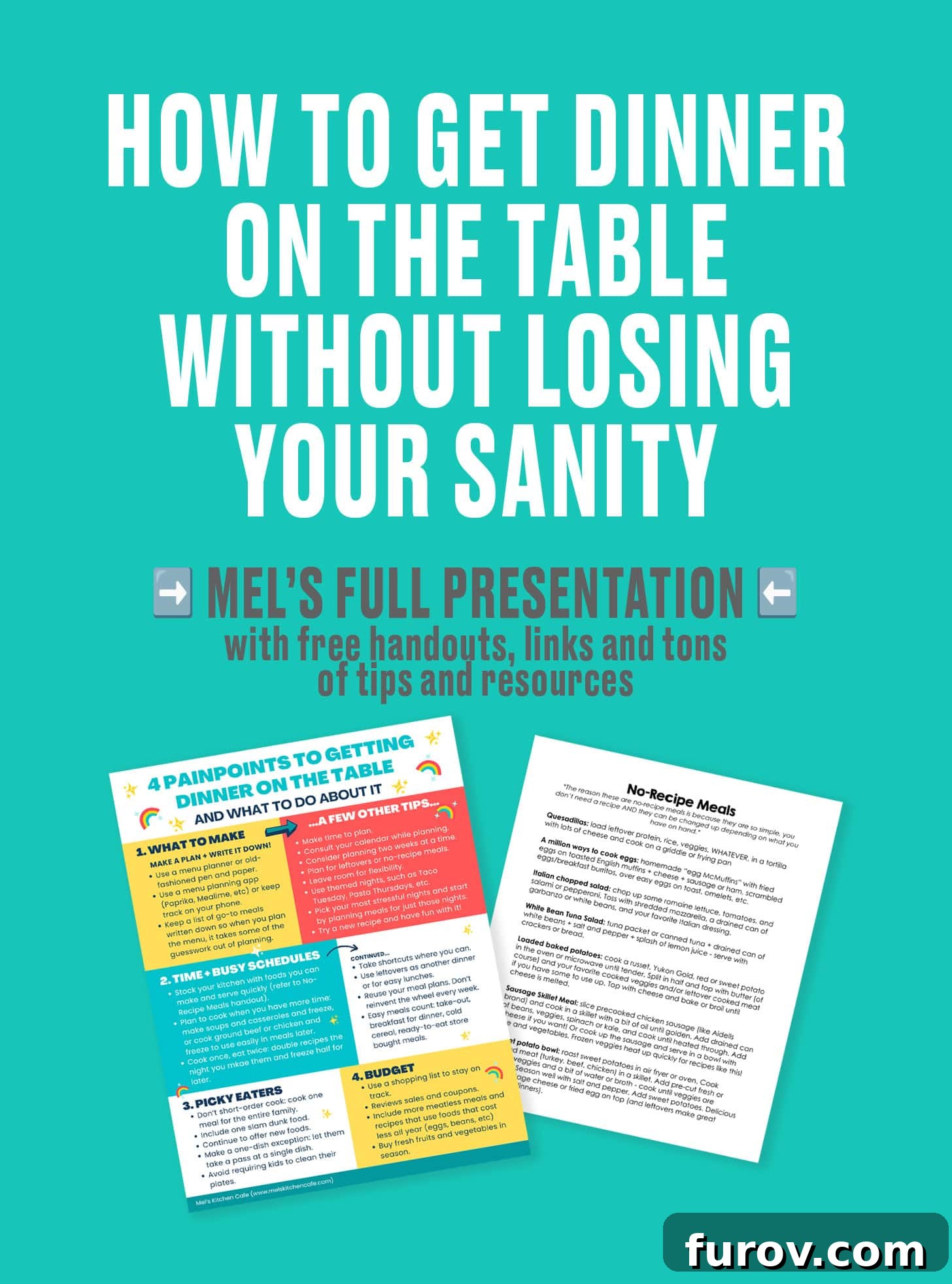
➡️ How to Get Dinner on the Table Without Losing Your Sanity ⬅️
(If you’re nodding along, you’re not alone! This struggle is real for so many of us.)
While I’d love nothing more than to share this presentation with each of you in person, the demand for this invaluable material has led me to compile it all into a comprehensive blog post. Consider this your go-to resource for conquering dinner time, whether you’re using it for personal reference or sharing it with your community.
Below, you’ll find every detail from my popular presentation, including my lighthearted jokes and, most importantly, links to all the complimentary handouts I provide during live sessions. These resources are designed to make your life easier.
Even if you never present this material to anyone else, I sincerely hope these insights will offer practical guidance and a much-needed boost as you navigate the daily rhythm of feeding yourself and your loved ones. 😘
Let’s dive in.

My Journey: Almost Two Decades of Food, Family, and Online Connections
For nearly two decades, I’ve immersed myself in the world of food, sharing recipes and culinary insights online. My journey began during what I affectionately call “The Toddler Years” – a period marked by profound loneliness and a dash of boredom while living in Wisconsin. At one point, I was a mom to three children under the age of three, which quickly evolved into four under four. Yes, I’m fully aware of how babies are made, and yes, I chose this path, even if some days had me dreaming of running far, far away! My food blog became my sanctuary, a creative outlet amidst the beautiful chaos.
Looking back, my early food photography was, to put it mildly, quite terrible. It was a learning curve, to say the least. ⬇️

Over the years, with much practice and dedication, things have certainly improved. ⬇️

Beyond better pictures, I’ve been incredibly fortunate to gain millions of dedicated readers, transforming this passion into what truly feels like the best job ever.
Navigating the Digital Landscape: Community and Feedback
Publishing recipes online for such a long time has given me a front-row seat to the full spectrum of human interaction on the internet. The vast majority of comments I receive are incredibly uplifting and supportive, reflecting a vibrant, positive community:

However, the internet also offers its share of unique and sometimes questionable feedback. I occasionally receive entertaining threads like this one:
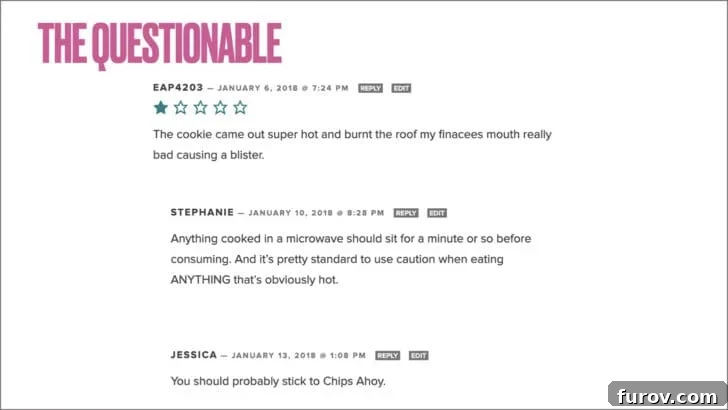
And, because we inhabit a truly strange and wonderful world, there are also moments that bring out the “internet trolls”:

Please don’t fret over the hateful comments. I’ve developed a remarkably thick skin over the years, so there’s no need to feel badly for me. In fact, I often read these comments aloud to my family at dinner time, turning them into opportunities for good laughs and important discussions about proper internet etiquette and being a good human.
The Universal Dinner Dilemma: What We All Struggle With
Over the past 17 years, I’ve engaged with thousands of people, primarily women, about the daily grind of dinner time. We’ve talked about menu planning, feeding hungry families, and even simply feeding ourselves! You name the dinner-time challenge, and I’ve heard about it.
It’s clear that so many of us share the same sentiments. While I genuinely LOVE food—(Brian, my husband, will tell you to slowly back away if I start discussing recipes, dark chocolate, or carbs)—I must confess, I don’t always love making dinner. And meal planning? That can be a chore too.
I am certainly not here to proclaim, “IT’S AMAZING, ANGELS WILL BE SINGING! MAKING DINNER IS FUUUUUUUUN!” No, absolutely not. I am right here in the trenches with you.

Insights from Our Community: The Biggest Dinner-Time Hurdles
To truly understand the core challenges, I recently conducted a poll among my Instagram audience of nearly 200,000 followers, asking about their biggest pain points when it comes to getting dinner on the table.
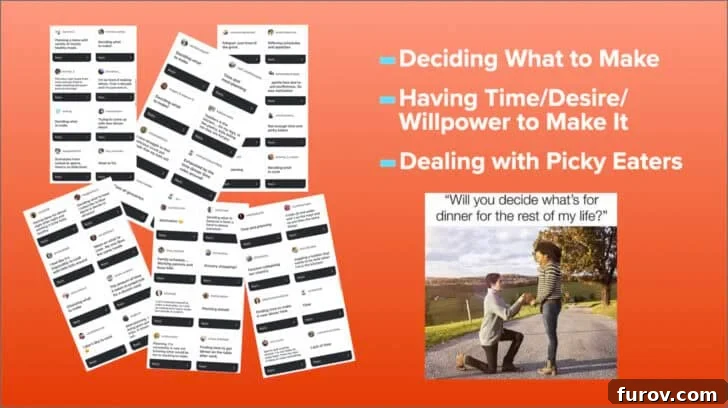
Thousands of people responded, and their feedback was clear. The three most common pain points, mentioned hundreds of times each, were:
- Deciding what to make: The mental fatigue of daily meal decisions.
- Having the time to make it: Juggling busy work, life, and children’s schedules.
- Working with picky eaters: The constant battle to satisfy everyone at the table.
AND, a sentiment that resonated deeply, the sheer fact that they have to do it “over and over again every stupid night.” (A direct quote from one respondent, perfectly capturing the exhaustion!)
Budgeting and money were also frequently mentioned, but they consistently ranked as a distant fourth to these top three challenges.
So, we’re going to tackle these pain points head-on. I’ll share a wealth of tips, practical resources, and proven strategies I’ve gathered and refined over the years.
These tips are incredibly versatile. They can be easily adapted to fit any family structure or life stage. I encourage you to pick and choose the strategies that resonate most with you and that you believe will genuinely help in your unique circumstances.
➡️➡️ Ultimately, as challenging as making dinner can feel—night after night, after endless night—it also presents a priceless opportunity for family connection and togetherness.

Recently, one of my adult sons, who is living abroad for two years, commented that the thing he misses most about home is eating dinner with the family. Now, he probably meant “someone else making dinner for me” 🤣, but I found his statement profoundly touching, especially considering all the other things he could miss. It highlights the deeper value of these shared moments.
Dinner at our house is rarely fancy. We often gather at the kitchen counter on barstools, serving meals family-style. It’s not always a complex recipe (grilled cheese night, I’m looking at you!), and with varied schedules, we don’t always manage it every single night of the week.
However, striving for fairly consistent family dinners has proven to be one of the most effective ways to foster conversations (especially with teenagers) and spend quality time together, even if it’s just a quick 15 minutes each evening.
Okay, let’s dig in and figure out how to make this happen for you!
At this point in my live presentations, I provide a helpful printable handout for attendees to follow along and take notes. I’m making it available here as a free resource, in case you find it beneficial. It’s a two-page document, with the second page dedicated to your personal notes.
➡️ DOWNLOAD YOUR FREE PDF HANDOUT HERE ⬅️
Pain Point #1: Figuring Out What to Make (The Menu Planning Dilemma)

I know the mere mention of “menu planning” might send shivers of dread down some of your spines. It can feel like an overwhelming task, and I absolutely get it.
However, strategic menu planning is, hands down, THE most effective way to ensure smooth and consistent family (or individual) meal times. It’s the foundation for reducing stress and reclaiming your evenings.
FIRST, let’s reframe our perception of menu planning. It’s not a rigid, one-size-fits-all system. There are numerous flexible approaches, and we’re going to explore them now to find what works best for you.
Here are my top tips to transform menu planning from a dreaded chore into an empowering habit, helping you to RETHINK your entire approach.
Practical Strategies for Effective Meal Planning
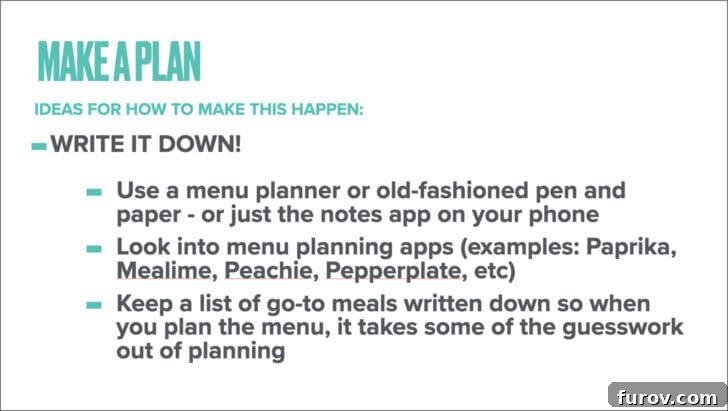
1. Make a Plan and WRITE IT DOWN! The act of committing your ideas to paper (or screen) significantly increases your chances of success. Here are three simple ways to do it:
- Low-Tech Options: Grab a classic notebook, use a dedicated menu planning pad, or simply type it into the notes app on your phone. The method doesn’t matter as much as the act of recording.
- Embrace Technology: Explore meal planning apps like Paprika, Peachie, Mealime, or Pepperplate. These tools often help with recipe organization, grocery lists, and even nutritional tracking.
- Build a Go-To List: Create a running list of your family’s favorite, tried-and-true meals. When it’s time to plan, this list becomes an invaluable resource, making it much quicker to fill in your weekly menu without starting from scratch.
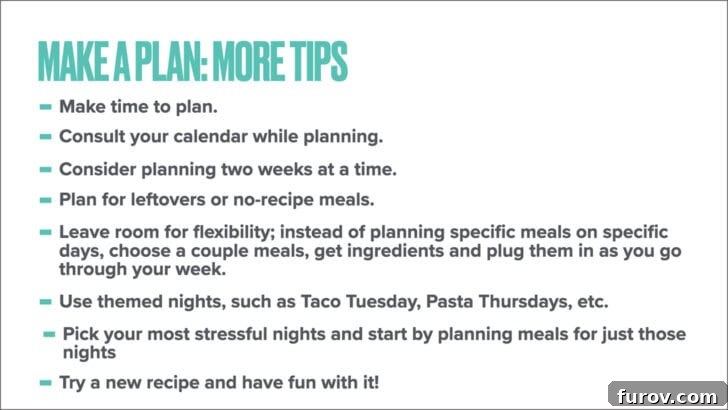
2. Dedicate Time for Planning: You don’t need to block out hours for menu planning. Set aside a focused 10 to 20 minutes, perhaps on a Sunday afternoon, and just get it done. Consistency is key here, not duration.
3. Consult Your Calendar: This is a game-changer! Before planning, glance at your family’s weekly schedule. This simple step will prevent you from planning an elaborate, five-course meal on a Tuesday night when you have three soccer games and a late meeting. 😜 The goal is to align your meals with your actual daily schedule, choosing quick and easy options for busy evenings.
4. Consider Planning Two Weeks at a Time: Confession time… I still find menu planning a bit of a drag. But if I know I only have to do it every two weeks instead of every seven days, it feels significantly less daunting. This small shift can make a big difference in your consistency.
5. Intentionally Plan for Leftovers or No-Cook Meals: You absolutely do not need to prepare a brand-new, complex meal every single night! Smart planning incorporates leftovers or simple “assembly” meals. Check out the free printable handout below, which offers a comprehensive list of “no-recipe meals” perfect for those nights when you need a quick dinner solution without any fuss.
➡️ Free Handout with a Whole List of No-Recipe Meals! ⬅️
6. Build in Flexibility: Instead of assigning exact recipes to exact days, adopt a more fluid approach. For example, choose four core recipes for the week, gather their ingredients, and then, as the week unfolds, plug them into the days that best suit your energy levels and schedule. This reduces pressure and allows for spontaneity.
7. Implement Themed Nights: This is a fun and simple way to streamline decisions. Think “Taco Tuesday,” “Italian Thursday,” or “Stir-Fry Fridays.” Having a theme narrows down your options and makes planning quicker. Your kids might even look forward to their favorite themed night!
8. Start Small: Plan for Your Most Stressful Nights First: Menu planning doesn’t mean you need to meticulously plan every single meal for every day of the week, right off the bat. Identify your most challenging evenings and focus on planning simple, reliable meals for those nights first. Build from there.
9. Have Fun with It! While dinner can be a chore, try to inject some fun. Maybe that means trying one new, exciting recipe each week (if you enjoy that!), or simply playing your favorite music while you cook. A positive mindset can make a world of difference.
Pain Point #2: Time & Busy Schedules (The “No Time to Cook” Conundrum)

In the wise words of someone much older and wiser than I am…

Listen, I’m no genie, but I can offer some practical suggestions and actionable tips to help combat that pervasive feeling of “there’s no time (or desire!) to make dinner!”
Strategies to Maximize Your Time and Energy
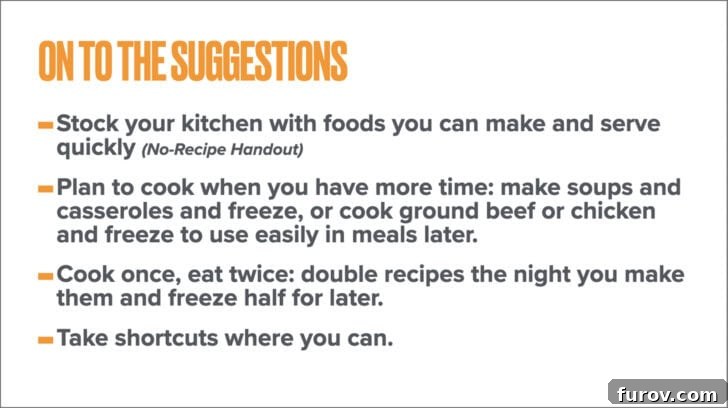
1. Stock Your Kitchen for Speed: Keep your pantry, fridge, and freezer well-stocked with reliable ingredients that allow you to whip up quick meals. Think canned beans, tuna, quick-cooking oats, frozen vegetables, pasta, rice, jarred sauces, and pre-cooked proteins. These staples are your emergency dinner heroes.
2. Cook When You Have More Time (Batch Cooking & Meal Prep): If your weekends or a particular day of the week offer a bit more breathing room, utilize that time strategically. Consider preparing recipes that freeze well for later reheating, like casseroles, soups, or stews. Another excellent strategy is to cook proteins in bulk—think shredded chicken, cooked ground beef, or roasted vegetables—and store them in the freezer. This allows you to quickly pull them out and incorporate them into chilis, spaghetti sauces, stir-fries, or grain bowls throughout the busy week.
3. Cook Once, Eat Twice (or Thrice!): Even if extensive meal prepping isn’t your style, simply doubling your dinner recipe can be a lifesaver. Cook a larger batch of lasagna, enchiladas, or a hearty soup, and freeze half for a future busy night. Alternatively, plan to enjoy leftovers for lunch the next day, saving you from preparing another meal. This minimizes cooking effort while maximizing output.
4. Embrace Smart Shortcuts: Not every component of every meal needs to be made from scratch. And you certainly don’t need a perfectly home-cooked meal every single night, especially when your schedule doesn’t permit. Don’t hesitate to use store-bought shortcuts: pre-chopped vegetables, rotisserie chicken, pre-made pie crusts, jarred sauces, frozen rice, or even quality ready-to-eat salads. These can significantly cut down on prep time without sacrificing flavor.
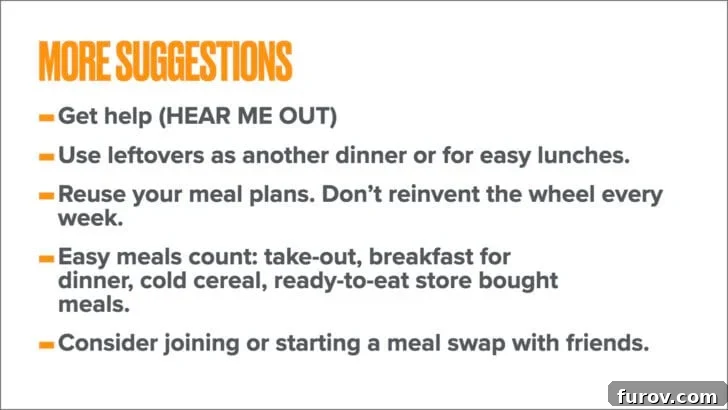
5. Delegate and Get Help (Yes, Seriously!): Now, before you cringe at the thought of “getting help,” hear me out. I understand that sometimes having a spouse or children “help” in the kitchen can feel like more work than it’s worth! But with a few strategic approaches, it can become genuinely helpful:
- Divide and Conquer with a Partner: If you have a partner, consider dividing dinner responsibilities. For instance, one person takes Monday/Wednesday, the other takes Tuesday/Thursday, and Fridays could be a designated takeout or easy-meal night. This method ensures the work is equitably distributed, and everyone knows exactly who is responsible for which nights, eliminating last-minute discussions.
- Involve Kids to the Extent Your Sanity Allows: Some families thrive on full-on delegation. I have a friend, a full-time teacher with a large family, where each child has a designated dinner night to plan and execute the meal for the entire family. Others, like my family, do it differently. We haven’t had consistent success assigning full dinner nights. Instead, I utilize my kids’ help throughout the week for tasks like setting the table, washing dishes, cleaning up, or smaller cooking tasks delegated in the moment. On Sundays, I give them bigger assignments to help with our Sunday meal. (Currently, with only two of my five kids living at home, they rotate and each cook dinner on alternating Sundays; they might not love it, but I certainly do!). Start small, find age-appropriate tasks, and gradually increase their involvement.
6. Utilize Leftovers Creatively: Leftovers aren’t just for another dinner; they can be transformed! Repurpose leftover chicken into tacos, stir-fries, or salads for quick lunches. Leftover pasta can be baked into a frittata. Think beyond just reheating and get creative to avoid food waste and make future meals easier.
7. Reuse Your Own Meal Plans: Don’t feel like you need to reinvent the wheel every single week. Keep a binder or digital file of past meal plans that worked well. You can recycle entire weeks, or simply refer to them for inspiration to quickly fill in a couple of meals. This is a fantastic way to save mental energy and time.
8. “Easy Meals” Absolutely Count: Be kind to yourself! Takeout, breakfast-for-dinner, cold cereal, ready-to-eat store-bought meals – these are all valid dinner options on busy nights. Identify your personal list of “easy buttons” and don’t hesitate to deploy them to simplify getting dinner on the table when life gets hectic.
➡️ Explore all my fast 20- or 30-minute recipes compiled in one convenient place. ⬅️
9. Explore or Organize a Meal Swap Group: I’ve heard from countless individuals over the years who have found tremendous success with meal swap groups, whether for lunches or family dinners. The concept is simple: if your group has five members, each person prepares five batches of a chosen meal (e.g., lasagna, enchiladas, a hearty stew). Each member then delivers one batch to the other four group members. The result? You cook extensively just once, but you receive meals for five different days of the week. It’s a fantastic way to enjoy variety with minimal individual cooking effort.
Essential Kitchen Tools for Easier Dinners

While no single kitchen tool is a magic bullet for all your dinner-time woes, these are a few items I rely on repeatedly that consistently help simplify meal preparation and save valuable time and effort:
- Instant Pot: This multi-cooker is a true game-changer for speeding up everything from tough cuts of meat to dried beans and grains. It’s fantastic for making entire meals in one pot. (Discover all my favorite Instant Pot recipes here)
- Slow Cooker: Perfect for busy days, a slow cooker allows you to set it and forget it. Prep ingredients in the morning, and come home to a delicious, hot meal. It’s ideal for stews, pulled meats, and comforting chili. (Explore my go-to slow cooker recipes here)
- Stove-to-Oven Pan: This is an ingenious piece of cookware! It’s brilliant for recipes that require both stovetop searing or sautéing and oven baking, drastically reducing the number of dishes you have to clean. I use mine constantly for everything from frittatas to roasted chicken dishes.
- Electric Griddle: We use our griddle almost daily. It’s incredibly versatile for cooking large batches of pancakes or French toast, making crispy wraps, quesadillas, or even perfect grilled cheese sandwiches. It provides a large, even cooking surface.
- Handy Chopper: If you dread chopping vegetables, this tool is a lifesaver. It makes quick work of dicing onions, peppers, and other produce, saving you precious minutes and tears (from onions!).
- Favorite All-Purpose Knife: A sharp, reliable knife is essential. I actually have three of these inexpensive yet incredibly effective knives in my drawer because we use them so frequently for virtually every cooking task. A good knife makes all the difference in kitchen efficiency and safety.
Pain Point #3: Dealing with Picky Eaters

And when we talk about picky eaters, let’s be honest, we’re not always just talking about the kids, are we? #husbands 👀
It’s important to note that not all of these tips will resonate with everyone. There are often strong opinions, particularly along generational lines, when it comes to feeding families and children. Furthermore, some individuals face genuine sensory challenges that make eating and picky eating an entirely different and complex experience, requiring a specialized approach.
However, for the general challenges of navigating meals with selective eaters, I hope some of these tips will provide valuable assistance.
Effective Strategies for Navigating Meals with Picky Eaters
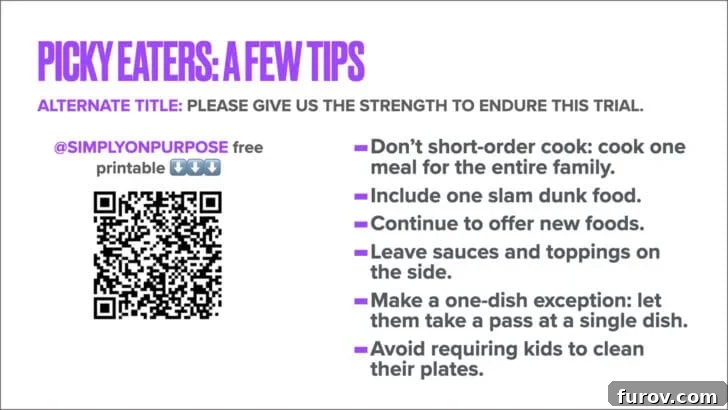
Before diving into my specific tips, I want to mention Ralphie @simplyonpurpose, who offers a fantastic free “eat the rainbow” guide. I’ve heard wonderful things about its effectiveness. You can find more details by following this link to her Instagram post.
A few additional tips for managing picky eaters:
- Don’t Short-Order Cook: Resist the urge to prepare a separate meal for each picky eater. Cook one wholesome meal for the entire family. This approach, while challenging initially, helps establish clear expectations and prevents you from becoming a restaurant chef in your own home. (The second tip below works hand-in-hand with this one!)
- Include One “Slam Dunk” Food: When planning your family meal, ensure there’s at least one component that your selective eaters genuinely like and will reliably eat. This “safe” food can be very simple: crackers or a slice of bread with soup, fresh fruit as a side dish, sliced cheese, plain pasta, or a simple vegetable they tolerate. By doing this, you can make one main meal (following tip #1) with the confidence that even if they don’t love every part of what’s served, there’s always something on their plate they will consume, reducing mealtime battles.
- Continue to Offer New Foods (Patience is Key!): It can be incredibly easy to feel discouraged and give up on introducing new foods. However, persistence pays off! Remember that it can take anywhere from 8 to 15 exposures (and sometimes more) for a child (or even a teenager) to decide they like a new food. Keep offering small, non-pressured portions alongside familiar favorites. Make it a casual, consistent effort rather than a battle.
- Serve Sauces and Toppings on the Side: Many picky eaters dislike foods touching or being mixed, or they may be sensitive to certain textures or strong flavors in sauces. Offering gravies, dressings, cheese, or other toppings in separate small bowls allows everyone to customize their plate according to their preferences. This simple adjustment can significantly increase acceptance.
- Allow a “One-Dish Exception”: Empower your child with a small amount of control by allowing them to politely decline one single dish without it turning into a power struggle. For example, if green beans are on the menu and they truly can’t bring themselves to eat them, let them pass on just that item. This teaches them to make choices while still encouraging them to try other components of the meal.
- Avoid Requiring Kids to Finish Everything or “Clean Their Plates”: Forcing children to eat everything on their plate can lead to unhealthy relationships with food, teaching them to ignore their body’s hunger and fullness cues. Instead, focus on encouraging them to try a “no thank you bite” or even just gently touching the food with a fork. Celebrating small successes like these helps build a positive, less stressful environment around food, fostering healthy eating habits in the long run.

I am living proof that this bonus tip works wonders. My own journey through childhood pickiness is a testament to its effectiveness!
Pain Point #4: Budgeting & Expense (Making Meals Affordable)

I’ll touch on this crucial topic briefly, as everyone’s financial circumstances are unique, and your definition of “budgeting” might be vastly different from someone else’s. However, here are a few universal tips that can help reduce food expenses in nearly any scenario.
Practical Food Budgeting Tips for Every Household
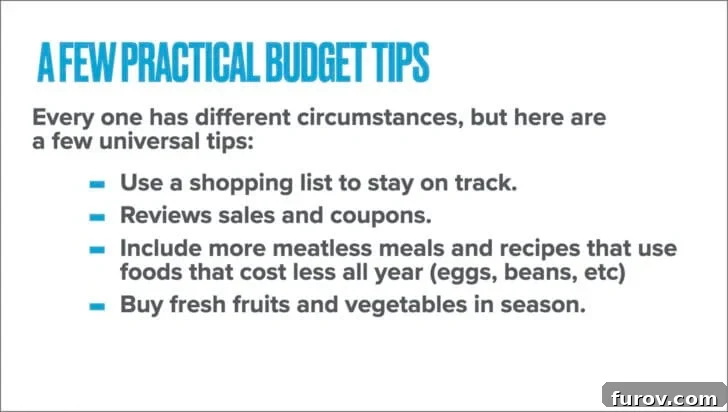
Here are a few practical food budgeting tips to help you save money without sacrificing flavor or nutrition:
- Use a Shopping List and Stick to It: This might seem obvious, but it’s arguably the most effective way to prevent impulse purchases and ensure you only buy what you need. Plan your meals, create a list, and avoid deviating from it in the store.
- Review Sales and Coupons: Before heading to the grocery store, take a few minutes to check weekly flyers and digital coupons. Plan your meals around items that are on sale. Stock up on non-perishable sale items that you use regularly, but only if you truly need them.
- Include More Meatless Meals: Meat can often be the most expensive component of a meal. Incorporating one or two meatless meals into your weekly menu can significantly reduce your grocery bill. Delicious and satisfying vegetarian options are abundant. ➡️ Find my favorite meatless main dish recipes here. ⬅️
- Embrace Affordable Staples Year-Round: Foods like dried beans, lentils, rice, pasta, and sometimes eggs are consistently budget-friendly and incredibly versatile. Learn to cook with these staples, as they form the base of many inexpensive and nutritious meals.
- Properly Store Fresh Foods Immediately: Preventing food waste is crucial for budgeting. As soon as you bring groceries home, take the time to store fresh fruits and vegetables properly in the fridge. Wash and prep them if needed, ensuring they last longer and don’t spoil before you can use them.
- Buy Fresh Fruits and Vegetables In Season: Produce is generally much more affordable, flavorful, and abundant when it’s in season locally. Plan your meals around seasonal offerings, and consider buying larger quantities for freezing or preserving when prices are at their lowest.
- Cook from Scratch More Often: While convenience foods offer shortcuts, they often come with a higher price tag. Making meals, snacks, and even certain condiments from scratch can be more cost-effective in the long run.
- Pack Lunches and Snacks: Eating out, even for lunch, can quickly add up. Prepare lunches and snacks at home to bring to work or school, saving significant money over time.
Bringing It All Together: Your Path to Stress-Free Dinners
And that’s a wrap!
I understand this has been a substantial amount of information, and rather lengthy, but I genuinely hope that these insights, strategies, and resources will prove helpful in some meaningful way as you navigate the daily journey of feeding your family.
As a recap, here are the free printables mentioned throughout the post, conveniently linked again for easy access:
➡️ Your Colorful PDF HANDOUT that complements the entire presentation. ⬅️
➡️ A handy Handout with a Whole List of No-Recipe Meals for your busiest nights! ⬅️
And as always, please share YOUR invaluable tips and tricks for getting dinner on the table without losing your sanity in the comments section below! Your insights are a gift to this community.