
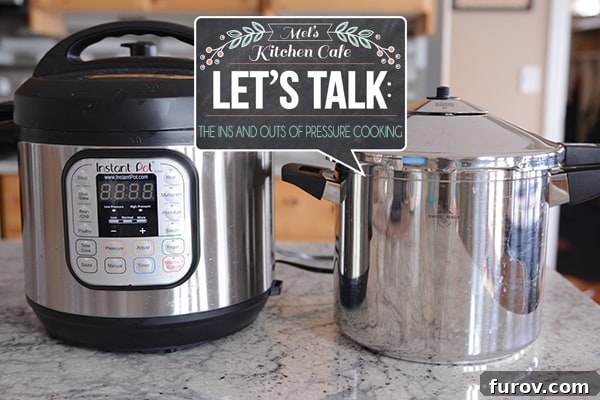
Unlock the secrets to faster, healthier, and more delicious meals with this comprehensive guide to pressure cooking. Dive into everything you need to know, whether you’re just starting out or looking to master your device!
A few years ago, I embarked on my pressure cooking journey, a decision born out of a desire to conquer a rather irrational fear of kitchen explosions and embrace a more efficient way of cooking. If my grandmother could fearlessly wield her vintage pressure cooker, surely I could navigate the modern versions, right? The allure of effortlessly whipping up dishes like creamy cheesecake or perfectly tender pot roasts in a fraction of the time was simply irresistible.

Over the past months, my inbox has been flooded with inquiries about pressure cooking. It seems this culinary technique is experiencing a remarkable resurgence, shedding its old-fashioned reputation and emerging as a mainstream, even trendy, method for home cooks. Many of you are eager to know: what’s my approach to pressure cooking, what equipment do I recommend, and most importantly, have I finally joined the Instant Pot craze?
My Journey into the World of Pressure Cooking
When I first decided to explore pressure cooking, my initial research phase was extensive, perhaps even obsessive. I poured over countless reviews, delved into blogs, and scoured online forums, all driven by the goal of finding the perfect pressure cooker. After acknowledging that modern pressure cookers are far safer than their predecessors – no more “grandma’s exploding tank” scenarios – I committed to finding a reliable model. My search led me to a traditional stovetop pressure cooker: the highly-rated Kuhn-Rikon pressure cooker.
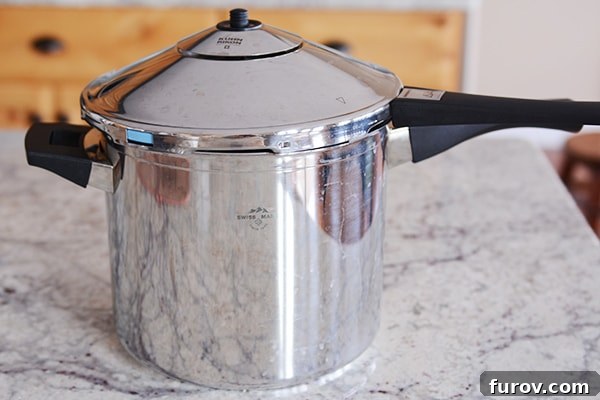
Why I Chose a Stovetop Pressure Cooker
The primary factor in my decision to opt for a stovetop model over an electric one was capacity. With a bustling household of five hungry children and two perpetually hungry adults, plus frequently cooking for extended family and friends, I needed an appliance capable of handling substantial quantities of food. Many electric models available at the time had capacity limitations that simply didn’t align with my family’s needs. It’s also crucial to remember that for safety reasons, pressure cooker recipes, especially for liquids like soups and stews, often recommend filling the pot only halfway, further emphasizing the need for a larger vessel.
I acknowledge that the Kuhn-Rikon isn’t the most budget-friendly option on the market. However, after extensive research and scrutinizing countless user reviews, I prioritized a foolproof stovetop pressure cooker renowned for its safety and durability. I sought a model that I could trust implicitly (or at least 98.9% implicitly!) not to fail and to withstand the test of time. The Kuhn-Rikon consistently received stellar reviews for its robust construction, advanced safety features, and generous size, making it the clear choice for my demanding kitchen. Having previously owned other Kuhn-Rikon products, I was already familiar with their unparalleled quality. While this was my personal preference, it’s worth noting that many other highly-rated stovetop pressure cookers are available today, all significantly safer and more advanced than those of past generations. A little research will help you find the perfect match for your needs.

The Unmistakable Benefits of Pressure Cooking
For those new to the concept of pressure cooking and perhaps wondering about its advantages, let me share why it has become such an indispensable tool in my kitchen:
- Remarkable Speed: Many foods cook significantly faster under pressure. This is a game-changer for busy weeknights, transforming tough cuts of meat into tender delights in record time.
- Energy Efficiency: Pressure cooking utilizes less energy compared to conventional methods. The sealed environment and high temperatures mean less heat escapes, leading to more efficient cooking.
- Enhanced Nutrition: The rapid cooking times and high heat help to better preserve vitamins and minerals in food, meaning your meals are not just faster, but also more nutritious.
- Superior Flavor: The intense pressure forces moisture and flavor deep into ingredients, resulting in incredibly rich and succulent dishes.
- A Lifesaver for Frozen Foods: One of my absolute favorite benefits (and a frequent lifesaver!) is the ability to cook frozen meats in a surprisingly short amount of time. For someone like me, who occasionally forgets to thaw dinner, this feature is nothing short of wonderful.
- Pure Kitchen Confidence: There’s an undeniable satisfaction that comes with effortlessly creating gourmet-quality meals in your pressure cooker. It makes you feel like a culinary rockstar!
In essence, a pressure cooker is an excellent investment for anyone who appreciates flavorful, versatile cuisine and relishes the challenge of creating it in a fraction of the usual time. Whether you’re a busy parent juggling multiple tasks or an adventurous cook eager to expand your culinary horizons, a pressure cooker is certainly worth exploring.
Mastering Your Stovetop Pressure Cooker: A Learning Curve
I’ll be honest, my initial experiences with the pressure cooker weren’t entirely smooth. The first few attempts left me a bit disappointed; it didn’t immediately live up to my high expectations. This was primarily due to my lingering apprehension about letting the cooker reach and maintain high pressure. My healthy fear complex meant I wasn’t allowing the food to cook properly, compromising the final result. I also learned that pressure cooking on an electric stove differs slightly from a gas range. I’ve since developed a technique: I bring the pressure cooker up to the desired pressure on a higher heat burner, then immediately transfer it to another burner that has been pre-set to a low temperature, just enough to maintain the pressure. This simple adjustment made all the difference.
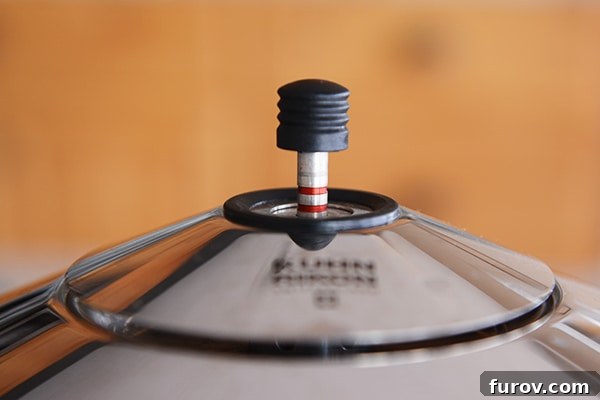
Now that I’m more comfortable and confident, my stovetop pressure cooker is in constant rotation. I use it at least weekly, and during particularly busy periods, it might even be every single night. Once you truly grasp its myriad benefits, it feels genuinely revolutionary in the kitchen. I vividly recall one evening when I was preparing taco soup and realized I was out of canned black beans. Thankfully, I had a stash of dry beans! In what felt like no time at all, my pressure cooker magically transformed those dry beans into perfectly tender morsels, saving dinner from disaster. It was truly impressive.

The Rise of Electric Pressure Cookers: Embracing the Instant Pot
While stovetop models are fantastic, they’re not the only solution, especially for beginners. Over recent months, I’ve been inundated with questions about the Instant Pot. It seems many of you have either purchased one, received it as a gift, or placed it high on your kitchen wishlist. These appliances have skyrocketed in popularity, and with thousands of 5-star reviews, their appeal is undeniable. Initially, I had no plans to acquire one, content with my beloved stovetop model and convinced my already-packed kitchen couldn’t accommodate another gadget. (My husband, Brian, would emphatically agree!).
However, fate intervened one sad December day when my trusty slow cooker, a wedding gift from 13 and a half years ago, finally gave up the ghost. After a brief period of mourning, I found myself on Amazon, contemplating my next move. Should I replace it with another slow cooker, or finally investigate what all the fuss was about with the Instant Pot, which conveniently doubles as a slow cooker and a pressure cooker? Seizing the opportunity, I reached out to the Instant Pot company, offering an honest review in exchange for a unit (and perhaps a future giveaway!). They graciously accepted, prompting a delighted, albeit clumsy, cartwheel. My Instant Pot arrived within the week.
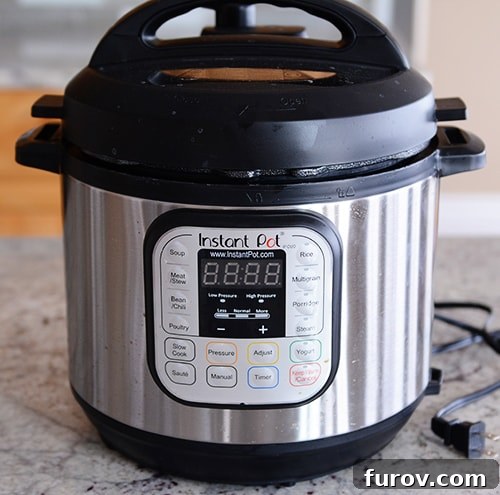
Exploring the Instant Pot: A Multifunctional Marvel
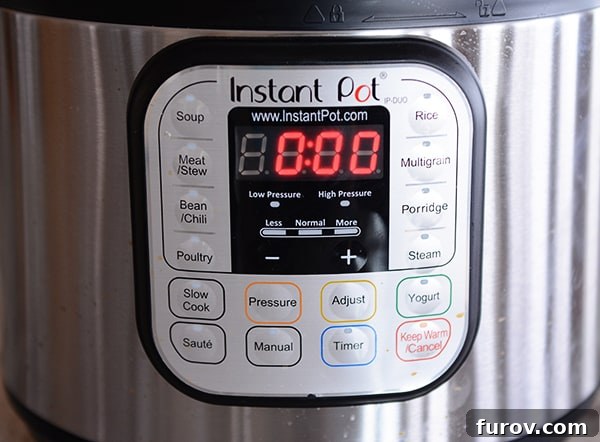
Let’s talk about the Instant Pot. This appliance is truly a workhorse, boasting an impressive array of functions – it can do seemingly everything! From making yogurt and slow cooking to steaming rice and, of course, pressure cooking, its versatility is remarkable. The capacity is decent, typically six quarts, which matched my old slow cooker but is slightly smaller than my stovetop pressure cooker. Given its numerous functions, there’s definitely a learning curve involved. I often find myself wondering which of the many buttons I’m supposed to push! Thankfully, a user manual is provided for those of us who appreciate detailed instructions.
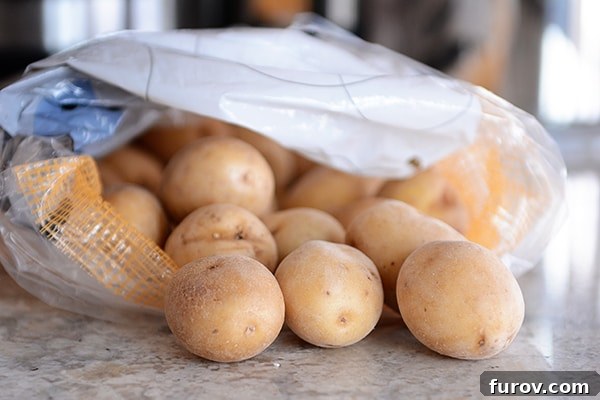
So far, I’ve successfully made creamy yogurt (though I currently prefer my stovetop method due to familiarity), delicious risotto, and fantastic 5-minute steel-cut oatmeal (though the “5 minutes” is a bit misleading when you factor in the time it takes to come to pressure and then cool down). I’ve also adapted several recipes from my website for the Instant Pot and, of course, made pressure cooker potatoes – quite possibly one of the best things to cook in any pressure cooker, electric or stovetop. (Pressure cooker green beans are another absolute must-try – oh my goodness, yum!).
The sheer number of options on the Instant Pot can be mind-boggling and a little overwhelming at first glance.

Stovetop vs. Electric: Which Pressure Cooker is Right for You?
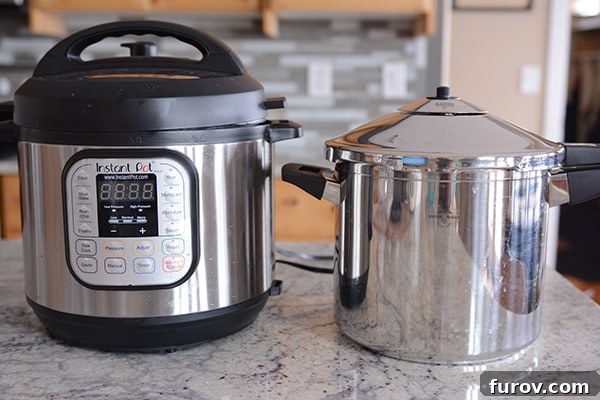
I know the burning question on your mind: which one would I buy again? What’s the ultimate choice? Has the Instant Pot swayed my loyalty from stovetop pressure cookers? Having now extensively used both a stovetop and an electric pressure cooker, I confess, it’s incredibly difficult to choose just one. My Kuhn-Rikon stovetop pressure cooker holds a very special place in my heart, a testament to its reliability and performance. However, I won’t lie, I’m genuinely loving the Instant Pot. Just last week, I had both running simultaneously on three different nights!
For instance, just last night, I created an amazing riff on a favorite baked pork chop and apple recipe in my Instant Pot. At the same time, my stovetop pressure cooker was busy churning out a batch of white cheddar garlic mashed potatoes. I still had time to empty the potatoes and quickly whip up some pressure cooker turkey bacon green beans before the pork was even finished. The entire meal was prepped, cooked, and on the table in under an hour, resulting in one of the most delicious dinners we’ve had in ages. This simultaneous cooking capability truly highlights the versatility of owning both – it’s #pressurecookingforlife!
Key Differences and Considerations
The main advantage of the Instant Pot (and other electric models) is its “set it and forget it” convenience. I can program the Instant Pot to cook potatoes and then walk away to help my kids with homework, run a quick errand, or even sneak a few chocolate chips in the pantry. In contrast, I always keep a close eye on my stovetop pressure cooker, ready to pull it off the heat if it threatens to go over pressure, as it doesn’t self-regulate like electric models. However, my stovetop unit offers greater capacity, which I appreciate. Plus, it doubles as a regular stockpot for large batches of soup and other dishes.
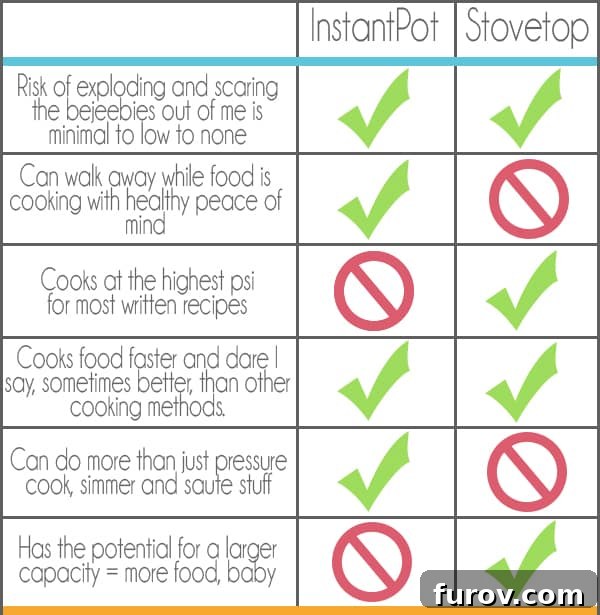
Pros and Cons: Stovetop vs. Electric Pressure Cookers
(This is not an exhaustive list, but rather my personal highlights and drawbacks for each type.)
Stovetop Pressure Cookers:
- Pros:
- Higher Pressure: Typically reach higher PSI (up to 15 psi), leading to faster cooking times for certain foods and more intense browning.
- Larger Capacity: Generally available in larger sizes, ideal for big families or meal prepping.
- More Durable: Often simpler in design with fewer electronic parts, potentially leading to a longer lifespan.
- Versatile: Can be used as a regular large stockpot when not pressure cooking.
- Less Counter Space: Doesn’t take up dedicated counter space, can be stored in a cabinet.
- Cons:
- Requires Monitoring: Needs more active supervision to regulate heat and maintain pressure.
- Manual Release: Pressure release mechanisms are manual (natural or quick release).
- Learning Curve: Can be intimidating for beginners due to manual controls.
- No Keep Warm Function: Food needs to be transferred or kept warm separately.
- No Multifunctionality: Primarily a pressure cooker and stockpot, lacks other cooking modes.
Electric Pressure Cookers (e.g., Instant Pot):
- Pros:
- “Set It and Forget It” Convenience: Automated pressure regulation and timers allow for hands-off cooking.
- Multifunctional: Combines several appliances in one (pressure cooker, slow cooker, rice cooker, yogurt maker, sauté, steamer, etc.).
- User-Friendly: Often easier for beginners due to preset programs and digital controls.
- Safety Features: Multiple built-in safety mechanisms for peace of mind.
- Keep Warm Function: Automatically switches to a keep-warm mode after cooking.
- Cons:
- Lower Pressure: Typically max out at 11-12 PSI, meaning slightly longer cooking times than stovetop models for some recipes.
- Smaller Capacity: Most common models are 6 or 8 quarts, which can be limiting for very large batches.
- Counter Space: Requires dedicated counter space for operation and storage.
- More Components: More electronic parts mean potential for more points of failure, though modern units are quite reliable.
- Learning Curve for Functions: While easy to use for basic pressure cooking, mastering all its functions can take time.
As you can see, both types of pressure cookers offer distinct advantages and disadvantages. Your ideal choice will ultimately depend on your cooking habits, kitchen space, family size, and comfort level with manual versus automated controls. If you’re considering diving into pressure cooking, I highly recommend researching both types thoroughly to determine which best fits your lifestyle.
A quick note on pressure readings: The Instant Pot, even at high pressure (maxing out around 11.6 psi), doesn’t cook at quite as high a pressure as my stovetop model (which can reach up to 15 psi). This means if you’re adapting a recipe that calls for “high pressure,” you might need to add a bit of extra cooking time when using an Instant Pot or most other electric pressure cookers, which generally max out around 11 or 12 psi.
Regardless of the model you choose, pressure cooking is an undeniably fabulous way to prepare food. I absolutely adore it; in fact, I’m quite obsessed! It took me a while to conquer my initial apprehension, so don’t let fear hold you back from discovering this incredible cooking method.
Depending on your interest, I plan to share more posts (and perhaps videos!) on pressure cooking in the future. In the meantime, remember that the internet is a vast goldmine of pressure cooking information and countless recipes to explore.
Here are a few of my favorite online resources for pressure cooking:
- Hip Pressure Cooking: An invaluable resource offering extensive reviews, tips, videos, and a vibrant community forum. Their detailed posts on the Kuhn-Rikon and the Instant Pot were particularly informative and influenced my own choices.
- Pressure Cooking Today: Barbara, a seasoned food blogger, shares fantastic pressure cooking recipes and practical tips, especially useful for those navigating electric models.
- Dad Cooks Dinner: A great source for a wide variety of pressure cooker recipes.
- Miss Vickie’s: While a bit old-school in design, this site offers a wealth of excellent information and time-tested recipes.
- Pressure Cooker Diaries: Another fantastic blog to find inspiration and guidance for your pressure cooking adventures.
How to Convert a Normal Recipe to Pressure Cooking
My website (and the broader web) hosts hundreds of recipes that, while not explicitly labeled “pressure cooker recipes,” are incredibly pressure cooker friendly. The easiest way to adapt a conventional recipe for pressure cooking is often to search for a similar recipe already optimized for a pressure cooker (for example, “pressure cooker beef stew”). By glancing at its cooking times and liquid requirements, you can effectively adjust your desired recipe. For instance, my fabulous beef stew, originally a slow cooker recipe, transforms into a remarkably delicious and quick meal in the pressure cooker.
Furthermore, handy pressure cooking charts are invaluable tools. I keep this one bookmarked on my iPad, as it simplifies the process of calculating cooking times for various ingredients. The small manual that accompanied my Kuhn-Rikon has also proven to be an indispensable reference.
My Favorite Pressure Cooker Recipes from the Site
I’ve had phenomenal success adapting the following recipes from my site for pressure cooking, in addition to countless others from across the web, including that amazing cheesecake!
Phew! That was quite a deep dive into the world of pressure cooking. As you can tell, I can be a little long-winded when discussing something I’m passionate about!
Now, I’d love to hear from you.
Where are you on the pressure cooker spectrum? Are you a seasoned pro, a curious newcomer, or still on the fence? Share your thoughts below – yay or nay?