
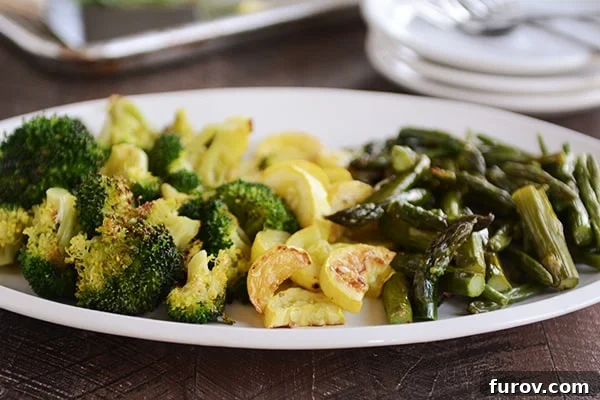
Transform your meals with these five simple, yet powerful tips for achieving perfectly roasted vegetables every single time! The possibilities are endless when it comes to oven-roasted deliciousness!
For many of us, the daily challenge of getting a wholesome dinner on the table is daunting enough. Often, the main course takes center stage, leaving the side dishes as an afterthought. We’ve all been there, staring at a plate wondering what simple, yet delicious accompaniment could elevate the meal without adding extra stress. If you’re anything like me, sometimes a simple plate of pasta has to suffice because the energy for planning a complementary side just isn’t there.
But what if I told you there’s a culinary secret weapon that is not only incredibly easy and fast but also consistently delivers mouth-watering results? Enter roasted vegetables – a true game-changer for any meal. This isn’t just a side dish; it’s a versatile, flavor-packed solution that can elevate even the simplest weeknight dinner into a satisfying feast. While I often mention them in my recipe notes as the perfect accompaniment, I’ve never dedicated an entire guide to the art (and science!) of crafting them to perfection, until now.
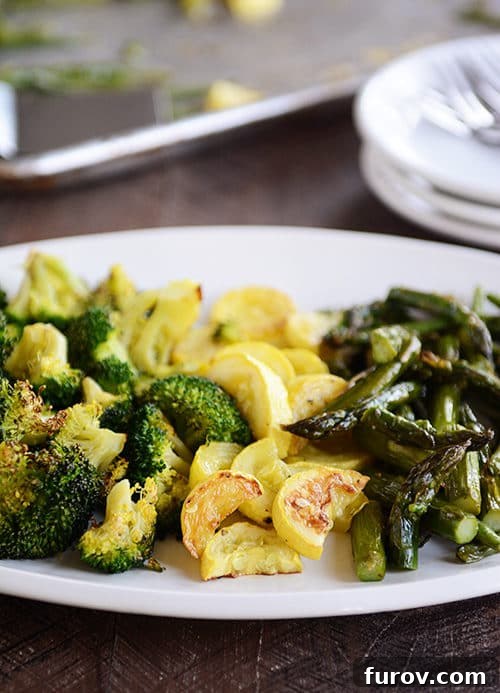
Roasted vegetables are truly the ultimate simple, fast, and satisfying side dish solution. What’s more, they are incredibly forgiving and the leftovers refrigerate beautifully, making them ideal for meal prepping or quick additions to future meals. (Pro tip: always make extra!). The versatility of roasted vegetables knows no bounds. In my kitchen, the most frequently roasted vegetables include broccoli, cauliflower, asparagus, green beans, and butternut squash, but the sky’s the limit!
The appeal isn’t just for adults. Just last week, my seven-year-old proudly declared roasted broccoli as his favorite food, even requesting it for his birthday dinner! While I eventually convinced him to include homemade pizza, I couldn’t fault his initial, enthusiastic choice. There’s an undeniable magic to roasted vegetables. With just a touch of olive oil, salt, and pepper, they develop a distinct, caramelized flavor profile that is utterly special and delicious. It’s no exaggeration to say that, especially during the cozy fall and winter months, I find myself roasting vegetables several times a week, filling my home with their comforting aroma.
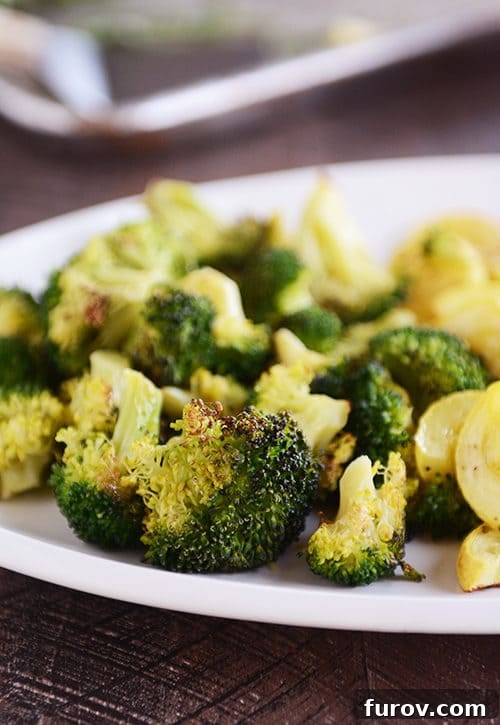
The Essential Guide: 5 Golden Rules for Flawless Roasted Veggies
While the concept of roasting vegetables might seem straightforward, a few key techniques can transform them from good to absolutely extraordinary. These aren’t complicated culinary maneuvers, but rather simple adjustments that make a monumental difference in texture, flavor, and overall enjoyment. Let’s dive into the five golden rules that will ensure your roasted vegetables are always perfectly caramelized, tender-crisp, and bursting with flavor.
1. Crank Up the Heat: The 425°F Sweet Spot
This is perhaps the most crucial tip for achieving that coveted roasted perfection. Low oven temperatures are the enemy of truly great roasted vegetables; they tend to steam rather than roast, leaving you with limp, soggy results. I consistently roast our everyday vegetables at a robust 425 degrees F (around 220 degrees Celsius). This high heat is the sweet spot for my oven – it promotes the Maillard reaction, creating those desirable caramelly, golden-brown spots and a slightly crisp exterior without burning, all while cooking the vegetables quickly and efficiently. If your oven tends to run hot or cold, you might adjust slightly, but aim for a high temperature to ensure proper browning and tender-crisp texture.
2. Embrace Coarse Seasoning: Simple Yet Profound Flavor
While fancy spice blends certainly have their place, for everyday roasting, I’ve found that less is often more. My personal preference leans towards the simplicity of coarsely ground black pepper and coarse kosher salt. The magic lies in the coarseness: coarse salt and pepper distribute more evenly and cling better to the vegetables, slowly releasing their flavor as they roast. This results in a more pronounced and vibrant taste compared to finely ground varieties, which can sometimes just fall off or create an overly salty crust. Of course, don’t be afraid to experiment! Occasionally, a sprinkle of garlic powder, onion powder, or a dash of paprika can add a wonderful dimension. And for a truly indulgent treat, a little freshly grated Parmesan cheese sprinkled on top just as the veggies come out of the oven is pure bliss. The key is to start simple and let the natural flavors of the vegetables shine.
3. Give Them Space: The Single Layer Secret
This rule is non-negotiable for success. Regardless of the type or size of your vegetables, ensure they are spread out in a single layer on your baking sheet. They can be close together, but never, ever heaped on top of each other. Crowding the pan is a common mistake that leads to steaming rather than roasting. When vegetables are piled up, the moisture they release has nowhere to go, effectively steaming them and preventing them from browning and caramelizing properly. If you have a large batch of vegetables, don’t hesitate to use two or even three baking sheets to give them ample space. This simple act guarantees that each piece gets direct contact with the hot pan and circulating air, resulting in those irresistible crispy edges and tender centers we crave.
4. Practice Patience: The Art of the Single Flip
Resist the temptation to constantly stir or flip your vegetables! Those vegetables need uninterrupted contact with the hot baking sheet to develop their delicious browning and caramelization. In most cases, I roast for about 10-12 minutes on one side. Then, I give them one good stir or flip, ensuring new surfaces come into contact with the pan, and cook for another 8-10 minutes. The exact timing will depend on the specific vegetable and your desired level of tenderness. This “stir once” method is a true secret to achieving those beautifully browned, deeply flavorful bits. It’s one of the few times I’ll encourage you to be an underachiever in the kitchen – step back, let the oven do its work, and enjoy not having to constantly babysit your side dish!
5. Cut with Care: Uniformity for Even Perfection
I admit, I’m not always perfect at this, especially when rushing to get dinner ready. But when possible, taking a moment to cut your vegetables into roughly uniform pieces pays huge dividends. Why? Because vegetables of similar size will cook evenly. If you have a mix of large chunks and tiny pieces, the small ones will burn before the large ones are cooked through, leading to an inconsistent texture and potentially ruined batch. Aim for bite-sized pieces that are generally the same thickness and length. For example, broccoli and cauliflower florets should be similar in size, carrots and potatoes diced evenly, and asparagus trimmed to uniform lengths. This attention to detail ensures every piece is perfectly tender-crisp.
That’s it! With these five easy tips, you’re well on your way to mastering the art of perfect roasted vegetables. Now, it’s time to start experimenting! The guidelines below offer a solid starting point, but don’t be afraid to tailor this method to your liking. Explore different combinations of vegetables, adjust cooking times to achieve your preferred tenderness, and play with various seasonings. Go crazy – the kitchen is your playground!
Perfect Roasted Vegetables
Pin
Ingredients
- 4-6 cups fresh vegetables, like broccoli, cauliflower, asparagus, butternut squash, bell peppers, zucchini, carrots, or potatoes. Ensure they are cut into similar, bite-sized pieces for even cooking.
- 1-2 tablespoons olive oil, or avocado oil, enough to lightly coat the vegetables.
- Several pinches of coarse kosher salt and freshly coarsely ground black pepper, start with a moderate amount, you can always add more after cooking.
Instructions
-
Prepare the Oven: Preheat your oven to a high heat of 425 degrees F (220 degrees C). A hot oven is key for crisp, caramelized results.
-
Prep the Vegetables: On a large, rimmed baking sheet (ideally 11×17-inches, or use two if needed to avoid crowding), drizzle your chosen vegetables with olive oil. Toss them thoroughly to ensure an even, light coating. Then, sprinkle generously with coarse kosher salt and coarsely ground black pepper.
-
First Roast: Arrange the seasoned vegetables in a single, even layer on the baking sheet. Place in the preheated oven and cook for 10-12 minutes. Allow them to cook undisturbed during this phase to develop deep browning.
-
Second Roast: After 10-12 minutes, carefully remove the baking sheet from the oven. Stir or flip the vegetables once to expose different sides to the hot pan. Return to the oven and cook for another 8-10 minutes, or until they reach your desired tenderness and level of caramelization. The exact time will vary based on the vegetable type and how large or small it is cut. Broccoli and cauliflower typically follow this timing closely. Asparagus may need slightly less time, while denser vegetables like butternut squash or potatoes might require a bit longer. Softer squashes like zucchini and yellow squash roast quite quickly.
-
Serve: Taste and adjust seasoning with additional salt and pepper if needed. For extra flavor, you might squeeze a little fresh lemon juice or sprinkle with fresh herbs. Serve immediately and enjoy!
Pro Tips for Success
Vegetable Spacing: Always ensure your vegetables are in a single, even layer. While a few tiny overlaps are acceptable, avoid double layering or piling them up. Crowded pans lead to steaming, which prevents proper roasting and caramelization, resulting in soggy vegetables. Use multiple pans if necessary.
Adjusting Cooking Time: The precise cooking time is flexible and depends on several factors: the specific type of vegetable, the size to which it’s cut, and your personal preference for tenderness. For instance, broccoli and cauliflower generally adhere to the timings provided here for a crisp-tender finish. Asparagus roasts relatively quickly, often needing less than 20 minutes total. Denser vegetables such as butternut squash, potatoes, or sweet potatoes will require a longer roasting period, sometimes up to 30-40 minutes or more, with an extra stir. Conversely, softer vegetables like zucchini, yellow squash, and bell peppers cook much faster, often in just 15-20 minutes total. Always keep an eye on your vegetables and test for desired doneness.
Flavor Variations: Experiment with different seasonings beyond salt and pepper. A dash of garlic powder, dried oregano, thyme, rosemary, or even a pinch of red pepper flakes can transform the flavor profile. For an earthy touch, try a sprinkle of cumin or smoked paprika. For a hint of sweetness, a drizzle of balsamic glaze or a touch of maple syrup can be added during the last few minutes of roasting.
Leftovers: Cooled roasted vegetables make excellent additions to salads, grain bowls, wraps, or as a quick side for lunch the next day. Reheat gently in the oven or a skillet to maintain some crispness.