
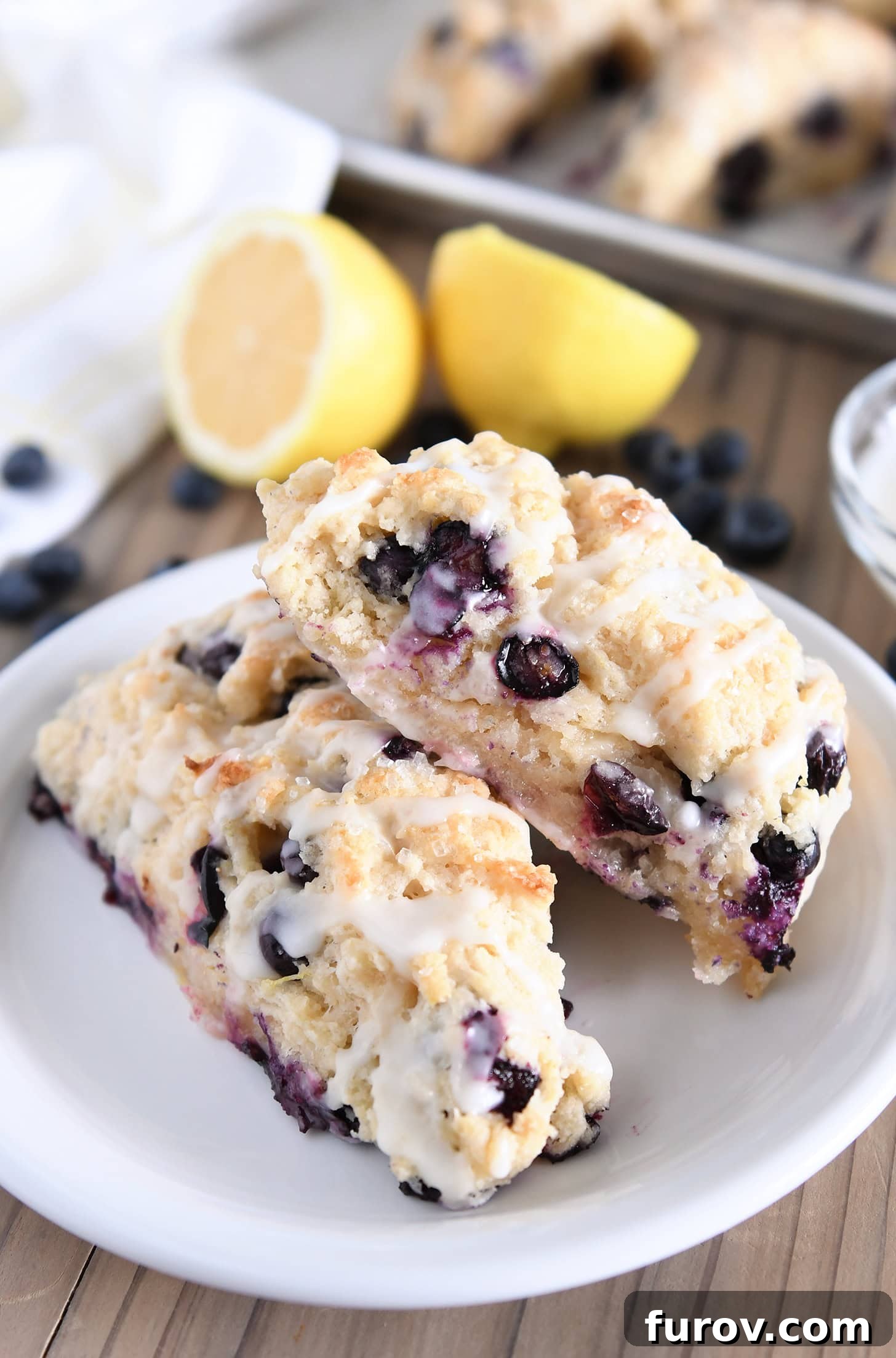
Imagine a bite of pure bliss: a perfectly flaky, tender scone bursting with juicy blueberries and brightened by a luscious, tart-sweet lemon glaze. These homemade lemon blueberry scones are not just a treat; they’re an experience, promising to elevate any breakfast, brunch, or afternoon tea. Prepare to fall in love with a scone recipe that’s as delightful to make as it is to devour.
While lemon and blueberries are a match made in heaven, don’t hesitate to explore other fruit variations! These delightful scones would also be absolutely fabulous with fresh raspberries, or for those lucky enough to find them, plump huckleberries. The adaptable nature of this basic scone dough makes it a versatile foundation for your favorite fruit combinations.
Crafting the Perfect Scone Dough: Flaky, Tender, and Flavorful
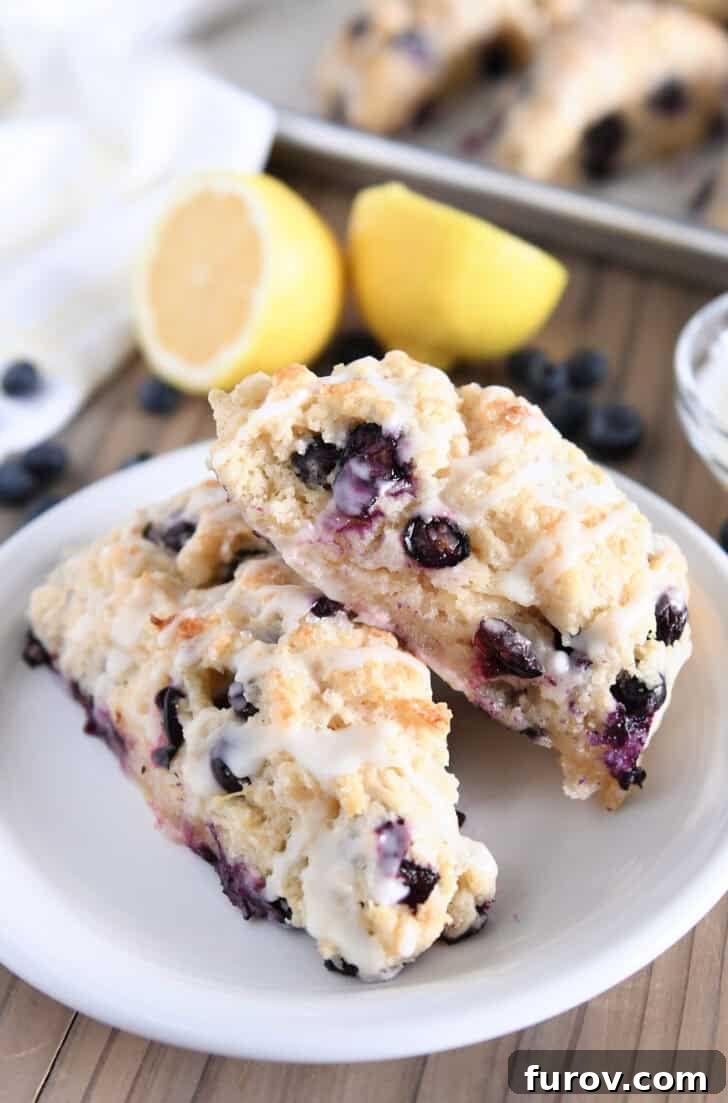
The secret to truly outstanding scones lies in the dough, and this recipe is built upon what many consider to be the ultimate scone foundation. It consistently delivers scones that are wonderfully flaky, incredibly tender, and robust enough to handle generous additions of fruit and flavorings without losing their delicate texture. If you’ve struggled with dry or tough scones in the past, prepare for a revelation!
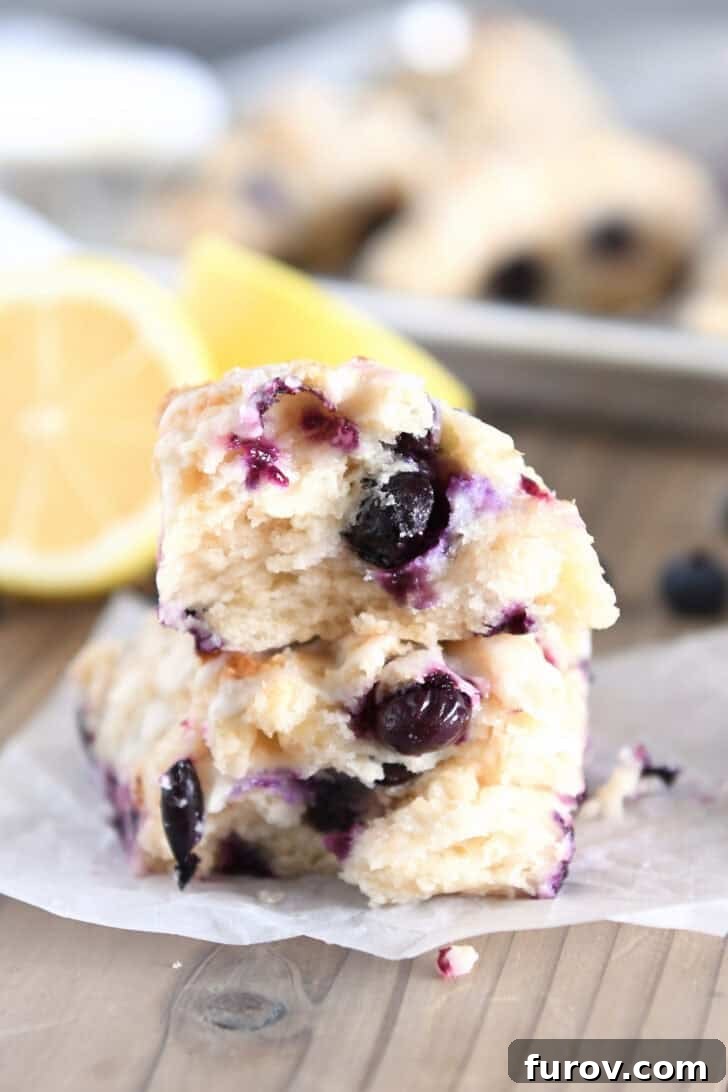
Much like crafting perfect biscuits or a stellar pie crust, the key to achieving those irresistible flaky layers in scones is the method of incorporating cold butter into your dry ingredients. When tiny pieces of butter are worked into the flour mixture and then baked at a high temperature, they melt, releasing steam. This steam creates small pockets of air throughout the dough, which are responsible for the light, airy, and distinctively flaky texture that defines a truly exceptional scone. This culinary magic transforms simple ingredients into a delightful baked good.
Achieving this crucial step of cutting butter into the dry ingredients can be done in several effective ways, each with its own advantages:
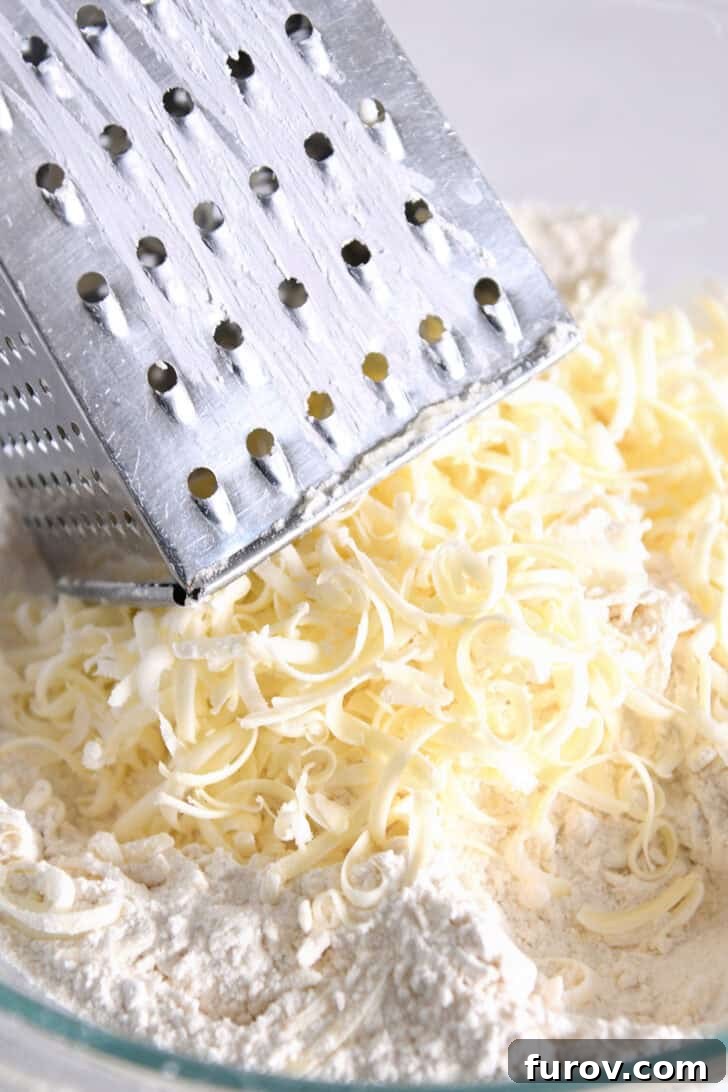
- Grating the Cold Butter: Utilize a standard box grater to shred thoroughly chilled butter directly into your dry mix. This method creates small, even pieces quickly and efficiently.
- Food Processor Method: For a hands-off approach, pulse the cold butter alongside the dry ingredients in a food processor. Continue pulsing until the butter resembles small, pea-sized crumbs.
- Pastry Blender Technique: A traditional pastry blender can be used to cut chunks of cold butter into the flour until the mixture achieves a coarse, crumbly texture with visible butter bits.
My preferred method for incorporating butter is by grating it with a box grater. It’s surprisingly simple, incredibly fast, and minimizes cleanup. Once the butter is grated, a quick toss with the dry ingredients is all it takes to evenly distribute those vital butter shreds. This method ensures consistent results and saves you time in the kitchen, allowing you to move quickly to the next step of scone perfection.
Mastering Fresh Fruit Integration for Bursting Flavor
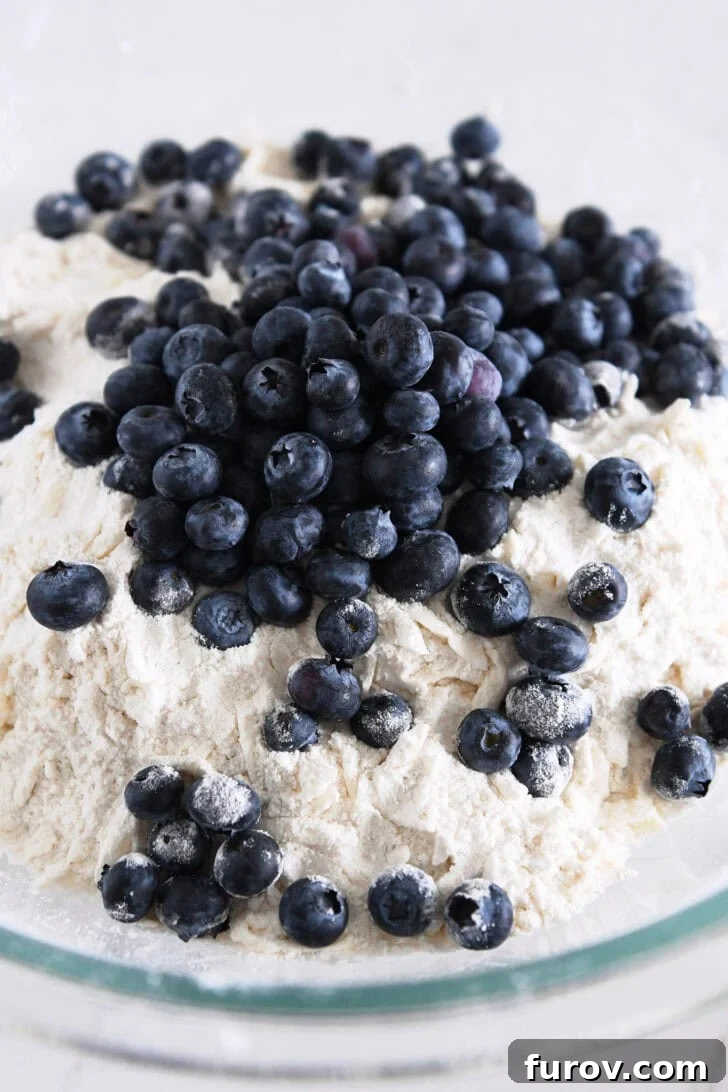
Incorporating fresh fruit into this scone dough is a straightforward process, but a few considerations will ensure your scones are studded with beautiful, intact blueberries rather than a purple-stained dough. The vibrant blueberries are gently tossed with the dry ingredients first. This step lightly coats the berries in flour, which helps prevent them from sinking to the bottom of the dough during mixing and baking, and also minimizes potential moisture issues.
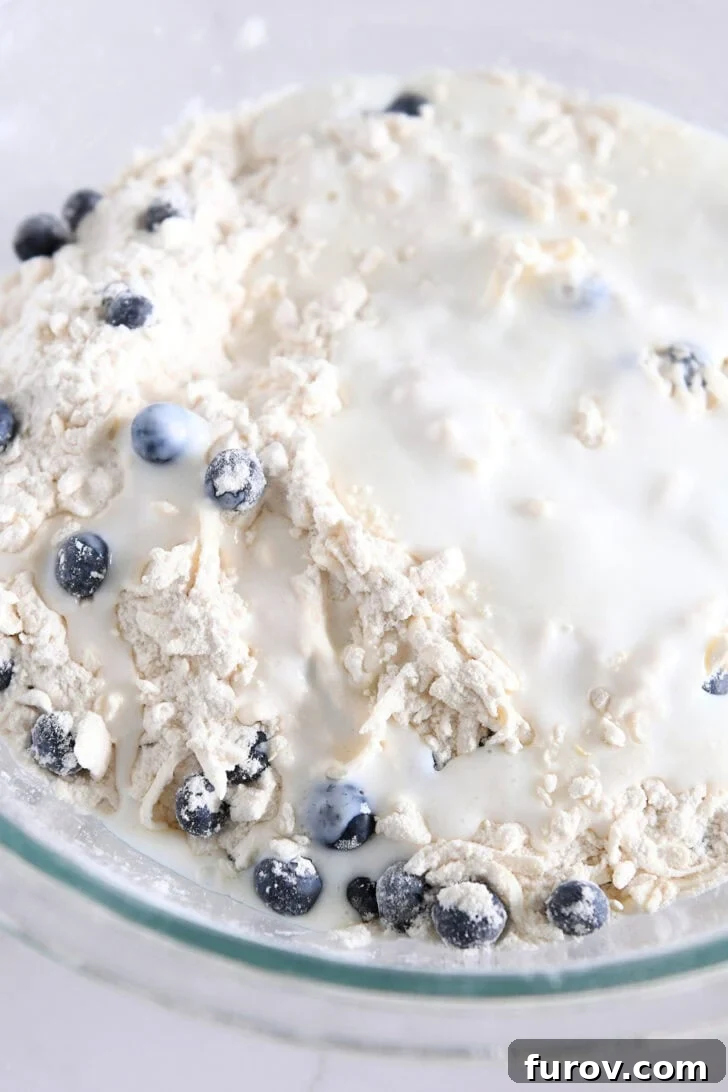
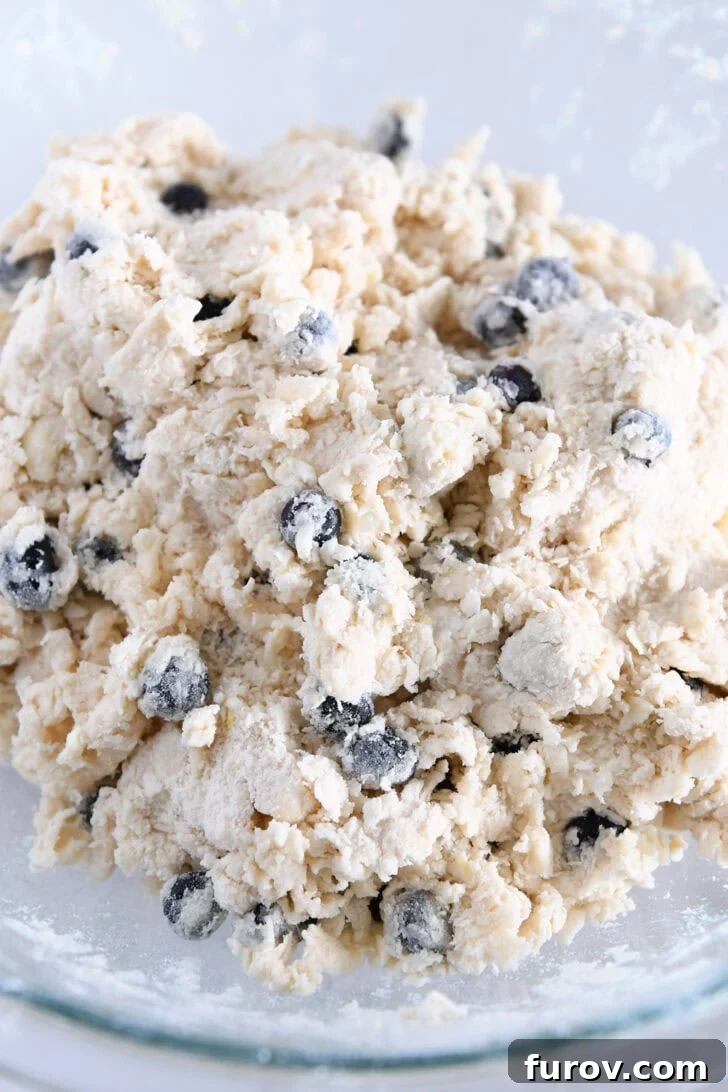
Once the buttermilk and lemon juice are added, the real key to success is to mix the dough gently. Use a silicone spatula or your hands to carefully fold the ingredients together. The goal is to bring the dough just to the point of coherence without overworking it. While it’s almost inevitable that a few blueberries will burst during this process, most should remain whole, providing those delightful bursts of flavor and texture in every bite.
Don’t expect the dough to be perfectly smooth or homogenous. Scone dough, especially with fresh fruit, embraces a more rustic, shaggy appearance. Seeing uneven corners or blueberries peeking out here and there is not just acceptable, it’s a sign that you’re doing it right! This less-than-perfect look contributes to the homemade charm and ensures a light texture.
Remember this crucial tip for making the best scones of your life: do not overwork the dough! Over-mixing develops the gluten in the flour too much, leading to scones that are dense, dry, and tough – the exact opposite of what we’re aiming for. Mix only until the ingredients are just combined and no dry streaks of flour remain.
Shaping Your Scones: Classic Triangles and Creative Alternatives
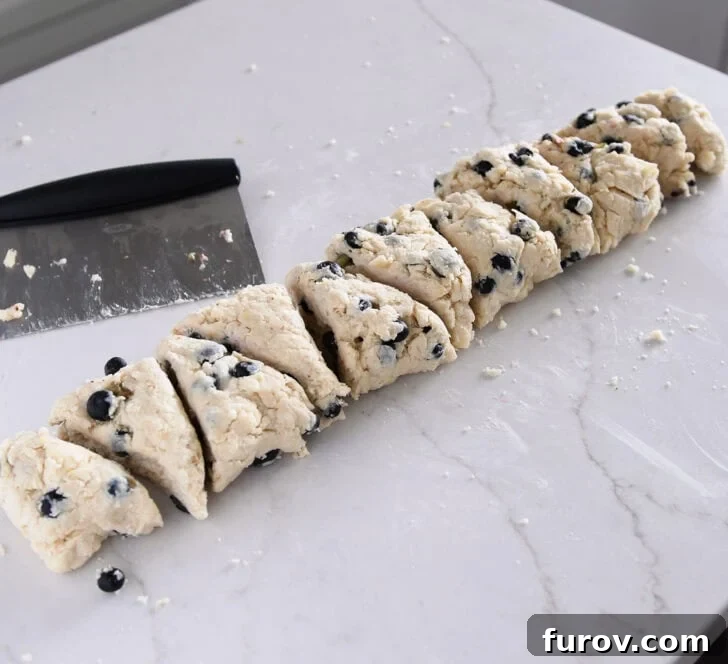
Once your dough is gently mixed, it’s time to transform it into individual scones. Lightly dust your countertop with a tablespoon or two of flour, then turn the dough out. Using your hands, gently press and pat the dough into a rectangular shape, approximately 15×3 inches. For a classic, elegant presentation, use a bench scraper or a sharp knife to cut the dough into triangular wedges. This method is efficient and creates uniform pieces that bake beautifully.
Exploring Alternate Scone Shaping Methods:
- Larger Rectangular Scones: For a more substantial scone, press the dough into a shorter and wider rectangle, then cut into larger individual pieces. Adjust baking time as needed for the increased size.
- Traditional Pie-Shaped Wedges: You can also pat the dough into a round disc, about 1-inch thick, and then cut it into pie-shaped wedges. This is a very common and appealing scone shape.
- Square or Round Scones: Press the dough into a square and cut into square scones. Alternatively, use a round biscuit cutter for perfectly circular scones. Keep in mind that the circle-cutting method will result in dough scraps that can be gently re-rolled and cut (though overworking the scraps can make them tougher) or simply baked as rustic dough balls.
- Scone Pan Convenience: For ultimate ease and uniformly shaped scones, press the dough into a scone pan. This specialized pan features wedge-shaped molds, ensuring consistently sized and shaped scones with minimal effort.
Enhancing Flavor and Finish: Before and After Baking Rituals
The journey to the perfect scone doesn’t end with shaping. A couple of simple steps before and after baking will significantly elevate their taste and appearance, making them truly irresistible.
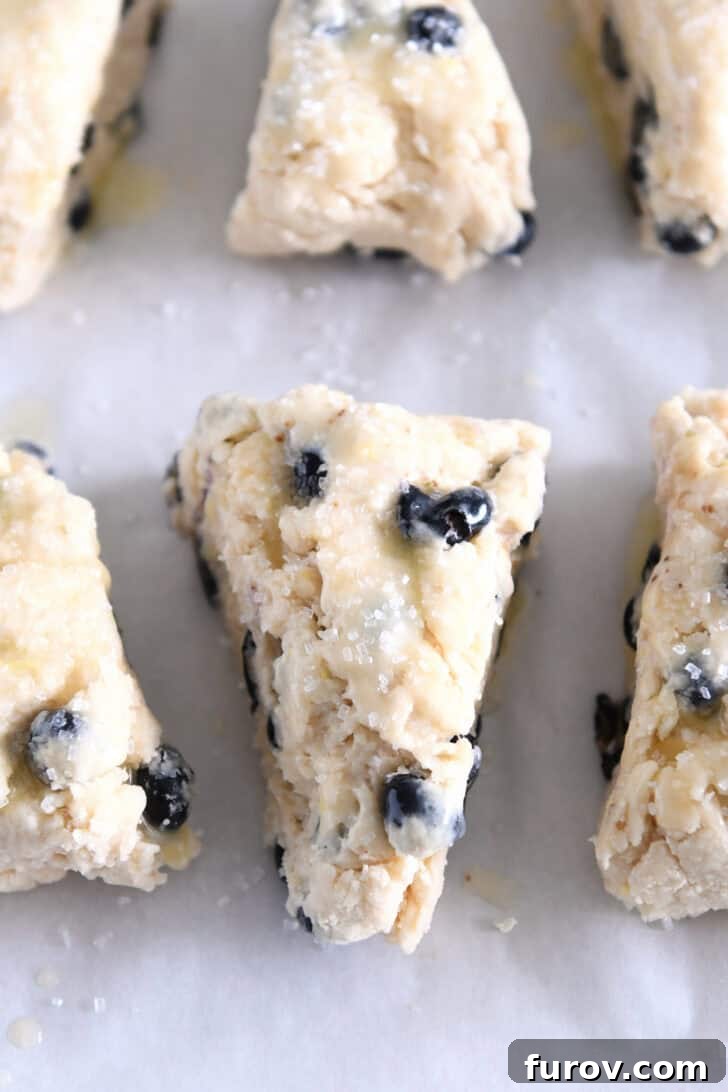
Before baking, arrange your shaped scones on a parchment-lined baking sheet, spaced about half an inch apart. Take a moment to brush the tops of each scone generously with melted butter. This not only adds richness but also helps the coarse sugar adhere. Finish by sprinkling a generous amount of coarse sugar or turbinado sugar over the buttered tops. As the scones bake, this sugar creates a delightful, glistening, crunchy crust that perfectly complements the soft interior. It’s a small step that yields big flavor and textural contrast.
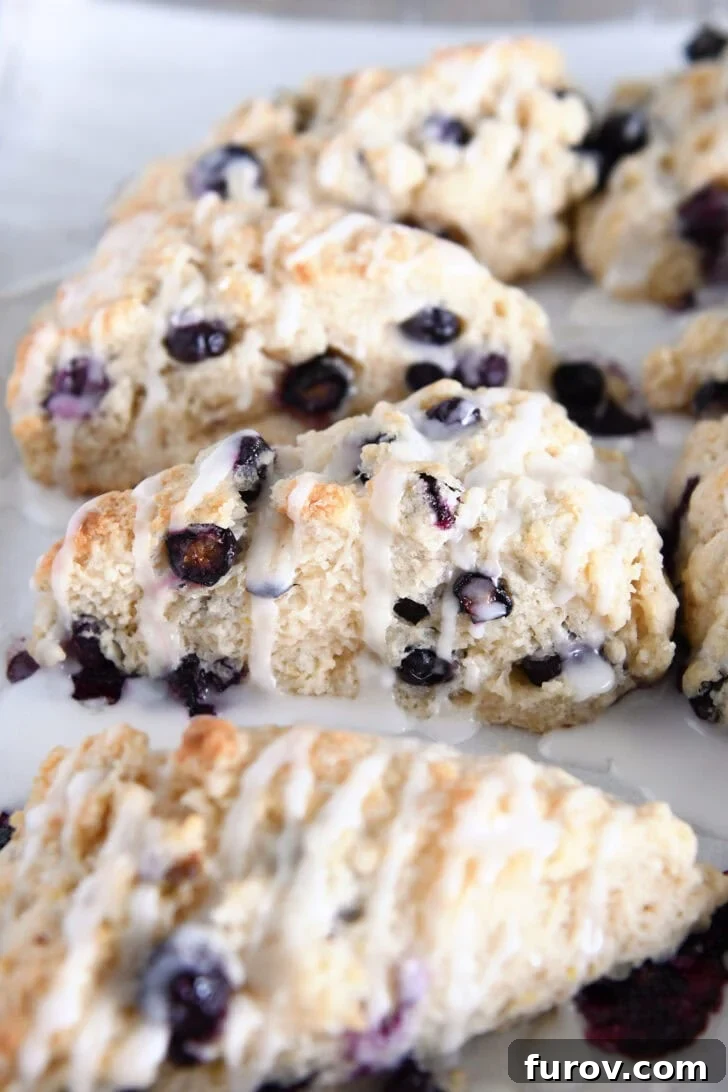
After baking, allow the scones to cool slightly on the pan or transfer them to a wire rack to cool completely. Cooling is essential before glazing, as a hot scone would simply melt the glaze into a sugary puddle. While they cool, whip up the incredibly simple yet impactful glaze. This tart-sweet confection is made with just two ingredients: powdered sugar and fresh lemon juice. The fresh lemon juice cuts through the sweetness, providing a bright, tangy counterpoint that enhances the blueberry and lemon flavors within the scone. Once cooled, generously drizzle the glaze over the tops of your scones, letting it cascade down the sides.
Don’t be intimidated by the 400°F (200°C) baking temperature. This high heat is intentional and crucial for scone success. It helps the scones rise quickly and hold their shape, setting their exterior and contributing to that desirable flaky crust, all while ensuring the interior bakes to perfect, fluffy doneness without becoming dry. Trust the temperature; it’s your ally in achieving scone perfection.
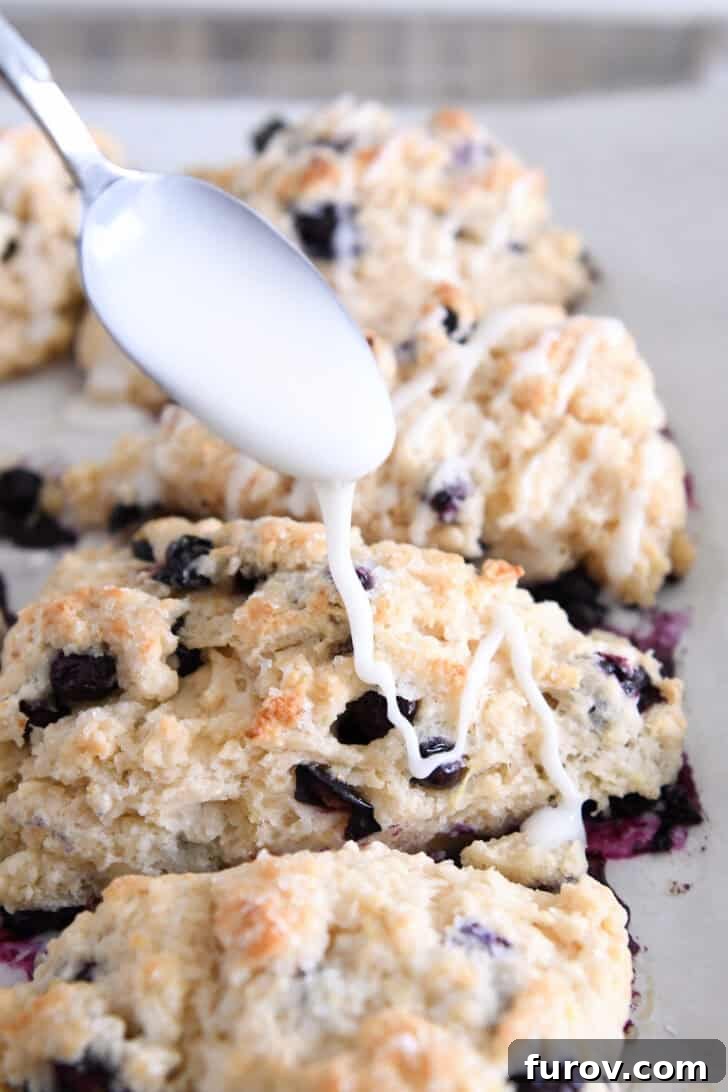
These lemon blueberry scones are more than just a recipe; they are a truly incredible culinary achievement. I say this with full conviction, having dedicated a good portion of my life to the enjoyment and appreciation of scones in all their glorious varieties. These particular ones stand out as some of the finest I have ever tasted, embodying everything a scone should be: flaky, tender, rich, and bursting with fresh flavor.
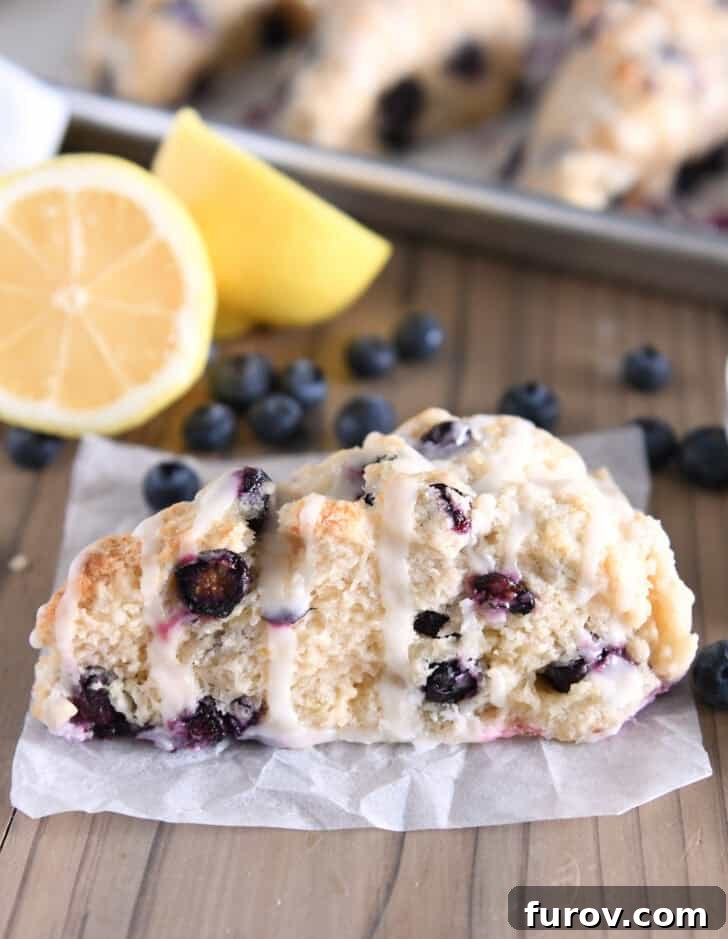
The pairing of lemon and blueberries is an age-old classic, a testament to flavors that are simply meant to be together. In these scones, the bright, zesty notes of fresh lemon infuse both the tender dough and the tangy glaze, creating a refreshing base. The blueberries, those little jewels of sweetness, add a delightful pop of juicy flavor and a beautiful visual appeal, perfectly complementing the lemon without overpowering it.
Whether you’re seeking an elegant addition to your breakfast spread, a sophisticated snack to accompany your afternoon coffee, or a light and satisfying dessert, these scones fit the bill perfectly. They are wonderfully versatile and equally delicious served at room temperature or gently warmed, allowing the butter and fruit flavors to truly shine. Each bite offers a harmonious blend of sweet, tart, and buttery goodness, making them an instant favorite.
Creative Adaptations for Your Lemon Blueberry Scones
This lemon blueberry scone recipe serves as an excellent base for various delicious adaptations. Feel free to get creative and tailor them to your taste and what you have on hand:
- Plain Lemon Scones: If you’re a purist or simply don’t have blueberries, this recipe works wonderfully as a standalone lemon scone. Simply omit the blueberries. For the liquid, start with 3/4 cup buttermilk and only add the extra two tablespoons if the dough feels excessively dry.
- Switch Up the Fresh Fruit: The versatility of this dough allows for an easy swap of the blueberries with other fresh berries. Consider using juicy raspberries, plump blackberries, or even delicate huckleberries for different flavor profiles and textures.
- Utilizing Frozen Fruit: While fresh is often best, you can use frozen fruit with some adjustments. If your frozen fruit is larger (like standard blueberries), it’s best to thaw it and pat it thoroughly dry to avoid excess moisture. For smaller frozen fruits (like wild blueberries or huckleberries), you might be able to add them frozen. Be aware that frozen fruit, whether thawed or not, is more prone to bleeding color into the dough than fresh fruit, but the taste will still be fantastic.
- Citrus Variations: Don’t limit yourself to lemon! Experiment by swapping out the lemon juice and zest for fresh lime or orange. If you do this, you can still keep the blueberries for a vibrant citrus-berry combination, or get truly creative with other add-ins like lime and coconut, or orange and cranberry.
Honestly, these scones are easily one of the most delicious things I’ve baked all year. Their perfect balance of flavor and texture is truly something special. I am so excited for you to try them and discover your new favorite scone recipe!
A Look Back: Beloved Recipes from Years Past
One Year Ago: Amazing Olive Oil Cake
Two Years Ago: Amazing Peanut Butter Oatmeal Chocolate Chip Cookies {Dairy-Free + Egg-Free}
Three Years Ago: Chocolate Chip Blended Oatmeal Cookies
Four Years Ago: Butterscotch Rice Krispie Treats
Five Years Ago: The Best Homemade Glazed Donuts
Six Years Ago: Amazing Instant Pot Creamy “Baked” Ziti
Seven Years Ago: Creamy Coconut Milk Steel Cut Oatmeal {Instant Pot or Slow Cooker!}
Eight Years Ago: French Bread Rolls {Step-by-Step}
Nine Years Ago: Amazing Cinnamon Chip Scones {Best Basic Scone Recipe}
Ten Years Ago: Amazing Key Lime Cheesecake
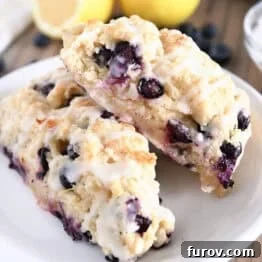
Amazing Lemon Blueberry Scones
Yield: 10 to 12 scones
Prep Time: 30 mins
Cook Time: 15 mins
Total Time: 45 mins
Pin Recipe
Ingredients
Scones:
- 3 ½ cups (497 g) all-purpose flour
- ⅓ cup (71 g) granulated sugar
- 1 tablespoon fresh lemon zest (from 1 to 2 lemons)
- 2 teaspoons baking powder
- ½ teaspoon baking soda
- ½ teaspoon salt
- ¾ cup (170 g) cold salted butter
- ¾ cup + 2 tablespoons buttermilk
- ¼ cup fresh lemon juice (from 1 to 2 lemons)
- 1 to 1 ¼ cups fresh blueberries (see notes for frozen berries and other fruit options)
Topping:
- 2 tablespoons melted butter
- Coarse or turbinado sugar, for sprinkling
Glaze:
- 1 ¼ cups (143 g) powdered sugar
- 2 tablespoons fresh lemon juice
Instructions
- Preheat the oven to 400°F (200°C). Line a half sheet pan with parchment paper and set aside.
- In a large bowl, combine the flour, granulated sugar, lemon zest, baking powder, baking soda, and salt; mix well.
- Using the large holes of a box grater, grate the cold butter into the dry ingredients and toss until the butter shreds are evenly coated with the flour mixture. (See notes for food processor or pastry blender mixing methods.)
- Add the blueberries and gently toss to combine.
- Add the buttermilk and lemon juice. With a silicone spatula, stir and fold until the mixture just starts to come together. Mix gently to avoid mashing the blueberries (it’s okay if a few burst, but most should stay intact).
- Do not overmix the scone dough; it’s perfectly fine if there are a few dry spots. Pieces of dough should come together when pressed between your fingers. Only add additional buttermilk a tablespoon at a time if the dough is extremely dry and crumbly.
- Turn the dough out onto a counter dusted with 1 to 2 tablespoons of flour. Use your hands to bring the dough together into a cohesive mass, working carefully around the blueberries. Lightly knead/fold the dough once or twice.
- Pat and press the dough into a long rectangle, approximately 15×3 inches.
- Use a bench scraper or knife to cut the dough into 10 to 12 triangular wedges. Place the scones 1/2-inch apart on the prepared baking sheet. Brush the tops with melted butter and sprinkle generously with coarse sugar.
- Bake for 15 minutes, or until the bottoms and sides are very lightly golden and the centers are no longer doughy. Let cool on the pan or transfer to a wire rack to cool completely.
- For the Glaze: Whisk together the powdered sugar and fresh lemon juice in a small bowl. Add additional lemon juice, a teaspoon at a time, until the glaze is thick but still pourable. If it’s too thin, add extra powdered sugar a tablespoon at a time. Drizzle the finished glaze generously over the cooled scones.
- Serve the scones lightly warm or at room temperature.
Notes
Food Processor or Pastry Blender Method: The butter can be cut into the dry ingredients using a food processor (pulse until the butter forms pea-sized pieces, then add the wet ingredients and pulse until the dough starts to come together; remove the blade, add the blueberries, and mix by hand to combine). A pastry blender can also be used (combine dry ingredients in a large bowl, cut butter into pieces and add to the bowl, use a pastry blender to cut the butter into the dry ingredients until the butter is in pea-sized or slightly smaller pieces, then proceed with the recipe).
Frozen Blueberries: This recipe works best with fresh blueberries. If using larger-sized frozen fruit (like blueberries), I recommend thawing and patting them dry before using in the recipe. If using smaller-sized frozen fruit (like huckleberries or wild blueberries), you can try adding the berries frozen. Keep in mind that with any frozen fruit, whether thawed or frozen, the fruit will bleed color throughout the dough more than using fresh fruit.
Other Fruits: Other fresh fruits like raspberries, blackberries, or huckleberries would substitute well for the blueberries.
Author: Mel Gunnell
Nutrition Information (per scone, approximate):
- Serving: 1 scone
- Calories: 342 kcal
- Carbohydrates: 50 g
- Protein: 5 g
- Fat: 14 g
- Saturated Fat: 9 g
- Cholesterol: 37 mg
- Sodium: 336 mg
- Fiber: 1 g
- Sugar: 20 g