
Unravel the mystery of egg sizes in baking and transform your kitchen results! This comprehensive guide offers essential insights, practical tips, and tricks to ensure every bake is a masterpiece.
The Unseen Variable: Decoding Egg Sizes in Baking for Perfect Results
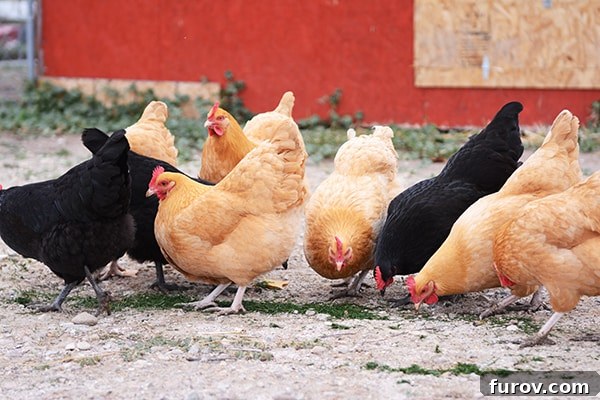
For many home bakers, eggs are a staple ingredient often added without a second thought. We typically grab a carton of “large” eggs and assume they’ll work perfectly in any recipe. However, this seemingly minor detail – egg size – holds significant sway over the outcome of your baked goods. I, too, was a devoted large egg buyer, rarely considering the nuances, until I embarked on the charming adventure of raising my own chickens. Suddenly, my tried-and-true cookie, quick bread, and cake recipes started behaving erratically. The delicious promise of homegrown eggs came with an unexpected twist: inconsistency in size.
This revelation was quite startling! Everyone raved about the superior taste and quality of fresh, backyard eggs. What they neglected to mention was that my beloved hens would produce eggs of varying sizes, a fact that profoundly impacts the delicate balance required in baking. If you’ve ever wondered why your brownies turn out cakier than fudgy, or your cookies spread too much, egg size might just be the culprit.
Why Egg Size Isn’t Just a Minor Detail in Baking
When you’re whipping up a batch of scrambled eggs or frying a sunny-side up, egg size is largely irrelevant. Use what you have, and enjoy! But baking is a science as much as it is an art. It demands precision. Eggs aren’t just an arbitrary addition; they play a multifaceted role in the structure, texture, and moisture of your baked creations. They are a primary source of liquid, fat, and protein, each contributing to the final product in unique ways. Eggs help to:
- Add Moisture: The liquid content (mostly in the whites) contributes to the overall hydration of the batter or dough, preventing dry and crumbly results.
- Provide Structure and Stability: Egg proteins, particularly in the whites, coagulate when heated, forming a framework that helps baked goods hold their shape and prevent collapse.
- Leaven: Whisked eggs trap air, which expands during baking, contributing to a light and airy texture. This is especially true for recipes like meringues or soufflés.
- Bind Ingredients: Eggs act as an emulsifier, helping to bind fats and liquids together, creating a cohesive and smooth batter. They also hold ingredients like crumbs and nuts together.
- Enrich Flavor and Color: Egg yolks contribute richness and a golden hue to baked goods, enhancing both taste and appearance.
Consider the impact: using significantly larger eggs in a brownie recipe, for instance, could introduce too much moisture and protein, resulting in a cake-like texture rather than the desired dense, fudgy consistency. Conversely, using smaller eggs in cookies might lead to a crumbly, dry product that doesn’t hold together well. Too much egg might cause cookies to spread excessively, while too little could inhibit proper leavening, making them flat or overly dense. It’s a delicate balance, and even a slight variation in egg volume can throw off the entire recipe.
Demystifying Egg Sizes: Weights and Volumes Explained
While the detailed journey of an egg from farm to grocery store and its deeper scientific interactions in baking are fascinating subjects, our focus today is purely practical: understanding the different sizes of eggs and how they compare, so you can confidently use them in your recipes. Let’s delve into the specifics of the most common egg sizes you’ll encounter.
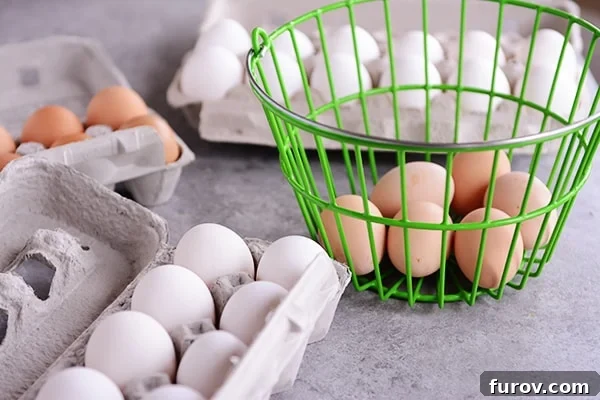
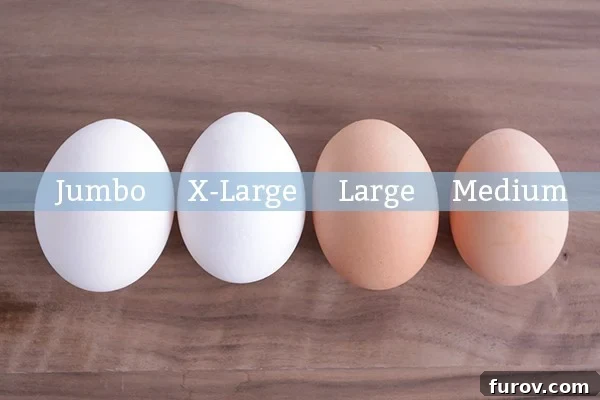
For clarity, we’ll concentrate on four primary sizes: Jumbo, X-Large, Large, and Medium. To give you the most accurate picture, I’ve gathered and weighed four eggs from each of these classifications, specifically focusing on their weight out of the shell. Keep in mind that these are average measurements; individual eggs can vary slightly, even within the same size category. The goal here is to provide a clear visual and quantitative understanding of how these sizes differ.
Jumbo Eggs: The Giants of the Carton
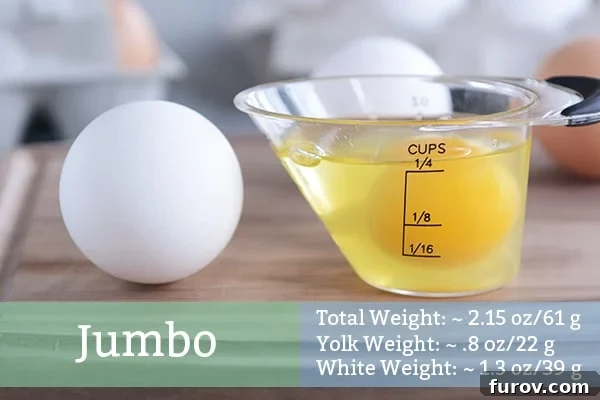
Frankly, before diving deep into egg sizes for this guide, I had never purchased a jumbo egg. The closest I’d come were the occasional “double yolkers” that one of our particularly generous hens sometimes produced (a surprising gift!). These impressive eggs weigh in at approximately 2 ounces (57 grams) once removed from their shell. In terms of volume, a jumbo egg typically measures out to a generous, heaping 1/4 cup (60 ml). While their size might seem appealing, they can easily overpower recipes designed for smaller eggs, leading to overly moist or dense results.
Extra-Large Eggs: A Step Below Jumbo
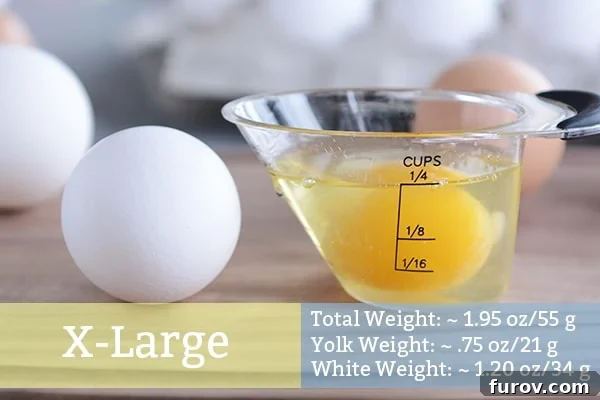
Slightly smaller than their jumbo counterparts, extra-large eggs are still substantial. An X-Large egg typically weighs around 1.95 ounces (55 grams) out of its shell. Its volume usually rounds out to an even 1/4 cup (60 ml). These are often chosen for recipes where a bit more richness and structure are desired, but they still carry the risk of throwing off a recipe calibrated for large eggs if used without adjustment.
Large Eggs: The Baking Standard
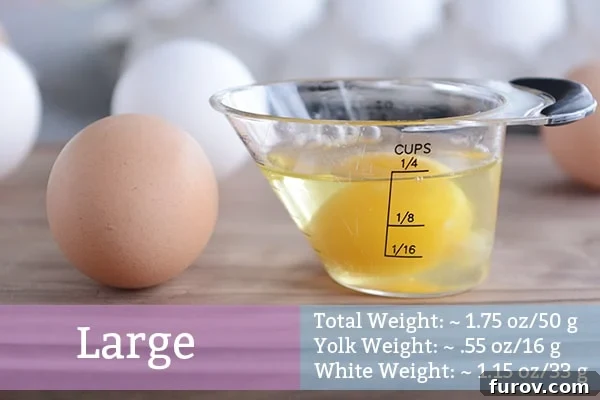
Ah, the trusty large egg! This is the default size assumed by the vast majority of recipes published in the United States, whether in cookbooks, magazines, or online. A large egg weighs approximately 1.75 ounces (50 grams) out of the shell. Its volume is slightly less than 1/4 cup, typically around 3 tablespoons + 1 teaspoon (about 50 ml). Its consistent availability and ideal balance of yolk to white make it the go-to for most baking endeavors.
Medium Eggs: Compact but Capable
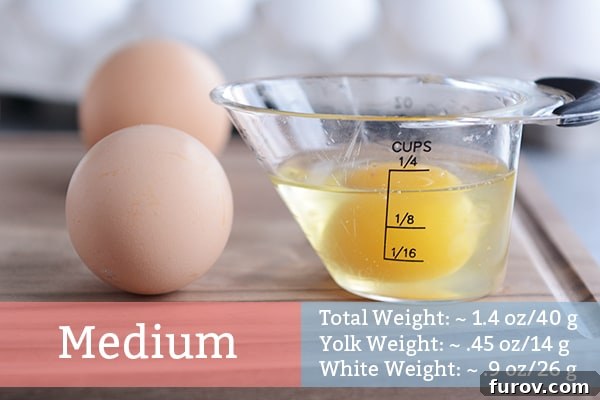
The humble medium egg, often seen in cartons of smaller-grade eggs or, in my case, a common output from a younger backyard hen, is quite versatile. Out of the shell, a medium egg weighs about 1.4 ounces (40 grams). Its volume is approximately 3 tablespoons (45 ml). While not as commonly specified in recipes as large eggs, they are perfectly suitable for baking when properly accounted for, perhaps requiring an extra half or whole egg to match the volume of larger eggs.
Navigating Egg Size Standards: USDA vs. Global Variations
To add a layer of complexity, it’s crucial to understand how egg sizing is regulated. In the United States, the USDA determines egg sizes based on the minimum required net weight per dozen eggs, including the shell. This means a carton labeled “large eggs” must weigh at least 24 ounces (680 grams) in total. The catch? Individual eggs within that dozen can still vary in size, as long as the collective weight meets the standard. You might find some eggs slightly larger or smaller, but the average will typically align with the “large” classification.
This system also highlights why consistency can be elusive. While the total weight per dozen is regulated, there are no strict guidelines for the weight of each individual egg. Furthermore, if you’re exploring recipes from around the globe, be aware that egg sizing standards vary significantly by country. What’s considered a “large” egg in the UK, for example, might not be precisely the same as a “large” egg in Australia or the US. Always be mindful of the recipe’s origin, and if possible, consult local egg sizing charts.
Achieving Baking Precision: Practical Tips for Home Bakers
All this information might seem overwhelming, making you hesitant to crack another egg. But fear not! Mastering egg size for baking is entirely achievable with a few simple guidelines. These tips will help you maintain confidence and consistency in your kitchen, ensuring delightful results every time.
The Golden Rule: When in Doubt, Go Large
If a recipe doesn’t explicitly state the required egg size, assume it calls for large eggs. This is the industry standard in North America, and most recipes are developed using this size. While there might be slight variations within a carton, these are usually minimal enough that you can proceed without major concerns.
Respecting Recipe Specifications
When a recipe does specify an egg size (e.g., “2 extra-large eggs” or “3 medium eggs”), it’s best to follow it precisely. Substituting a different size without adjustment can alter the recipe’s delicate balance, potentially compromising the texture, moisture, and rise of your baked goods. For optimal results, stick to the instructions.
Embrace the Kitchen Scale: Your Secret Weapon for Consistency
This is arguably the most crucial tip for achieving consistently perfect results. A kitchen scale is an invaluable tool for precision baking, eliminating guesswork and ensuring exact measurements. I personally use this kitchen scale and wholeheartedly recommend it. Since exclusively using our homegrown chicken eggs, which vary in size, I always weigh my eggs out of the shell when baking. My guideline for a standard large egg is 1.75 ounces (50 grams). As a dedicated food blogger, I prioritize foolproof recipes for my readers, and exact egg measurement is a key component of that commitment.
Understanding My Recipes (and Most Online Recipes)
Unless otherwise specified, all recipes featured on my website are developed and tested using large eggs. This consistency helps ensure that if you use large eggs, your results should mirror mine, provided other variables (oven temperature, ingredient quality, etc.) are also consistent.
Solving the Egg Dilemma: Troubleshooting with a Scale
Let’s walk through a common scenario. Imagine a recipe calls for two large eggs, which equates to approximately 3.5 ounces (100 grams) of liquid egg. You crack two eggs from your carton (or your backyard flock) and weigh them, only to find they total just 2.75 ounces (78 grams). What now?
Here’s the trick: grab another egg, crack it into a separate small bowl, and lightly whisk it. Slowly add spoonfuls of this whisked egg to your initial two eggs until you reach the desired target weight of 100 grams. Conversely, if your two eggs are larger than needed and weigh 4 ounces (115 grams), whisk them together thoroughly. Then, remove the excess egg mixture, a teaspoon at a time (or less, if very precise), until you hit the precise 100-gram mark.
If there’s leftover egg mixture, don’t waste it! I store it in a small container in my refrigerator – a designated spot for all those lonely egg remnants. This mixture can be used for future baking adjustments or, more often, gets happily incorporated into our morning scrambled eggs or omelets.
While this weighing process might initially seem complicated, I assure you it’s quite simple once you get the hang of it. However, I also understand that some home bakers prefer not to fuss with weighing eggs. And that’s perfectly fine! In such cases, simply revert to the general recommendations: use large eggs unless the recipe specifies a different size, then adhere to that specified size. If you consistently find your baked goods temperamental or not turning out as expected, inconsistent egg size might be a factor worth investigating. While many elements influence baking success, addressing egg size is an excellent starting point for troubleshooting.
Egg Size Conversion Chart for Baking (Approximate)
To further assist you in achieving perfect results, here’s an approximate conversion chart for egg weights and volumes. Remember, these are averages and using a kitchen scale for precise measurements remains the gold standard.
| Egg Size | Weight (Out of Shell) | Volume (Out of Shell) | Approximate Equivalence to 1 Large Egg |
|---|---|---|---|
| Jumbo | ~2.25 oz (64g) | ~scant 1/3 cup (75ml) | 0.8 Large Eggs |
| Extra-Large | ~2 oz (57g) | ~1/4 cup (60ml) | 0.9 Large Eggs |
| Large | ~1.75 oz (50g) | ~3 tbsp + 1 tsp (50ml) | 1 Large Egg (Base) |
| Medium | ~1.5 oz (43g) | ~3 tbsp (45ml) | 1.2 Large Eggs |
| Small | ~1.25 oz (35g) | ~2.5 tbsp (37ml) | 1.4 Large Eggs |
How to use this chart: If a recipe calls for 2 Large Eggs (approx. 100g) but you only have Medium eggs, you would need about 2.4 Medium eggs (100g / 43g per Medium egg ≈ 2.32). You would whisk 3 medium eggs and use a scale to measure out 100g. Similarly, if you have Extra-Large eggs and need 2 Large, you might only need 1.8 Extra-Large eggs (100g / 57g per XL egg ≈ 1.75), so you’d whisk 2 XL eggs and measure out the exact 100g. Always whisk multiple eggs together before measuring out a partial amount.
Conclusion: Master Your Baking with Egg Size Awareness
Eggs, in all their glorious versatility, should be a source of joy in your kitchen, not stress! Understanding the impact of their size is a simple yet powerful step towards becoming a more confident and successful baker. By paying attention to this often-overlooked detail, whether by simply sticking to large eggs or by embracing the precision of a kitchen scale, you’ll gain greater control over your recipes and achieve consistently delicious results. Hopefully, this guide has clarified any confusion and equipped you with the knowledge to bake with newfound confidence. If you have any lingering questions or personal baking experiences to share, please don’t hesitate to comment below – I’m always happy to help!
Disclaimer: This post contains an Amazon affiliate link, meaning I may earn a small commission if you purchase through it, at no extra cost to you.