
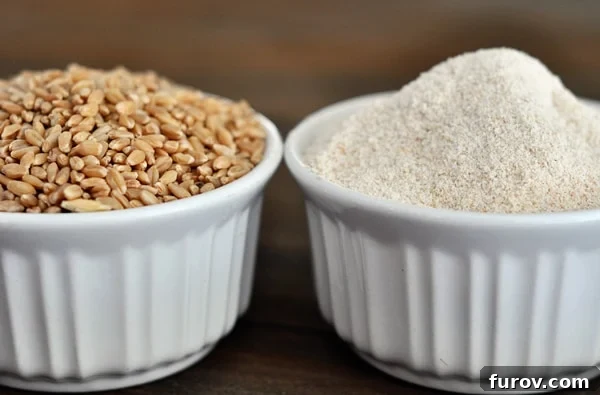
Welcome back to the second part of our comprehensive Wheat and Wheat Grinding 101 series! If you missed the foundational first installment, which covered various wheat types, reliable sources for purchasing wheat berries, and diverse applications for them, you can find it here.
Today, we’re diving deep into the heart of the home milling experience: The Wheat Grinder. This essential kitchen appliance empowers you to transform whole wheat berries into fresh flour, offering a myriad of benefits that extend far beyond simply having baking ingredients on hand. Get ready for an in-depth exploration, including invaluable insights from a compiled list of wheat grinder reviews submitted by our wonderful community!
Before we explore the machines themselves, let’s address a frequently asked question that arose after our initial post:
Why Should I Grind My Own Wheat Instead of Buying Flour From the Store?
The decision to invest in a grain mill and grind your own wheat is a journey many home bakers and health-conscious individuals embark on. It’s a choice driven by several compelling factors:
- Unparalleled Control Over Your Ingredients: Grinding your own wheat gives you complete mastery over the flour you use.
- Wheat Type: Store-bought whole wheat flours often derive primarily from red wheat berries. By milling at home, you can experiment with specific varieties, such as a balanced blend of red and white wheat, or opt for the milder flavor of white wheat exclusively.
- Texture Customization: Most high-quality wheat grinders allow you to precisely adjust the fineness or coarseness of your flour. This means you can produce ultra-fine pastry flour for delicate cakes, medium-fine flour perfect for artisan breads, or even coarse cracked wheat for hearty cereals and pilafs—a versatility rarely found in pre-packaged options.
- Optimal Freshness and Nutritional Value: This is arguably the most significant advantage. Once a wheat berry is ground, its protective outer layers are broken, exposing the nutrient-rich germ and bran to air. This exposure initiates oxidation, which causes a gradual loss of vital nutrients, enzymes, and delicate oils. By grinding your wheat immediately before use (or freezing freshly ground flour), you ensure that your baked goods are brimming with the maximum possible nutritional value, far surpassing flour that has sat on store shelves for weeks or months.
- Cost-Effectiveness in the Long Run: While the initial investment in a quality grain mill can be significant, the savings accumulate over time.
- Bulk Purchasing Power: Wheat berries can be purchased in bulk quantities (often 25-50 lb bags) directly from farms, co-ops, or specialty suppliers. This bulk buying dramatically reduces the per-pound cost compared to purchasing pre-ground flour.
- Strategic Investment: Considering the rising cost of groceries, a grain mill can pay for itself over several years, especially for families who frequently bake with whole grains. (Refer to our first installment here for sources on buying wheat berries).
- Versatility Beyond Just Flour: A good grain mill is not a single-purpose appliance.
- Cracked Wheat: Easily create cracked wheat for hearty hot cereals, salads, or pilafs.
- Grinding Other Grains and Seeds: Many mills can process a wide array of other grains like oats, rice, corn, and even legumes and spices, opening up a world of culinary possibilities that extends far beyond traditional baking. We’ll delve deeper into this below.
- Enhanced Food Security and Preparedness: In uncertain times, having a stable food supply is paramount.
- Long-Term Storage: Whole wheat berries have an incredibly long shelf life when stored properly in a cool, dry place – often decades. This makes them an ideal staple for emergency food storage.
- Self-Sufficiency: Regardless of economic downturns, job loss, or even larger-scale natural disasters, knowing you have a substantial supply of wheat berries ready to be ground into nourishing flour provides a profound sense of security and self-reliance for your family. Our family has experienced challenging periods, and our wheat and other food storage have often felt like a lifeline.
- A Natural Boost to Your Family’s Health: The sheer convenience of having a grain mill on your counter naturally encourages healthier eating habits.
- Increased Whole Grain Consumption: With freshly ground flour readily available, you’ll find yourself incorporating whole grains into nearly all your baking – from homemade bread to cookies, muffins, other baked goods, and breakfast foods.
- Perceived Health Benefits: There’s a certain satisfaction, and perhaps a touch of psychological wellness, that comes with enjoying a treat like a whole wheat chocolate chip cookie, knowing it’s made with the freshest, most wholesome ingredients. And let’s be honest, we all appreciate those little culinary comforts that feel a bit healthier!
Without a doubt, investing in a grain mill is a significant decision. Quality wheat grinders are not inexpensive. However, for many, myself included, the long-term benefits outlined above far outweigh the initial cost. It’s crucial to understand that grinding your own wheat is not for everyone!
This series aims to be a valuable resource for those already engaged in home milling or those contemplating starting, rather than imposing any pressure. If you’re familiar with my approach, you know I’m the last person to make anyone feel inadequate for what they’re not doing. Trust me, while I might diligently grind my own wheat, you probably wouldn’t want a tour of my laundry room or toilets! We all have our unique strengths and priorities.
Alright, let’s roll up our sleeves and explore the fascinating world of wheat grinders!
My Trusted Companion: The KoMo Fidibus Classic Grain Mill
Let me introduce you to the grain mill that holds a cherished spot on my kitchen counter. I’ve been using it consistently for nearly four years, averaging 4-5 times a week, as I prefer to grind my wheat fresh for every single recipe. This machine is a true workhorse, quietly tucked into its corner, always ready for action.
My particular model is a KoMo Fidibus Classic, a European-designed grain mill that has gained significant popularity in the United States over recent years. It’s renowned for its robust construction, beautiful aesthetic, and exceptional performance. While I primarily use it for wheat, its versatility is impressive. In addition to various types of wheat, it can also expertly grind: oats, rice, triticale, kamut, spelt, buckwheat, barley, rye, millet, teff, quinoa, amaranth, sorghum, and dent (field) corn. Beyond grains, it’s capable of grinding spices, lentils, and a variety of dry beans such as pinto, red, garbanzo, and kidney beans. While many of these ingredients are still on my culinary exploration list, I take immense pride in knowing my mill is capable of handling such a diverse range of foods.
A Glimpse into the Grinding Process
Let’s walk through the simple operation of this remarkable machine, and then we’ll discuss its key advantages and disadvantages.
Like most modern wheat grinders, the KoMo features a generously sized “hopper” or bowl-shaped receptacle positioned at the top of the unit. This is where the magic begins!
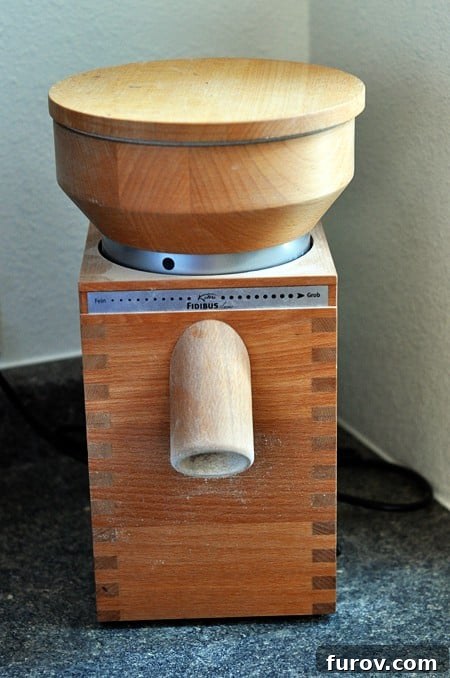
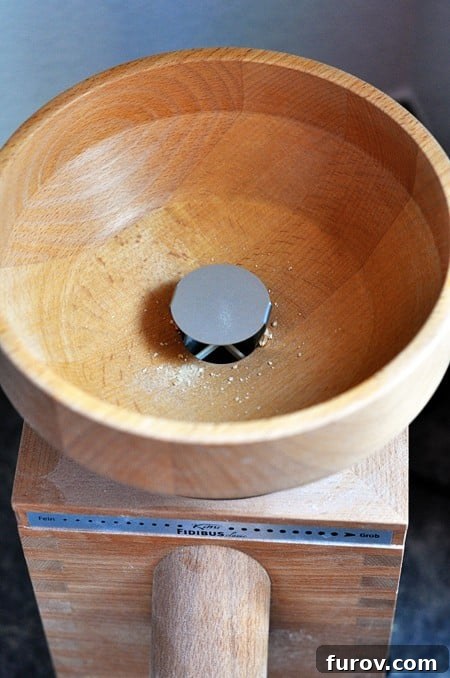
The hopper is designed to be loaded with your chosen wheat berries. My KoMo mill’s hopper comfortably accommodates about 6 cups of wheat berries. It’s worth noting that hopper capacity can vary significantly between different grain mill models.
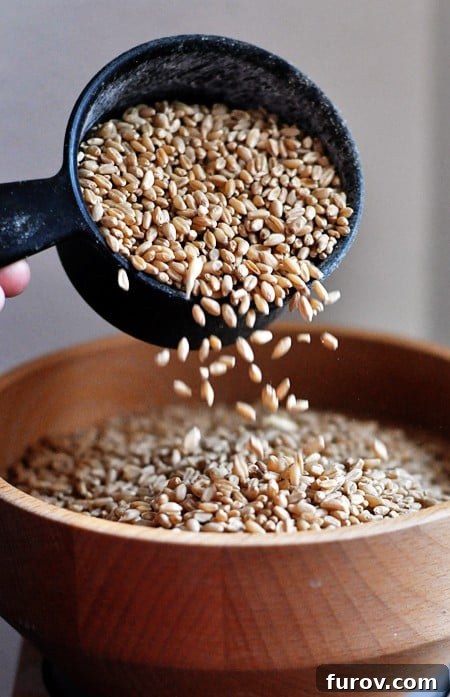
Once filled (there’s no need to fill it to the brim for every grinding session), a simple press of the small power button located on the side brings the mill to life, and the grinding process begins. It’s truly a marvel to watch raw grains transform into fine flour!
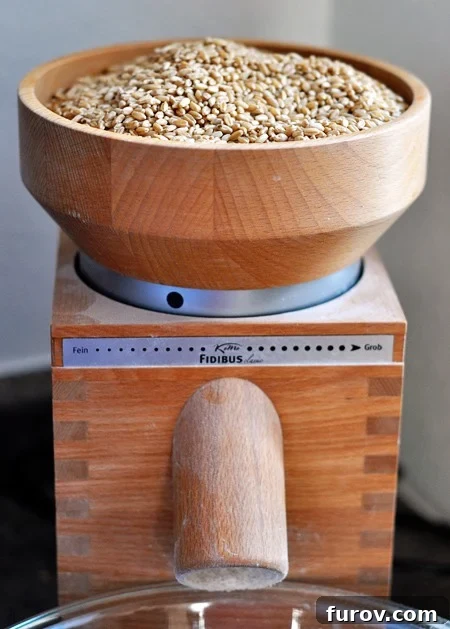
I position a large Pyrex bowl directly beneath the output chute, where the freshly ground flour gracefully spills, creating a growing mound of soft, fragrant goodness.
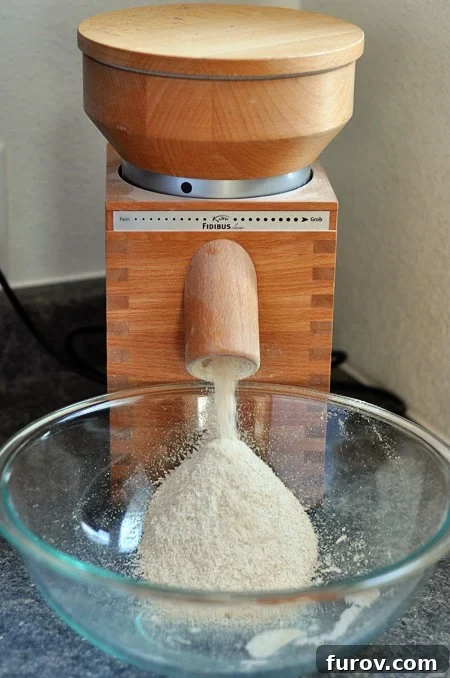
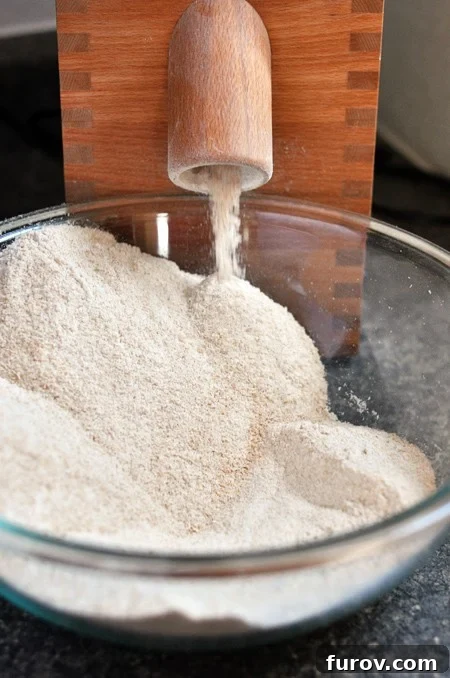
From approximately 6 cups of whole wheat berries, I typically yield about 12 cups of freshly ground flour. Keep in mind that freshly milled flour often has more air incorporated into it, resulting in a lighter, fluffier texture. For the most precise measurements, allowing the flour to settle briefly before measuring is recommended. Personally, I don’t often bother with this extra step; I simply pack the flour ever so slightly more into the measuring cup straight from the mill.
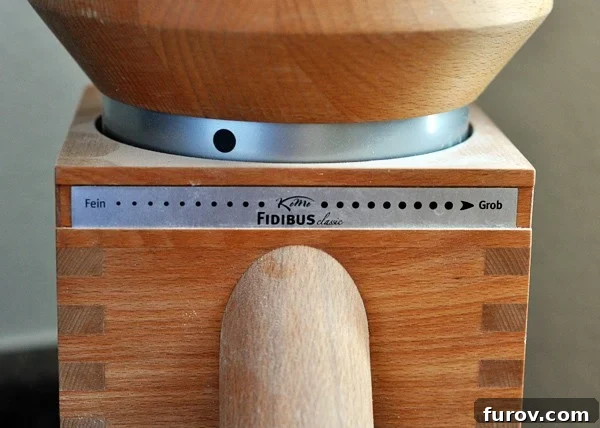
A standout feature shared by my KoMo mill and many other advanced wheat grinders is the ability to easily adjust the flour’s texture, ranging from ultra-fine to coarse. With my mill, this adjustment is intuitively made by simply twisting the hopper bowl, allowing for seamless transitions between different grind sizes.
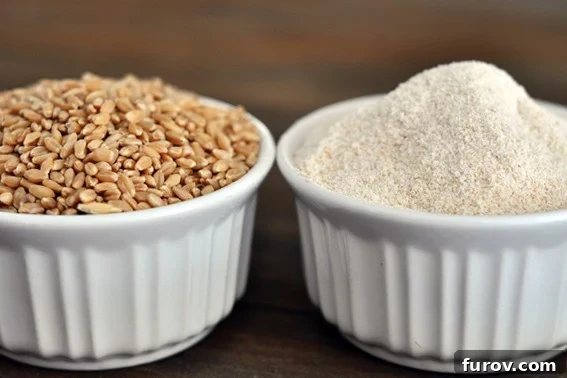
The end result is consistently beautiful, aromatic, and delightfully fluffy flour—a truly rewarding sight for any home baker.
Choosing Your Grain Mill: Essential Research
Every wheat grinder on the market possesses its own unique set of characteristics, differing in price point, grinding capacity, noise level, and the fineness of the flour it produces. Therefore, the most critical piece of advice I can offer to anyone considering a purchase is to conduct thorough research. Don’t rush into a decision. Before owning my KoMo mill, I used a Nutrimill for approximately five years. The Nutrimill is indeed a robust, heavy-duty mill, but the specific model I had eventually developed significant issues, including an unfortunate tendency to disperse flour over a considerable radius!
Advantages of the KoMo Fidibus Classic
My KoMo mill stands out for several compelling reasons:
- Compact Countertop Design: Its sleek and relatively small footprint means it can remain on my kitchen counter permanently. This accessibility encourages frequent use, eliminating the hassle of retrieving it from storage every time I need fresh flour.
- Exceptional Speed and Fineness: The KoMo grinds flour remarkably quickly and achieves an impressive level of fineness, comparable to or exceeding any other mill I’ve used. Its easily adjustable coarse settings also make it ideal for producing perfect cracked wheat.
- Unmatched Versatility: As previously mentioned, its capability to grind a vast array of grains beyond just wheat is a significant advantage, supporting diverse dietary needs and culinary explorations.
- Nutrient-Preserving Cool Grinding: Unlike some mills that can generate considerable heat during operation, potentially degrading delicate nutrients, the KoMo is designed to grind at a cooler temperature, thereby maximizing the retention of nutritional value in the flour.
- Spotless Operation: This mill grinds with remarkable cleanliness. There’s no messy flour spewing. While a light dusting of flour might accumulate on the exterior after a week or so of regular use (as you might notice in some of the images, my beloved mill could use a wipe-down!), the grinding process itself is incredibly tidy.
- Effortless Maintenance: Cleaning the KoMo is a breeze, requiring no complex disassembly of parts, rings, or other equipment. This simplicity also significantly reduces the risk of common pantry pests like weevils taking residence. Running a small handful of rice through the mill once a month is typically all that’s needed to keep it pristine and functioning optimally.
Disadvantages of the KoMo Fidibus Classic
While the KoMo offers numerous benefits, there are a few points to consider:
- Premium Price Point: It is undeniably one of the more expensive grain mills on the market. I personally saved up for about a year before making the purchase, and I can confidently say it has been worth every penny for its performance and durability.
- Noise Level: The mill operates at a volume comparable to a standard vacuum cleaner. It’s not prohibitively loud, but it’s certainly not silent.
- Smaller Hopper Capacity: Compared to some heavy-duty commercial or semi-commercial mills, the KoMo’s hopper has a more modest capacity. This isn’t an issue for me since I grind flour on demand. However, if your baking habits involve grinding, say, 20 pounds of wheat at once, you would need to refill the hopper more frequently than with mills designed for larger batch processing.
Choosing Your Ideal Grain Mill: A Community Perspective
While my personal experience with the KoMo is positive, it’s crucial to consider a broader range of opinions when making such an important purchase. To provide you with a well-rounded view, I reached out to our community, asking about the grain mills they use and what they appreciate or dislike about their machines. Over 50 responses poured in – a huge thank you to everyone who contributed!
The invaluable feedback has been compiled into an easily accessible document, allowing you to read firsthand accounts of various grain mills. I found myself engrossed in reading these reviews, much like a captivating novel. It’s truly insightful material! Click on the image below to access the full document:
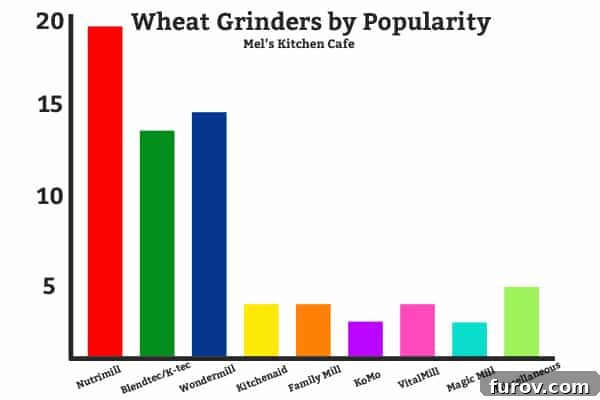
For a quick overview, here’s an at-a-glance chart illustrating the popularity of different grain mill types among our respondents:
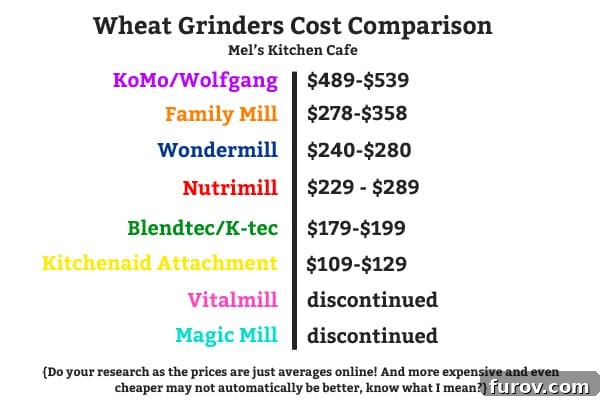
And, just for a bit of fun (and perhaps because I need more hobbies!), I conducted a cost comparison for all the wheat grinders featured in the graph above. These figures represent average prices, as actual costs can fluctuate based on sales events and specific retailers.
Where to Purchase Your Grain Mill
Determining the best place to buy a wheat grinder involves exploring both local and online options. While some metropolitan areas might have specialty kitchen stores or health food co-ops that stock grain mills, availability can be limited, especially if you reside in a rural area like me. Online retailers often provide the widest selection and competitive pricing.
Here are a few reputable online sources where friends and family have successfully purchased their wheat grinders (the company I bought mine from is no longer in business):
- Pleasant Hill Grain
- Emergency Essentials / BePrepared.com
- Amazon
Exploring Manual Wheat Grinders for Enhanced Preparedness
For those deeply committed to preparedness and food storage, it’s highly advisable to consider a manual, electricity-free wheat grinder. While modern electric mills are incredibly convenient, they become obsolete in the event of a power outage. Investing in a robust hand-crank mill ensures your ability to produce fresh flour regardless of electrical availability.
You might argue that if electricity is out, you won’t be baking bread anyway. However, as discussed earlier in this series, wheat berries can be utilized in numerous ways to provide essential nutrition for your family during an emergency. With an alternative heat source like a propane stove or campfire, you could still prepare cracked wheat cereals, pancakes, or various flatbreads using freshly ground flour from a manual mill. This small consideration offers a significant layer of security.
I currently do not own an electricity-free wheat grinder, so I cannot personally recommend a specific brand. However, a quick online search using terms like “electricity free wheat grinder” or “hand wheat grinder” will yield a wealth of information and product options to help you find a suitable model.
Your Journey to Fresh Flour Begins Here
Phew! That was quite the deep dive into the world of wheat grinders. I hope you found this comprehensive guide insightful and empowering. If you have any questions at all, please don’t hesitate to ask in the comments section below. I absolutely revel in conversations about wheat and all things related to home milling!
Happy grinding!