
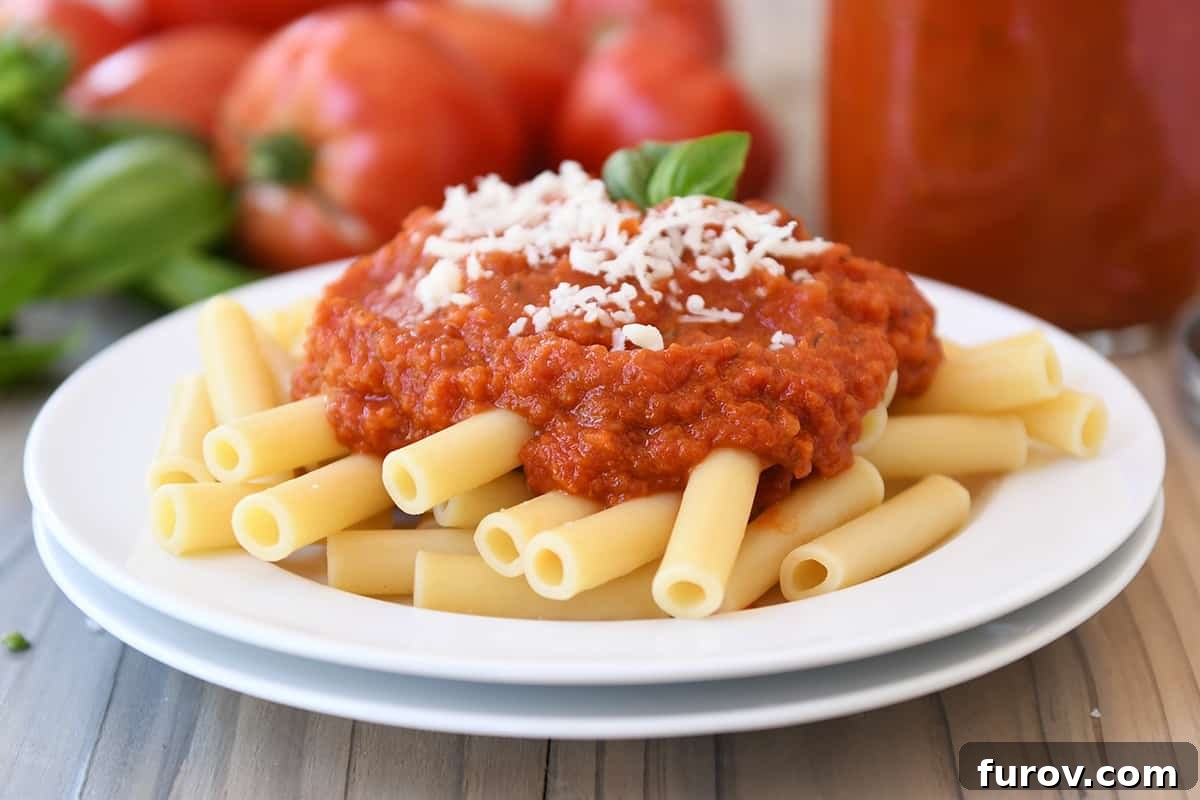
Transform your abundant garden harvest into a rich and flavorful staple with this homemade canned spaghetti sauce recipe. Easy to follow with step-by-step guidance, it’s perfect for both seasoned canners and beginners looking to preserve the taste of summer.
For too long, the promise of preserving those glorious, sun-ripened garden tomatoes has lingered. But the wait is over! Today, I’m thrilled to finally share my tried-and-true homemade canned spaghetti sauce recipe, designed to capture the essence of your fresh harvest and provide delicious, ready-to-use sauce all year round. This recipe is not just about convenience; it’s about savoring the incredible flavor that only garden-fresh ingredients can deliver, transforming them into a pantry staple you’ll be proud to share.
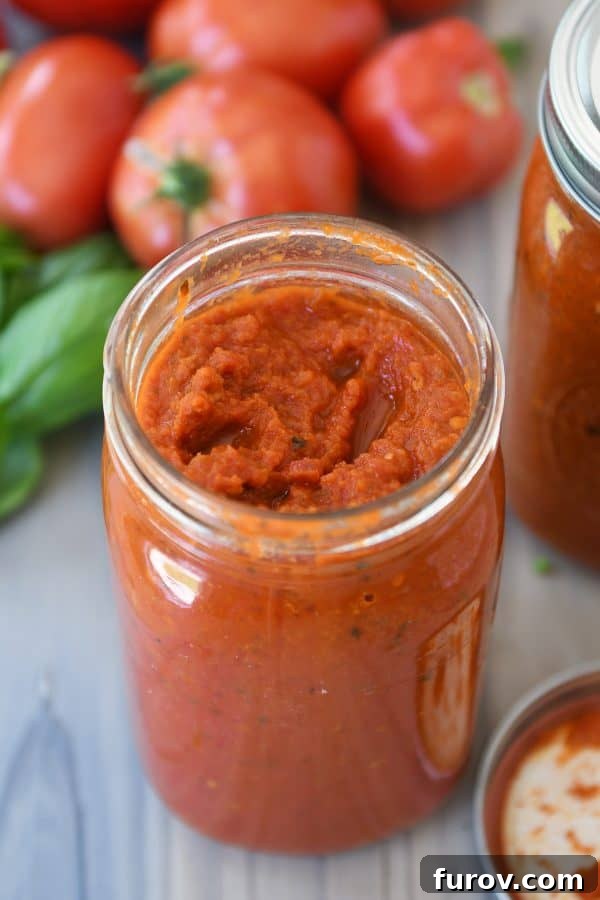
This comprehensive guide will walk you through every stage of making and safely canning this delectable marinara sauce. We’ll cover everything from preparing your fresh tomatoes to the critical processing steps, ensuring your homemade canned spaghetti sauce is not only incredibly flavorful but also safe for long-term storage. Even if you’re new to the world of home canning, these detailed instructions and helpful tips will empower you to embark on this rewarding culinary journey with confidence.
The resulting sauce is wonderfully thick, deeply hearty, and boasts a rich, authentic flavor that makes it incredibly versatile. Whether you’re tossing it with a simple plate of pasta, layering it into a lasagna, or using it as a base for other recipes that typically call for store-bought jarred spaghetti sauce, this homemade version will elevate any dish. It’s a game-changer for weeknight meals and special occasions alike, bringing a taste of homemade goodness to your table.
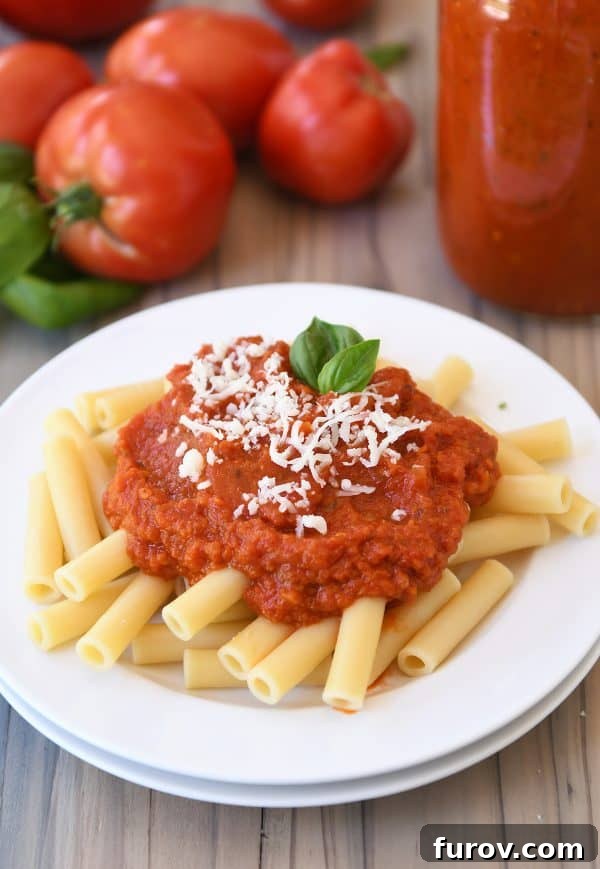
While I often share beloved spaghetti sauce recipes that are perfect for immediate consumption or freezing, neither of those classic family favorites has been specifically tested for canning safety. That’s precisely where this particular homemade canned spaghetti sauce recipe shines! It has been meticulously developed and tested to meet all safety guidelines for home canning, ensuring a stable and safe product. While its flavor profile might differ slightly from my other go-to recipes, it stands out as an equally delicious and satisfying option, truly a star in its own right.
There’s an undeniable satisfaction in watching fresh tomatoes transform into something so splendid and enduring. The process of canning your own spaghetti sauce is incredibly rewarding, making you feel like a culinary rock star with a pantry full of gourmet-quality convenience. Let’s dive into the world of home preservation and unlock the secrets to creating this amazing sauce.
Canning Basics for Beginners: Getting Started with Homemade Spaghetti Sauce
Before we embark on crafting this exquisite homemade canned spaghetti sauce, let’s establish a foundational understanding of home canning. For those new to the art of food preservation, it can seem daunting, but it’s a skill easily mastered with the right information and tools. Home canning allows you to store seasonal produce for extended periods, preserving flavors and nutrients, and reducing food waste. The key is adhering to tested recipes and proven methods to ensure safety.
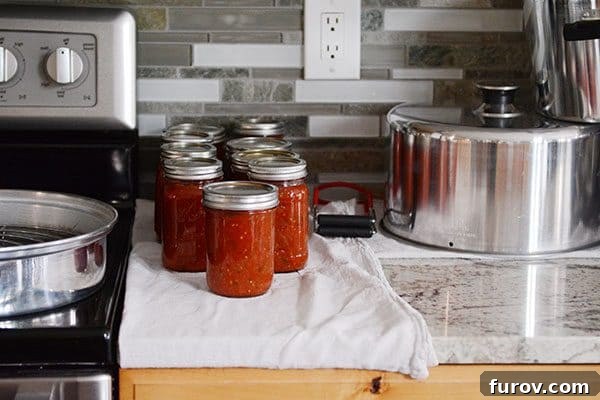
Two common methods for canning high-acid foods like tomato sauce are water bath canning and steam canning. Both methods involve heating filled jars to a specific temperature for a set duration to create a vacuum seal and destroy spoilage microorganisms. While water bath canning submerges jars in boiling water, a steam canner utilizes steam to achieve the same result. I often use a steam canner for its efficiency and reduced water usage. You can explore more about water bath canning basics here and discover the benefits of small-batch canning, including steam canners, in this detailed guide: Small Batch Canning 101. The National Center for Home Food Preservation also provides excellent resources on steam canners here, verifying their safety and efficacy for appropriate foods.
Essential Canning Tools for Delicious Homemade Spaghetti Sauce
Having the right equipment makes the canning process smoother and more efficient. Here are the essential tools I recommend for making and canning your homemade spaghetti sauce:
- An over-the-sink colander is incredibly useful for efficiently draining your prepared tomatoes, saving counter space and simplifying cleanup.
- A powerful food processor is a true time-saver for chopping large quantities of vegetables like tomatoes, peppers, onions, and garlic, making prep work a breeze.
- A steam bath canner, preferably one with a dial for accurate temperature monitoring, is excellent for processing high-acid foods with less water and bulk than traditional water bath canners.
- A basic canning toolset usually includes a jar lifter, canning funnel, bubble remover, and lid lifter – all indispensable for safely filling and handling hot jars. An extra canning funnel can also be handy for various kitchen tasks, including straining.
With your tools at the ready, let’s get started on this fantastic journey of creating your very own homemade canned spaghetti sauce!
To yield approximately 4 quarts of this rich, canned spaghetti sauce, you’ll need a substantial amount of fresh tomatoes – about 18-19 pounds, which translates to roughly 60 medium-sized tomatoes. I find a mix of varieties works best, typically combining dense Roma (paste) tomatoes, known for their low water content and meaty texture, with everyday garden varieties like Early Girl, which contribute a balanced sweetness and acidity. This blend ensures a robust flavor and excellent consistency for your sauce.
Effortless Tomato Peeling for Your Sauce
One of the initial steps in making a smooth spaghetti sauce is removing the tomato skins. The traditional method involves blanching tomatoes in boiling water followed by an ice bath, a process that can be quite messy and time-consuming when dealing with large quantities. Fortunately, there’s a much simpler and cleaner approach: the broiling method.
This technique, which I also use for my popular homemade canned salsa recipe, is incredibly efficient. Simply cut your tomatoes in half and arrange them, cut-side down, in a single layer on a large sheet pan. Place the sheet pan under a hot oven broiler for just a few minutes, watching closely until the skins begin to wrinkle and blister. This quick burst of intense heat separates the skin from the flesh with minimal effort. Once the tomatoes are out of the oven and cool enough to handle, those skins will practically slide right off, leaving you with perfectly peeled tomatoes and remarkably easy-to-clean sheet pans!
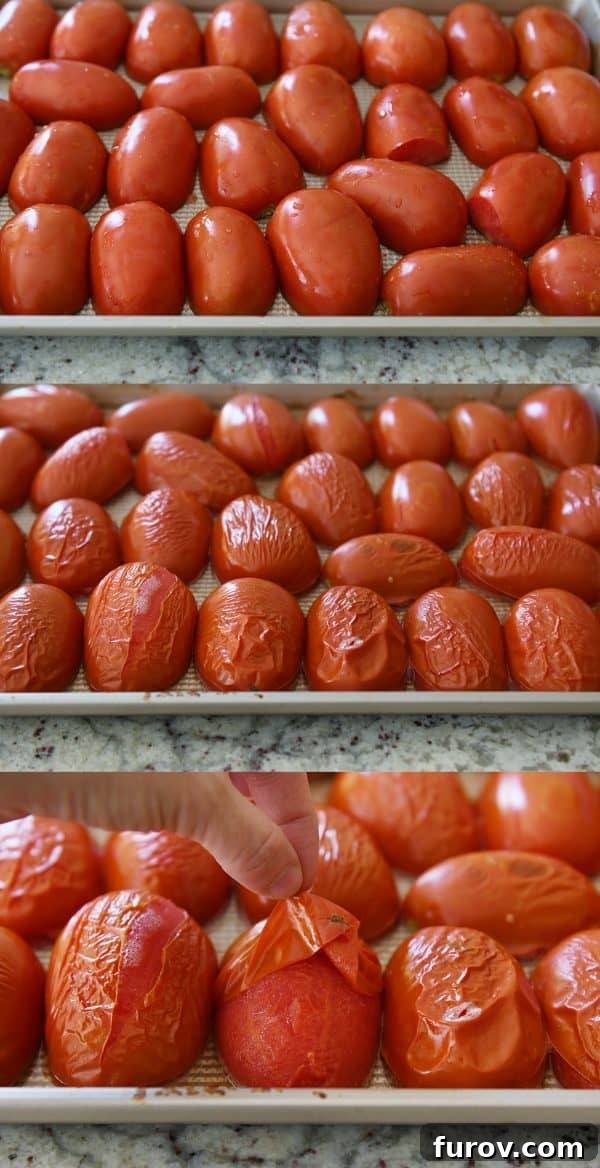
While some recipes might suggest skipping the peeling step, I highly recommend removing the skins for a superior sauce. Tomato skins can introduce a slightly bitter flavor and an undesirable texture to your finished spaghetti sauce. Furthermore, there’s anecdotal evidence suggesting that skins might affect the pH level of the canned product, potentially compromising canning safety. For the best taste and utmost safety, taking the time to peel your tomatoes is a worthwhile investment.
Draining, Chopping, and Precise Tomato Measurement
Once your tomatoes are beautifully peeled (and the skins discarded), the next crucial step is draining them. Place the peeled tomatoes in a colander set over a large bowl or directly in your sink. Allow them to drain for 30 minutes to an hour. This step is vital for achieving a thick, rich spaghetti sauce, as it removes excess watery liquid that would otherwise thin out your final product. To expedite the draining process, you can gently mash and squeeze the tomatoes with your hands or a sturdy spoon, encouraging more liquid to release. The visual difference before and after draining is quite significant, as you can see in the image below.
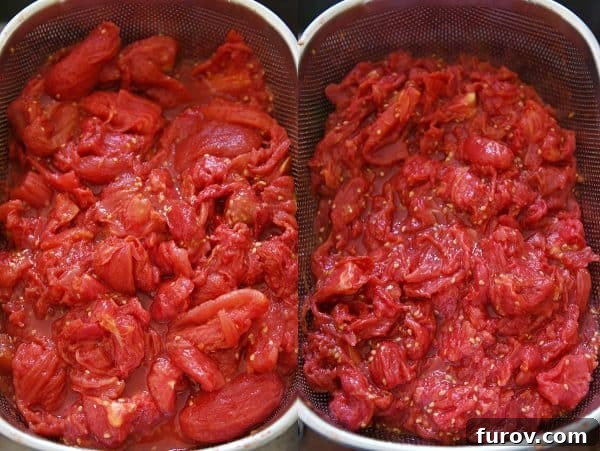
After draining, it’s time to chop. For ultimate ease and consistent texture, I toss the tomatoes into my food processor and give them a few pulses until they are well-blended to my desired consistency. This invaluable tool also handles all the other chopping – bell peppers, onions, and garlic – saving significant time and effort compared to hand-chopping. Remember, measure your tomatoes after they have been fully drained and chopped. This ensures accuracy in your ingredient ratios, which is particularly important for canning safety and achieving the perfect sauce texture.
Simmering Your Homemade Spaghetti Sauce to Perfection
Now for the heart of the recipe: combining and simmering the ingredients. In a large, heavy-bottomed pot (at least 8-quart capacity), combine all the spaghetti sauce ingredients except the bottled lemon juice. Stir everything thoroughly, paying special attention to fully incorporating the tomato paste. Unmixed tomato paste can clump at the bottom of the pot and burn, which would impart an unpleasant flavor to your entire batch of sauce. A good stir ensures all flavors meld beautifully.
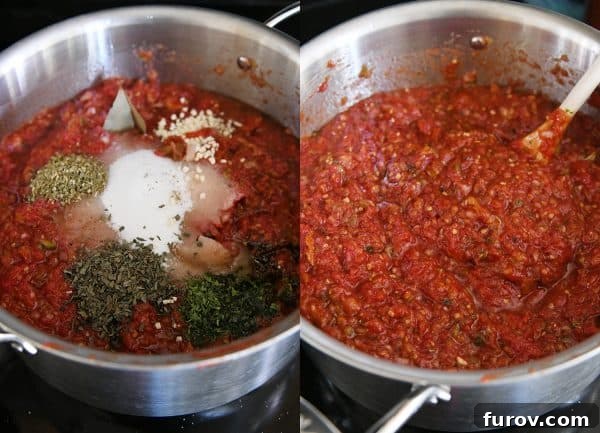
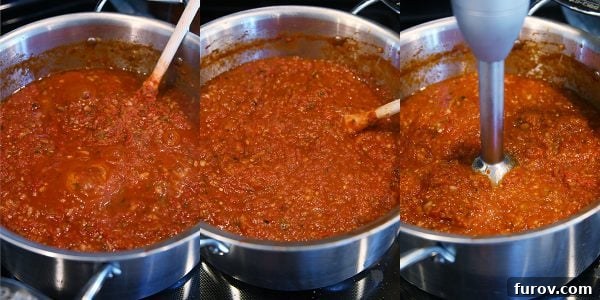
Bring the spaghetti sauce to a gentle simmer, then reduce the heat and let it cook for approximately one hour. During this time, the flavors will deepen and meld, and the sauce will naturally thicken. If, after an hour, the sauce still appears too watery, continue simmering it uncovered until it reaches your desired rich, thick consistency. Stir frequently to prevent sticking.
For a super smooth marinara, I use an immersion blender directly in the pot to eliminate any larger chunks of vegetables. The level of purée is entirely up to your preference – some prefer a chunkier sauce, while others like it completely smooth. If you don’t have an immersion blender, you can carefully transfer the sauce in batches to a regular blender, taking care when blending hot liquids.
Pro Tip for Efficiency: While your spaghetti sauce is simmering, get a head start on preparing your canner. Fill your steam bath or water bath canner with the appropriate amount of water and begin heating it on another burner. While the canner heats up, place your clean canning jars inside, cover them with the canner lid, and allow them to heat and sterilize. This simultaneous preparation saves precious time and ensures your jars are hot and ready when the sauce is finished.
Filling and Sealing Your Precious Jars
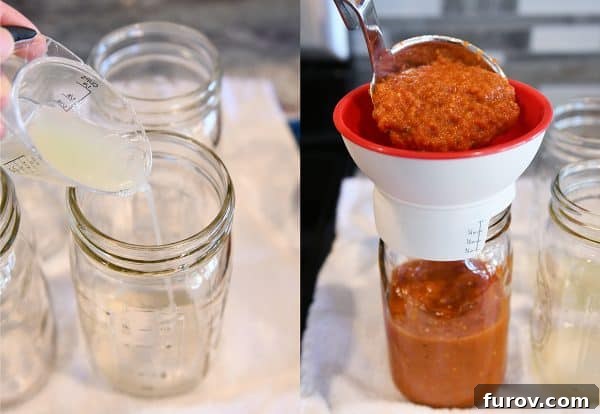
Once your rich spaghetti sauce has reached its perfect consistency, it’s time to prepare for canning. An absolutely critical step for safe water bath or steam canning of tomato products is adding acid. Pour two tablespoons of bottled lemon juice into each sterilized and hot quart-sized jar. It is imperative to use bottled lemon juice, as its acidity level is standardized and reliable, unlike fresh lemon juice which can vary significantly and compromise the safety of your canned goods.
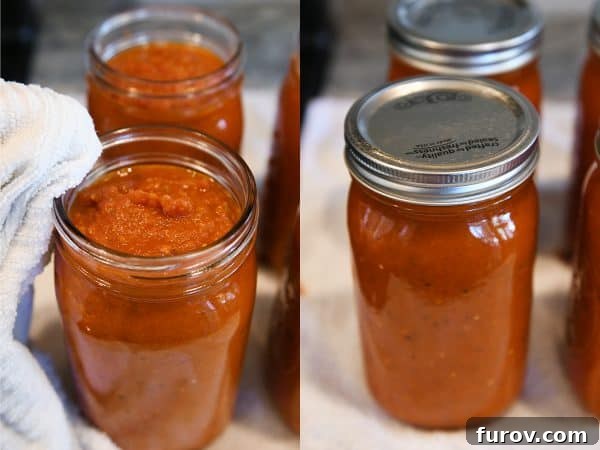
Carefully ladle the hot spaghetti sauce into the jars, leaving a ½-inch headspace from the top. This headspace is essential for proper sealing and to prevent liquid from boiling out during processing. Once filled, use a clean, damp cloth to meticulously wipe the rim of each jar. Any sauce residue on the rim can prevent a proper seal. Place a new canning lid centered on top of the jar, followed by a canning ring, tightened only finger-tight. Avoid over-tightening, which can interfere with the venting process during canning.
Processing Your Homemade Canned Spaghetti Sauce
With your jars filled and sealed, it’s time for the final, critical step: processing. Carefully place the filled quart jars into your pre-heated steam bath or water bath canner. Ensure there is adequate water (or steam) around the jars. Process the quart jars for 40 minutes. It’s crucial to adjust this processing time for higher elevations to ensure food safety: add 5 minutes for elevations between 1,001 and 3,000 feet; add 10 minutes for 3,001 to 6,000 feet; and add 15 minutes for 6,001 to 8,000 feet. Note that for processing times longer than 45 minutes, a water bath canner is generally recommended over a steam canner, as steam canners may not maintain consistent temperatures effectively for extended periods at very high altitudes.
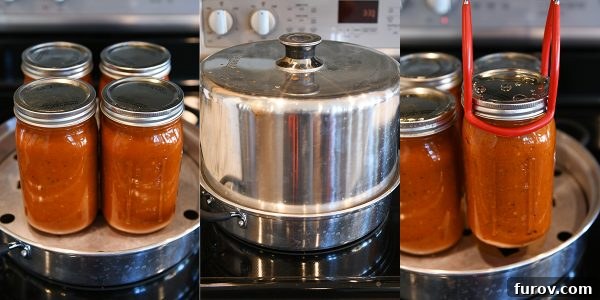
Once the processing time is complete, carefully remove the hot jars from the canner using a jar lifter. Transfer them to a cooling rack or a towel-lined counter, ensuring they are not touching each other, and allow them to cool naturally to room temperature for 12-24 hours. During this cooling period, you’ll likely hear that wonderful “pinging” sound – the sweet music of successful seals! This sound indicates that the vacuum seal has formed, signifying properly canned spaghetti sauce. After cooling, check all seals by pressing on the center of each lid; it should be firm and not flex up or down. Any jars that haven’t sealed must be refrigerated and consumed within a few days or re-processed immediately with new lids.
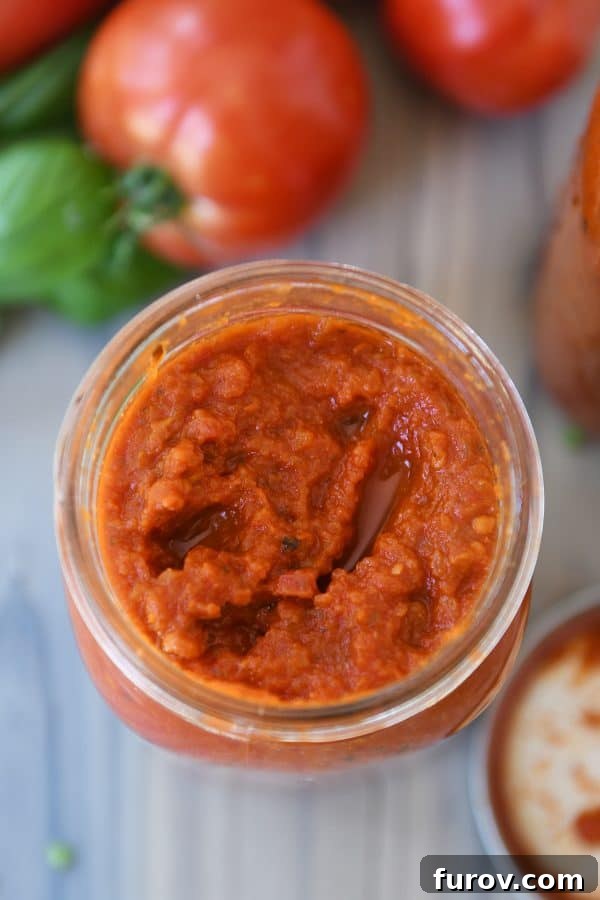
And there you have it! Delicious, rich, hearty, and safely homemade canned spaghetti sauce, ready to be enjoyed whenever the craving strikes. Stock your pantry with the taste of summer and the satisfaction of knowing you preserved it yourself.
Understanding Canning Safety and the Limits of Experimentation
Home canning is a fantastic way to preserve food, and I genuinely enjoy sharing these valuable recipes with you. My kitchen is often a laboratory for culinary exploration, where I experiment with new flavors and ingredients for various dishes. However, when it comes to sharing canning recipes, my approach is very strict.
I will only ever publish and recommend recipes that have been rigorously tested for canning safety, specifically regarding pH levels, or those that strictly adhere to well-established, safe canning guidelines. This commitment is paramount to ensuring the safety of both myself and my valued readers. While this dedication to safety sometimes means I must set aside delicious experimental recipes that haven’t been scientifically validated for canning, it’s a non-negotiable principle.
Canning safety dictates that specific amounts of acidity are required for safe water bath or steam bath canning, particularly for recipes containing low-acid ingredients. Modifying ingredient quantities, especially increasing low-acid vegetables or decreasing tomatoes (which provide essential acidity), can significantly alter the pH balance of a recipe, rendering it unsafe for home canning. Botulism, a serious foodborne illness, can thrive in improperly canned, low-acid environments, which is why adhering to tested recipes is critical.
Over the years, I’ve developed and tasted many other spaghetti sauce recipes that would be wonderful for freezing or immediate consumption. Many of you have even shared your fantastic favorites with me! But because most of these haven’t undergone the stringent testing required for canning safety, I cannot, in good conscience, share them as canning recipes. When recipes are being shared with a wide audience, there’s simply no room to compromise on safety.
The excellent news is that recipes like today’s homemade canned spaghetti sauce are not only incredibly delicious but are also widely recognized and validated as safe for home canning. This means you get a truly tried-and-true canned spaghetti sauce recipe that you can confidently rely on for years to come. So, let’s stop reading and start canning! Your future self, with a pantry full of flavorful spaghetti sauce, will thank you.
One Year Ago: Cheesy Baked Ziti {Make-Ahead/Freezer Meal}
Two Years Ago: The Best Homemade Salsa {Fresh or For Canning}
Three Years Ago: Portillo’s Chopped Salad with Sweet Italian Dressing
Four Years Ago: Peanut Butter Granola
Five Years Ago: Chocolate Zucchini Cake with Brown Sugar Streusel

Homemade Canned Spaghetti Marinara Sauce
Yield: 4 quarts
Prep Time: 2 hrs
Cook Time: 2 hrs
Total Time: 4 hrs
Pin Recipe
Ingredients
- 12 cups peeled, drained, and chopped tomatoes (see note)
- 1 cup finely chopped green bell pepper, about 1 large pepper
- 1 cup finely chopped red bell pepper, about 1 large pepper
- 2 cups finely chopped white or yellow onions, about 3 medium onions
- 3 cans (6-ounces each) tomato paste
- ½ cup vegetable or canola oil
- ¼ to ½ cup granulated or brown sugar
- 3 tablespoons salt (canning salt recommended, see note for options)
- 2 tablespoons finely minced garlic, about 6 cloves
- 1 ½ tablespoons dried oregano
- 1 ½ tablespoons dried basil
- 1 ½ teaspoons dried parsley
- 2 teaspoons Worcestershire sauce
- 1 bay leaf
- ½ cup bottled lemon juice
Instructions
- Combine all the ingredients except the lemon juice in a large 8-quart pot, stir well to combine, and bring to a boil. Reduce the heat and simmer for 1 hour, stirring often. Remove and discard the bay leaf. For a smoother consistency, use an immersion blender or carefully transfer the sauce to a regular blender to process until smooth (optional).
- Pour 2 tablespoons of bottled lemon juice into the bottom of sterilized, hot quart jars. Ladle in the hot spaghetti sauce, leaving ½-inch headspace from the top. Wipe the rim of the jar clean with a damp cloth. Place a canning lid and ring on each jar, tightening the ring finger-tight.
- Process the spaghetti sauce in a water or steam bath canner for 40 minutes. Add 5 minutes for elevations from 1,001 to 3,000 feet. For higher elevations, a water bath canner is necessary as steam bath canners are not recommended for processing longer than 45 minutes.
- Remove the jars carefully from the canner and let them cool naturally to room temperature on a cooling rack or towel-lined surface. After 12-24 hours, check to ensure the jars have sealed correctly (the lid should be firm and not flex when pressed in the center). Unsealed jars must be refrigerated immediately or re-processed with new lids.
Notes
Amount of Tomatoes: This recipe calls for 12 cups of peeled, drained, and chopped tomatoes. I used a mix of Roma and non-paste varieties (like Early Girl) – approximately 60 tomatoes or 18-19 pounds. Measuring the tomatoes after they are drained and chopped (using a food processor) ensures accuracy for both recipe consistency and canning safety, accounting for variances in tomato varieties.
Peppers: You can use 2 green bell peppers instead of 1 green and 1 red, or 2 red peppers. I prefer one of each for a balanced flavor profile.
Salt: If canning or pickling salt is unavailable, coarse kosher salt can be used. Ensure it does not contain added iodine or anti-caking agents, which can affect clarity and flavor.
Peeling Tomatoes: Instead of the traditional blanching method, I halve the tomatoes and place them cut-side down on a baking sheet. Broil for 3-4 minutes until skins pucker, then peel them off easily once cooled slightly. Visuals are available in the main post.
Easy Chopping: For quick and effortless preparation, process the peppers, onion, and garlic in a food processor until finely chopped.
Canning Safety: It is crucial to understand that this recipe has been developed and tested specifically to ensure safe pH levels for canning. Altering ingredient amounts, especially increasing low-acid vegetables or decreasing tomatoes, can compromise the pH and make the recipe unsafe for canning. While I have not tested this recipe in a pressure canner, I have provided details on steam canners vs. water bath canners. Please conduct your own research to determine the best method for your needs and elevation.
Steam Canning: My preferred processing method is steam bath canning for its efficiency with high-acidity foods. However, due to the longer processing time required for this sauce (which increases further at higher elevations), if you live above 3,000 feet, you must use a water bath canner to safely process this recipe. Refer to the National Center for Home Food Preservation for detailed guidelines.
Doubling Recipe: This recipe can be easily doubled or tripled (ensure you have a sufficiently large pot!) or halved to suit your canning needs.
Author: Mel
Cuisine: American, Italian
Method: Stovetop
Nutrition Facts
Serving: 1 Quart, Calories: 456kcal, Carbohydrates: 49g, Protein: 6g, Fat: 29g, Saturated Fat: 2g, Sodium: 5302mg, Fiber: 10g, Sugar: 32g
Recommended Products
- Two Sided Measuring Spoons
- 8-Inch Chef’s Knife
- Cookware
Recipe Source: Adapted and quantities adjusted (while maintaining acidity levels for safety) from Taste of Home’s canned spaghetti sauce recipe.