
Reflections on Parenthood, Discipline, and Life’s Little Pleasures: Your Weekly Dose of Friday Thoughts
First and foremost, a heartfelt thank you for the overwhelming outpouring of support, thoughtful comments, invaluable feedback, and genuine affection shared on my previous Friday Thoughts post a couple of weeks ago. Your engagement truly makes this space special.
I meticulously read every single comment, diligently jotting down countless ideas and notes. Inspired by your suggestions, I’ve already ordered some fantastic books and explored various online workout videos. It’s clear that this community is incredibly supportive and insightful, and for that, I am truly grateful. You guys are, without a doubt, the best!
Today’s Candid Friday Reflections
{I genuinely welcome each and every thought YOU wish to share in the comments below. Your perspectives enrich our discussions!}
Navigating the Joys and Challenges of Home Education: The Piano Paradox
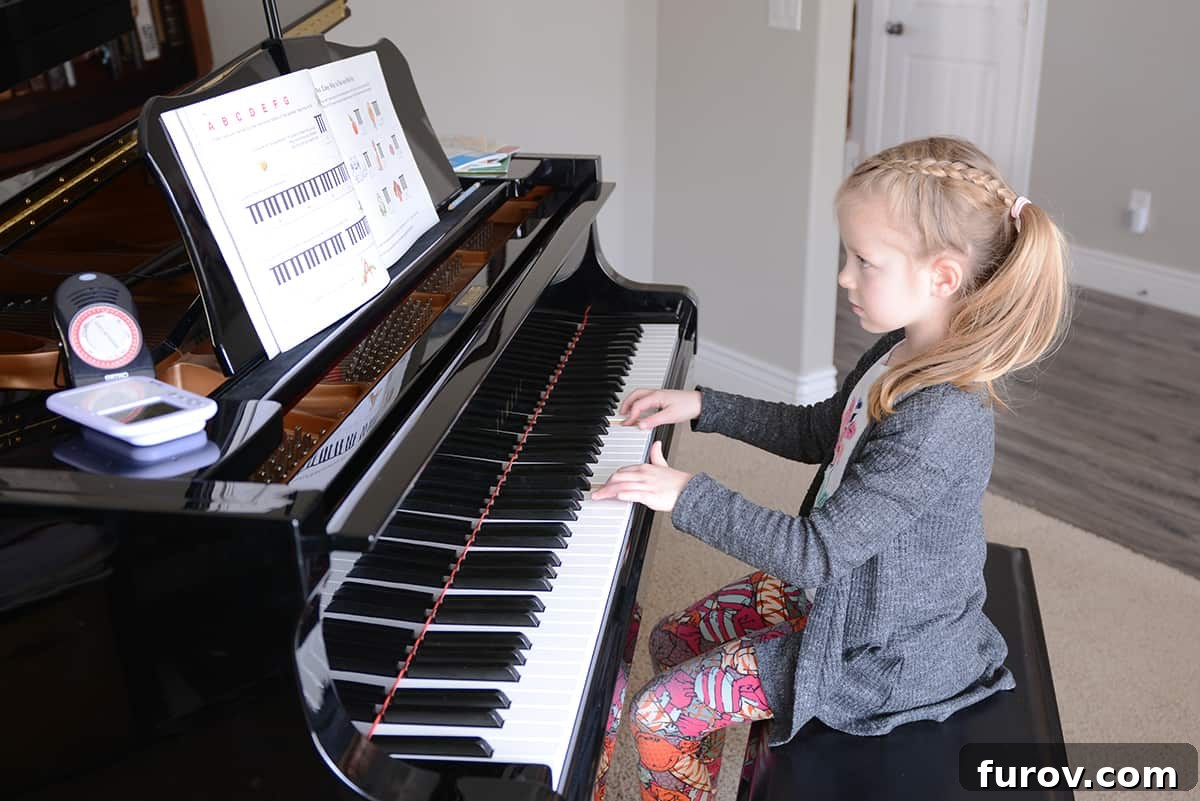
1) The Honest Truth About Teaching Kids Piano: As a parent, one often finds themselves in roles they never anticipated, and for me, that includes becoming a piano teacher to my children. While I am certainly no virtuoso pianist – not even remotely close – I’ve embraced this role for a few compelling reasons. Primarily, it’s a practical decision: saving on external lesson costs and avoiding the daily scramble of leaving the house. More profoundly, it’s about passing on a skill, a useful talent that I possess, hoping to instill a love for music in them. However, this noble endeavor comes with a significant personal cost to my mental sanity.
Lately, a persistent question has echoed in my mind: Is it fundamentally wrong to allow a child to “pass” on a piano song they’ve been diligently practicing, even if it hasn’t reached anything close to perfection? My motive, I confess, is purely self-preservation – simply to avoid hearing that same melody one.more.single.time. The internal debate is real: Am I inadvertently eroding their work ethic? Am I stifling their musical progression, or worse, setting them up for a lifetime of mediocrity?
But then, a moment of defiant clarity surfaces: Honestly, at this point, I don’t care. The relentless repetition of tunes like Indian Dance and The Spinning Song feels like it’s slowly but surely leading me to an early grave, or at the very least, confining me to a corner, curled in the fetal position, comforted only by my secret stash of chocolate chips. This is the raw, unvarnished truth of a parent caught between pedagogical ideals and the desperate need for quiet. While the long-term benefits of musical education are undeniable, the daily grind can test the limits of even the most patient parent. Perhaps the true lesson here isn’t about perfect scales or flawless recitals, but about fostering an enduring appreciation for music without sacrificing familial harmony – or one’s sanity.
Cultivating Self-Discipline: A Year Without Sweets
2) A Family Experiment in Self-Control: This past week, a significant milestone was reached by two of my children, a feat I’ve hinted at on the blog over the last year. These two remarkable young men successfully completed an entire year WITHOUT CONSUMING SWEETS! Watching their unwavering self-control unfold over twelve months was nothing short of incredible – simultaneously insane, utterly exhausting for me as a parent navigating holiday parties and birthday celebrations, yet profoundly inspiring.

The challenge initially began in March 2017 with all four of my boys, but it was the formidable 10- and 12-year-olds who demonstrated exceptional perseverance and finished strong. The other two, bless their hearts, clearly inherited more of my DNA, which screams “give me all the chocolate, now!” The two who triumphed didn’t abandon all forms of sugar; rather, they abstained from blatant, overt sweets. This rigorous list included cookies, cakes, cupcakes, muffins, fruit snacks, any and all chocolate, brown sugar or powdered sugar on crepes, brownies, and juice, among other similar items. They were, however, still permitted to enjoy homemade jam on their pancakes or French toast and indulged in a wide variety of fresh fruits.
Once we realized they were genuinely committed to seeing this challenge through – a couple of months into their impressive streak – we introduced an incentive: a monetary reward upon completion. This additional motivation, coupled with their generous dad’s decision to split the unearned winnings of the two brothers who dropped out among the two winners, undoubtedly helped to fuel their self-control fire and bolster their resolve. It became a powerful lesson in delayed gratification and goal setting.
I was absolutely convinced that at the conclusion of their year-long sweets fast, at least one of them would inevitably overindulge, making up for lost time by consuming their body weight in sugar and subsequently suffering the consequences. To my genuine surprise, they exhibited remarkable wisdom. They seemed to intuitively understand that after a year of abstinence, too many sweets would likely make them feel unwell. Consequently, they exercised a commendable degree of caution and moderation – with the notable exception of my 10-year-old. His profound love for donuts, fueled by an ambition to become a gourmet donut shop owner when he grows up, led him to devour three “gourmet, grocery store” donuts for breakfast. A small, understandable indulgence after such a significant achievement, proving that even the most disciplined among us have their cherished weaknesses. This entire experience was a testament to the power of commitment and the surprising maturity children can exhibit when given a clear objective.

Insights into Modern Parenting: Books, Articles, and Real-Life Application
3) Unlocking Communication: Lessons from a Timeless Parenting Guide: Following numerous recommendations from the deep thoughts post a few weeks ago, I eagerly purchased “How To Talk so Kids Will Listen & Listen So Kids Will Talk.” This book, originally penned in 1980, possesses a charmingly old-school vibe, much like another one of my favorite parenting resources, and this classic approach genuinely resonates with me (note: affiliate links for these books are provided for your convenience).
Despite being only a couple of chapters in, I am absolutely loving it. I’ve already begun to implement some of its foundational principles with my children, and the results have been remarkable. These principles include active listening with full attention, helping them articulate and name their feelings, and crucially, validating those feelings – even in the midst of a full-blown tantrum. It has been astonishing to witness the positive shifts in my relationships with certain children, particularly where our interactions previously often devolved into power struggles. While some of the dialogue and examples in the book feel a bit dated and occasionally lack a deeper emotional component, it’s remarkably easy to extrapolate the core examples to my own family dynamics. I’ve found immense value in these guiding principles in just the last few weeks alone. A huge thank you to everyone who recommended this transformative book!
On a related, equally thought-provoking parenting note, my dear friend Deb recently sent me this insightful article from Your Modern Family. It captivated me entirely – so fascinating! I truly wish we could all gather in my kitchen right now, perhaps with brownies in hand, and dissect this article together. (Seriously, wanna come over?) While I don’t wholeheartedly agree with every single point presented in the article, a significant portion of it deeply resonates with me as a mother. This is especially true for the philosophies of “let them be bored” – fostering creativity and self-sufficiency – and “let them lose” – teaching resilience and the invaluable lessons of failure. Additionally, the crucial point about putting down my own phone and actively setting personal boundaries for screen time struck a profound chord. In our increasingly digital world, recognizing and managing our own device usage is paramount to being fully present for our children. Have you had a chance to read this article? What were your thoughts on its core messages?

The Quest for the Perfect Pair: A Philosophical Look at Fashion
4) The Enduring Allure of Denim: What Price Comfort and Style? Finally, let’s wrap up this week’s reflections with a truly deep, perhaps even philosophical, question pertaining to our daily comfort and style: How much is too much to spend on a pair of jeans? This isn’t a rhetorical question; I genuinely want to hear your perspectives and experiences. Jeans have become an indispensable staple in most wardrobes, revered for their versatility, durability, and timeless appeal. But at what point does the price tag become prohibitive, or on the flip side, entirely justifiable?
Do you, perhaps, possess that one absolute favorite, cannot-live-without pair of jeans? The kind that fits you perfectly, makes you feel incredible, and has become a true extension of your personal style? If such a treasured pair exists in your closet, how much did they set you back? And here’s the crucial follow-up: if you metaphorically had to consider selling your firstborn child to afford them, was that significant investment truly worth every penny? Inquiring minds, including mine, are eager to know the nuances of your denim purchasing philosophies. Share your stories about finding that perfect fit, the comfort, and the enduring style that makes certain jeans an irreplaceable part of your wardrobe, regardless of the cost. Let’s discuss the intersection of fashion, personal value, and practicality.
Later, skaters! Until next time, keep those thoughts and comments coming!
Disclaimer: I am a participant in the Amazon Services LLC Associates Program, an affiliate advertising program designed to provide a means for me to earn fees by linking to Amazon.com and affiliated sites. As an Amazon Associate I earn from qualifying purchases.