
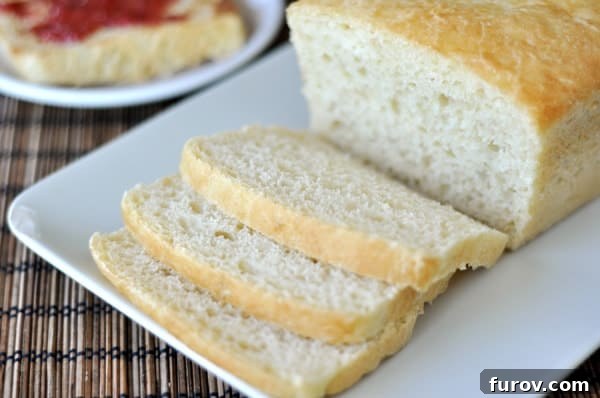
Sliced, toasted, and generously slathered with butter and jam, this homemade English Muffin Bread is the ultimate lazy baker’s delight, transforming any breakfast into a truly special occasion.
Easy English Muffin Bread: The Foolproof Homemade Delight
For years, this remarkable English Muffin Bread has been a cherished staple in our home, a testament to a fantastic recipe passed down by my Aunt Marilyn. It offers all the signature charm of classic English muffins—those irresistible nooks and crannies, that perfect chew—but in the effortless form of a bake-and-slice loaf. This isn’t just a recipe; it’s a breakfast revolution for anyone who loves homemade goodness without the fuss.
What makes this bread truly extraordinary, especially for those new to baking or with limited time, is its utter simplicity. I cannot emphasize enough: this bread is virtually impossible to mess up. Unlike traditional yeast sandwich-type breads that demand precise kneading, delicate handling, and a keen eye for dough consistency, this English Muffin Bread embraces a more forgiving approach. It liberates you from the finicky qualities that often deter aspiring bakers, making the joy of homemade bread accessible to everyone.
The secret to its success lies partly in its unique dough. While many bread recipes aim for a smooth, elastic, and non-sticky dough, this one deliberately defies convention. You want it sticky—beyond belief, in fact! This high hydration is precisely what contributes to the bread’s distinctive texture. So, as you battle the clingy dough, trust the process. The end result, a loaf brimming with those delightful air pockets and holes, is absolutely worth every sticky moment.
The Magic Behind the Nooks and Crannies
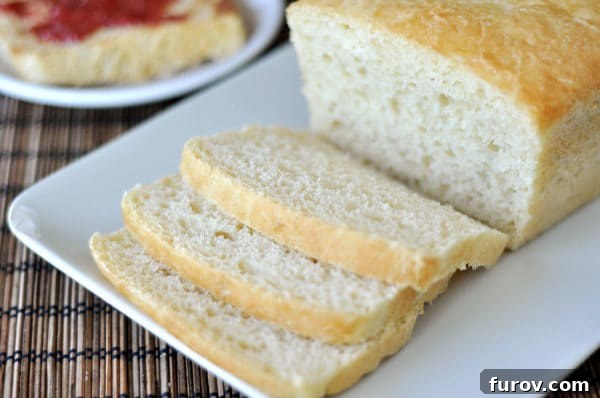
The wetness and elasticity of the dough are not a flaw but a crucial design element. This characteristic texture is what fosters the formation of those neat, intricate air pockets, often referred to as “nooks and crannies,” that define the beloved English muffin. Essentially, this recipe delivers all the textural marvels of a traditional English muffin, but in a convenient, sliceable bread form. It’s the perfect culinary compromise for those who adore the classic but seek a simpler preparation.
Once baked, this bread truly shines when toasted. The toasting process not only enhances its flavor and aroma but also helps to revive slices that might have been sitting at room temperature for a few days. This robust quality means it can be stored covered at room temperature for several days without losing its appeal, or even frozen for longer enjoyment. Moreover, the efficiency of baking a loaf and then slicing it as needed far surpasses the time-consuming task of griddling individual English muffins one by one. For an easy way out, especially on busy mornings, this bread is an undeniable winner.
Why English Muffin Bread Belongs in Your Kitchen
Beyond its unparalleled ease, English Muffin Bread offers a host of advantages that make it a must-try for any home baker:
- Effortless Preparation: This recipe minimizes the typical complexities of yeast bread, requiring no kneading in the traditional sense. It’s truly a “mix, rise, bake” affair, perfect for beginners or those seeking a stress-free baking experience.
- Iconic Texture: Achieve the signature airy, chewy interior with those coveted irregular holes, ideal for catching butter, jam, or any topping you desire. This unique texture sets it apart from other homemade bread varieties.
- Versatile Serving: While a classic choice for breakfast or brunch, English Muffin Bread is incredibly versatile. Enjoy it toasted with sweet spreads like strawberry jam, honey, or marmalade. Transform it into savory delights with avocado, eggs, or even as the base for mini pizzas. Its neutral yet inviting flavor profile makes it suitable for almost any topping.
- Convenience and Storage: The ability to store this bread at room temperature for multiple days, coupled with its excellent freezing potential, means you can always have delicious, homemade bread on hand. Simply slice, toast, and enjoy whenever the craving strikes.
- Time-Saving: Bypassing the individual griddling of English muffins saves significant time and effort, making it a far more practical option for feeding a family or preparing for guests.
Imagine waking up to the aroma of freshly baked bread, knowing you achieved it with minimal effort. This English Muffin Bread delivers on that promise. It’s more than just a recipe; it’s an invitation to rediscover the simple pleasures of homemade baking. I genuinely hope you’ll love this bread as much as we do, and that it becomes a cherished tradition in your household, just as it has in ours.

English Muffin Bread
32
Slices (4 loaves of bread)
1
10
28
1
38
Pin
Rate
Ingredients
-
5 ½
cups
very warm water -
3
tablespoons
instant yeast -
2
tablespoons
salt -
3
tablespoons
sugar -
11 ½
cups
all-purpose flour
Instructions
-
In a large bowl or the bowl of an electric stand mixer, combine the very warm water, sugar, salt, and instant yeast. Mix these ingredients thoroughly until well combined. Gradually add half of the all-purpose flour and mix until incorporated. Then, add the remaining flour and continue to mix until a very sticky dough forms. Do not be alarmed by the stickiness; this is exactly the desired consistency for developing those signature air pockets. Cover the bowl loosely with plastic wrap or a clean kitchen towel and let the dough rise in a warm place until it has visibly doubled in size. Once risen, gently stir down the dough with a sturdy wooden spoon.
-
Generously grease four standard loaf pans (approximately 8 1/2-inch by 4 1/2-inch) with cooking spray, ensuring every surface is coated to prevent sticking. With lightly greased hands (to manage the stickiness of the dough), divide the risen dough evenly among the four prepared loaf pans. The dough should fill each pan about halfway. Cover the filled loaf pans loosely with lightly greased plastic wrap to prevent the dough from sticking, and allow the bread to rise again until it has doubled in volume and appears puffy and bubbly. This second rise is crucial for the final texture.
-
Preheat your oven to 350 degrees Fahrenheit (175 degrees Celsius). Bake the risen loaves for 25-28 minutes, or until the tops are beautifully golden brown and the bread is thoroughly baked through. To test for doneness, an internal temperature of around 200-210°F (93-99°C) is ideal. Carefully remove the pans from the oven. Immediately turn the warm bread out onto a wire cooling rack to prevent the bottoms from becoming soggy. For an extra touch of flavor and a soft crust, lightly butter the tops of the loaves while they are still warm. Allow the bread to cool completely before slicing for best results.
Notes
Yeast: The recipe calls for instant yeast, which can be directly added to the other ingredients without prior activation. However, if you are using active dry yeast, you will need to “proof” it first. To do this, combine 1 cup of the warm water and the 3 tablespoons of sugar from the recipe with the active dry yeast in a small bowl. Let this mixture sit for 5-10 minutes until it becomes foamy and bubbly, indicating the yeast is active. Then, simply add this proofed yeast mixture to your main bowl and proceed with the rest of the recipe directions, incorporating the remaining water and flour as instructed.
Mel
Bread
American
Bake
Serving:
1
Serving
,
Calories:
169
kcal
,
Carbohydrates:
36
g
,
Protein:
5
g
,
Fat:
1
g
,
Saturated Fat:
1
g
,
Sodium:
437
mg
,
Fiber:
1
g
,
Sugar:
1
g
Recommended Products
Recipe Source: A treasured family recipe from my Aunt Marilyn.